

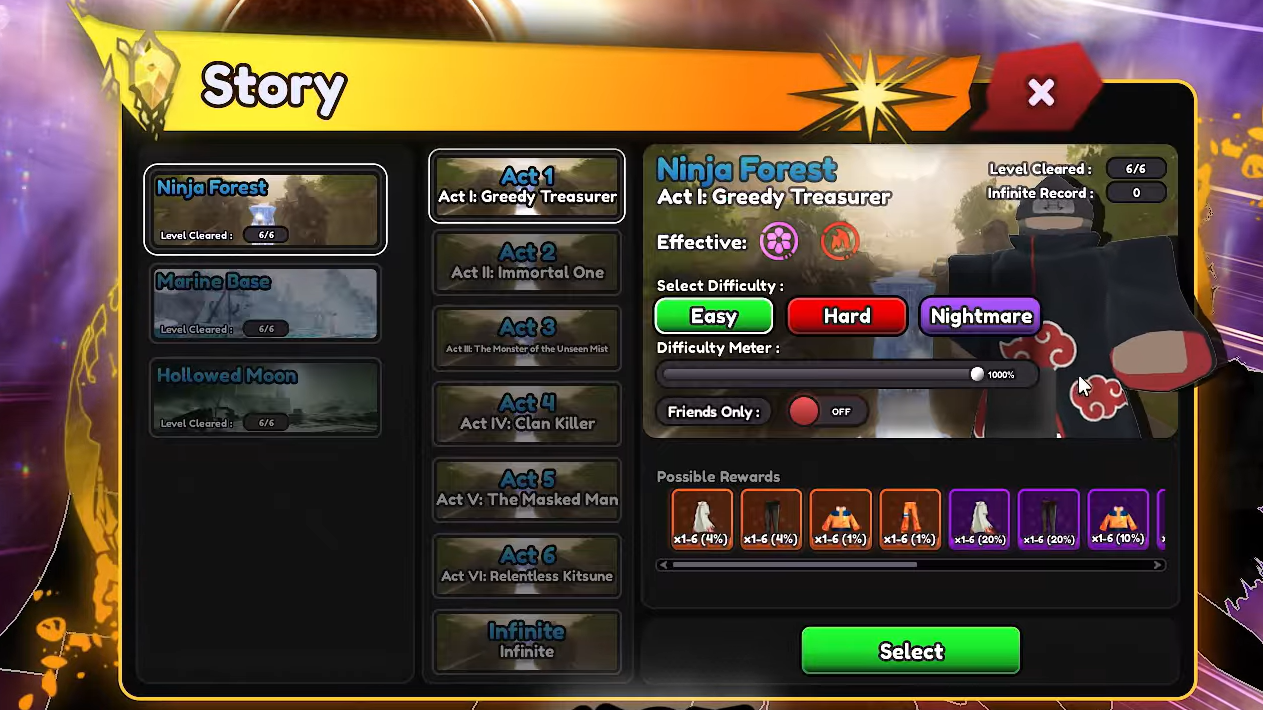
In Universal Tower Defense, traits are the small system that ends up doing the big work. They’re passive modifiers you attach to a unit to cover weaknesses (range, cooldown, boss damage) or to lean harder into what the unit already does well (damage-over-time, critical hits, relic scaling). Once you start pushing past Act II: Immortal One, the game’s difficulty curve makes trait quality matter a lot more.
How trait slots work
Each unit can hold two traits at the same time. The catch is simple: you can’t put the same trait in both slots, and identical traits don’t stack.
Trait tier list (December 2025)
| Tier | Traits | What they’re best at |
|---|---|---|
| S | Ruler, Eternal, Fission, Astral | Best overall power, late-game scaling, and/or specialized damage profiles |
| A | Sacred, Wizard, Duelist, Artificer | Strong general-use upgrades or clear role-based boosts |
| B | Lightspeed, Lethal, Deadeye | Useful single-stat improvements or situational damage |
| C | Prodigy, Fortunate (Farms only) | Progression and economy niches |
| D | Enhanced, Precise, Agile | Low-impact, basic boosts that get replaced quickly |
S tier traits (meta)
Ruler is the premier all-rounder: +200% Damage, −20% Cooldown, +30% Range, with a 1 placement limit. It’s rare (0.1% drop chance), but it’s the cleanest way to push the three stats most units care about.
Eternal is built for long runs: −20% Cooldown, plus scaling bonuses each wave (+2% Damage and +1% Range per wave, capped at 25 waves for +50% Damage and +25% Range). It’s strongest when you expect the match to last long enough for the ramp to pay off.
Fission is the balanced S-tier option: +15% Damage, −15% Cooldown, +25% Range, and adds a Radiation DoT. The DoT is valuable against high-HP enemies, but it can lose value when enemies are immune to it.
Astral is the DoT specialist: +20% Affliction Duration, −20% Cooldown, +15% Range, and DoT stacks, with a 1 placement limit. If your core damage comes from lingering effects rather than single hits, Astral is the trait that turns bosses into a longer fight they can’t win.
A tier traits (very good)
Sacred is a strong general-purpose roll: +25% Damage, −10% Cooldown, +25% Range, and −15% Cost. It doesn’t push a specific boss-killer or DoT identity, but it’s broadly useful across unit types.
Wizard targets DoT-focused builds with +30% DoT Damage, −15% Cooldown, and +20% Range. It’s powerful when the unit’s kit is built around damage-over-time, and much less compelling when it isn’t.
Duelist is the boss pressure trait: +25% Critical Rate, +20% Range, and +35% Boss Damage. It tends to feel best in boss-heavy stages or whenever elite enemies are the run’s failure point.
Artificer is a long-term investment trait, increasing stats gained from relics by 15%. The more relic work you do, the more this one quietly snowballs.
B tier traits (decent)
Lightspeed is a pure tempo pick with −20% Cooldown. It’s one-dimensional, but cooldown reductions are often noticeable in practice, especially on ability-driven units.
Lethal boosts +15% Critical Rate and adds +30% Damage to enemies at or below 50% HP. It’s useful for stabilizing messy waves and finishing enemies that would otherwise slip through.
Deadeye is straightforward: +20% Range. That can be meaningful on maps where coverage matters, but it doesn’t solve damage or uptime.
C tier traits (mid)
Prodigy gives +50% Unit Experience. It’s a leveling accelerant for evolutions, not a combat trait.
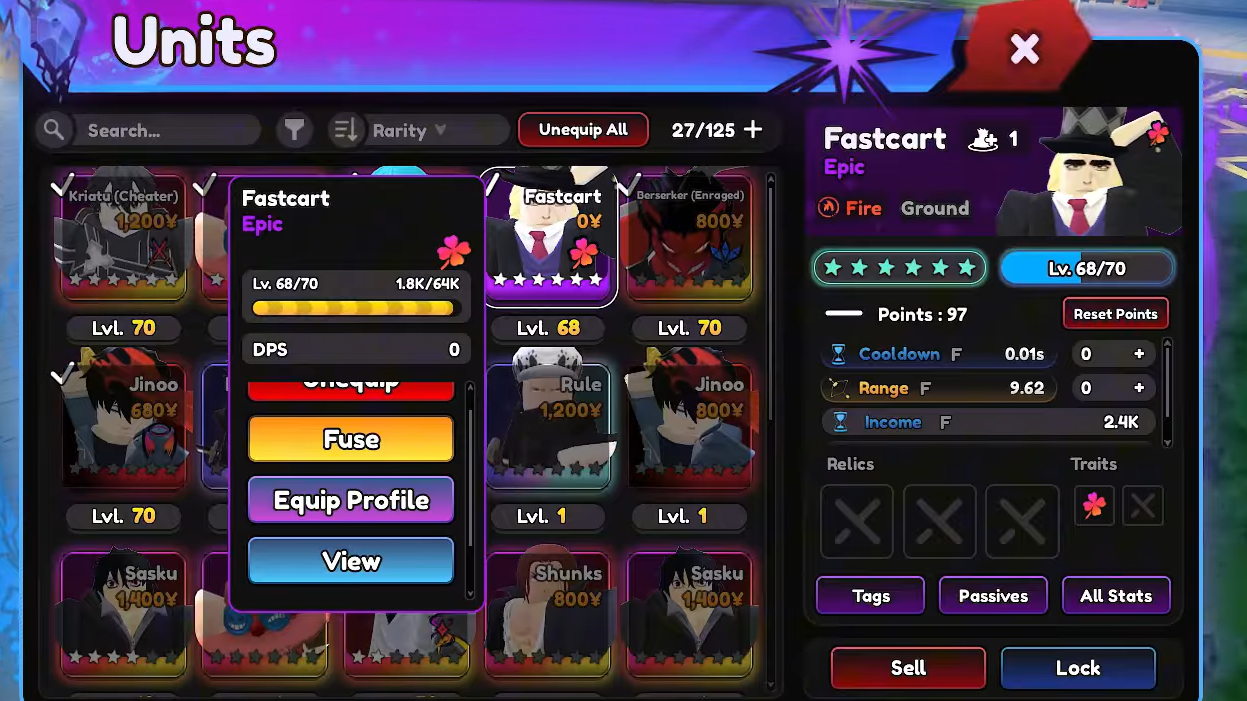
Fortunate (Farms only) increases income by +20% and only applies to farm units such as Fastcart. It’s a money trait, not a damage trait, and it doesn’t belong on anything that isn’t generating cash.
D tier traits (weak)
Enhanced, Precise, and Agile are basic boosts that scale up to Tier III, but they’re still narrow upgrades compared to higher-tier traits. Enhanced is minor damage, Precise is minor range, and Agile is minor cooldown reduction. They’re common enough that most players cycle past them quickly while chasing something more transformative.
How to get traits in Universal Tower Defense
Step 1: Go to Upgrades, located on the map behind the Summoning area.
Step 2: Enter the building and find the Traits + Stats shop on the left.
Step 3: Select the unit you want to modify, then roll using Trait Rerolls.
Step 4: Keep rolling until you land the trait you want for that unit’s role.

How to get Trait Rerolls
Trait Rerolls can drop from Challenges. They can also be purchased from the Merchant, Virtual Shop, or Store, and they can appear as rewards in the in-game Battlepass.
What to prioritize when rolling
If you’re trying to minimize wasted rerolls, treat the S-tier traits as the “build around” outcomes and A-tier traits as the “stop and play” outcomes. Ruler is the standout because it combines damage, cooldown, and range in one roll, but the other S-tier traits are often better when you have a specific plan, like long-wave scaling (Eternal) or leaning into DoT mechanics (Astral, Fission).