

Wen Wuque, also called the Ember of East, sits at the center of Where Winds Meet’s second main chapter, “Universal Furnace.” At first he’s just a name in a letter, a powerful figure who promised Aunt Han safe passage for Heaven’s Pier. By the end of Chapter 2, he has reshaped Kaifeng’s economy, exposed deep corruption, and quietly rewritten how you understand several characters around him.
Who Wen Wuque Is in the Story
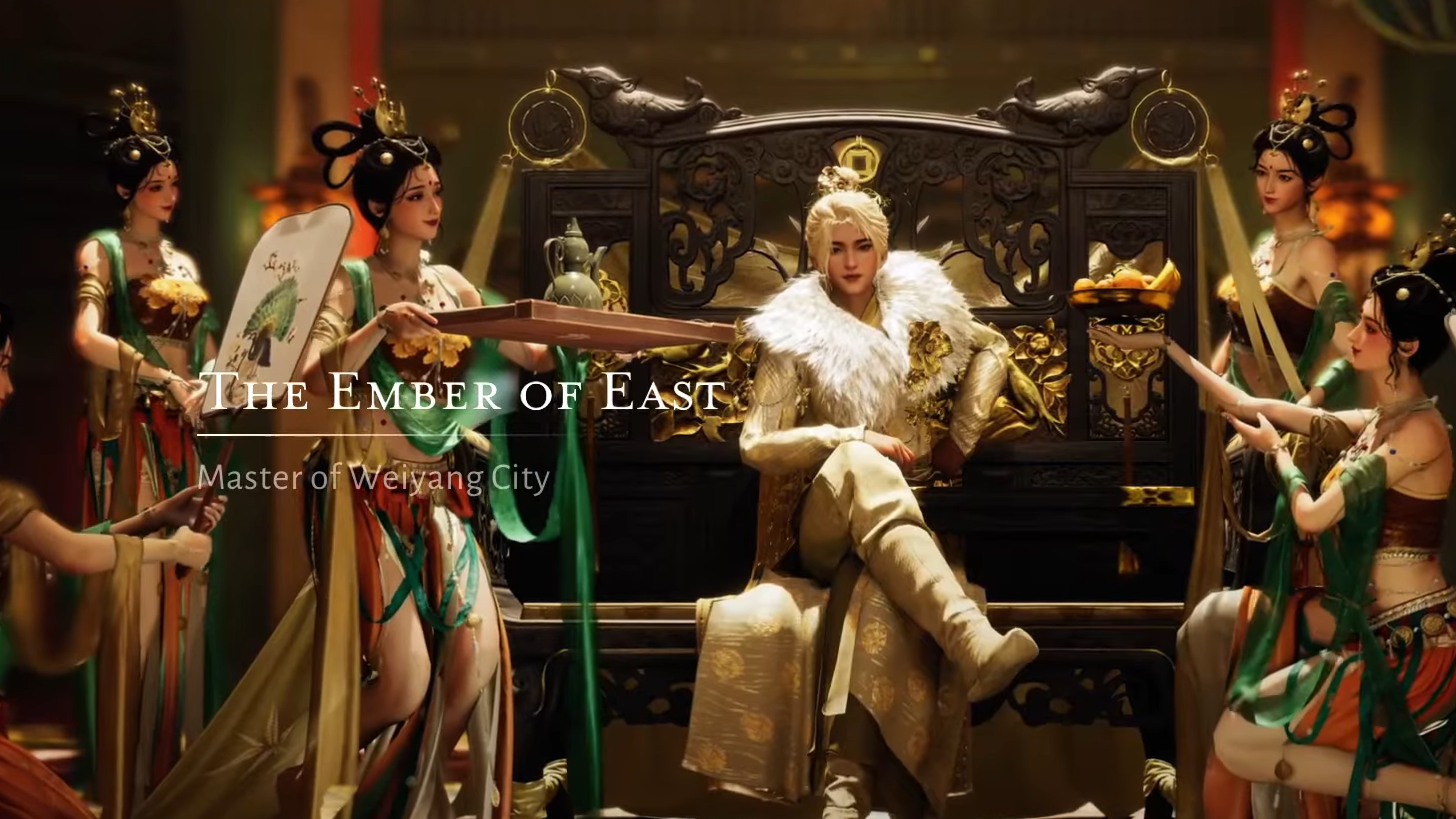
Wen Wuque is introduced as the Ember of East, a legendary leader from Weiyang who governs wealth and influence the way a sect master governs martial arts. People in Kaifeng talk about him in the same breath as miracles: he is expected to unveil a Treasure Basin that can “make gold,” and his arrival is framed as the city’s last hope during a crushing coin shortage.
For the protagonist, the connection is personal. In the aftermath of Heaven’s Pier’s destruction, a letter addressed to Aunt Han reveals that she is the Water Lady and that Wen Wuque was arranging a route to safety in Kaifeng. With Aunt Han missing, Wen becomes the only real lead—someone who both understood the danger facing Heaven’s Pier and had the means to help.
That’s why Chapter 2 begins with a simple objective that pushes everything forward: reach Kaifeng and find Wen Wuque.
From Wheatwind Bazaar to Kaifeng: Chasing “Wuque”
The search for Wen Wuque starts in the outskirts of Kaifeng, at Wheatwind Bazaar, under the main quest “New Guest in Kaifeng.” You arrive with Clip-Clop and a letter, expecting to meet a person. Instead, the name “Wuque” has already dissolved into rumor and scam.
Hawkers push “Wuque Treasure Basins,” claiming their crude props can conjure coins. A hulking swindler stages a fake demonstration using a hidden mechanism that drops money into the bowl. You expose the trick with Wind Sense, the crowd scatters, and your purse is stolen in the chaos.
This is the first hint that Wen Wuque’s reputation has become a currency in itself. People no longer know him as a person; they know the story of a Gold-Making Vessel, and they imitate that story any way they can. The gap between the real Ember of East and the market’s fantasies about him is already wide before you ever see his face.
First Meeting at Revelry Hall (Gathering of Heroes)
The real Wen Wuque finally appears during the “Gathering of Heroes” quest. Big Zhao fails to secure an Assembly Ticket for the Heroes Assembly at Revelry Hall, so he arranges passage by boat and then sneaks you both in disguised as Velvet Shade disciples.
Just outside the hall, a confrontation sets the tone. The Joyous Couple try to force their way past the Velvet Shade Disciples. As the argument turns violent, Wen Wuque steps in. He flips a single Life Coin that arcs through the air and kills them instantly. It is the first time you see the Ember of East in person, and the game establishes three things at once:
- He commands lethal techniques with frightening ease.
- He is accepted as the supreme authority inside this space.
- His “life and death” decisions are treated as normal by everyone around him.
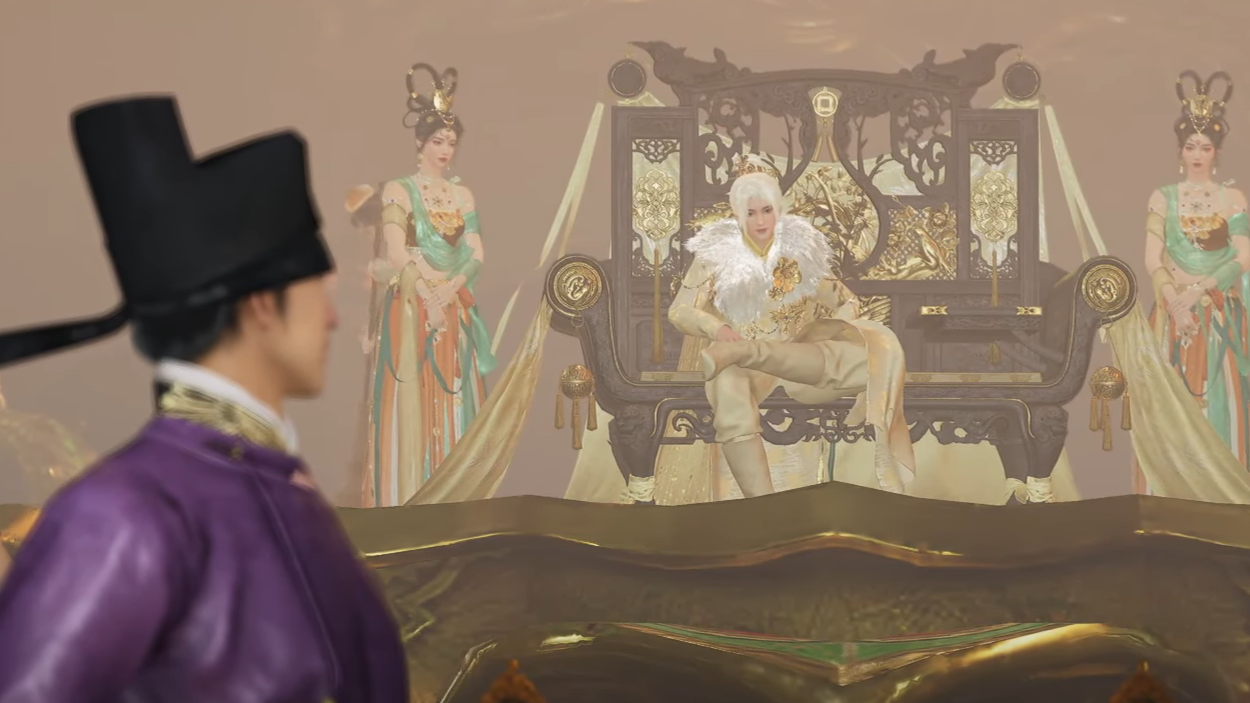
Inside Revelry Hall, Wen stands at the center of Kaifeng’s elite: Dao Lord from the underground market, Shen Yilun of the Ever-Normal Granary, and Lord Shi, the Song Dynasty representative in charge of copper coins. Wen unveils the Gold-Making Vessel—also called the Treasure Basin—and lets Lord Shi test it. Coins rain down on the crowd in a dazzling show that briefly makes the city’s monetary crisis feel solvable.
Then the explosion hits. Lord Shi falls, an eagle snatches the Vessel, and the hall erupts into chaos as heroes brawl for control. In the confusion, an illusion traps your character, forcing you to fight waves of foes while clutching a bag you believe is the Vessel. When the spell breaks, the bag holds only a chamber pot.
The Prefect of Kaifeng seizes on the moment, accuses you and Big Zhao—who snuck in without tickets—of being involved, and forces you to swallow the Seven-Day Soulbreaker Pill. You will die in seven days unless you recover the real Gold-Making Vessel.
Wen Wuque, who clearly recognises you and even alludes to the Parting Tears wine from Heaven’s Pier, chooses not to intervene. He lets the Prefect’s “deal” stand. The Ember of East remains above the fray, watching how people move when pushed.
Identity Twist: Wen Wuque and Yingying
In Kaifeng’s streets, you meet Yingying early on: a sharp-tongued con artist who stages theatrical scams, tricks you into pawning your last jar of Parting Tears, and later turns out to be part of Granny Turtle’s makeshift family alongside Little Fu and Widow Zhou.
As Chapter 2 unfolds, hints start to stack up:
- Yingying has deep, inexplicable insight into Kaifeng’s currency crisis and the Gold-Making Vessel.
- Granny Turtle speaks of a daughter roaming the Jianghu who is about the same age as you.
- A letter shows that the Water Lady (Aunt Han) wrote to Wen Wuque directly; Yingying reacts to Wen’s name with a familiarity that feels more personal than gossip.
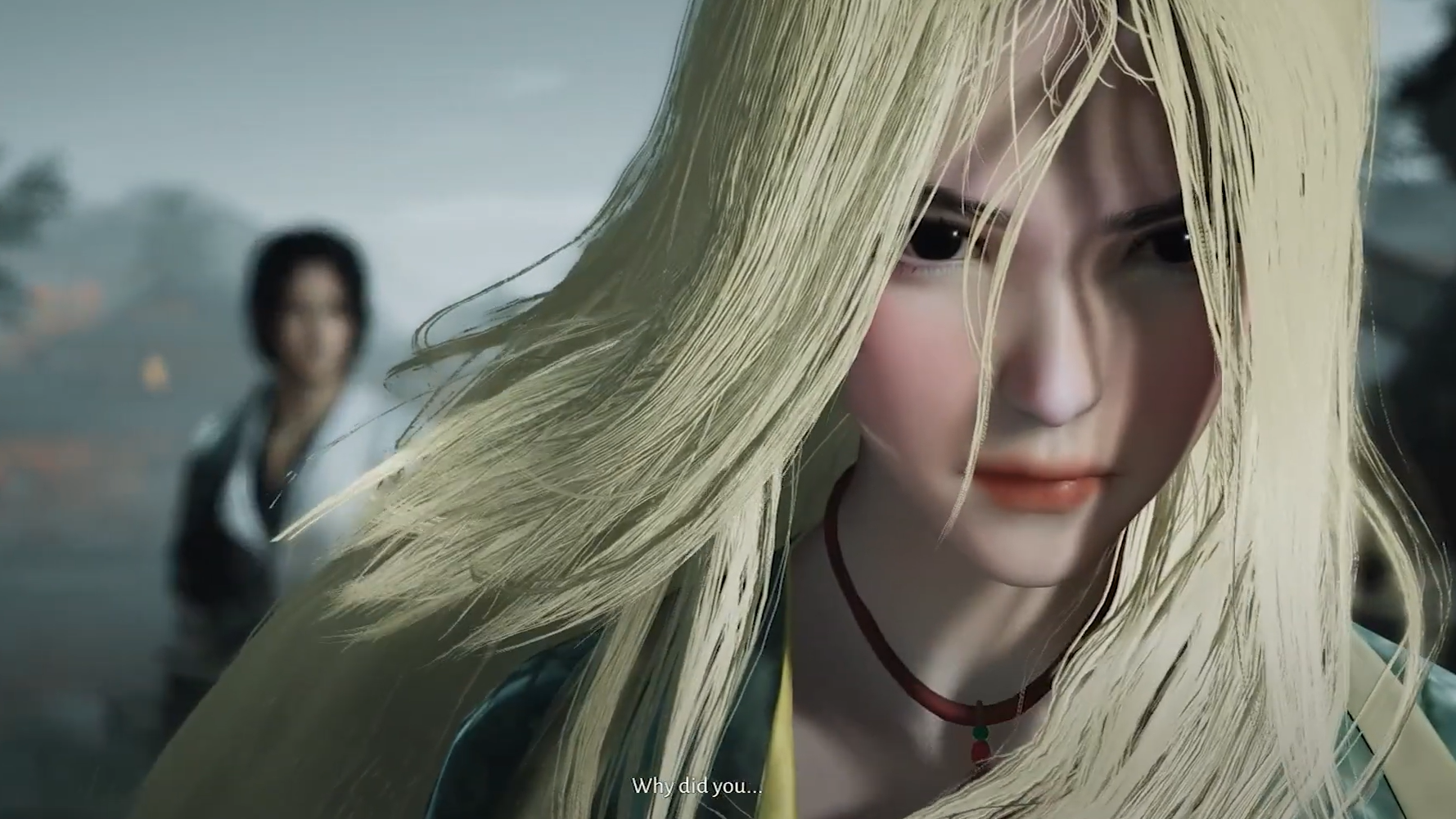
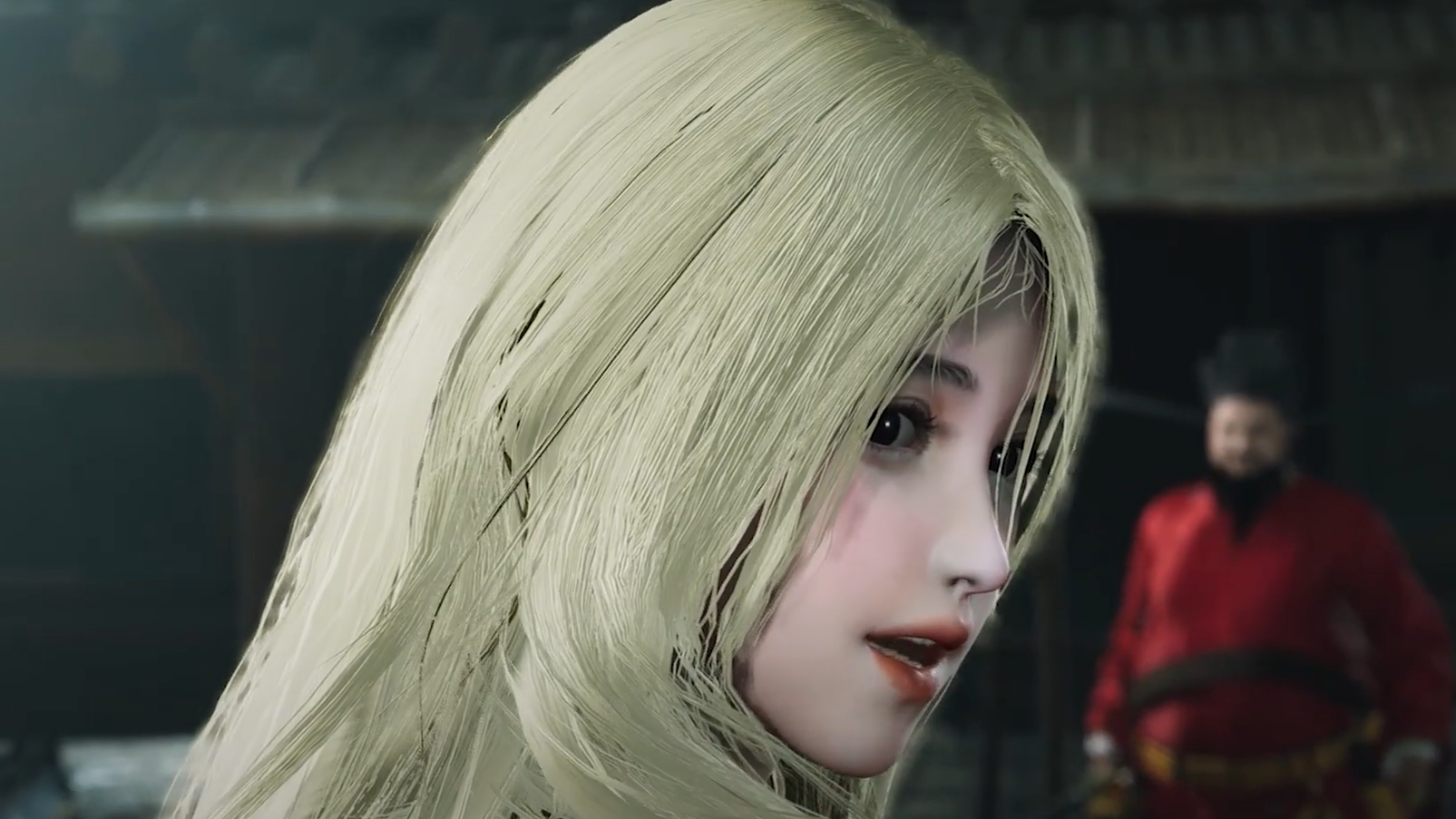
In “Furnace of Righteousness,” the mask comes off—literally. Lord Shi confronts Yingying while hunting Little Fu and the missing Vessel. When she blocks his blade to save you, her headscarf falls, and her pale yellow hair is exposed. Lord Shi recognises her on sight and calls her “Yingying, the Ember of East.”
This confirms what the story has been building toward: Wen Wuque is a woman passing as a man in public roles, and her “Yingying” identity is the one you’ve been interacting with far longer. The Ember of East you saw in Revelry Hall is that same person, performing another disguise to navigate Weiyang’s and Kaifeng’s power structures.
The dual naming underscores this. “Wuque” literally means “without lack” or “complete,” while “Ying” in classical Chinese can carry the sense of something brimming or full. Both point at wholeness and abundance, just from different angles. The grand title Ember of East and the street nickname Yingying are two masks hung on the same idea—and the same person.
Wuque, Weiyang, and the God of Fortune
Wen Wuque’s power does not come only from martial skill. It comes from his role in Weiyang and the spiritual economy around money and fate.
Throughout Kaifeng, four figures are associated with Weiyang’s “keepers,” and Wen Wuque stands among them as a God of Fortune. Lord Shi, who eventually reveals himself as the Black Treasurer, is another. Where Wen’s emblem glows like a benevolent ember, Lord Shi wields wealth as a weapon, hoarding coins, confiscating Tang Coins from the poor, and feeding them into the “furnace.”
In “Furnace of Righteousness,” you infiltrate that furnace—a massive industrial temple to coinage and control. Prisoners driven half-mad by greed chant for mercy beneath a painting of Shi as a deity of wealth. Hidden passages and secret dungeons link the furnace to the Ghost Market below and to the Ghostlight Market further out, where fake Treasure Basins and counterfeit Tang Coins circulate.
When you finally confront Shi in his fully awakened form as the Black God of Wealth, the fight plays out as a ritual unmasking. His phases move from spear-wielding officer to dual-bladed demigod, and then to a towering figure whose scepter literally projects long-range, coin-laced attacks. You break his power by striking at the eye on that scepter—attacking the gaze that sees people only as tools in a ledger.
Wen Wuque steps in at the political level after that battle. While you survive by force of arms, Wen rewrites the city’s rules:
- Acknowledging that copper alone cannot sustain the economy, he introduces paper money as a new medium of exchange.
- The government begins exchanging citizens’ Tang Coins for copper coins and notes, legitimising what had been treated as contraband.
- The forced confiscations that devastated people like Widow Zhou are rolled back into an orderly transition.
In other words, the Ember of East uses both identity and policy as weapons: he dismantles Lord Shi’s monopoly on “legitimate” currency and reroutes the city’s trust back through a system he can reshape.
Ghost Market, Nine Mortal Ways, and Wuque’s Web
The theft of the Gold-Making Vessel points you toward the Nine Mortal Ways, a shadowy sect operating out of the Ghost Market beneath Kaifeng. This becomes clear through a chain of evidence: the broken mask you find in Revelry Hall, Master Pu’s explanation, Wang Feng’s capture in the Ash Pit, and the trail that leads through Ghost Revelry Hall and the Human Market.
The Ghost Market storyline shows how Wen Wuque’s world works at its lowest levels:
- Unbound Cavern thugs run human trafficking operations, selling people and even “a pair of child’s eyes.”
- The Nine Mortal Ways create fake Treasure Basins and use sleight of hand to make counterfeit Tang Coins look real.
- Little Fu, Little Lu, and Little Shou use those tricks not to become rich, but to push ghost coins into circulation so the poorest can still trade.
Through deduction in “Reunion” and investigation in “Accident,” you and Big Zhao realise that the recent flood of Tang Coins is tied back to the Ghost Market and that the Nine Mortal Ways likely took the real Vessel. This is exactly the kind of knot Wen Wuque operates within: sects that blur the line between charity and crime, markets that mix superstition with hard currency, and children who impersonate Dao Lords to keep coins flowing where official policy has cut them off.
When Wen later restructures Kaifeng’s monetary system, he is not erasing the Ghost Market. He is folding its lessons into a new order. Tang Coins stop being illegal scrap and become part of a managed exchange. The Gold-Making Vessel stops being a single miraculous object and becomes, effectively, an industrial process—“paper money” mediated by state authority and Weiyang’s keepers.
Wen Wuque’s Relationship to Aunt Han and the Protagonist
For all the spectacle around Revelry Hall and the furnace, Wen Wuque’s connection to Aunt Han stays deceptively simple. Aunt Han, as the Water Lady, wrote to Wen asking for help moving Heaven’s Pier’s people to Kaifeng. That plan, if it had succeeded, would have placed the entire village directly under Wen’s protection and within the orbit of Kaifeng’s coin politics.
The attack on Heaven’s Pier by Qianye and the Aureate Pavilion interrupts that plan. Aunt Han saves you in the final blast and then disappears. In Kaifeng, when you press Yingying—now openly acknowledged as Wen Wuque—for answers, he admits only that:
- The Water Lady’s request for safe passage reached him.
- The attack made the original plan “unnecessary,” implying that forces beyond his control moved faster than he did.
- He does not currently know where Aunt Han is, but he is willing to return to Weiyang to search for traces.
At the end of Chapter 2, Wen gives you two threads to follow. He will look into Han’s fate from his side of the world, while you are encouraged to seek answers through Velvet Shade, another power that trades in secrets and transformations. The search for Uncle Jiang and Aunt Han steps beyond coins and sect politics into a larger web of face-changing arts, imperial conspiracies, and ancient grudges.
Why Wen Wuque Matters Going Forward
By the close of “Universal Furnace,” Wen Wuque has done three crucial things:
- Revealed himself as both Ember of East and Yingying, collapsing the boundary between aloof legend and flawed human.
- Broken Lord Shi’s stranglehold on Kaifeng’s money by legitimising Tang Coins and introducing paper currency.
- Tied his own fate more tightly to yours by accepting responsibility for Aunt Han’s unfulfilled request and offering to search for her.
He is no longer just the powerful stranger named in your mail. He is a disguised ally who has been in your orbit since the first scams in Wheatwind Bazaar, a God of Fortune who understands what poverty looks like from the ground, and a reformer who uses masquerade and policy to reshape a city.
Later chapters build on this foundation: the Aureate Pavilion’s face-changing, Velvet Shade’s role in hiding truths, and Weiyang’s four keepers all pull back to the same question that hangs over Wen Wuque’s dual identity—who gets to decide what is “real,” and who pays the price when wealth, masks, and power change hands.