

Crimson Desert launches on March 19, 2026, and the official PC system requirements paint a picture that has caught many players off guard. For a game featuring real-time cloth simulation, fluid physics, ray tracing, and massive draw distances, the listed hardware floor is remarkably low. But those numbers come without resolution or frame rate targets, which makes interpreting them a bit more nuanced than usual.
Quick answer: You need at minimum a GTX 1060 / RX 6500 XT, a Ryzen 5 2600X / i5-8500, and 16 GB of RAM. The recommended spec calls for an RTX 2080 / RX 6700 XT, a Ryzen 5 5600 / i5-11600K, and 16 GB of RAM. An SSD is required at both tiers. Expect roughly 135 GB of storage space.
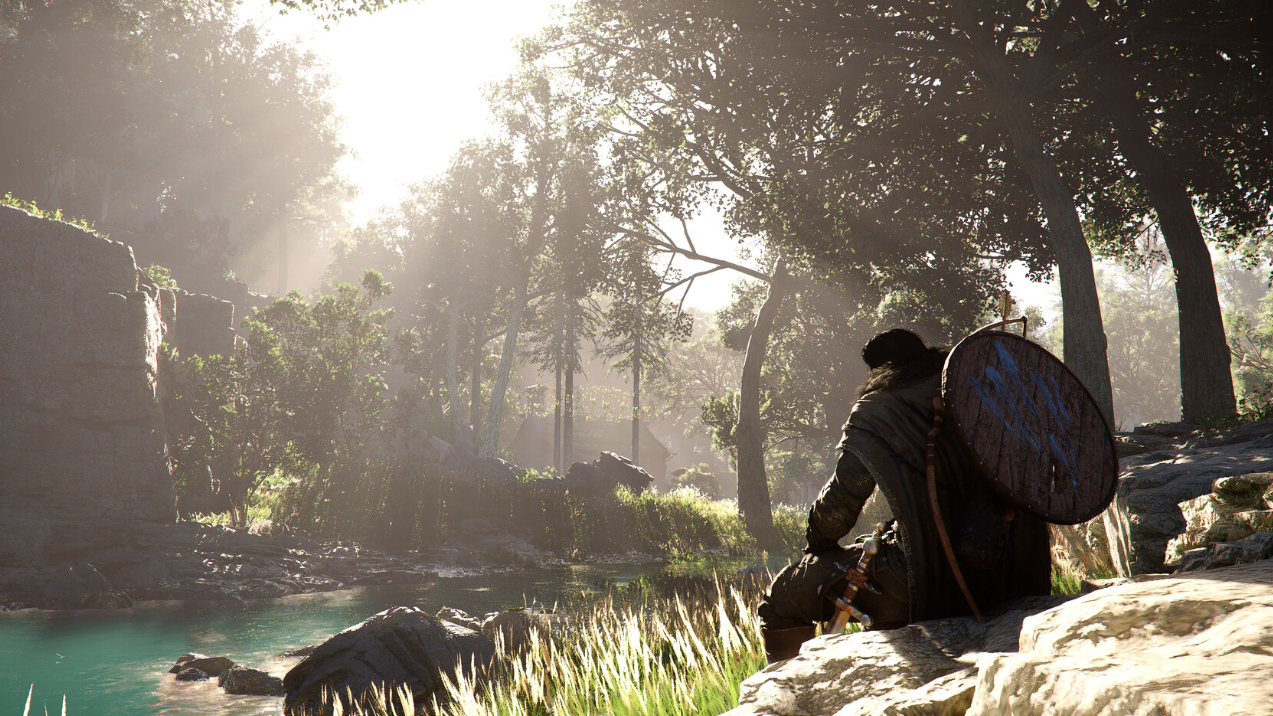
Crimson Desert Minimum and Recommended PC Specs
| Component | Minimum | Recommended |
|---|---|---|
| OS | Windows 10 64-bit | Windows 10 64-bit |
| CPU | AMD Ryzen 5 2600X / Intel Core i5-8500 | AMD Ryzen 5 5600 / Intel Core i5-11600K |
| RAM | 16 GB | 16 GB |
| GPU | NVIDIA GTX 1060 / AMD RX 6500 XT | NVIDIA RTX 2080 / AMD RX 6700 XT |
| VRAM | 3 GB | 8 GB |
| DirectX | Version 12 | Version 12 |
| Storage | 135 GB (SSD required) | 135 GB (SSD required) |
A few things stand out immediately. Both tiers ask for only 16 GB of RAM, which is unusually restrained for a large open-world title in 2026. The SSD requirement at both levels is non-negotiable — a mechanical hard drive will not suffice.
Crimson Desert macOS Requirements
Crimson Desert also supports Apple Silicon Macs. The minimum and recommended specs for macOS are as follows.
| Component | Minimum | Recommended |
|---|---|---|
| OS | macOS 15 | macOS 26 |
| Processor / GPU | Apple M1 | Apple M4 Pro (CPU) / M3 Pro (GPU) |
| RAM | 16 GB | 16 GB |
| Storage | 135 GB | 135 GB |
What the Minimum Spec Likely Gets You
The GTX 1060 originally launched in mid-2016, making it nearly a decade old. The RX 6500 XT delivers very similar rasterization performance — within about 4 percent of the GTX 1060 in most workloads. Neither card supports DLSS, so you'd be limited to AMD's FSR for any upscaling help on the NVIDIA side.
Pearl Abyss has not published target resolutions or frame rates alongside these tiers. A reasonable expectation for minimum-spec hardware is roughly 30 fps at 1080p output resolution with the lowest graphics settings, heavy use of upscaling (likely FSR in performance mode), and most advanced features — ray tracing, water simulation, particle effects — turned off. The developers have confirmed that many of these visual systems can be individually disabled, which suggests the game scales aggressively at the low end.
On the CPU side, the Ryzen 5 2600X is a six-core, twelve-thread chip from 2018, and the i5-8500 is a six-core, six-thread part from the same era. Both are weaker than what's inside a PlayStation 5. In scenes with large numbers of characters on screen — something Crimson Desert appears to feature heavily — these processors will likely struggle to maintain a steady frame rate.
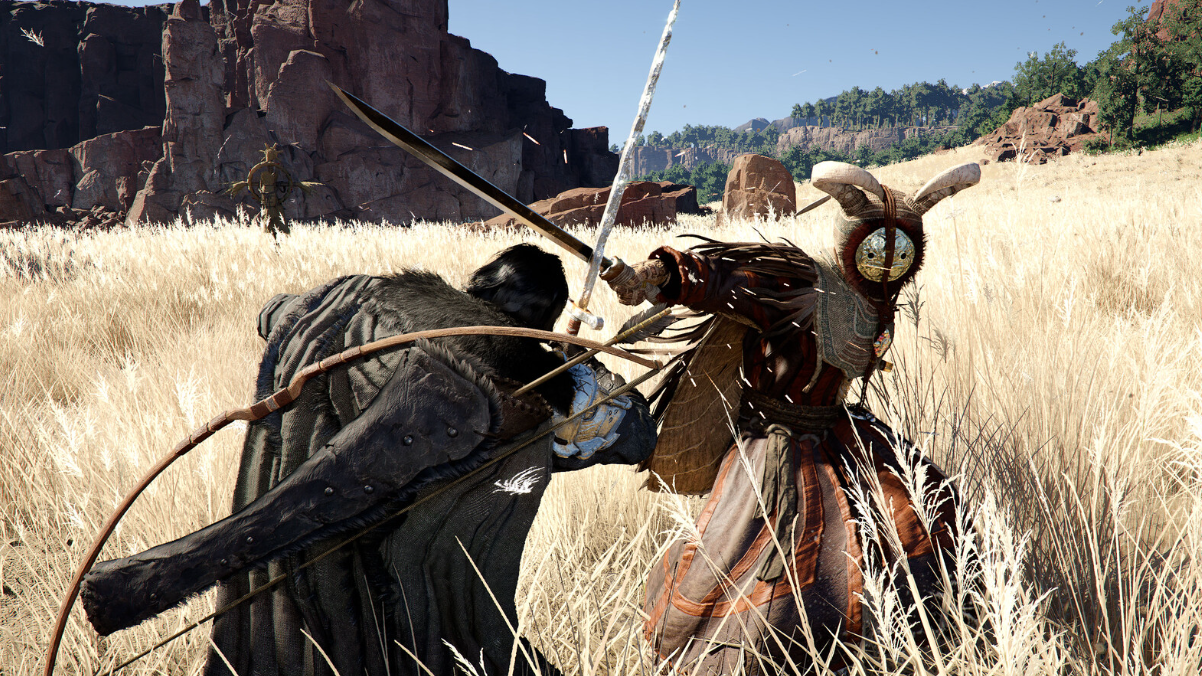
What the Recommended Spec Likely Gets You
The RTX 2080 delivers roughly 2.2 times the GPU performance of the GTX 1060. The RX 6700 XT lands in a similar performance bracket, about 13 percent ahead of the RTX 2080 in pure rasterization, though the 2080 has the advantage in ray tracing workloads and access to DLSS.
A detailed final requirements breakdown from Pearl Abyss pegs the recommended tier at 1080p / 60 fps (or 1440p / 30 fps) on medium settings. The developers have separately confirmed a 1080p / 60 fps native rendering target, though they haven't explicitly tied that to the recommended spec. It's the most logical interpretation, and the hardware roughly aligns with what a PS5 can deliver — the recommended GPUs are slightly more powerful than the PS5's GPU, but consoles benefit from tighter platform-level optimization.
The recommended CPUs — Ryzen 5 5600 and i5-11600K — are both six-core, twelve-thread parts from 2021–2022. These are more powerful than the PS5's CPU and should sustain 60 fps in most gameplay scenarios, with possible dips during the most character-dense combat sequences.
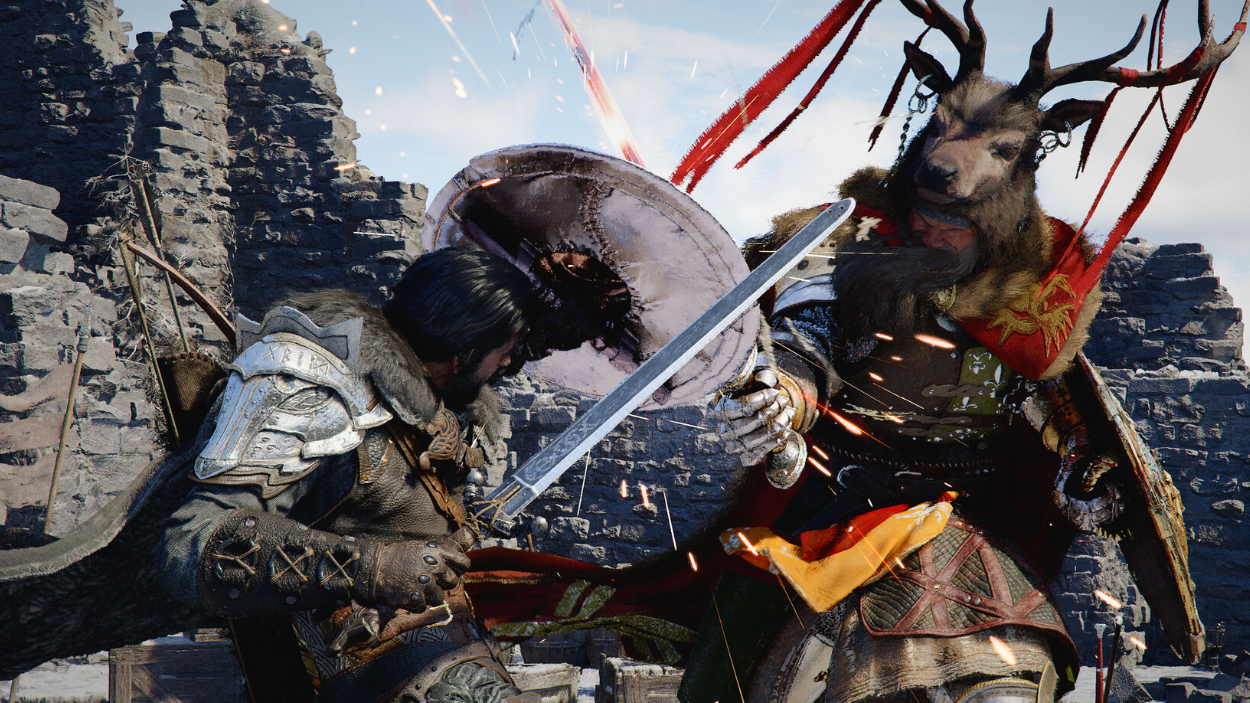
How Higher-End GPUs Scale
If you have hardware above the recommended tier, here's a rough sense of where various GPUs land relative to the RTX 2080 baseline.
| GPU | Approximate Performance vs. RTX 2080 |
|---|---|
| RTX 4060 / RTX 5050 | ~Equal |
| RTX 3060 Ti / RX 7600 XT | ~Equal to slightly above |
| RTX 5060 / RTX 4060 Ti 8 GB | ~30% faster |
| RTX 3070 / RTX 3070 Ti | ~30–40% faster |
| RTX 4070 | ~70% faster |
| RTX 3090 / RTX 5070 | ~2× faster |
| RTX 9070 | ~2× faster or slightly above |
| RTX 5090 | ~4× faster |
Cards in the RTX 4070 range and above should comfortably handle 1440p at higher settings. A flagship like the RTX 5090 could potentially reach 4K at 60 fps with maxed settings and no upscaling. Pearl Abyss has claimed that 4K / 60 fps with ray tracing enabled and no DLSS or FSR assistance is achievable on powerful enough hardware, though the specific GPU was not named. Enabling DLSS or FSR on top of that would push frame rates even higher.
The Specs Changed — And That's Worth Noting
The current requirements were not always this low. Roughly a year before launch, the Steam page listed an RTX 4070 Super and an i7-13700K as the recommended GPU and CPU, respectively. Those were revised downward within a couple of months. Whether this reflects genuine optimization progress, a shift in what "recommended" targets (from high settings to medium, for instance), or a marketing decision to broaden the game's perceived accessibility is unclear. The gameplay footage shown since the change still looks visually ambitious.
Pearl Abyss's Custom Engine Is the Wild Card
Crimson Desert runs on the Black Space Engine, Pearl Abyss's proprietary technology that evolved from the engine powering Black Desert Online. It is not built on Unreal Engine 5 or any other off-the-shelf solution. The developers have stated that an off-the-shelf engine could not deliver the combination of massive draw distances, real-time physics, cloth and hair simulation, fluid dynamics, and a full day-night lighting cycle that the game demands.
The custom engine is a double-edged consideration. On one hand, it allows Pearl Abyss to optimize at a level that isn't possible with a general-purpose engine — rendering thousands of trees at distance, for example, or running complex simulations without the overhead that comes with a more generic toolset. On the other hand, Black Desert Online's engine has a long-standing reputation for aggressive object pop-in, and early Crimson Desert gameplay showcases exhibited the same trait. Pearl Abyss has acknowledged this and stated that reducing pop-in is an active focus of the current optimization phase, but it may remain a visible compromise in the final product.
The game went gold well before launch, and the development team has been dedicating the remaining time exclusively to optimization. PS5 Pro enhancements are also confirmed, though specific console performance targets have not been detailed.
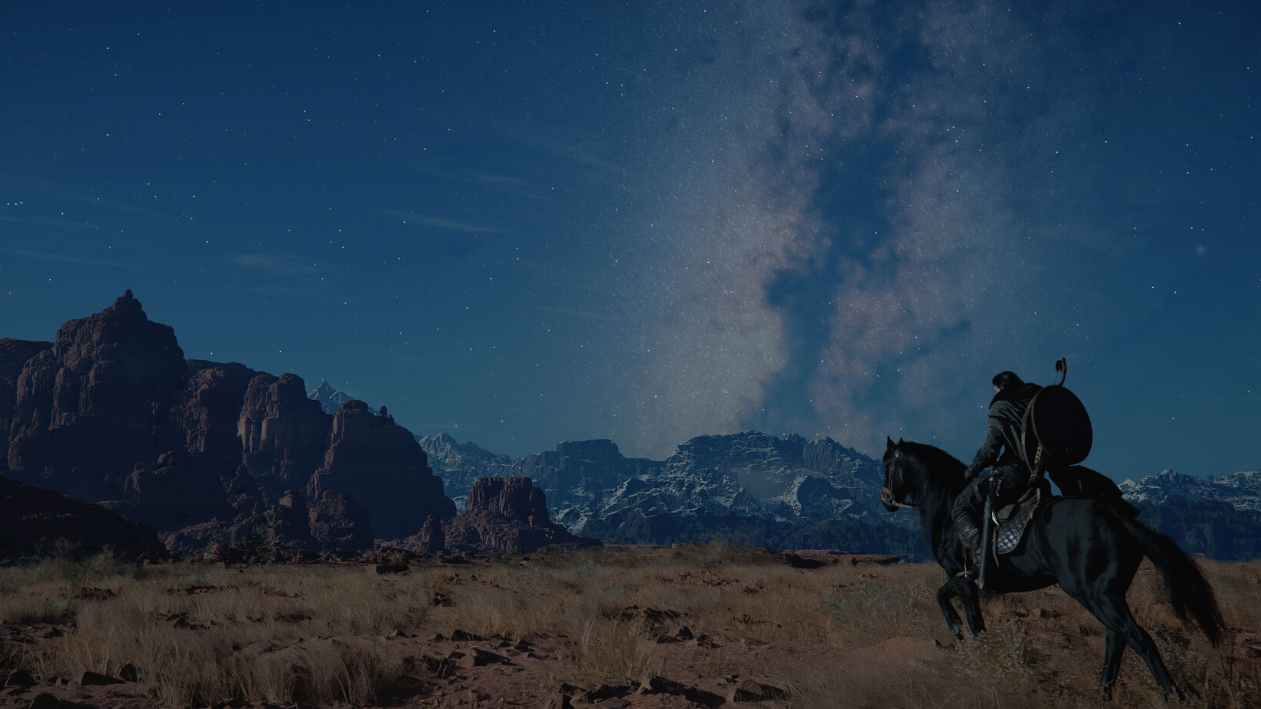
The bottom line is that Crimson Desert's official specs suggest a game designed to scale across a wide range of hardware, from nearly decade-old GPUs at the floor to current flagships at the ceiling. The minimum tier will get you into the game, but don't expect it to look or feel anything like the showcase footage. The recommended tier should deliver a playable 1080p / 60 fps experience at medium settings. Anything beyond that is where the game's more impressive visual features — ray tracing, full physics simulation, high draw distances — start to become viable. Real-world performance will only be confirmed once the game is in players' hands on March 19th.