

The Blue Gate in ARC Raiders is already loaded with history: once a proud symbol linking humanity to the mountains beyond, now a scarred threshold where Raiders push against ARC’s second wave. Tucked into that landscape is one of the game’s most intriguing loose threads – an unnamed group of survivors whose handiwork players stumble across before they ever see the people responsible.
Blue Gate and its place in the Rust Belt timeline
The Blue Gate sits topside in the Italian Rust Belt, framed as a “daunting gate into the perilous mountains” and surrounded by a valley marked by both fresh and ancient damage. It follows Acerra Spaceport in the codex sequence and comes just before Stella Montis, which positions it as a kind of hinge between the Exodus-era infrastructure and whatever is happening deeper in the highlands.
By the current era of 2180, the surface has already lived through environmental collapse, the Exodus of humanity into orbit, generations of underground survival, and two ARC invasions. The Tubes network that Raiders use to reach topside only recently extended out to the gate, and new Raider-built structures were thrown up to support regular operations there. Raiders, in other words, are late arrivals. Someone else has been active around the gate for some time.
What the codex actually says about the Blue Gate nomads
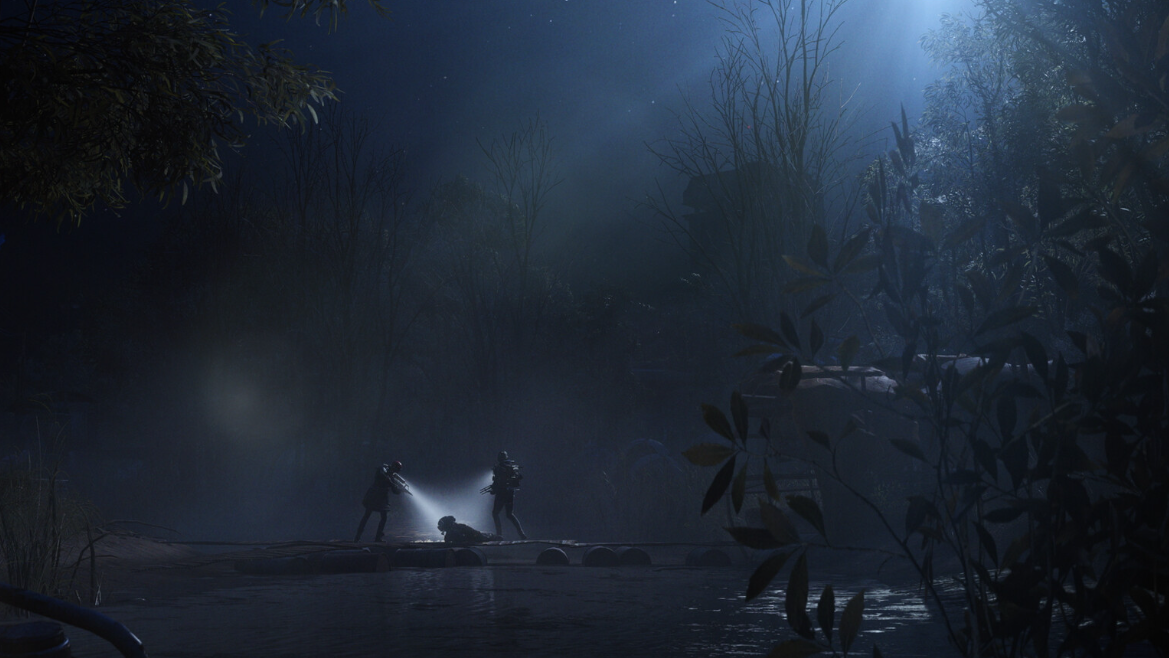
The clearest description of this group comes from codex lore on the “Blue Gate Nomads.” It states that signs of an unknown band of survivors can be found around the Blue Gate, identifiable by their flags and improvised decorations. They are explicitly credited with bringing down at least one ARC Deforester, the massive machine class responsible for stripping vegetation and topsoil.
The detail that stands out is what they left behind. The Deforester husks in this area are described as being in “surprisingly pristine” condition. In ARC’s usual wake, wrecks are shredded, half-buried, or melted by impact and weapons fire. Here, the frames are intact enough to look almost staged, as if the machines were switched off rather than ripped apart. That difference is the core of what makes the nomads interesting from a lore perspective.
Evidence of how they fight ARC machines
On the Blue Gate map, environmental storytelling backs up the codex description. Raiders investigating the fallen Deforesters encounter a tangle of cables, pylons, and wiring clustered around the husks. The scene implies that the nomads did not simply batter these machines into submission with conventional firepower or explosives.
The running theory inside the game’s fiction is that they are using some form of powerful electrical interference or focused energy surge. That would explain why the outer chassis and limbs remain largely undamaged while the machines themselves are inert. Instead of a battlefield of scorched debris, the valley looks like the aftermath of a systematic shutdown.
That approach hints at three things about the nomads:
- Technical competence. They appear to understand at least one of ARC’s key vulnerabilities well enough to attack systems rather than armor.
- Resource constraints. Preserving the hardware may be deliberate. Intact husks can be stripped for parts, metals, or even attempted reactivation.
- Deliberate strategy. Bringing down Deforesters in a focused zone around the gate suggests targeted defense of territory, not random sabotage.

Flags, decorations, and territory
The same codex entry notes that the group is recognized by their flags and makeshift decorations. That language matters. Flags imply identity and a claim to space; “makeshift decorations” suggests a culture that expresses itself with what little material it has, not an organized faction with manufactured insignia and standardized gear.
Around the Blue Gate, these visual markers function more like territorial warnings than friendly wayfinding. Raiders encounter them in proximity to the disabled Deforesters and other signs of prior conflict. Combined with the intact husks, the effect is closer to a warning shrine than a triumphant monument: this ground is watched, and machines trespassing here are methodically silenced.
There is no indication in the codex that the nomads are friendly to Raiders or aligned with Speranza. They are simply “survivors” – people who made it through the collapse, the Darkness period, Sunrise, and both ARC waves without retreating into the underground city.
How the nomads fit into ARC’s wider campaign
To understand why a group would risk operating this close to active ARC assets, it helps to look at what ARC seems to be doing in the Rust Belt as a whole. Environmental clues on other maps, especially Dam Battlegrounds, point to metal-rich mud, iron-laden sludge, and magnetic anomalies beneath the region. That pattern supports the idea that ARC is harvesting subsurface resources to sustain machine production in orbit.
Deforesters are one layer of that program: they erase forests, churn up topsoil, and prepare terrain for deeper extraction. By systematically disabling Deforesters around the Blue Gate, the nomads are not just clearing a path; they are interrupting ARC’s ability to strip this particular valley and whatever lies under it.
Seen alongside Stella Montis – a former space elevator complex with direct lines to the Exodus-era corporations – the Blue Gate becomes a choke point. On one side is the underground community of Speranza and the Raider network. On the other is whatever infrastructure or surviving human presence remains further into the mountains. The nomads appear to be holding that middle ground in their own way, parallel to but separate from Raider operations.

Relationship to Raiders and other human groups
No codex entry or map description names individual nomads or gives them a leader. They remain “an unknown group of survivors.” That silence is noticeable when set against the detailed personalities attached to Speranza’s traders and leaders, or the clear historical corporations like Jcosma Ventures and Sudarante that still leave logos scattered across the maps.
This gap leaves several possibilities within the story framework:
- Old surface settlers. They could descend from Sunrise-era communities that chose not to leave with the Exodus or move underground during the first wave of ARC. Their familiarity with the terrain and willingness to confront Deforesters would fit that profile.
- Splinter Raiders. After the Battle of Victory Ridge fractured Raider unity, some combatants rejected both Speranza’s politics and ARC’s occupation, instead carving out their own autonomous enclaves. The nomads’ tactical competence would support that idea.
- Mountain communities. Given the Blue Gate’s function as an entry to “perilous mountains,” the nomads may represent people whose home is not the valley at all but higher-altitude refuges beyond the current playable space.
None of these interpretations is confirmed in-text, but all align with what is already shown: a group that has lived topside long enough to develop both a visual culture and a consistent, non-Raider way of fighting ARC machinery.
Why their “pristine” kills matter
The unusual state of the Deforester husks is more than a visual flourish. It has practical implications for anyone operating in the area and for the broader lore.
For Raiders, intact ARC frames are a potential goldmine. Metal, actuators, cabling, and data cores all feed directly into the scavenging economy that keeps Speranza alive. A valley of nearly complete husks represents a quiet contest between whoever brought them down and the Raiders now combing through them. Each faction needs the same raw materials, but for different ends.
For ARC, seeing entire machines quietly switched off rather than violently destroyed could force changes in how it deploys Deforesters around the Rust Belt. Heavier escorts, altered patrol routes, or new machine variants would all be a rational response, and any shift at that scale ripples outward into Raider missions and map events.
From a narrative perspective, the method hints that human resistance is evolving. The first wave at Victory Ridge was won through attrition – daring raids and heavy losses over a decade. The nomads’ approach at Blue Gate suggests a turn toward precision disruption. Instead of wearing ARC down, they are trying to break its logistics and environmental engineering.
What might come next for the Blue Gate nomads
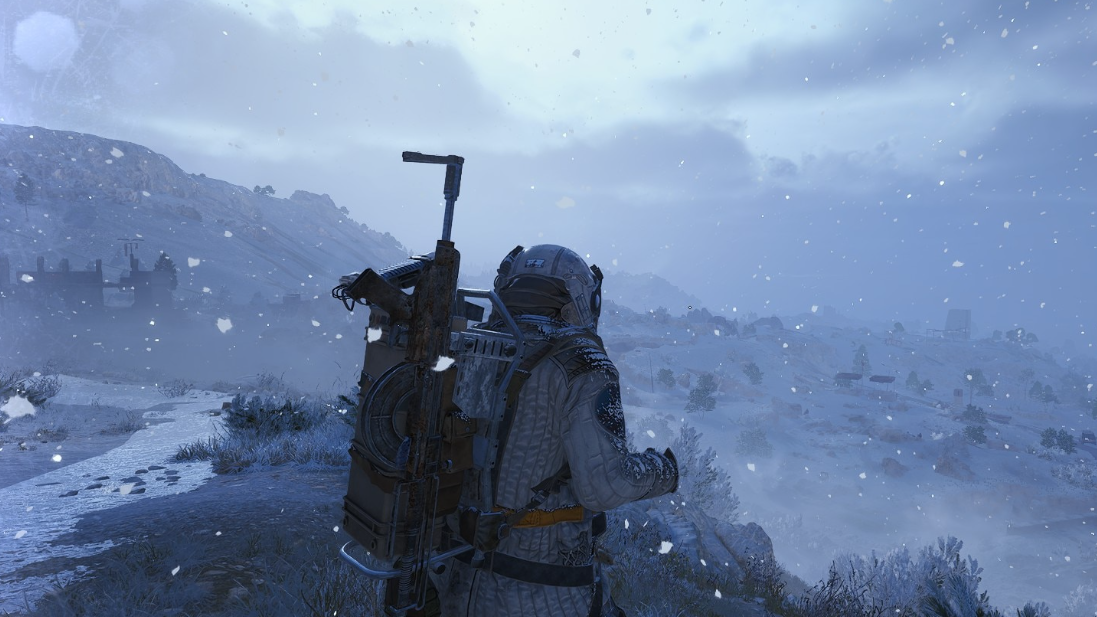
The codex order places Blue Gate immediately before Stella Montis, and the Stella Montis teasers already frame that location as central to the community event that opens a new map. Given that sequencing, there are a few logical directions future lore could take without contradicting what is already known.
One is direct contact. Raiders might eventually be tasked with tracing the nomads’ electrical rigs or flags deeper into the mountains, forcing the two groups to negotiate territory, trade, or even shared operations against ARC. Another is indirect influence: the techniques used at Blue Gate could inspire new Raider projects or augments that mimic the nomads’ machine-disabling methods.
There is also room for the nomads’ story to complicate the simple “humanity vs. ARC” framing. A group that has survived topside on its own terms for decades will not automatically trust an underground city that arrives late with guns and Tubes. The pristine Deforester graveyard around the Blue Gate is a quiet demonstration that they do not need Speranza’s approval to shape the surface.
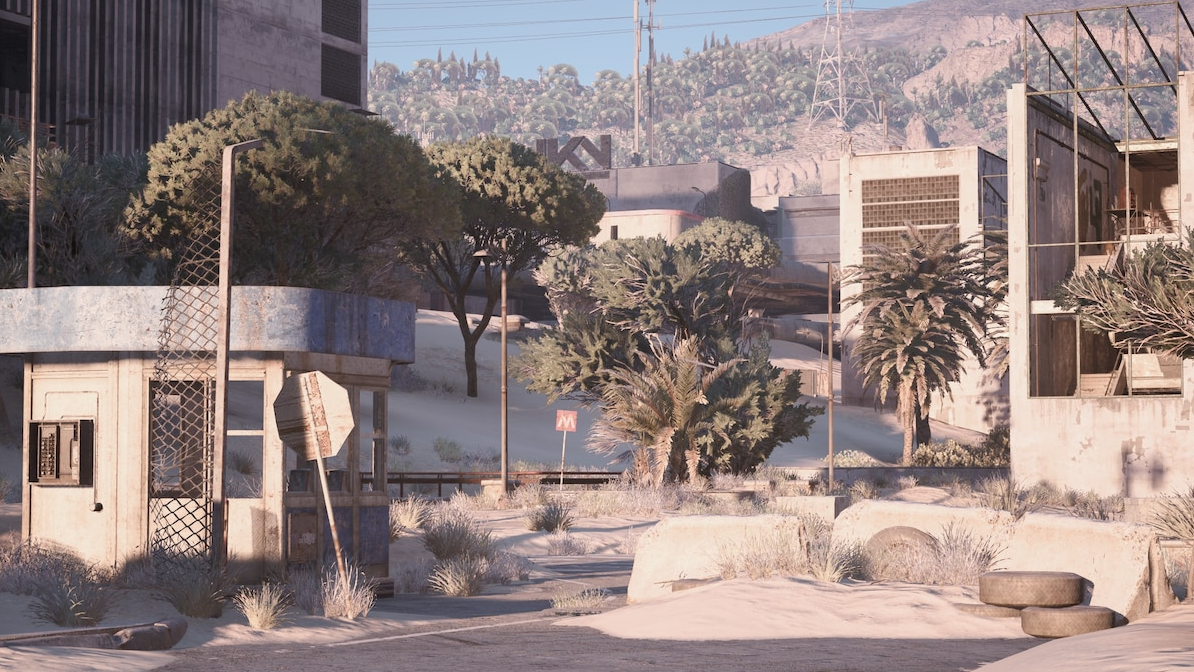
For now, that is where the trail ends. The Blue Gate frames a frontier: Raiders on one side, ARC’s automated extraction program on the other, and an unnamed band of survivors quietly cutting down the machines in between. The flags and cables scattered around the valley are less a solved mystery and more a marker that the Rust Belt still has human stories that have not yet walked into the light.