

Marvel Rivals has a competitive matchmaking system where two teams of six players fight to complete objectives. A disruptive practice known as bounty throwing appeared during Season 6 when a third‑party website began offering real‑world payouts to players who intentionally sabotage matches involving specific targets.

How the bounty throwing system works
The system revolves around an external bounty board where users can post a reward for sabotaging matches against a specific player. The process is simple but disruptive to normal matchmaking.
| Stage | What Happens |
|---|---|
| Bounty posted | A user lists a player name and offers money for someone to sabotage a match involving that player. |
| Player queues normally | The target enters matchmaking like any other player. |
| Bounty hunter joins a match | Another player who has seen the bounty queues into ranked games hoping to encounter the target. |
| Match sabotage | If they land in the same game, the bounty hunter intentionally throws the match. |
| Reward payout | The person who sabotaged the match claims roughly 80% of the bounty reward. |
The sabotage itself can take several forms. Some players remain idle, repeatedly die on purpose, refuse to play objectives, or intentionally pick ineffective tactics. Any behavior designed to guarantee a loss counts as completing the bounty.

Why the system spreads disruption beyond the target
The biggest issue with bounty throwing is that it rarely affects only the intended player. Because Marvel Rivals matches are team‑based, sabotaging a game harms everyone on the team.
If a bounty hunter joins a lobby with the target, five other teammates are caught in the same match. Those players have no control over the sabotage but still suffer the consequences of a ruined game, lost ranking points, and wasted queue time.
This creates a cascading problem in competitive matchmaking. A single bounty can lead to multiple matches being intentionally thrown while hunters attempt to collect the reward. The result is a wider spike in griefing across ranked games.
Why bounty throwing is difficult to control
Several characteristics of the system make it particularly difficult for developers to control.
| Challenge | Impact on the Game |
|---|---|
| Third‑party coordination | The bounty board exists outside the game, making it harder to detect at the source. |
| Intentional sabotage overlaps with normal mistakes | Players having a bad match can appear similar to someone deliberately throwing. |
| Random matchmaking | Bounty hunters must queue repeatedly until they encounter the target. |
| Team‑based gameplay | Any sabotage harms multiple unrelated players. |
These factors allow the behavior to spread quickly. Even a small number of players actively hunting bounties can generate a noticeable increase in sabotaged matches.

Developer response to incentivized throwing
The developers behind Marvel Rivals have identified bounty‑driven sabotage as a form of “incentivized throwing.” The studio maintains a zero‑tolerance stance toward malicious gameplay such as intentional match sabotage or idling.
Accounts found deliberately throwing games — especially when tied to external incentives — face escalating penalties. Enforcement actions can include extended suspensions or permanent bans when behavior is confirmed.
The game also encourages players to use the in‑game reporting tools when they encounter teammates who appear to be intentionally sabotaging a match. Reports trigger investigations into gameplay logs and behavior patterns.
Why the bounty system gained attention during Season 6
The controversy grew during Season 6 when a bounty site began advertising a way to “put a price” on players accused of griefing or throwing matches. The idea was pitched as a community‑driven way to punish disruptive players.
In practice, the system quickly expanded beyond its stated goal. Bounties appeared on high‑profile players and streamers, and critics argued the platform was effectively paying people to sabotage ranked matches.
Because rewards were paid through external payment services, the incentives extended beyond the game itself. Even small payouts were enough to encourage players to join matches specifically to sabotage them.
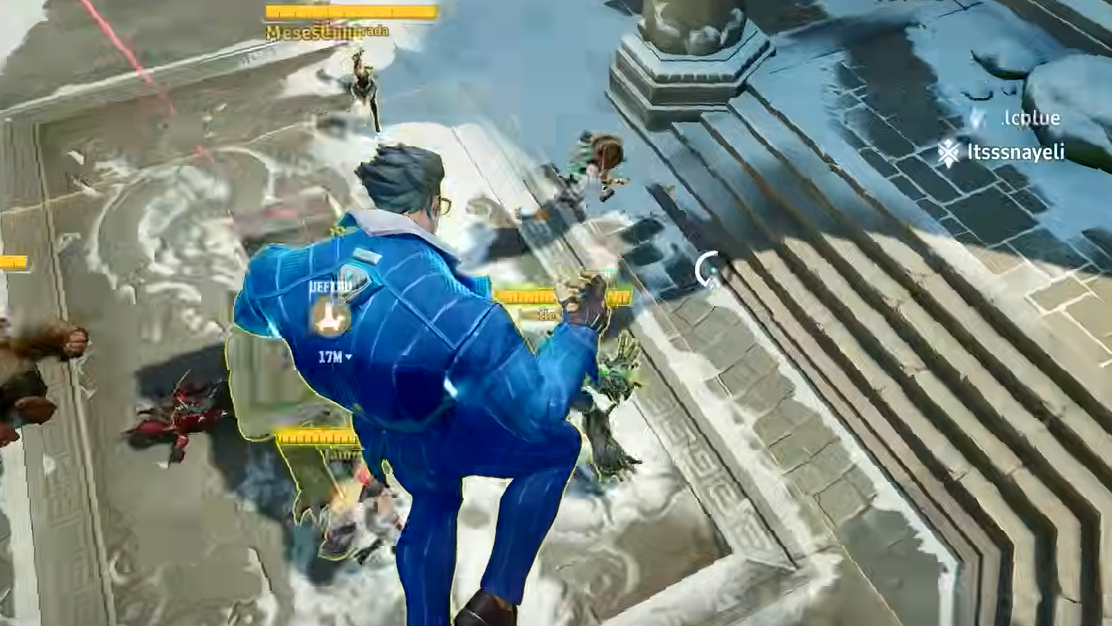
What counts as throwing in Marvel Rivals
Throwing refers to any deliberate action intended to cause your team to lose a match. In the context of bounty systems, the behavior is usually obvious and repetitive.
| Behavior | Example |
|---|---|
| Intentional feeding | Running into enemies repeatedly to die. |
| Malicious idling | Standing still or refusing to participate in fights. |
| Objective sabotage | Ignoring or actively avoiding the objective. |
| Deliberate trolling | Using abilities or positioning to disrupt teammates. |
These actions differ from normal poor performance. A player struggling in a match is not considered a thrower unless the loss is intentional.
Bounty throwing highlights a broader challenge for competitive online games: outside incentives can reshape player behavior inside the game itself. When rewards are attached to sabotage, the matchmaking system becomes vulnerable to manipulation — and even a small number of bad actors can disrupt thousands of matches.