
Status effects in Voidling Bound are conditions you apply to enemies during real-time fights, and enemies can apply some of them to you. They split into crowd-control effects that change what a target can do and elemental effects that deal damage over time. The current build of the Hatchery Games title runs on nine core status effects, with several extra elemental and movement conditions layered on top.
Quick answer: Use crowd control (Sleep, Stun, Slow, Fear, Float, Invisibility, Marked, Armor Reduction) to control the fight, and stack elemental effects (Bleed, Poison, Burn, Frostbite, Static, Disintegrate) for damage over time. On bosses, Stun is automatically replaced by Slow.
Crowd-control status effects in Voidling Bound
These effects control enemy behavior rather than deal direct damage. They are the tools you use to lock down threats, reposition, or set up burst windows.
| Status effect | What it does |
|---|---|
| Sleep | Leaves a target fully immobile until it takes any damage, which also wakes it up. The target cannot be damaged while asleep without ending the effect. |
| Stun | Stops the enemy from acting for the duration. It lasts a shorter time than Sleep, and the enemy can still take damage without the stun breaking. |
| Slow | Reduces enemy attack and movement speed, scaling with the number of stacks applied. Bosses that would be stunned are slowed instead. |
| Marked | Tags enemies so that specific marked perks trigger bonus effects when they hit a marked target. |
| Invisibility | Makes your voidling invisible to enemies so they stop targeting you. You can still be hit by attacks that are already in motion. |
| Fear | Forces enemies to run away from your voidling for the duration. |
| Float | Suspends enemies in the air for a few seconds before they drop back to the ground. |
| Armor Reduction | Lowers enemy defenses, increasing the damage they take from your follow-up attacks. |
The ninth effect, Lure, appears in the game’s data but currently has no defined function. Its mechanics have not been finalized, so it provides no functional benefit yet.
Elemental status effects and damage over time
When an ability inflicts an elemental status effect, the effect depends on the element of that ability. Most of these deal damage over time as they build stacks, while two of them store stacks toward a single large burst.
| Effect | Max stacks | Behavior |
|---|---|---|
| Bleed | 5 | Deals Neutral damage over time. It has the fastest tick, applying steady damage to the target. |
| Poison | 15 | Deals Organic damage over time. The per-tick damage is low, but it lasts longer than the others. |
| Burn | 5 | Deals Pyro damage over time. It hits hard but expires faster than other effects. |
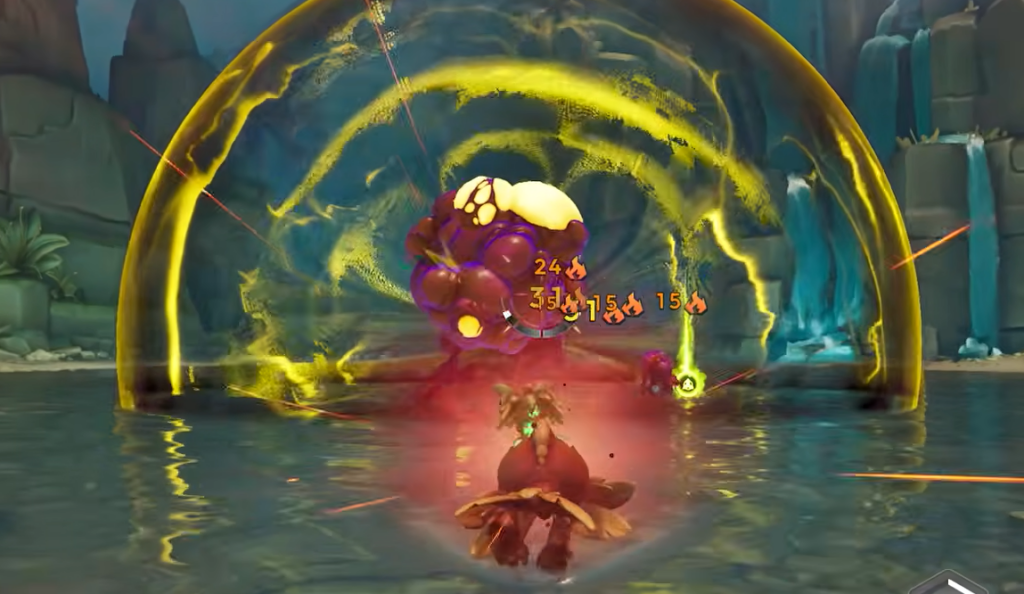
| Frostbite | 5 | Deals Cryo damage over time. At 5 stacks, every stack is removed and the target is stunned. |
| Static | 5 | Builds Cyber stacks. At 5 stacks, all stacks are consumed for a large burst of Cyber damage. |
| Disintegrate | 5 | Deals no damage over time. Every stack beyond 5 triggers a Plasma overflow for a large burst of damage. |
Frostbite, Static, and Disintegrate reward you for timing attacks around their thresholds. Reaching the cap on Frostbite locks the enemy down with a stun, while pushing Static and Disintegrate past their limits converts the stored stacks into heavy damage.
Movement status effects by element
Some abilities also inflict a movement status, and again the result is tied to the ability’s element. These overlap with the crowd-control list but are grouped by elemental source.
| Movement status | Element | Effect |
|---|---|---|
| Slow | Organic | Slows enemy attacks and movement. Bosses that would be stunned are slowed instead. |
| Fear | Pyro | Enemies flee from your voidling for the duration. |
| Frostbite Stun | Cryo | Stops the enemy from moving and attacking. |
| Lure | Cyber | Function not yet implemented. |
| Float | Plasma | Lifts struck enemies into the air for a few seconds before they fall. |
How status effect damage is calculated
Several elemental effects, including Burn and Poison, deal damage as a percentage of the target’s health on each tick. Because the value scales with the enemy, the same effect produces different numbers from fight to fight. A Burn that barely dents a small enemy can wear down a large one much faster, even with no change to your build.
This percentage model is the key thing to understand. Raw attack power does not raise a status tick the same way it raises a direct hit, because status damage follows its own rules on top of the standard damage calculation.

Status effect damage cap
The damage cap is the upper limit on how much a status effect can deal to a single target per tick. It exists to stop percentage-based damage from tearing through bosses. Without it, applying Burn or Poison to a high-health enemy would trivialize the fight. You can raise this ceiling by increasing the relevant attributes, which matters most against tanky enemies where you otherwise hit the limit on every tick. On weaker enemies, whose percentage health is already low, the cap rarely comes into play.
Status effect damage multiplier
Separate from the cap, the damage multiplier raises all status effect damage at once. The cap controls the maximum any single tick can reach, while the multiplier scales the output itself. The two work together, so lifting the multiplier pays off most once you have also raised the cap that would otherwise hold your ticks back.
| Mechanic | What it controls |
|---|---|
| Percentage-based ticks | Burn and Poison deal a share of the target’s health, so output varies by enemy. |
| Damage cap | The maximum a status effect can deal per target, stopping percentage damage from melting bosses. |
| Damage multiplier | Raises all status effect damage across the board. |
How attributes change status damage
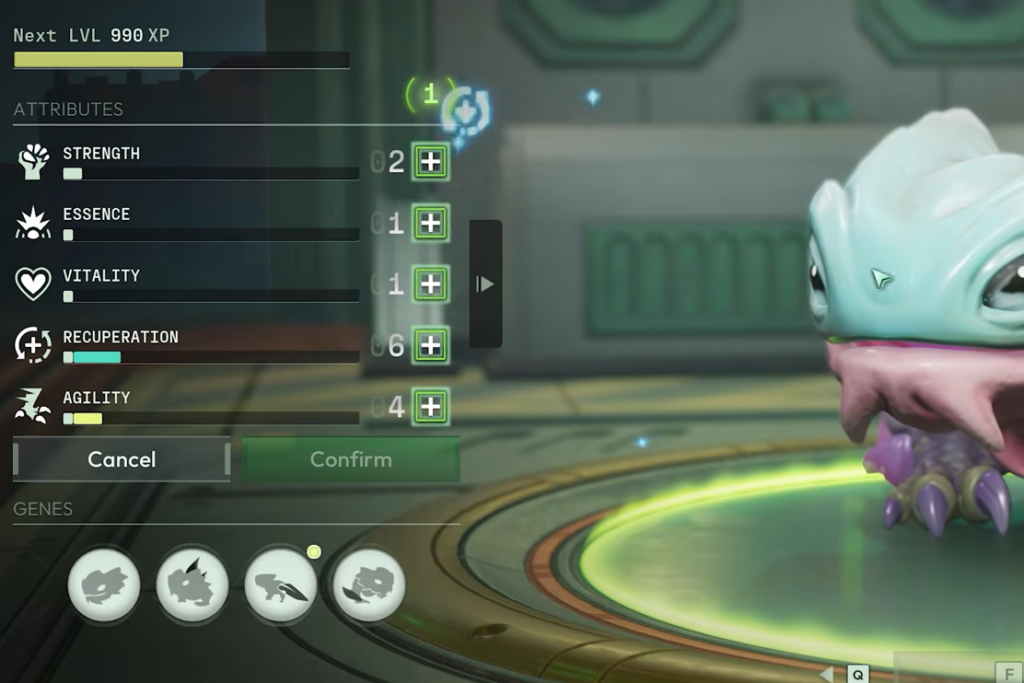
Attribute investment decides how hard your status effects hit. The most direct interaction raises the damage cap, letting Burn and Poison push past the ceiling they would otherwise meet on high-health targets.
- Essence increases all damage dealt to enemies weak to your element, and because Mutated Perks scale with that bonus, their damage rises with Essence too.
- Strength feeds the wider damage system, applying to ranged and melee abilities along with neutral and elemental damage.
- Elemental damage bonus is additive specifically when you hit a target weak to your element, so matchups stack on top of your base output.
If your Burn or Poison ticks look inconsistent, the percentage model is almost always the reason. A tick can land low either because you are striking the damage cap on a tough target, which flattens each tick to its limit, or because the enemy’s health pool is small enough that a percentage of it is not much. Lifting the cap through attributes solves the first case, and the multiplier helps in both.
Boss interactions to plan around
Bosses change how some effects behave. Stun is automatically converted to Slow on boss targets, so you cannot lock down a high-health boss indefinitely. That design pushes you to adapt loadouts instead of leaning on a single crowd-control trick. Pair Armor Reduction with elemental damage, build into the cap and the multiplier, and match elemental weaknesses with Essence, and effects like Burn and Poison become steady pressure against the bosses they were tuned around.