The Open Air Aviary is a powered flying enclosure added in the Rebirth Expansion for Jurassic World Evolution 3. It swaps the closed dome of the standard aviary for an invisible electromagnetic field, giving your flying reptiles a taller space to climb, soar, and dive while staying contained.
Quick answer: Open the Enclosures menu, pick the Open Air Aviary, place it on flat ground away from deep water, and keep it inside a powered generator’s range. Without power, the field drops and flying reptiles escape.
What the Open Air Aviary does differently
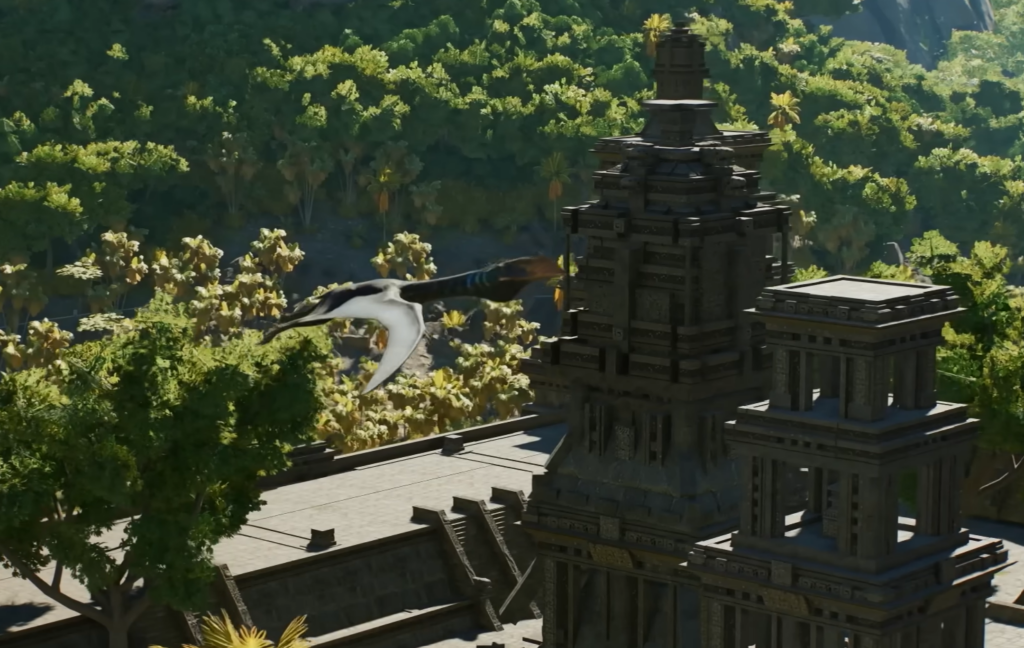
The structure works like a normal aviary in most respects, but it uses an electromagnetic field instead of a physical dome to hold animals in. That field lets flyers reach a much greater height before they are turned back, which keeps them from getting restless, bored, or destructive inside the habitat.
The open design also removes the visual obstruction of the dome, so guests and you can see the reptiles clearly from a distance. The enclosure snaps together on a hexagonal grid, and you add more circular aviary pieces to grow it, exactly as you would expand a domed aviary.
| Feature | Standard Aviary | Open Air Aviary |
|---|---|---|
| Containment | Physical dome | Electromagnetic field |
| Flying height | Limited by dome | Much taller, with expanded terrain editing |
| Power | Not required for containment | Required, or flyers escape |
| Visibility | Blocked by dome | Clear view of reptiles |
Requirements and placement limits
The enclosure draws power from your network, so it must sit in range of a powered generator. In the Top Secret Campaign on Île Saint-Hubert, that means a Geothermal Generator connected to a Geothermal Supply pipe. Lose the power feed and the field fails, letting your flying reptiles loose into the rest of the facility.
Placement is also restricted by terrain. You cannot build the aviary over deep water or across uneven ground such as rocky cliffs. Beyond that, you can make the footprint as large or as small as you want, as long as the flyers inside have enough room.
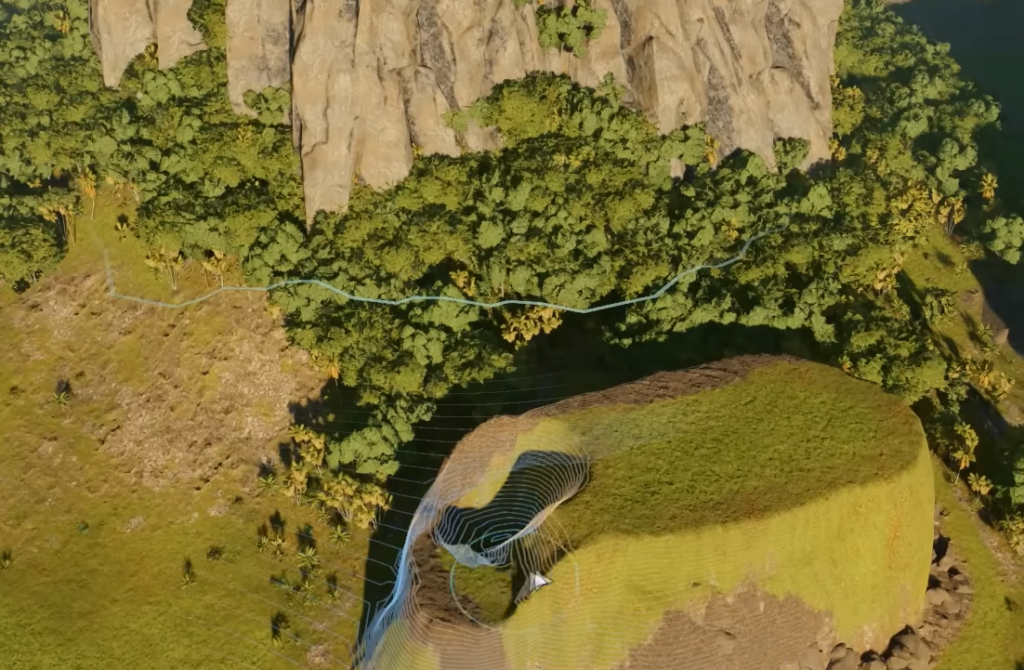
How to build an Open Air Aviary
You will know the build succeeded when the enclosure stays powered and your flying reptiles circle inside without breaching the boundary. If they fly out into the park, the most common cause is a power gap, so check the nearest supply for unused power and reconnect the generator.
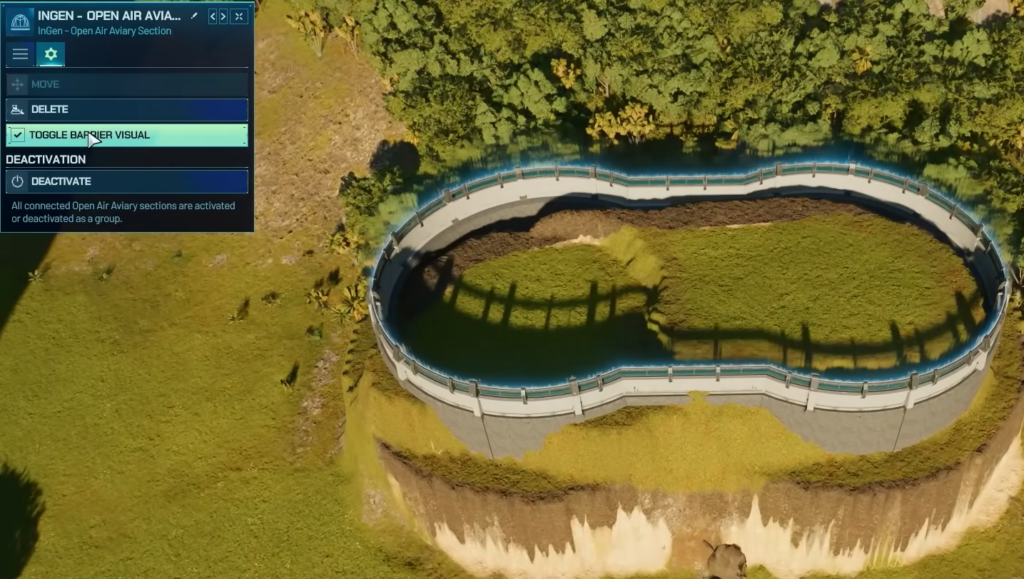
Stocking and decorating the aviary
A bigger aviary holds more animals, and mixing compatible flying reptiles adds color and movement to the habitat. Two combinations work well together for variety.
- Geosternbergia, Pteranodon, and Tropeognathus
- Quetzalcoatlus, Dimorphodon, Tapejara, and Caiuajara
The open layout gives you more room to design viewing options. Viewing Platforms, Aviary Viewing Galleries, and Balloon Tours all give guests a wide line of sight across the habitat and the flyers inside it.
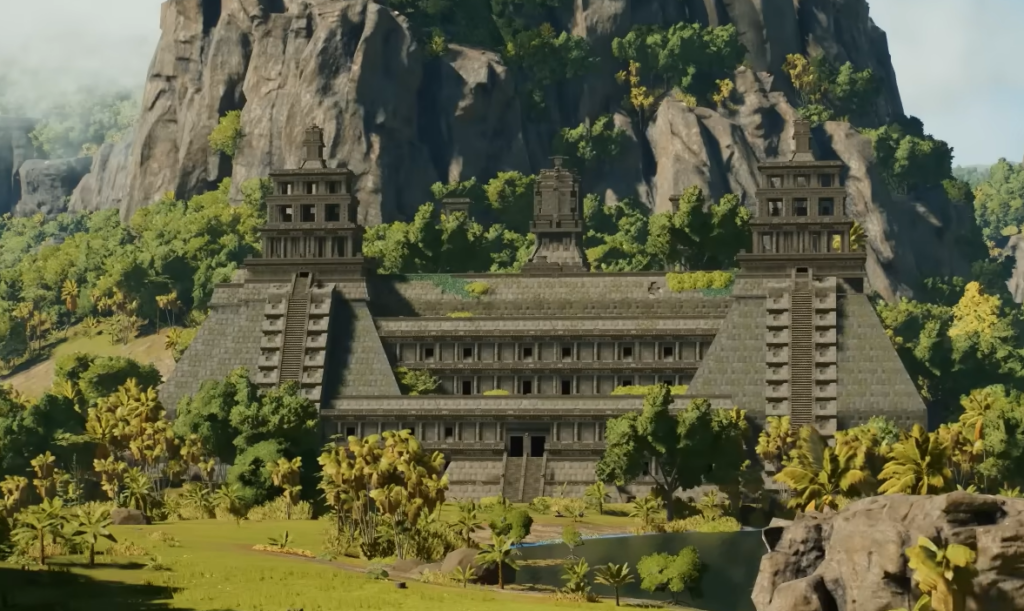
For scenery, you can attach rocky pieces to the outer walls so stone replaces the man-made edges and the structure blends into the landscape. Inside, raise the terrain into tall hills or high platforms, and combine added height with deep water to create waterfalls. That kind of vertical, flowing layout is something the closed dome aviary could not easily support.
Treat power as the one non-negotiable part of the build. Once the enclosure is fed by a reliable generator, the Open Air Aviary becomes one of the most flexible display spaces on Île Saint-Hubert, letting your flying reptiles use the full height of the habitat while staying safely contained.