Markus “Notch” Persson has publicly rebuked the Entertainment Software Association after one of its lobbyists told California lawmakers that private and community-run Minecraft servers are “illegal.” The comment came during a hearing on a game preservation bill, and it landed badly with a community that has been hosting its own servers for close to two decades. Notch, who sold Minecraft to Microsoft years ago, called the move “incredibly scummy” and said watching his old work get cited against players felt “borderline evil.”
Quick answer: Private Minecraft servers are not illegal. Mojang distributes official server software for free, and you can download the Java Edition server file right now from Minecraft’s official server download page. The ESA’s “illegal” and “piracy” framing was a characterization made by a lobbyist during a legislative hearing, not a legal ruling.
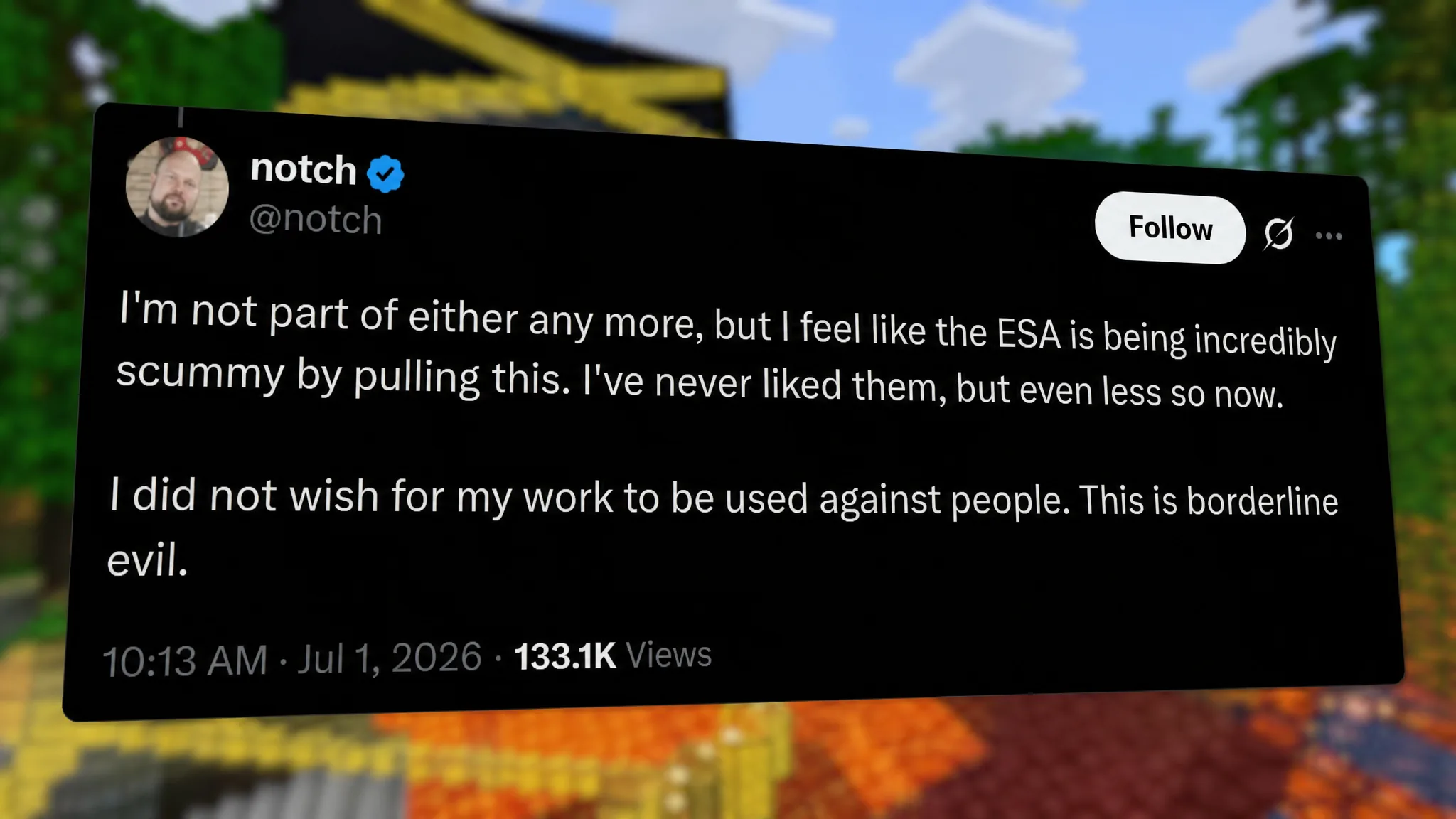
What Notch said about the ESA
Asked on X for his take on the ESA’s comments, Notch made clear he no longer has any stake in either Minecraft or the association, then went after the group anyway. “I’m not part of either any more, but I feel like the ESA is being incredibly scummy by pulling this,” he wrote. “I’ve never liked them, but even less so now.”
He followed up with a sharper line about the game he built being turned against the people who play it. “I did not wish for my work to be used against people. This is borderline evil,” he said. The reaction from players echoed his frustration, with some posting that they wished he had never sold Minecraft at all.
What the ESA lobbyist actually claimed
The remarks came from Jennifer Gibbons, the ESA’s vice president for state government affairs, during a California State Senate hearing on the Protect Our Games Act (AB 1921). California assemblymember Chris Ward, who introduced the bill, pointed out that community servers already keep games running. “Minecraft is currently hosted by community servers, Call of Duty [has] community servers, so it’s an option that is out there, in existence here today,” he said.
Gibbons cut in. “They’re illegal. They are not in any way affiliated with Microsoft,” she said, adding that “Microsoft, for Minecraft, has gotten a lot of criticism because of those community servers not employing the same safety standards that Microsoft does on their Minecraft servers.” When state senator Caroline Menjivar asked whether this was “like the black market of videogames,” Gibbons replied, “Yes. In fact, we consider it piracy. We have lawsuits, two pending lawsuits, against private servers right now.”
She also pointed to the US Trade Representative’s Notorious Markets Report, which she said has named some large private servers as notorious markets for intellectual property infringement.
Why the “illegal” label doesn’t hold up for Minecraft
Minecraft was designed with community-hosted servers in mind, and Mojang has always shipped the tools to run one. The server software is free to download from the official Minecraft site, and Minecraft’s own help pages walk players through joining servers. Community and private servers have been a core part of the game for most of its life.
The USTR reference also doesn’t map onto ordinary Minecraft servers. The Notorious Markets Report has flagged specific private servers before, but for a different reason. The 2018 report cited Warmane and Firestorm, sites that let people play World of Warcraft without paying Blizzard’s subscription. That is a different situation from a private Minecraft world you run with friends or a community server keeping an old Call of Duty playable.
| Claim in the hearing | Reality |
|---|---|
| Private Minecraft servers are “illegal” | Mojang distributes official server software for free; running your own server is a supported feature |
| They are “not in any way affiliated with Microsoft” | Microsoft/Mojang provide the server tools and instructions on the official website |
| USTR named private servers as piracy | The USTR flagged servers like Warmane and Firestorm that offered paid games (World of Warcraft) without a subscription, not community servers for games that support them |
The bill behind the fight: AB 1921
The Protect Our Games Act is California’s Stop Killing Games-endorsed bill, meant to require publishers to give players a way to keep playing games after their online services shut down. Part of the bill’s argument is that community and private servers already serve as a practical way to keep otherwise defunct games alive. The ESA has consistently pushed back against the measure.
The bill did not clear this stage of the legislative process. It drew four aye votes, three noes, and four abstentions, short of the majority it needed to advance. It has, however, been granted a reconsideration, so it is not dead yet.
A Stop Killing Games volunteer argued that the ESA’s statements were “designed to scare a busy legislator who does not have time to fact-check a well-dressed lobbyist in real time.” They said the campaign plans to return with in-person lobbying, bring developers and players into future hearings, and introduce similar bills in other states and potentially at the federal level.
The ESA’s follow-up statement
After the clip went viral, the ESA issued a clarification. The group said the representative was answering a multi-part question in which the committee used “community server” and “private server” interchangeably. Its narrower position is that “Private servers that host or distribute copyrighted game content without authorization infringe on the intellectual property (IP) rights of game publishers,” and that publishers reserve the right to act against infringement.
On the bill itself, the ESA said the provision treating these servers as a legitimate alternative “raises concerns about a publisher’s ability to enforce their IP rights.” It also argued that private servers “operate with no oversight from the publisher and do not uphold the same trust and safety standards,” which it framed as a potential safety risk for players.
Even with the clarification, the core distinction is what stuck with players. Hosting a private Minecraft world using Mojang’s own software is a legitimate, supported activity, and calling that piracy blurs it together with servers that hand out paid games for free. Neither Minecraft nor Mojang has commented, and some players are now asking Microsoft to state plainly where it stands on the community servers it has quietly supported all along.