

Spider-Man: Brand New Day never says Tony Stark’s name, yet his fingerprints are all over its central conflict. The Department of Damage Control, now a menacing arm of the U.S. government that experiments on people with powers, was founded with Stark’s help after the Battle of New York. What began as a cleanup crew has curdled into something closer to a threat, and the fourth Tom Holland Spider-Man film makes that shift impossible to ignore.
Quick answer: Tony Stark co-created the Department of Damage Control (DODC) in Spider-Man: Homecoming to manage the wreckage left by superhero battles. In Brand New Day, that same agency, led by corrupt director Bill Metzger, kidnaps and experiments on enhanced people, turning Stark’s well-meaning project into a weapon against the heroes he inspired.
Tony Stark created the Department of Damage Control
The origin is easy to forget because it is buried in a single news broadcast. In the opening flashback of Spider-Man: Homecoming, a TV report explains that Stark worked with the government in the aftermath of the Battle of New York to establish the Department of Damage Control. Its first job was literal cleanup, clearing the structural and urban damage caused by superhero-versus-supervillain fights.
That mission had immediate human cost. The new agency put Adrian Toomes out of work, setting him on the path to becoming the Vulture. Stark’s motive fit his character. Avengers: Age of Ultron spent much of its runtime on his guilt over the destruction the team leaves in its wake, so it tracks that he would want a body dedicated to fixing it.
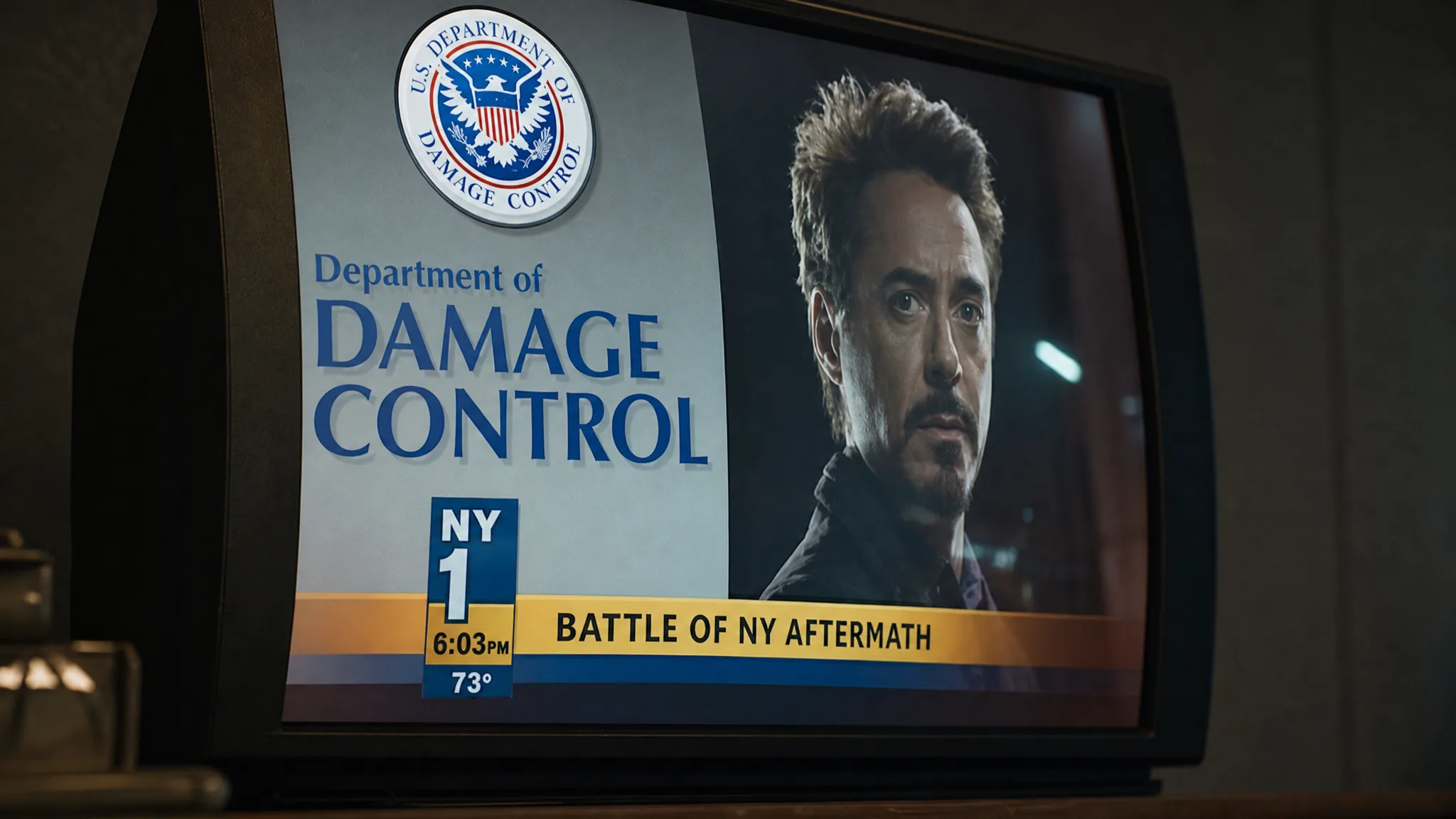
How Damage Control turned against heroes
Without Stark around to define its limits, the agency’s remit kept expanding. As superhero activity multiplied across the Multiverse Saga, the DODC drifted from cleanup into surveillance, arrests, and outright entrapment. Brand New Day is the fifth Multiverse Saga project to feature the department, and by now it functions less like a public service and more like an adversary.
| Project | What Damage Control does |
|---|---|
| Spider-Man: No Way Home | Arrests Peter Parker after Mysterio frames him |
| Ms. Marvel | Pursues Kamala Khan, who narrowly avoids becoming a target |
| She-Hulk: Attorney at Law | Appears as part of the wider legal and enforcement backdrop |
| Wonder Man | Agent Cleary runs a scheme to expose Simon Williams’ powers |
| Spider-Man: Brand New Day | Director Bill Metzger experiments on and kills enhanced people |
For a while, Agent Cleary was the face of the agency’s overreach, and you could argue he was a rogue operator rather than a symptom of something institutional. Brand New Day removes that comfort. The film’s director of Damage Control, Bill Metzger, makes Cleary look restrained by comparison.
Bill Metzger and the corruption in Brand New Day
Metzger, played by Tramell Tillman, first reads as a reliable ally when Peter meets him. That impression does not last. Sadie Sink’s Jean Grey looks like the film’s villain, but Peter learns she is taking revenge on the department after Metzger kidnapped her sister Sara, experimented on her to extract her telepathic abilities, and ultimately killed her.
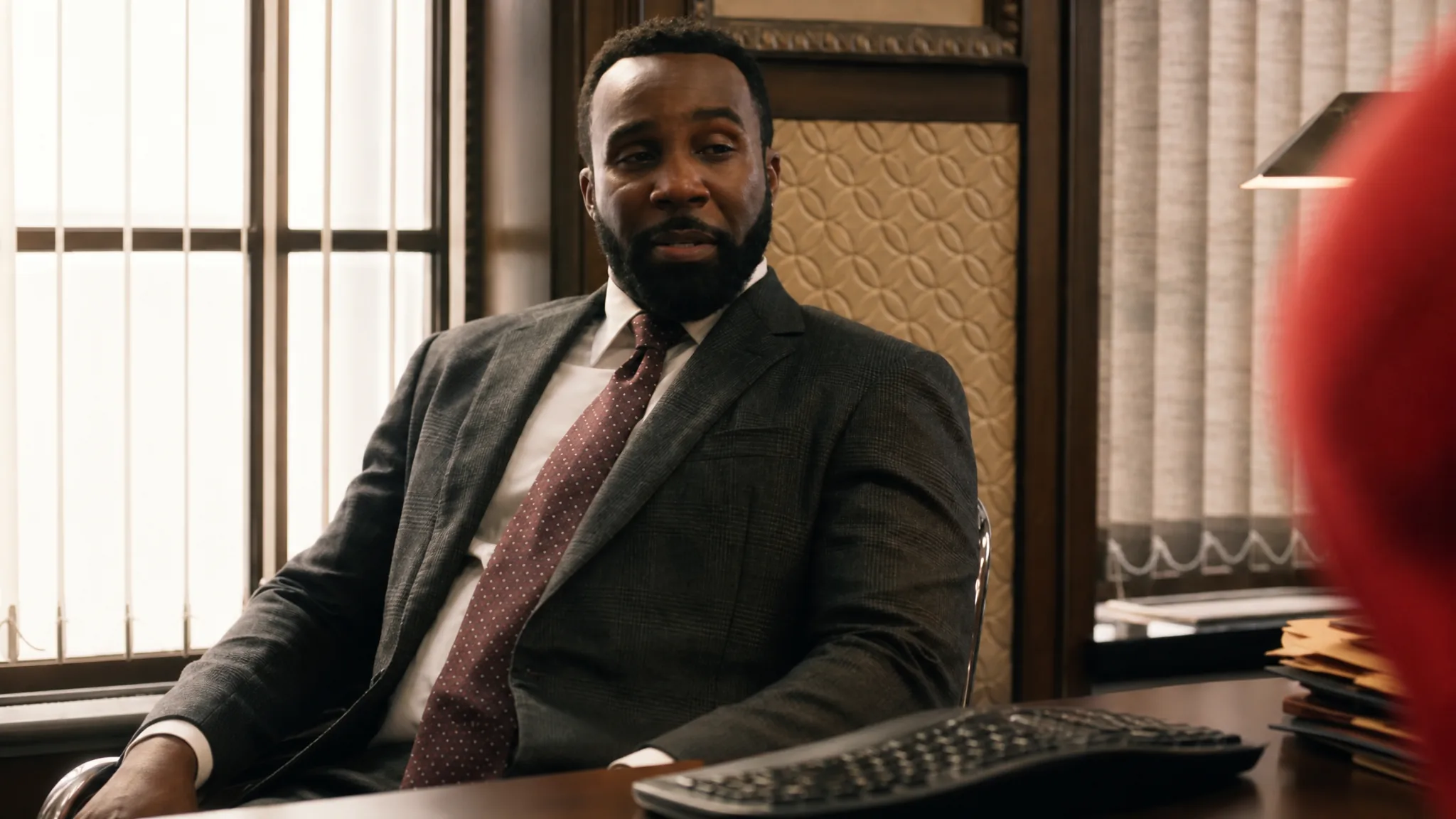
Metzger is arrested by the end of the film, and a more moderate replacement is implied. Even so, the agency is unlikely to shrink back into a simple cleanup role. Government distrust of enhanced people has only hardened since the Sokovia Accords were signed and then broken in Captain America: Civil War, which suggests figures like Metzger and Cleary reflect the department’s culture rather than exceptions to it.
Note: In the comics, William Metzger has no link to Damage Control. He is a minor X-Men antagonist who leads an anti-mutant militia quietly backed by the FBI, which makes his placement here a deliberate signal about where the MCU is heading.
Peter Parker’s inhibitor and the weapon Damage Control keeps
The other thread that outlives the credits comes from Peter himself. As his spider DNA begins overriding his human biology, his senses sharpen, his strength climbs, and he starts producing organic webbing. Alarmed by the change, he seeks out Bruce Banner, whose own inhibitor uses siRNA to suppress the Hulk.
Banner warns him that a device capable of stripping someone’s powers carries serious risks. Peter builds it anyway, first to stabilize himself, then a second version to shut down Jean Grey’s abilities long enough to detain her. The problem is what happens next. Damage Control gets extended access to the technology and modifies it to switch Jean’s powers on and off at will.
Metzger escapes with knowledge of how the inhibitor works. In the comics, that kind of hardware is the basis for the power-dampening collars seen in Days of Future Past, tools used to neutralize mutants. Peter, trying to fix a problem inside his own body, may have handed an anti-mutant institution its most effective weapon. It is his own version of a technology built with good intentions that turns dangerous in the wrong hands.
What this means for the X-Men and Tony Stark’s legacy
Damage Control has now gone after two young mutants, Kamala Khan and Jean Grey. With the MCU’s mutant population set to grow ahead of Marvel’s X-Men reboot, an agency built to contain superhuman collateral damage is well positioned to become a persistent obstacle for Professor X and his students. It is not hard to imagine this version of Damage Control eventually building the Sentinels.
That is the uncomfortable knot at the center of the film. Iron Man’s sacrifice against Thanos remains the MCU’s defining act of heroism, yet Doctor Doom now wears Stark’s face behind a mask, and one of Stark’s own institutions has become a danger to the heroes who followed him. He named his AI EDITH after the line “Even Dead, I’m The Hero.” If Damage Control keeps pointing his ideas at the people he inspired, that legacy grows harder to defend with every new operation.