Apple rebuilt Apple Intelligence around a new set of foundation models developed with Google, using the technology behind the Gemini family. The overhaul, shown at WWDC 2026, replaces Apple’s earlier model stack with co-developed Apple Foundation Models that the company says run both on your device and on its Private Cloud Compute servers when a request needs more power.
Quick answer: The next generation of Apple Foundation Models is based on Google’s Gemini models and cloud technology. The models add image understanding and generation, on-device and cloud processing through Private Cloud Compute, and a new system orchestrator that picks the right tool for your current app and task.
What changed in the Apple Intelligence architecture
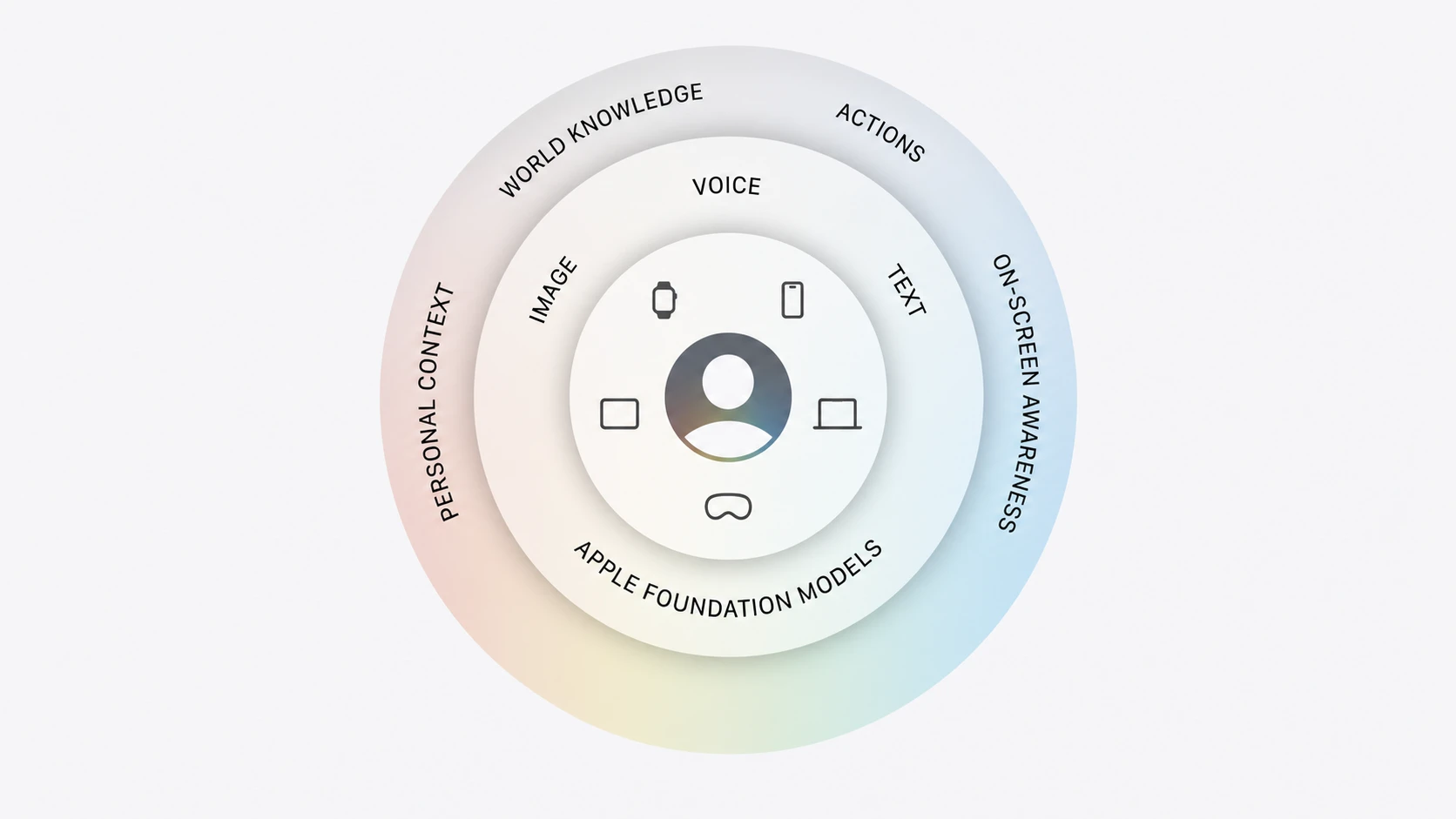
The center of the new system is a set of Apple Foundation Models co-developed with Google. Apple calls the collaboration a “deep” one and describes the result as a “huge upgrade” for Apple Intelligence, with stronger understanding and reasoning and full multimodal support. The models are adapted to run on-device and on Apple’s servers, so simpler requests stay local while heavier requests move to the cloud.
This is the consumer-facing result of a multi-year deal between the two companies. In their joint statement, Apple and Google said the next generation of Apple Foundation Models would be based on Google’s Gemini models and cloud technology, and that Apple “determined that Google’s technology provides the most capable foundation for Apple Foundation Models.” Apple evaluated other providers, including OpenAI and Anthropic, before choosing Google.
New capabilities the models support
The upgraded models are multimodal, meaning they work with text and images together. They can read images and create them, which opens up several new uses across Apple’s apps.
| Capability | What it does |
|---|---|
| Image creation | Generates realistic images from text descriptions. |
| Photo editing | Edits photos with new AI tools. |
| Visual question answering | Identifies objects, summarizes what a picture shows, and finds specific details. |
| Advanced text tasks | Handles more complex understanding and reasoning across written content. |
Some devices will receive a higher-power version of the model with extra capabilities, including more natural-sounding speech generation, more accurate dictation, and stronger handling of complex language and requests. Apple did not say which iPhones, iPads, or Macs qualify for this version.
The system orchestrator
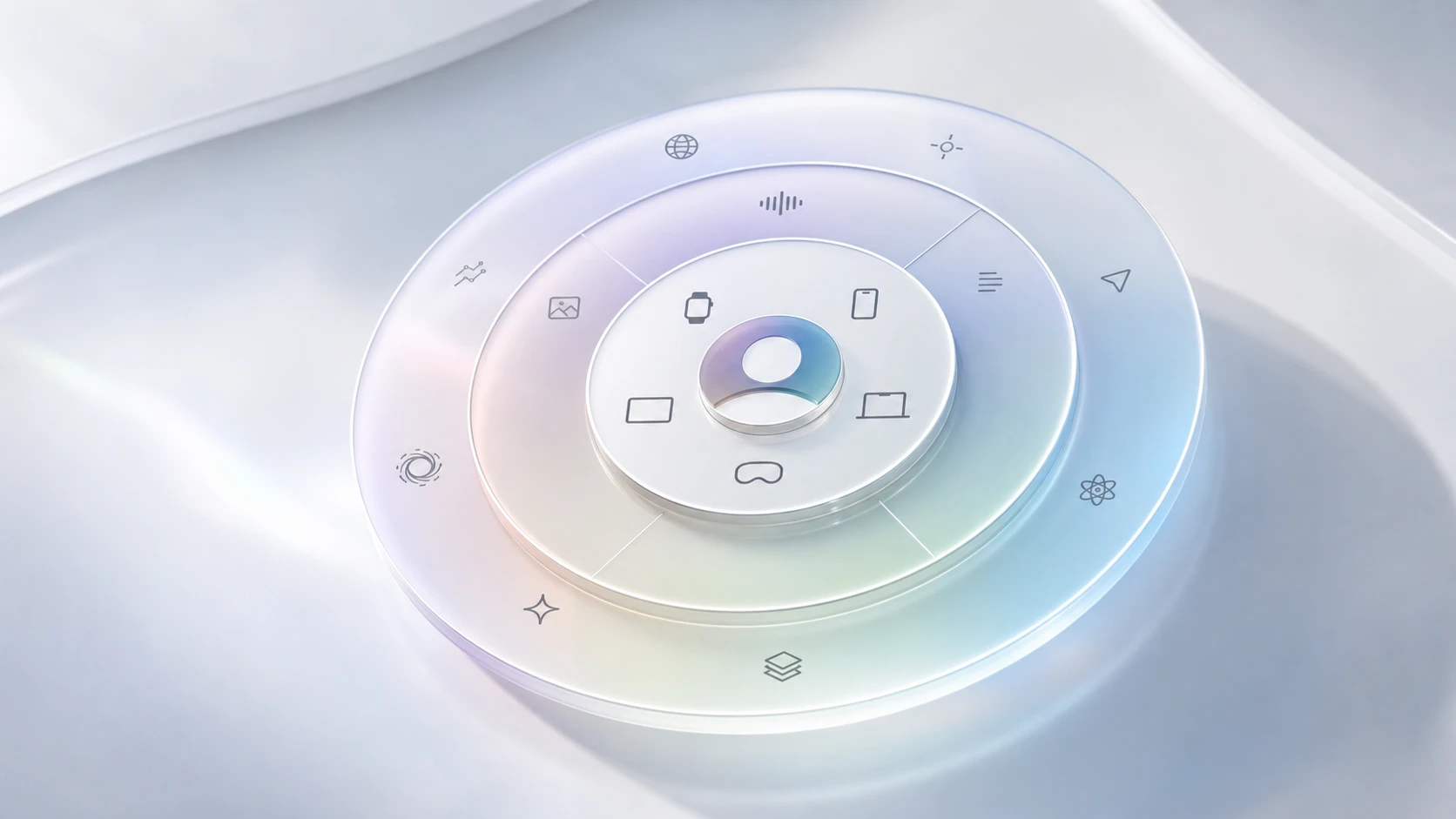
A new system orchestrator sits at the middle of the architecture and acts as a central coordinator for Apple Intelligence features. It knows which app you are in and what task you are working on, then decides which model or tool to use.
In practice, that means the suggestions change with context. Reading an email, editing a photo, or planning something in Calendar each produces different, more relevant help, because the orchestrator routes the request to the right place. Apple frames this as system-wide intelligence rather than a single feature bolted onto individual apps.
On-device processing, Private Cloud Compute, and privacy
Apple is keeping its existing privacy structure. Apple Intelligence continues to run on Apple devices and through Private Cloud Compute, the system Apple introduced in 2024 for handling requests that need server-side computing. Apple says user data is only used to carry out the immediate request and is not accessible to Apple or third parties, and that outside experts can verify those guarantees at any time.
The cloud side runs on Google’s infrastructure as part of the agreement. For the most advanced requests, Apple uses Google servers built on Nvidia’s Blackwell B200 data center chips, with Nvidia’s confidential computing feature encrypting data while it is processed. Apple tried to run the new Siri model on its own Private Cloud Compute hardware first, but the model ran too slowly in testing, which pushed the heavier workloads to Google’s servers.
Note: Apple contrasted its approach with competitors it described as “racing forward” without regard for users, reiterating that on-device processing and Private Cloud Compute remain the foundation of the system.
The Apple–Google deal terms
The architecture is the product of a partnership announced earlier in the year. The key terms are below.
| Term | Detail |
|---|---|
| Structure | Multi-year and non-exclusive. |
| Foundation | Apple Foundation Models based on Google’s Gemini models and cloud technology. |
| Reported cost | About $1 billion annually for access to Google’s AI technology (not officially confirmed). |
| Model scale | Gemini’s roughly 1.2-trillion-parameter model, far larger than Apple’s earlier on-device foundation model. |
| OpenAI relationship | Unchanged; ChatGPT remains an optional integration for complex queries. |
Because the deal is non-exclusive, Apple keeps the option to work with other providers later. That flexibility also matters against the backdrop of antitrust pressure on Google, where a December 2025 ruling limited exclusive default agreements between the two companies.
What it means for Siri
Siri is the most visible reason for the change. The more personalized Siri Apple promised at WWDC 2024, with personal context awareness, on-screen intelligence, and in-app actions, slipped repeatedly through 2025. The Gemini-based models are meant to deliver the contextual understanding and reasoning those features require.
From your side, the experience is designed to still feel like Apple. The interface, privacy protections, and ecosystem integration stay the same, and Google’s models work behind the scenes rather than as a visible Gemini app. The real test will be whether the upgraded Siri finally handles complex, multi-step requests reliably across Apple’s devices.