

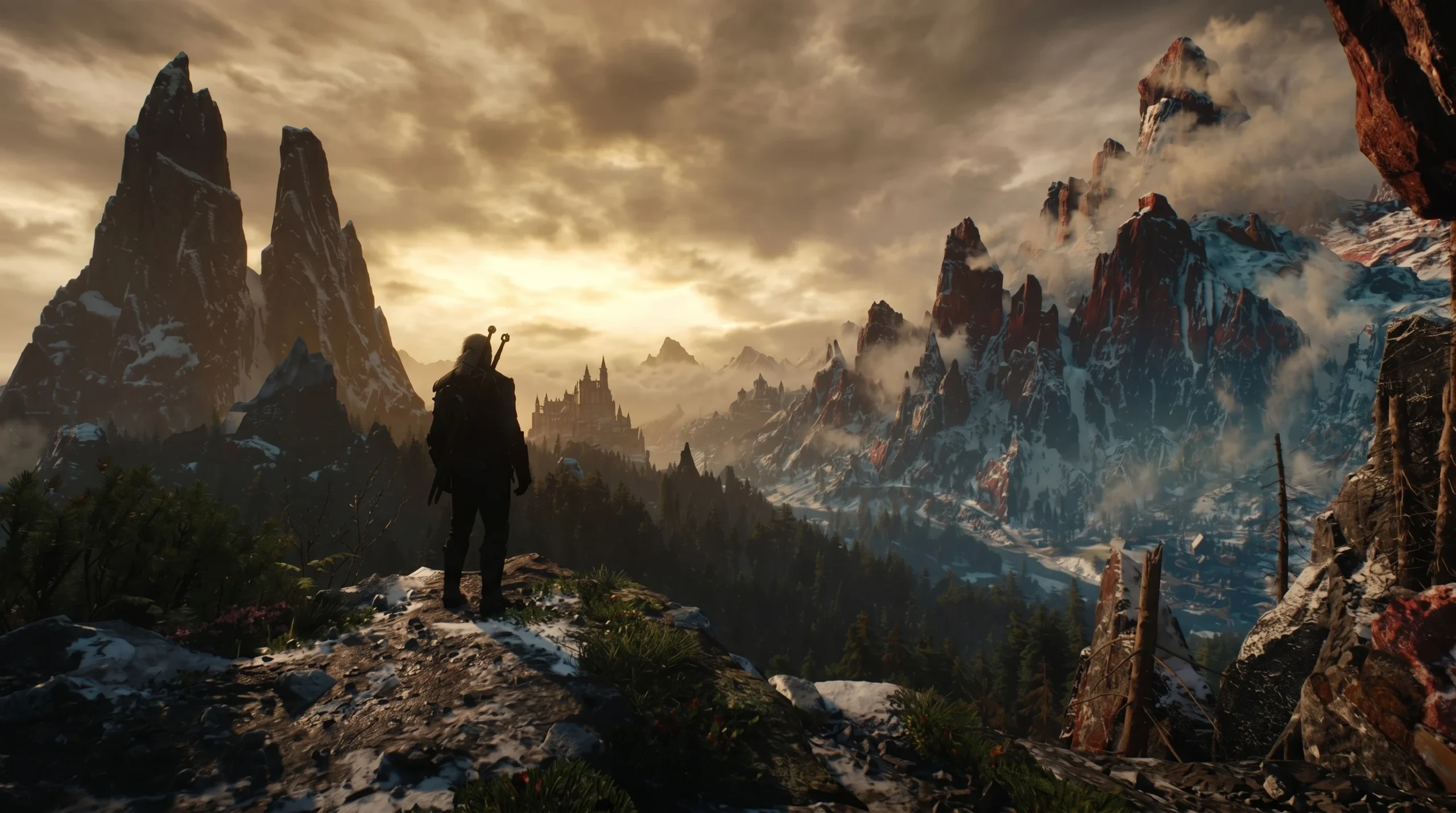
Michał Nowakowski, co-CEO of CD Projekt Red, says video games built entirely by AI are coming, and he isn’t convinced that should be the direction the industry takes. Speaking during an Unreal Engine panel, the executive recounted a conversation with the founder of an AI-based studio who claimed the technology can already produce finished games on a timeline measured in weeks rather than years.
Quick answer: Nowakowski believes fully AI-generated games are unavoidable and likely close to release, but he publicly doubts whether building games this way “is really the path to follow.”
What Nowakowski said about AI-generated games
The comments came in an interview tied to Edge’s Knowledge newsletter. Nowakowski described meeting someone who runs an AI-focused gaming studio and laid out exactly what that founder claimed was possible.
According to that pitch, the studio could generate 40 prototypes within a week, narrow them down to five it considered the strongest, and then ship one of those as a full release shortly after. As the founder put it to Nowakowski, “Two weeks from now I can have five games that I chose are going to be the best and, three weeks from now, I’m actually launching a game.”
Nowakowski’s response was measured. “Maybe that’s going to be successful, but I have some doubts whether this is really the path to follow,” he said. He acknowledged the speed is real and the output might even be decent, but he stopped short of endorsing it as the future of game development.
Why the speed pitch worries developers
Large games keep getting more expensive and slower to build, which makes AI tooling look attractive to publishers chasing lower budgets and faster releases. Engine makers like Epic Games are folding more AI features directly into Unreal Engine, and Unity is pushing its own initiatives, lowering the barrier to stitching together assets, dialogue, and systems at scale.
The problem Nowakowski points to is that speed and artistry are not the same thing. When the main metric becomes how many products you can ship in a month, the incentive shifts toward standardizing and repeating rather than inventing. Rapid AI prototyping tends to pull ideas toward the average of everything the model has already seen, not toward something fresh.
That limitation is structural. A large language model aggregates and averages out what it was trained on. It can produce a reliable baseline, such as plausible quest structures, consistent NPC dialogue, and landscapes that look right at a glance, but it does not originate culture or invent new ideas by design.
Where AI fits, according to Nowakowski’s view
The argument isn’t that AI has no place in development. It’s useful for cutting down rudimentary technical work, automating boilerplate code, generating placeholder art, and iterating on systems quickly. The clearest application is speeding up tasks that have already been solved for years, not replacing the creative decisions that make a game memorable.
Nowakowski also framed the real challenge as distribution rather than production. With so many titles released every year, the competition for player attention has grown harder than ever. He argued that the method of delivering content matters less than the ideas behind it.
If you have a fresh idea, with soul and potential, then you have a real chance of success.
He added that studios staying compact and lean, with a clear sense of their audience, are in the strongest position regardless of how fast technology lets them build. He also expects consoles to remain a fixture rather than disappear anytime soon.
How this lines up with CD Projekt Red’s projects
The skepticism fits the studio’s track record of handcrafted, narrative-heavy worlds. Games such as The Witcher 3 were built without AI involvement and remain the kind of experience that depends on human writing, direction, and player choice.
| Project | Status |
|---|---|
| The Witcher 4 | In development |
| New Cyberpunk | In development |
| The Witcher 3: Wild Hunt – Songs of the Past | Expansion with Fool’s Theory, planned for 2027 |
The short version: is that Nowakowski sees fully AI-made games arriving, possibly soon, and he won’t deny they might find some success. His doubt is about whether trading distinct creative voices for speed and scale produces games worth playing, and that question is now sitting at the center of the industry’s AI debate.