Firaxis has rolled out the next round of changes for Civilization VII on the heels of the Test of Time overhaul. Update 1.4.1 went live on June 23, 2026 across all platforms, and it brings back hotseat local multiplayer, adds a fresh Archipelago map type, and reworks how Happiness, governments, and celebrations interact. It also arrives next to the paid Brush and Blade Collection DLC.
Quick answer: Install update 1.4.1, then start a new game to use hotseat multiplayer (everyone takes turns on one device), the new Voronoi-generated Archipelago map, the five-stage Happiness system, and the revised government bonuses. The Brush and Blade Collection is a separate purchase priced at $29.99 / £24.99.
Hotseat local multiplayer returns
The headline addition for many longtime players is hotseat multiplayer, a local mode where more than one human plays on the same machine. Each person makes their moves when their turn comes around, then hands the controls to the next player. It is the classic “Civ as a board game” setup, with everyone gathered around a single PC.
This mode had been absent at launch, when Civ 7 supported LAN play on PC and local wireless on Nintendo Switch but not hotseat. Firaxis previously listed hotseat among the community-requested features it intended to add as free updates, and an early build surfaced during a Firaxis Feature Workshop round before this release.
New Archipelago map type (Voronoi generation)
Update 1.4.1 introduces a redesigned Archipelago map that uses the game’s new Voronoi map generation technology. It places two regions of archipelagos at random, with scattered distant lands across the rest of the map. The stated goal is less repetition, more randomness, and a more organic feel compared to the older layout.
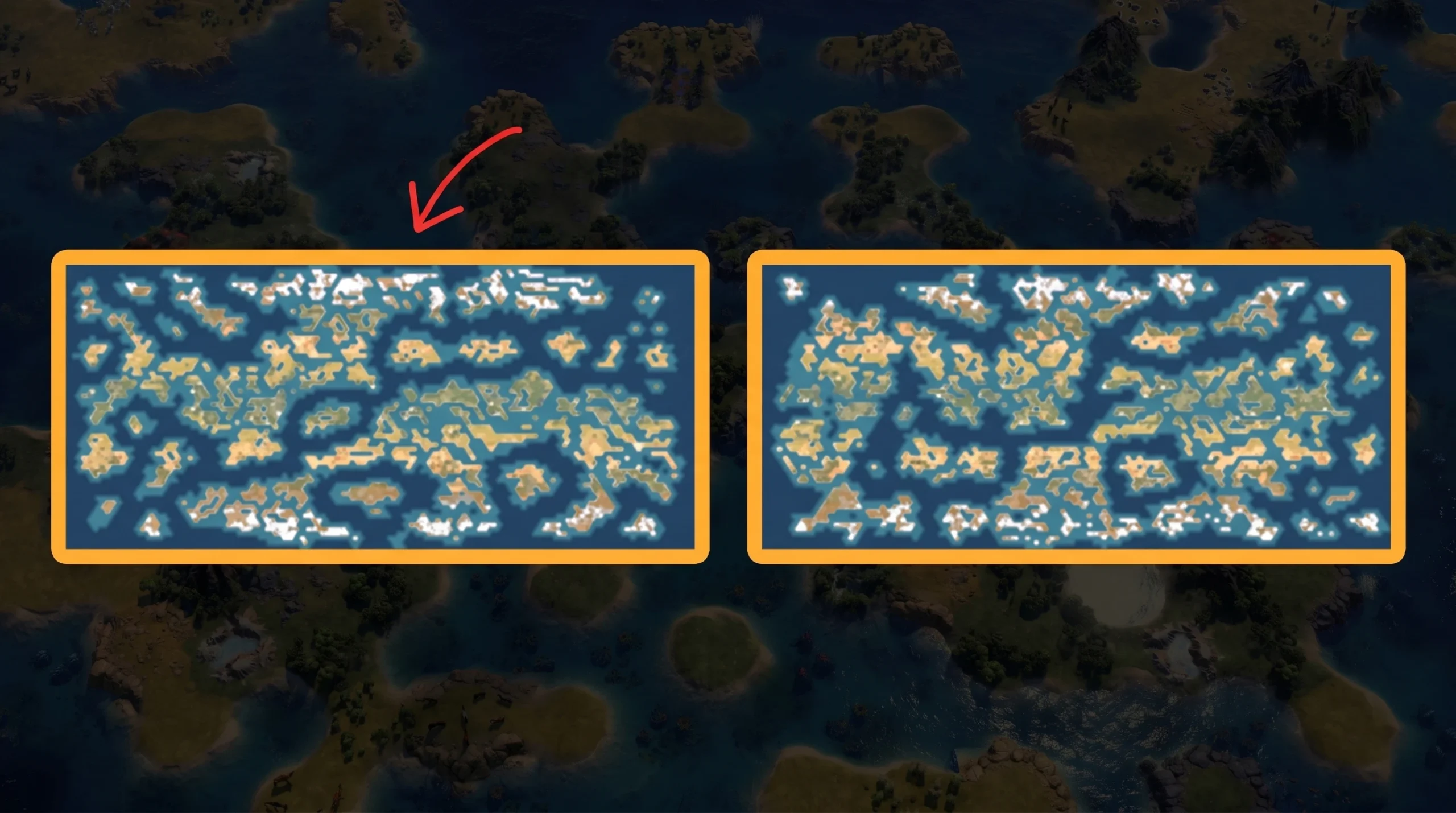
The previous Archipelago map has not been removed. It now appears in the map list under a new name, Archipelago Hemispheres, which keeps its distinctive east-west split intact for players who prefer it.
Happiness now uses five stages
Happiness moves away from a simple yes/no measure and back toward the more layered system seen in earlier entries. Cities can now sit in one of five distinct moods at any time, ranging from angry up to ecstatic, with the current state shown through emoji so you can read a settlement’s status at a glance.
The system gets tougher to manage over time, because your population expects more as the ages advance. That makes keeping settlements content a longer-term concern rather than a flat target, and it feeds directly into the government changes described below.
Government and celebration changes
Governments now carry more weight. Each system of rule offers a passive bonus tied to how many of your settlements are happy and how high they sit on the Happiness scale. The bonus becomes active immediately when you adopt that government, and switching to a government type also grants a couple of exclusive traditions, such as extra settlement Happiness near wonders or extra Culture from great works.
Celebrations have been retuned as well. They now last six turns instead of ten, and they are harder to trigger because they were previously too easy to activate. In exchange, the themed bonus tied to your government’s identity is meant to be more consequential, and the chance to celebrate comes around more often.
| System | Before 1.4.1 | After 1.4.1 |
|---|---|---|
| Happiness | Binary (appealing or not) | Five moods, angry to ecstatic |
| Governments | Limited direct impact | Passive bonus scaling with happy settlements, plus exclusive traditions on switch |
| Celebrations | 10 turns, easy to trigger | 6 turns, harder to earn, stronger themed bonus, more frequent |
Note: Some new abilities or effects may not show up in an existing campaign until you start a new game or advance to the next Age, so a fresh start is the cleanest way to see every change.
Brush and Blade Collection DLC
The update launches alongside the Brush and Blade Collection, a paid DLC that spans the history of both Japan and Korea. Only the Japanese half is available at launch. It adds new leader Toyotomi Hideyoshi, known as the nation’s “second great unifier” from the late Sengoku period, together with the Heian Japan and Sengoku Japan civilizations.
All four of the collection’s wonders unlock right away. The Korean portion follows at some point before September, adding Admiral Yi Sun-Sin along with the Goryeo and Joseon dynasties.
| Part | Content |
|---|---|
| Japan (available now) | Toyotomi Hideyoshi; Heian Japan; Sengoku Japan |
| Korea (arriving by September) | Yi Sun-Sin; Goryeo; Joseon |
| Wonders (all unlocked at launch) | Mireuksa; Nirayama Reverberatory Furnace; Seongsan Ilchulbong; Nachi Falls |
Price and early reception
The Brush and Blade Collection costs $29.99 / £24.99, in line with the game’s other content packs. Early reviews have skewed negative, with about 38% of players who submitted a response recommending it so far. Much of the criticism targets the price rather than the content, with players noting that it is not part of the premium Founder’s Edition and that the base game is still being adjusted.
That reception lines up with the broader picture for the game since the Test of Time update, where Steam reviews have hovered just above the 50% positive mark. The free systems work in 1.4.1, including the Happiness, government, and celebration changes, applies to all players regardless of whether they buy the new DLC. For the best results with those reworked systems, begin a new game so every effect is active from the start.