

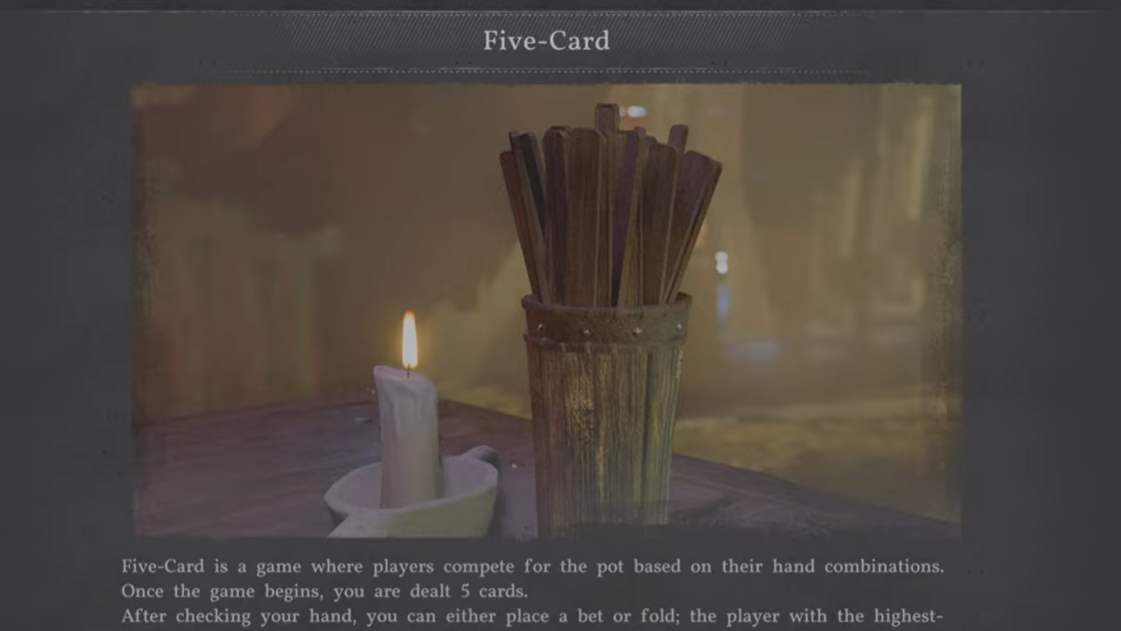
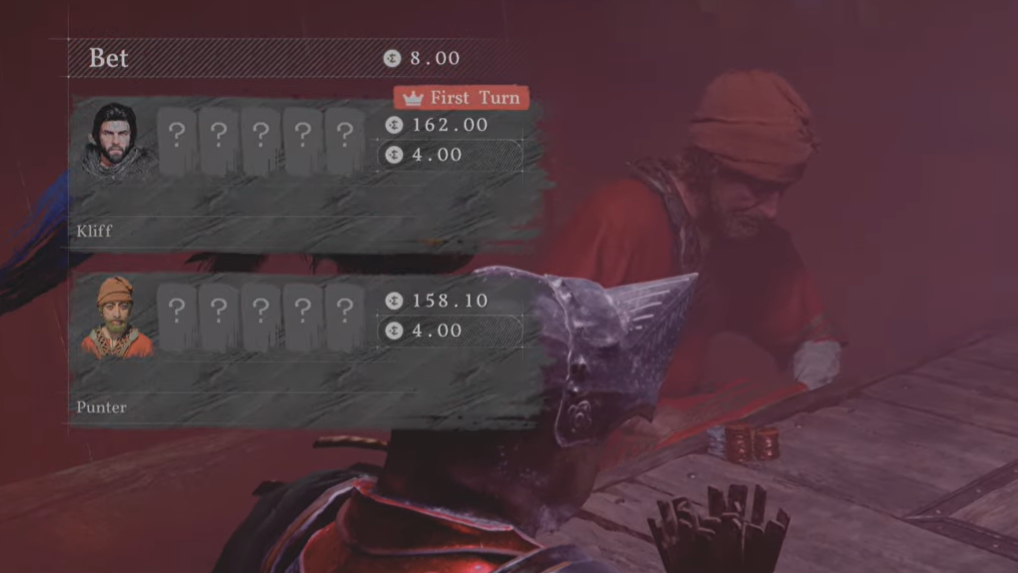
Five-Card is a high-stakes gambling minigame in Crimson Desert played exclusively at the den in Beighen. The game uses numbered sticks instead of traditional cards, and understanding when your hand qualifies as a Bust is essential to avoid automatic losses and wasted Silver.
Quick answer: A Bust hand in Five-Card means you cannot combine any three of your five cards to equal exactly 10, 20, or 30. When this happens, you lose the round automatically, regardless of what your remaining two cards would otherwise form.
How Five-Card Determines Your Hand
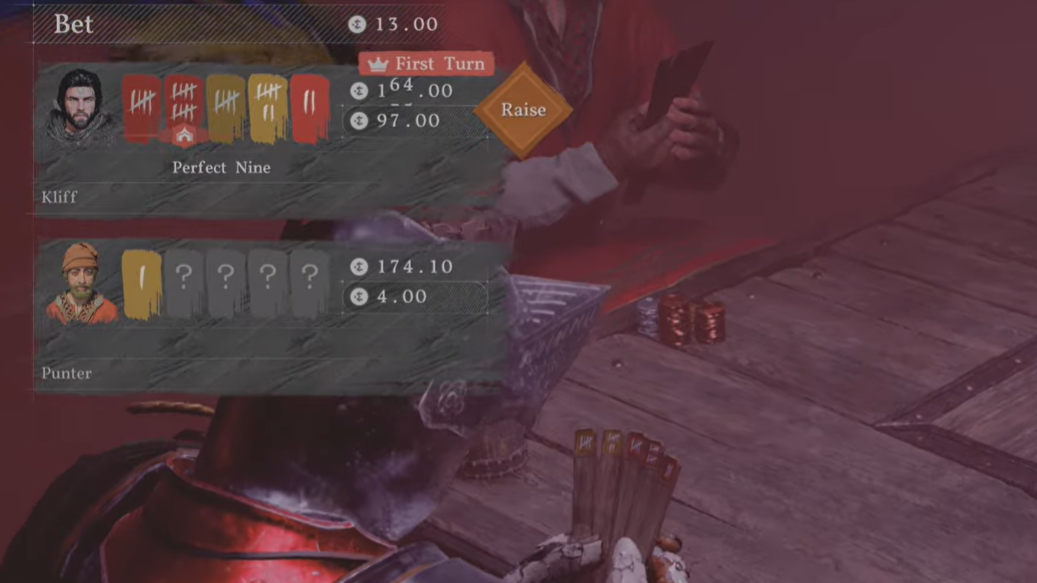
Every Five-Card round begins with five numbered sticks dealt to each player. Each stick is colored either red or yellow and numbered 1 through 10. The game automatically searches your hand for any combination of exactly three cards that sum to 10, 20, or 30. The game displays a small house icon beneath the three cards it selects for this combination.
Once the game identifies a valid set of three cards, those cards are set aside. The two remaining cards form your actual hand, which is then ranked against your opponents using the standard Five-Card hierarchy: Prime Pair, Superior Pair, Ten Pair, standard Pair, One-plus Combinations, and Points.
If the game cannot find any three-card combination that equals 10, 20, or 30, your hand is declared a Bust. You cannot win that round, and any strong cards you might hold become irrelevant.
Why Strong Cards Can Still Bust
A common source of confusion occurs when you hold a powerful pair—such as two 10s or two 8s—but the game still declares your hand a Bust. This happens because the game prioritizes the three-card sum requirement above all else.
For example, if you hold two 8s but using one of those 8s is the only way to create a valid 10, 20, or 30 sum with two other cards, the game will consume that 8 for the three-card set. Your remaining two cards might no longer form a pair, leaving you with a weaker Points hand or even a Bust if the remaining three cards cannot sum correctly.
In another scenario, you might hold cards numbered 4, 5, 6, 7, and 9. Even though you have a pair of high-value cards elsewhere, if no three of these five cards can combine to exactly 10, 20, or 30, the hand is a Bust. The pair never gets evaluated because the foundational three-card requirement fails first.
Bust vs. Points: The Critical Difference
A Bust hand is not the same as a low Points hand. A Points hand means you successfully formed a valid three-card sum of 10, 20, or 30, and your remaining two cards add up to a single-digit total other than 9. The game ranks Points hands by their sum: higher totals beat lower ones.
A Bust hand, by contrast, means you never cleared the three-card sum requirement. Even if your remaining two cards would theoretically add up to a strong total, the game never evaluates them because the hand failed at the first step.
Consider this example: You hold cards numbered 8, 3, 9, 7, and 5. If you can combine 8 + 3 + 9 to equal 20, the game sets those three aside. Your remaining two cards—7 and 5—sum to 12, which reduces to a Two Points hand. You have a valid, ranked hand.
Now imagine you hold 4, 6, 7, 8, and 9. No three of these cards sum to exactly 10, 20, or 30. The hand is a Bust, and the round ends for you immediately.
Visual Indicators in the Game
The game displays a small house icon beneath the three cards it selects to form the 10, 20, or 30 sum. If you see this icon on any of your cards, you have cleared the Bust threshold, and your hand will be ranked normally using the remaining two cards.
If no house icon appears on any of your cards, your hand is a Bust. The game will not evaluate your remaining cards, and you cannot win the round.
When to Fold a Bust Hand
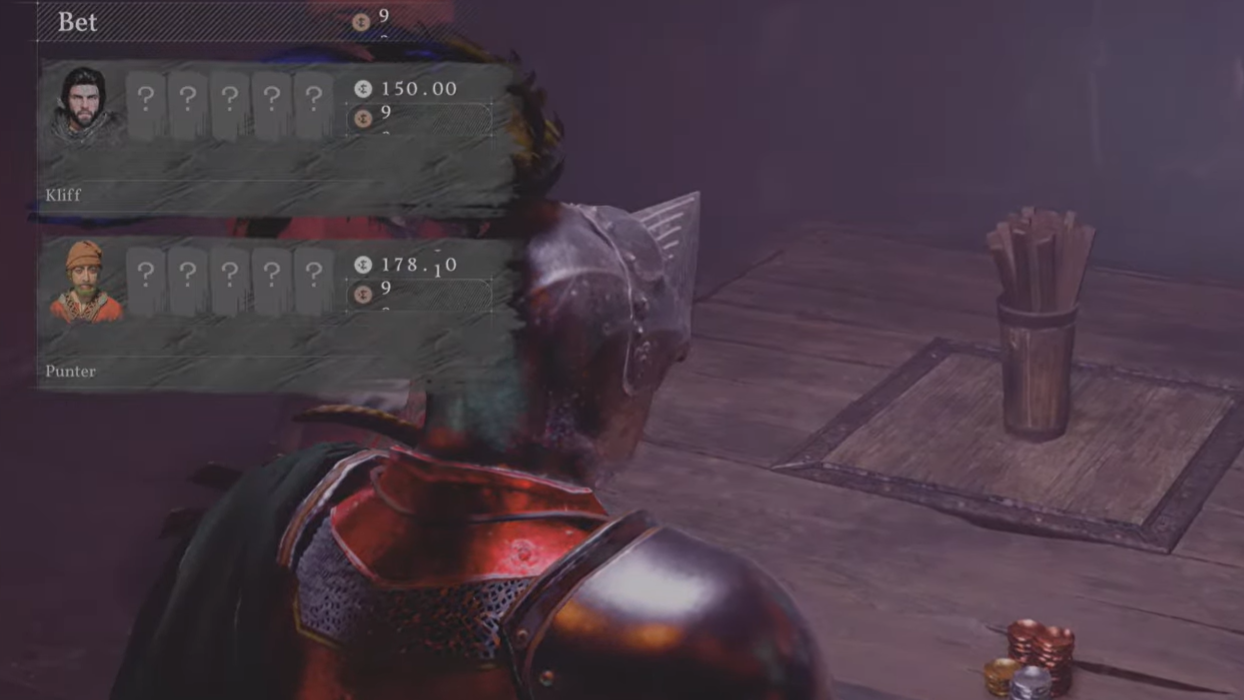
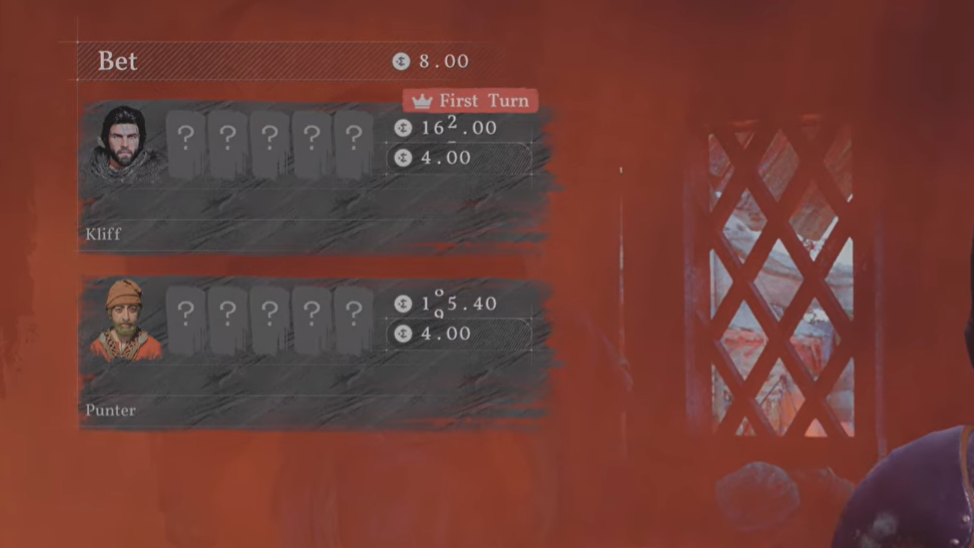
Five-Card costs 150 Silver to enter, and players bet aggressively throughout each round. If you recognize early that your hand is a Bust, folding immediately saves Silver and lets you move to the next round without further losses.
You can identify a Bust hand as soon as you see your cards. Look for any three-card combination that sums to 10, 20, or 30. If none exists, fold unless you can check your way through the round without additional bets.
Attempting to bluff with a Bust hand is rarely effective. The AI opponents in Five-Card tend to call bets aggressively in early rounds, and you cannot win even if they fold, because your hand is automatically disqualified.
Examples of Bust Hands
| Cards Held | Three-Card Combinations Tested | Result |
|---|---|---|
| 4, 6, 7, 8, 9 | 4+6+7=17, 4+6+8=18, 4+6+9=19, 4+7+8=19, 4+7+9=20 | Valid (4+7+9=20). Not a Bust. |
| 1, 2, 4, 5, 6 | 1+2+4=7, 1+2+5=8, 1+2+6=9, 1+4+5=10 | Valid (1+4+5=10). Not a Bust. |
| 3, 5, 7, 9, 10 | 3+5+7=15, 3+5+9=17, 3+5+10=18, 3+7+9=19, 3+7+10=20 | Valid (3+7+10=20). Not a Bust. |
| 2, 4, 6, 8, 10 | 2+4+6=12, 2+4+8=14, 2+4+10=16, 2+6+8=16, 2+6+10=18, 4+6+8=18, 4+6+10=20 | Valid (4+6+10=20). Not a Bust. |
| 1, 3, 5, 7, 9 | 1+3+5=9, 1+3+7=11, 1+3+9=13, 1+5+7=13, 1+5+9=15, 3+5+7=15, 3+5+9=17, 5+7+9=21 | No valid sum. Bust. |
The final example demonstrates a true Bust. No three cards in the hand sum to exactly 10, 20, or 30, so the hand is disqualified before the remaining two cards are ever evaluated.
How Bust Hands Affect Strategy
Recognizing Bust hands quickly lets you fold early and preserve your Silver for stronger rounds. Five-Card games can last multiple rounds, and the AI opponents bet heavily. Staying in a round with a Bust hand guarantees a loss and drains your bankroll.
If you are using the manual save strategy to farm Silver at the Beighen gambling den, a Bust hand is an immediate signal to reload your save. There is no reason to continue a round you cannot win.
Understanding the difference between Bust and low Points hands also helps you evaluate risk. A Two Points hand is weak but still ranked. A Bust hand is not ranked at all. If you see the house icon on your cards, you have a valid hand and can decide whether to bet or fold based on the strength of your remaining two cards. If you see no house icon, fold immediately unless you can check without cost.