

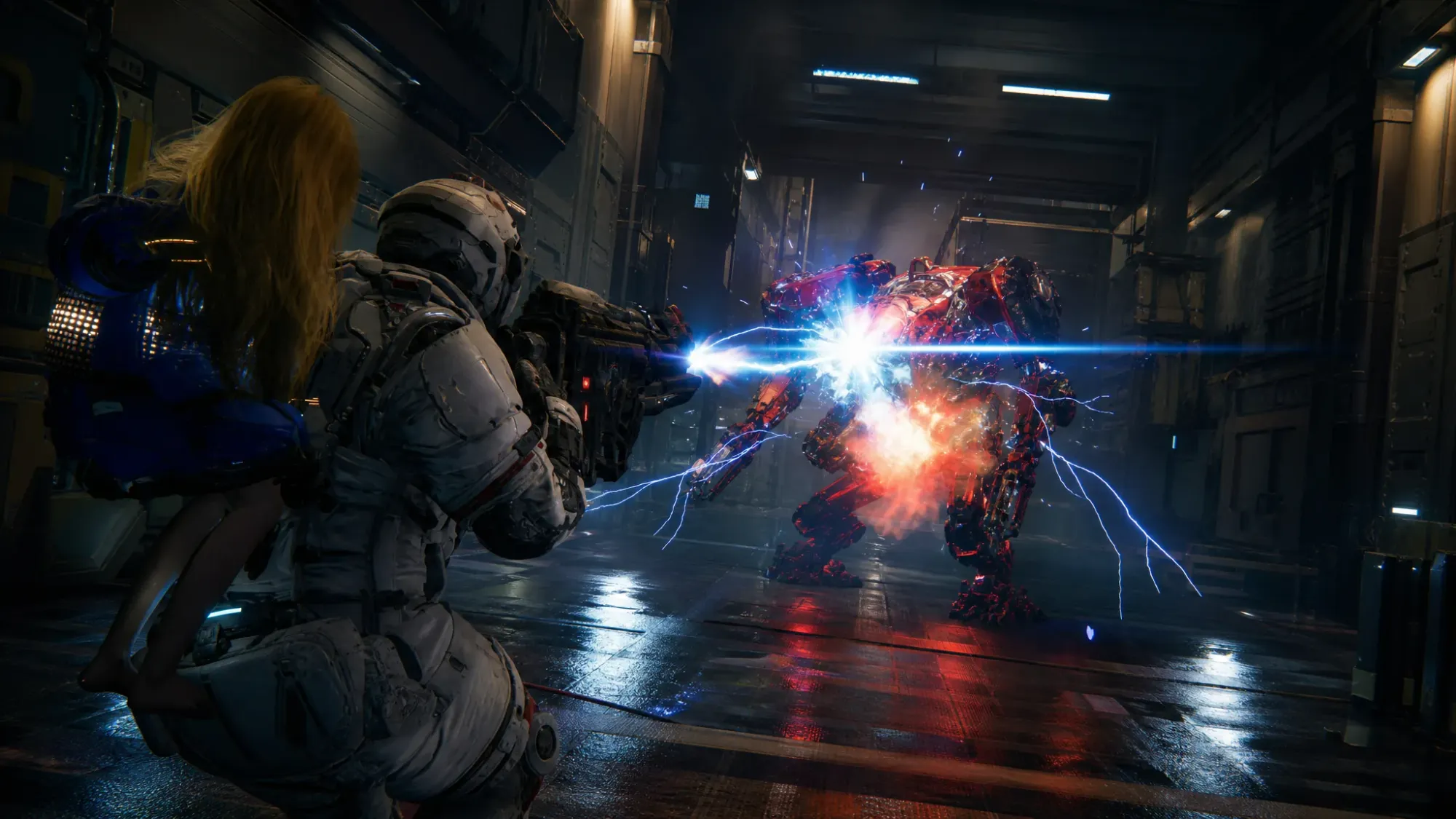
Nvidia is filling in the last missing piece of its DLSS 4.5 lineup. After rolling out a new Super Resolution model and 6X Multi Frame Generation, the company has now revealed DLSS 4.5 Ray Reconstruction, an updated AI denoiser for ray-traced and path-traced games. It is built on a second-generation transformer model and is aimed at producing cleaner, more stable lighting without forcing you to give up much performance.
What DLSS 4.5 Ray Reconstruction does
Ray Reconstruction is a neural rendering technique that replaces the hand-tuned denoisers games normally use to clean up noisy ray-traced lighting, reflections, and shadows. Instead of separate filters tuned by developers, Nvidia uses an AI network trained on its supercomputers to fill in the parts of a frame where rays were not sampled.
The model combines denoising and Super Resolution into a single network. It reads temporal and spatial data coming out of the game engine, then rebuilds a sharper, higher-resolution image that stays stable as you move through a scene. The underlying way it works has not changed for 4.5, but the model itself is now larger and smarter about how it uses that engine data.
What’s new in the second-generation model
The headline change is a heavier transformer model that runs without a meaningful drop in frame rate. Nvidia says it delivers 35% more compute capability and processes 20% more parameters while keeping performance similar to the previous version, because the network is more efficient. The practical result is sharper images with fewer artifacts in demanding ray-traced and path-traced scenes.
| Improvement | What it changes |
|---|---|
| Efficient denoiser | 35% more compute capability and 20% more parameters, at similar performance to the old model |
| Enhanced Super Resolution | Deeper spatial awareness and smarter use of engine pixel sampling and motion data for better lighting accuracy and motion clarity |
| Expanded training dataset | Trained on a larger dataset to pick more accurate engine data and reconstruct closer to ground truth |
| Finer developer control | More precise tuning of temporal accumulation for better image quality |
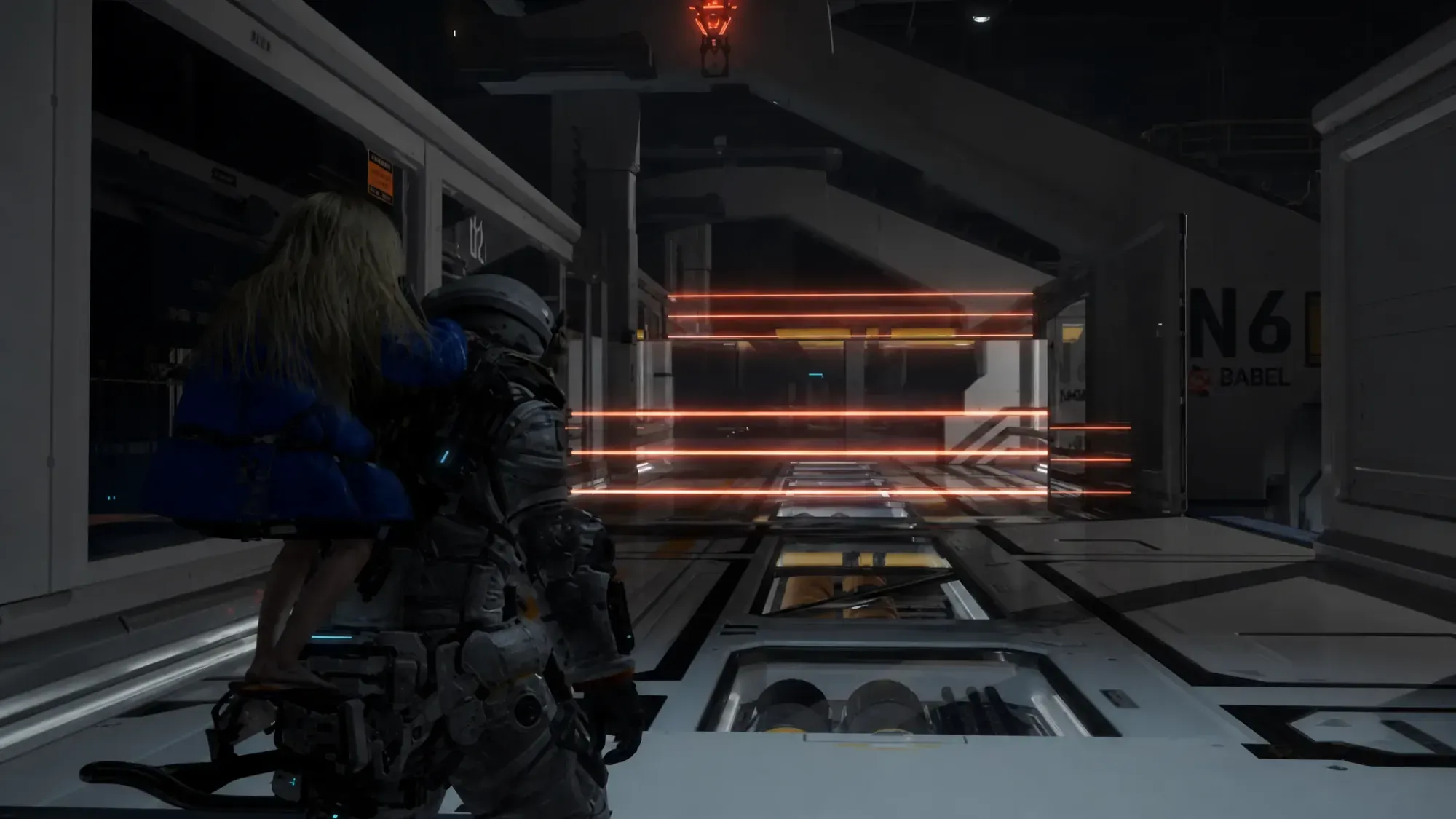
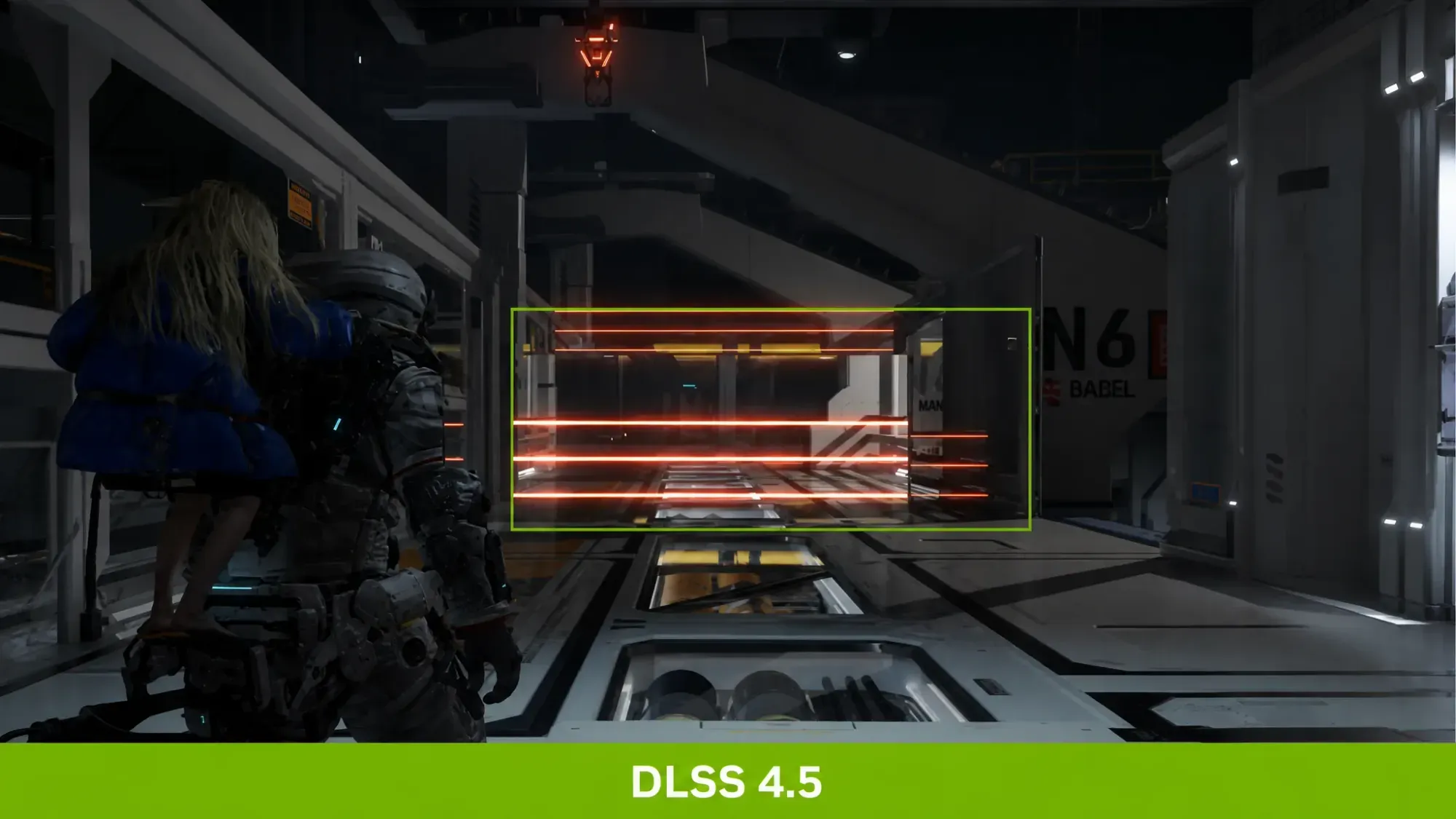
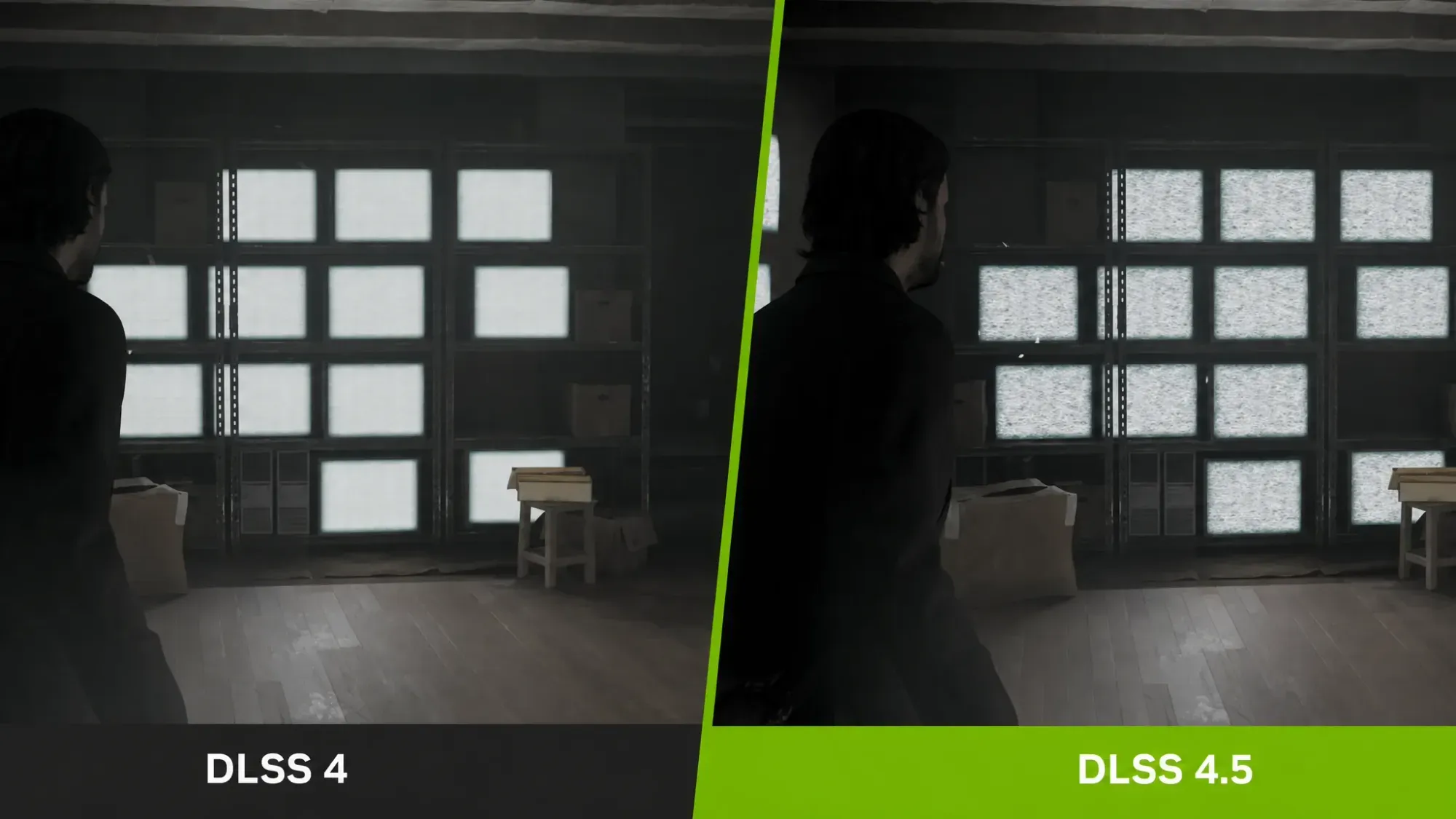
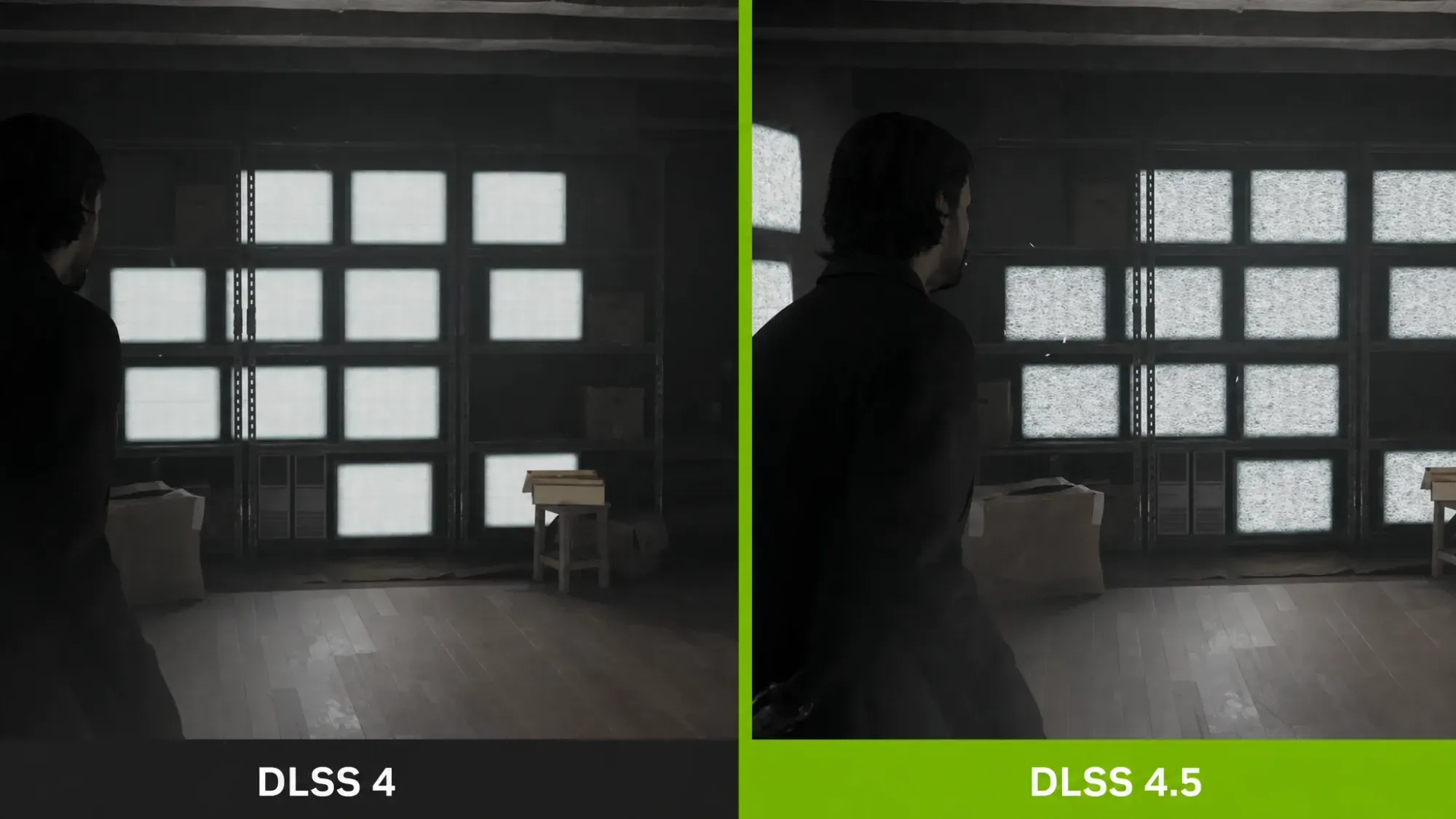
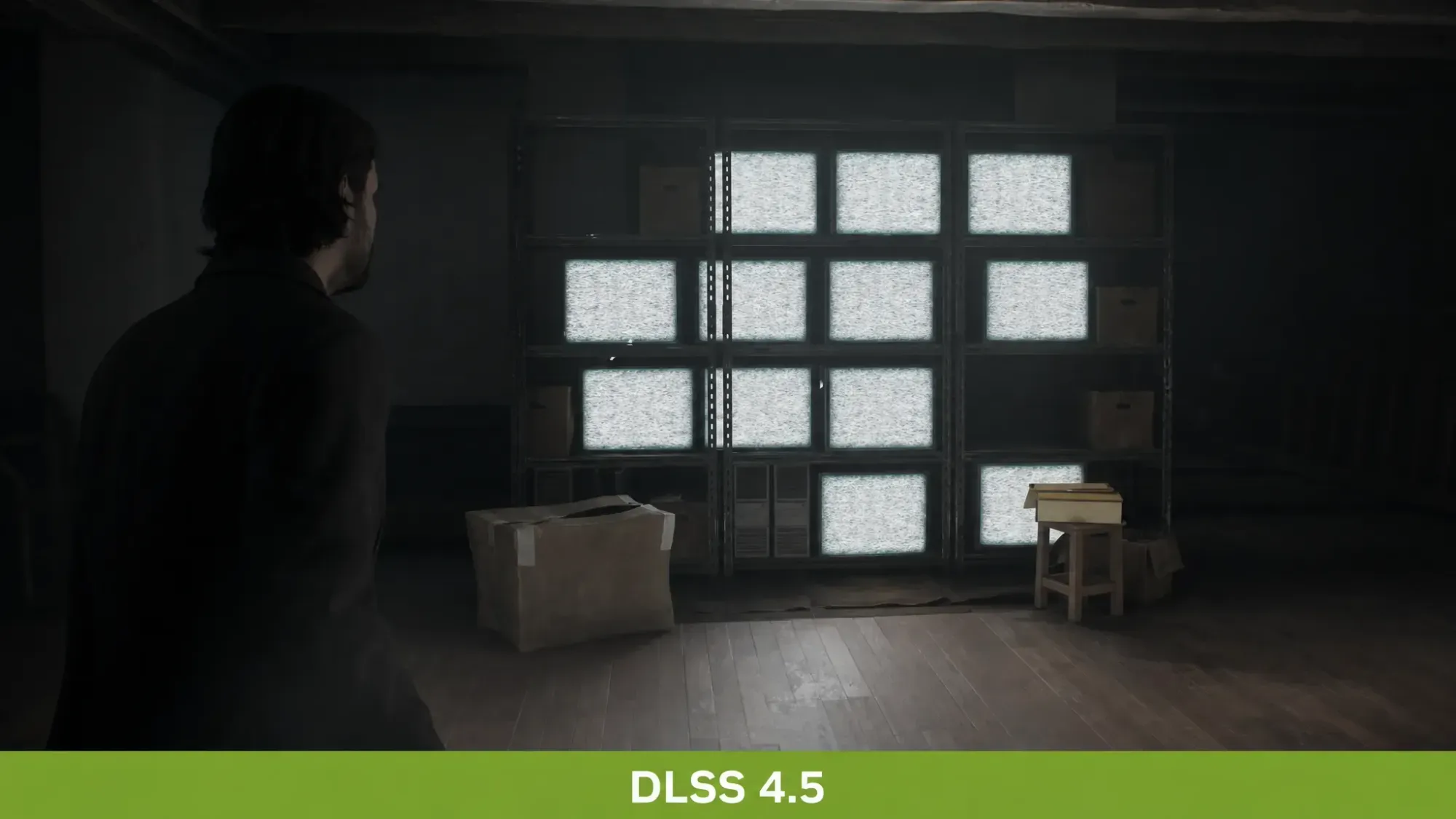
Nvidia showed off the difference with a few examples. In Indiana Jones and the Great Circle, the model produces cleaner particle effects with almost no snow ghosting. In PRAGMATA, laser lighting reacts faster and leftover artifacts vanish once the laser is switched off. And in Alan Wake 2, the CRT television static keeps its fine individual lines with more clarity and stability instead of smearing away.
Which RTX GPUs are supported
This is the part most people will care about. DLSS 4.5 Ray Reconstruction works on every GeForce RTX card, going all the way back to the RTX 20 series. That means RTX 20, RTX 30, RTX 40, and RTX 50 owners all get access to the new model. There is no Blackwell-only lock here, unlike 6X Multi Frame Generation, which stays exclusive to the RTX 50 series.
DLSS 4.5 Ray Reconstruction supported games at launch
The feature arrives with 27 games able to use the new model. The lineup includes major path-traced titles alongside multiplayer and creative-looking releases.
| Games | Games | Games |
|---|---|---|
| Alan Wake 2 | Enlisted | NTE (Neverness to Everness) |
| Avatar: Frontiers of Pandora | EVERSPACE 2 | Portal with RTX |
| Backrooms: Escape Together | F1 25 | PRAGMATA |
| Call of Duty: Black Ops 7 | FBC: Firebreak | Resident Evil Requiem |
| Crimson Desert | Half-Life 2 RTX | Samson |
| Cyberpunk 2077 | Hogwarts Legacy | Star Wars Outlaws |
| Death Relives | Incursion Red River | Subliminal |
| Directive 8020 | Indiana Jones and the Great Circle | Sword of Justice |
| DOOM: The Dark Ages | NARAKA: BLADEPOINT | The First Descendant |
The list is expected to grow over time as more titles adopt the model. Phantom Blade Zero, the action RPG from S-GAME, is also set to launch this fall with DLSS 4.5 and ray-traced reflections, shadows, and caustics.
How to get DLSS 4.5 Ray Reconstruction
When it goes live in August, the update is delivered through the Nvidia app, so you do not need to wait on individual game patches to swap in the new model. You can install the app and then use it to apply the latest DLSS model to supported titles.
You will know the new model is active when DLSS 4.5 Ray Reconstruction appears as a selectable option in the app for a supported game. Nvidia confirms the visual gains apply across all RTX generations, although older GPUs without FP8 acceleration will not see the same level of performance headroom as Ada and Blackwell cards.
DLSS 4.5 Ray Reconstruction in Blender Cycles
The technology is not limited to games. Blender Cycles is adding DLSS 4.5 Ray Reconstruction as a denoiser, building on an earlier OptiX integration. For 3D artists, the goal is an interactive viewport that shows near-final ray-traced lighting in real time, instead of the usual wait while a denoiser catches up. That integration is planned to arrive with Blender 5.3 this fall.
Nvidia is framing all of this around a milestone of more than 1,000 RTX games and apps, nearly eight years after the original RTX 2080 launched in 2018. Ray Reconstruction was the one DLSS 4.5 component still missing, and with an August release across the full RTX range, the suite is now complete for anyone running a GeForce RTX card.