

The Duelist combat style in Solo Leveling: ARISE OVERDRIVE turns Sung Jinwoo into a close‑range specialist built around burst damage, staggers, and tight windows of invulnerability. It is one of the most straightforward ways to play: get in, break the enemy’s posture, and delete priority targets before they can retaliate.
This breakdown focuses on making that playstyle as reliable as possible for solo leveling, story progression, and general PvE.
Duelist role and base stat profile
Duelist is one of four primary combat styles for Jinwoo, alongside Assassin, Elementalist, and Ruler. It leans on:
- Dual‑wielding melee weapons (especially daggers and short swords).
- Heavy emphasis on stagger and counterattacks rather than ranged or elemental damage.
- Deflection timing: perfect Deflects and follow‑ups are a core damage source.
Its base stat spread looks like this:
| Stat | Base grade | Practical effect |
|---|---|---|
| Strength | A | High basic attack and skill damage from the start. |
| Vitality | S | Excellent HP and defense baseline, strong potion scaling. |
| Agility | D | Low critical output and evasiveness unless you invest. |
| Intelligence | C | Average MP pool and regeneration, not central to the build. |
| Perception | B | Decent minimum damage floor and Deflect timing window. |
The key takeaway: Duelist starts durable and strong, but slow. The build’s job is to patch Agility and leverage Strength and Vitality without wasting points on stats that barely contribute to your damage loop.

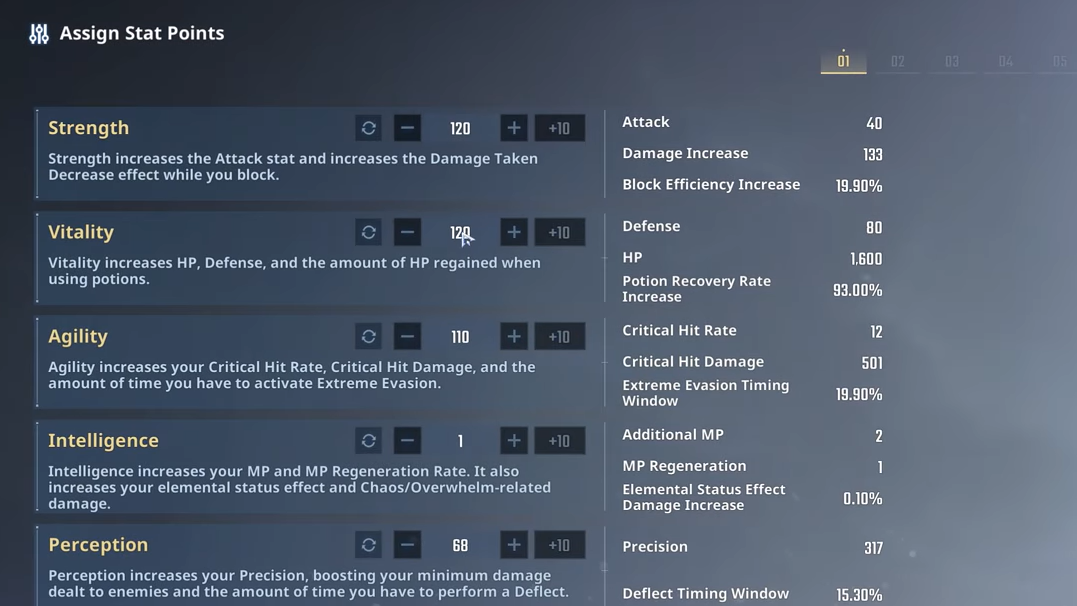
Best stat allocation for Duelist
Jinwoo gains stat points on level up, on top of flat Attack/HP/Defense increases. Each stat also has a hidden bonus:
- Strength: Increases basic attack and skill damage, and reduces damage taken while blocking.
- Vitality: Increases HP and defense, and improves potion healing.
- Agility: Raises critical rate and damage, and makes Extreme Evades easier.
- Intelligence: Increases MP and regeneration, and boosts Chaos/Overwhelm damage.
- Perception: Raises minimum damage and extends the Deflect timing window.
For a pure Duelist, a simple way to think about priorities is:
| Priority | Stat | Why it matters for Duelist |
|---|---|---|
| 1 | Strength | Main source of raw DPS, synergizes with frequent melee hits and counterattacks. |
| 2 | Agility | Fixes the weak base Agility, giving you crits and smoother Extreme Evades. |
| 3 | Perception | Improves Deflect consistency and keeps your floor damage high on bad rolls. |
| 4 | Vitality | Already high baseline; add more only for tough content and long wave fights. |
| 5 | Intelligence | Lowest impact in this build; take points here last if ever. |
For solo leveling and story mode, a balanced but aggressive allocation can look like this over time:
- Rough focus: ~45–50% of discretionary points into Strength, ~25–30% into Agility, ~10–15% into Perception, the rest into Vitality.
- Early game: Front‑load Strength to snowball damage and clear missions faster.
- Mid game: Start fixing Agility aggressively so you actually benefit from critical‑based gear and easier evades.
- When stuck in story: Temporarily divert a cluster of points into Vitality to increase potion effectiveness and survivability for long wave chains.
Leave Intelligence for last. Duelist’s core skills do not rely on big MP pools, and you rarely spam large elemental nukes that need magic scaling.
Duelist core skills for solo leveling
Duelist skills lean toward closing gaps, deleting a single target, and staying safe between bursts. Three skills stand out as staples for solo leveling and general PvE:
| Skill | Function | Why it’s valuable |
|---|---|---|
| Dagger Rush | Rushes toward enemies, dealing damage while moving. | Primary gap‑closer, doubles as a short traversal tool and combo starter. |
| Shadow Clone Strike | Creates additional single‑target hits. | Delivers high burst on staggered or isolated enemies, ideal for bosses and elites. |
| Stealth Step | Turns Jinwoo invisible briefly. | Lets you reposition, wait on cooldowns, or set up back‑to‑front engagement safely. |
On top of these, the Duelist Overdrive skill builds power while you Deflect. A perfect Deflect with Overdrive ready releases a heavy strike‑back, so a big part of mastering the build is learning boss patterns and treating Deflect windows as damage opportunities, not just defense.
Best Duelist skill tree unlocks
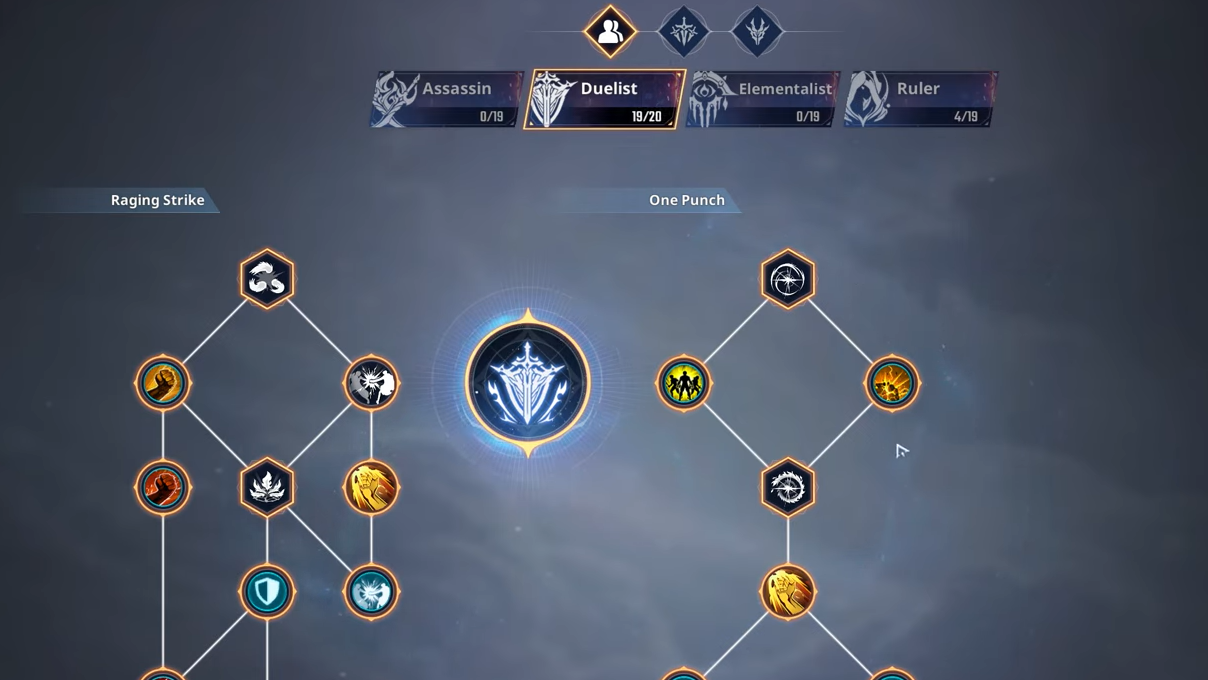
The Duelist combat style has its own tree with two main branches, Raging Strike and One Punch. You start with Rush and Armor Break, then fan out into a mix of stat nodes and special attacks. The most impactful unlocks for this build include:
- Swift Shadow: Counterattack – Upgrades your Basic Attack after a Deflect into a dedicated Deflect Combo Attack. This turns every successful Deflect into a clean damage injection and speeds up posture breaks.
- Percussion – A charge that launches an enemy into the air, followed by multiple hits and an explosive finisher. Excellent for isolating dangerous targets and safely damaging them away from the crowd.
- Pummel – A flurry of punches ending in a kick. Simple, high‑uptime damage tool for staggered bosses or big elites.
- Decimation – A short charge into a fiery punch. Slightly slower to start than Pummel, but hits hard when you can see a safe window.
Most remaining nodes in the Duelist tree are stat or effect boosts: more Attack, higher stagger effectiveness, better damage during certain windows. For solo leveling in particular, prioritize:
- Attack‑up nodes tied to basic and skill damage.
- Stagger duration or stagger damage increases.
- Any effect that ties bonus damage to Deflects or counter hits.
In the Physique tree, focus on:
- Attack increases.
- Critical Hit Rate and Critical Damage nodes, to fully cash in on your Agility investment.
- Defense Penetration Increase, which keeps your bursts relevant against armored bosses.
Physique nodes are universal, so you are never wasting scrolls there; they support Duelist and any future build you try.
Recommended equipment and Blessing Stones for Duelist
Duelist gear should mirror the stat priorities you built into Jinwoo. General rules:
- Weapons: Favor daggers or light melee weapons with high Attack scaling and skills that keep you close to targets. Weapon Skills that add rushes, multi‑hit combos, or built‑in stagger work especially well.
- Armor: Choose pieces that lean toward Attack, crit rate, and crit damage over raw defense, unless you are stuck on a difficulty wall.
- Accessories: Rings and necklaces with Attack, Speed, and Dark or physical damage bonuses fit the Duelist loop. Sets that add damage to criticals or to staggered enemies are ideal.
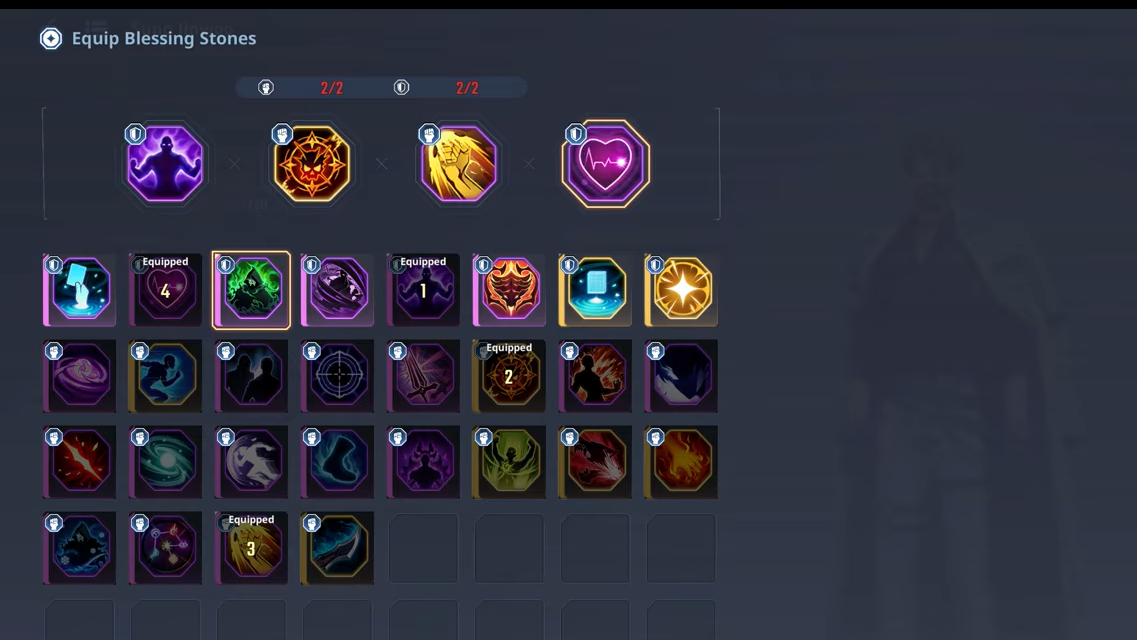
Blessing Stones amplify specific aspects of your kit. For Duelist, prioritize:
- Attack Power bonuses.
- Speed or Attack Speed increases for faster combos.
- Critical Hit Chance, which scales multiplicatively with your Agility and gear.
- Defense Penetration or damage against staggered enemies if available.
Stones and gear that mainly boost magic or elemental status scaling are better reserved for Elementalist or hybrid builds; they do little for a pure Duelist focused on physical strikes and staggers.
Story mode and solo progression with a Duelist
Solo Leveling: ARISE OVERDRIVE’s story mode is built around multi‑stage missions with waves of enemies and boss encounters. For a Duelist, survivability is more about resource management and positioning than standing still and tanking hits.
Several systems matter a lot for efficient solo progression:
- Potions and drinks: Potions heal you, while vending machine drinks add passive effects for the mission.
- Team formation: Support Hunters contribute healing, shields, or additional damage.
- World map grinding: Side missions and dungeon breaks feed your materials, skill scrolls, and potion upgrades.
Survival tools: potions, drinks, and Vitality
Harder chapters throw long wave chains and aggressive bosses at you. The cleanest way to stay alive without sacrificing damage is to make your healing more efficient rather than stacking pure HP.
- Protein Drink: Gives a chance to restore a potion when you kill an enemy, up to your current potion cap (maximum of five). In wave‑heavy story missions this effectively stretches your potion count enormously.
- Cafe Latte: Heals you over time each time you enter a new stage, useful when you do not need potion refills but want passive sustain between fights.
- Cider: Increases damage to staggered targets. Ideal for confident Duelist players who rarely get hit and want more posture‑break DPS.
- Debuff drinks (Healthy Veggie Juice for bleed, Antacid for poison): Bring these when specific bosses lean heavily on those damage‑over‑time effects.
Two other key tools make healing much more potent:
- Vitality stat points – Even a modest investment increases raw HP, defense, and the amount each potion restores. For long chapters and Extreme difficulty, a small Vitality spike can be the difference between constant retries and a clean full clear.
- Brigadurian potion effect – When equipped as your potion modifier, it adds a chance that using a potion does not reduce your remaining count. Combined with Protein Drink, this can feel like having an almost bottomless pool of healing in long missions.
There is also a special material, Spirit Breath, obtained as a first‑clear reward from specific dungeon breaks on the world map. Spirit Breath lets you upgrade potions, raising both their capacity and the amount of HP they restore. Prioritize unlocking at least the early Spirit Breath nodes so your Duelist can lean into high‑risk melee safely.

Best content to farm while leveling a Duelist
Progression in ARISE OVERDRIVE depends heavily on materials, Blessing Stones, and skill scrolls rather than simple EXP. Several content types are particularly valuable while you level Jinwoo as a Duelist.
Red Gates for gear, gold, and shadow resources
Red Gates are among the most efficient farms once you unlock them in story chapters 6, 7, and 9. They offer:
- Gold and Hunt Coins.
- High‑tier artifacts and gear at higher star levels (up to tier 10 gear around character level 45+).
- Weapon crafting materials like Viper Blossoms for A and S‑rank weapons.
- Shadow upgrade materials (Shadow Energy, Traces of Shadows, Abyssal Fragments) and occasional shadow extractions from bosses.
For pure farming, a simple approach works well:
- Set the Red Gate difficulty to level 1 if you are focusing on materials rather than challenge.
- Clear all mobs and environmental nodes on the map for maximum drops.
- Kill the final boss for guaranteed materials and the first‑clear bonus on each star tier.

Gate Dispatch and Ghost Strike Squad
Ghost Strike Squad offers passive farming by dispatching Hunters to clear gates over time. It yields:
- Association Gate Dispatch rewards like tokens, Gate Tokens, and Powder of Blessing.
- Additional gold through Hunter missions that refresh periodically (roughly every six hours).
When dispatching Hunters, pay attention to each gate’s requested stat (Attack, HP, or Defense). Units that scale on the wrong stat can fail requirements, so send Hunters whose main stat aligns with the gate. Upgrading your Strike Squad’s Gate Management level increases the number of simultaneous gates and unlocks higher difficulties, multiplying long‑term returns.
World map missions and skill scrolls
Skill scrolls fuel every tree: Duelist, other combat styles, weapon trees, Physique, and Monarch’s Awakening. They are often tied to:
- First‑clear rewards on specific gate tiers (for example, tier five gates giving a Skill Scroll 3 on first completion).
- Dungeon breaks that also award Spirit Breath.
Scroll types are separated by tree; spending Physique scrolls never slows down Duelist tree progression and vice versa. For a Duelist main, prioritize scrolls that unlock key stagger and Deflect nodes, then expand outward into Physique for general stat boosts.
Team composition and supports for a Duelist main
While Jinwoo is the main character, support Hunters are vital, especially once difficulty climbs.
- For story and long missions, a strong baseline is two healers and one tank supporting your Duelist Jinwoo. This stabilizes your HP bar so you can stay aggressive.
- Configure each Hunter’s support skill use condition in the Special Skills menu. Common options include:
- Triggering when Jinwoo takes heavy damage.
- Triggering automatically when his HP falls below 50%.
- Triggering when three or more normal monsters are nearby or after a Deflect Combo.
Unlike Solo Leveling: ARISE, you cannot manually call support Hunters on demand in Overdrive, so treating their triggers as passive “safety nets” is important. Combine support healing with your potion and drink setup so you are never caught without an answer after a mis‑timed dodge or Deflect.

When Duelist shines and when to consider Ruler instead
Duelist excels in:
- Story mode, normal to hard: fast single‑target deletion, reliable counter windows, and enough innate Vitality to survive mistakes.
- Solo grinding of moderate‑density content, especially Red Gates, where mobility and quick kills keep runs short.
- PvP‑style encounters, where burst damage and Deflect punishes matter more than crowd control.
Ruler, by contrast, is built for battlefield control, large‑area abilities, and magic scaling. For dense raid encounters and heavy crowd control requirements, Ruler’s area skills and shadow summons can be more forgiving and supportive for a group.
If you regularly swap between solo story play and high‑end co‑op or raids, it is worth maintaining gear and Blessing Stones for both Duelist and Ruler. The stat and skill priorities diverge enough that one shared set tends to feel compromised in either direction.
Built around Strength, fixed‑up Agility, and precise Deflect timing, a Duelist Jinwoo offers a fast, readable way to push through Solo Leveling: ARISE OVERDRIVE’s story and early endgame. Stack the right stats, lock in the key stagger and counter skills, and pair them with smart potion and support setups, and you get a build that stays dangerous from the first missions all the way through high‑tier Red Gates.