

The Eternal Flames of Karma Wandering Tale in Where Winds Meet is a short, story-driven side activity that plays out near Thousand-Buddha Vale. It centers on a burned-down home, a half-charred letter, and Granny Yang Shan, tying into the game’s broader themes of guilt and atonement.
Where Eternal Flames of Karma takes place
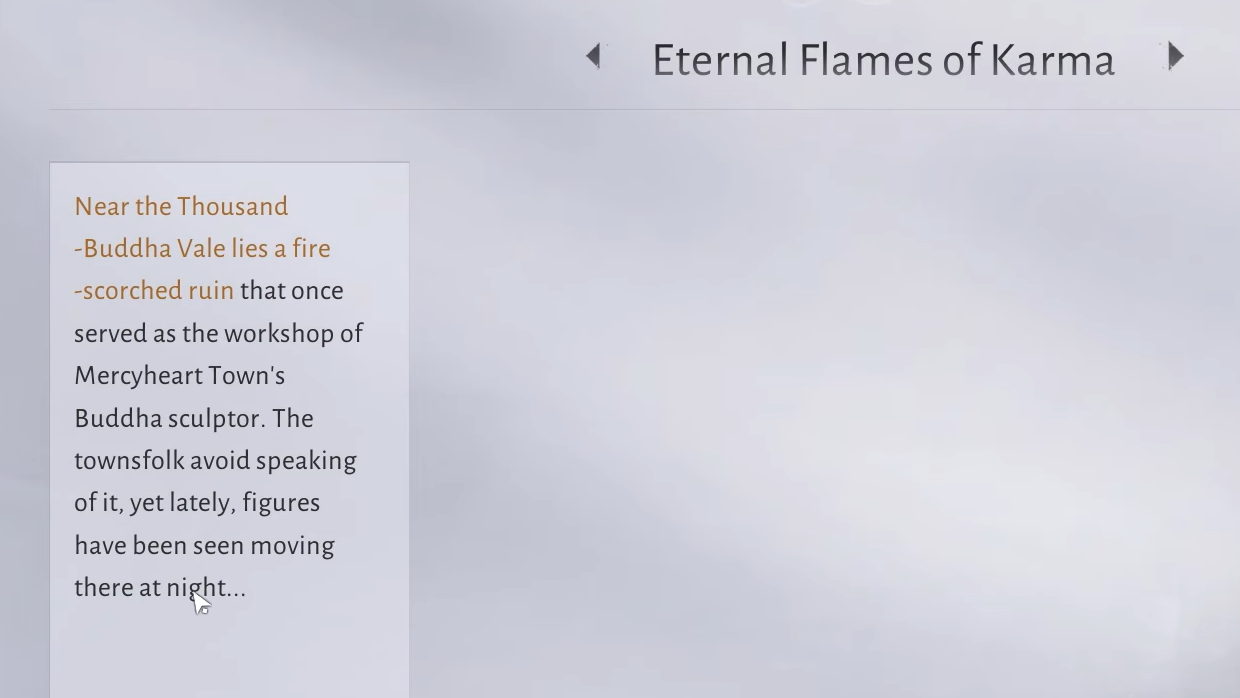
This Wandering Tale is located close to the Thousand-Buddha Vale Boundary Stone in the Qinghe region. The quest area is a ruined, burned-down house with scattered remains and ash, which is where you will find the key item that starts the tale.
Thousand-Buddha Vale is already framed as a place of spiritual weight, filled with statues and offerings. Placing the quest here reinforces the idea that characters are trying to balance old sins with ritual and remembrance, which is echoed in the dialogue about planting “Buddha flowers” to atone for past harm.
How to start Eternal Flames of Karma
Step 1: Travel to the Thousand-Buddha Vale Boundary Stone in Qinghe. Look for the remains of a burned-down house near the marked location associated with this Wandering Tale.
Step 2: Search the charred ruin until you can interact with a letter on the ground. Pick up the item named Half-Burned Family Letter. This immediately flags the Eternal Flames of Karma tale as active.
The letter is the only trigger needed; there is no requirement to talk to an NPC beforehand or fulfill a combat or exploration prerequisite. Once the letter is in your inventory, the objective shifts to tracking down the person connected to its contents.
Walkthrough: How to complete Eternal Flames of Karma
The Wandering Tale resolves in a few straightforward interactions, but the framing adds emotional context around the concept of karma.
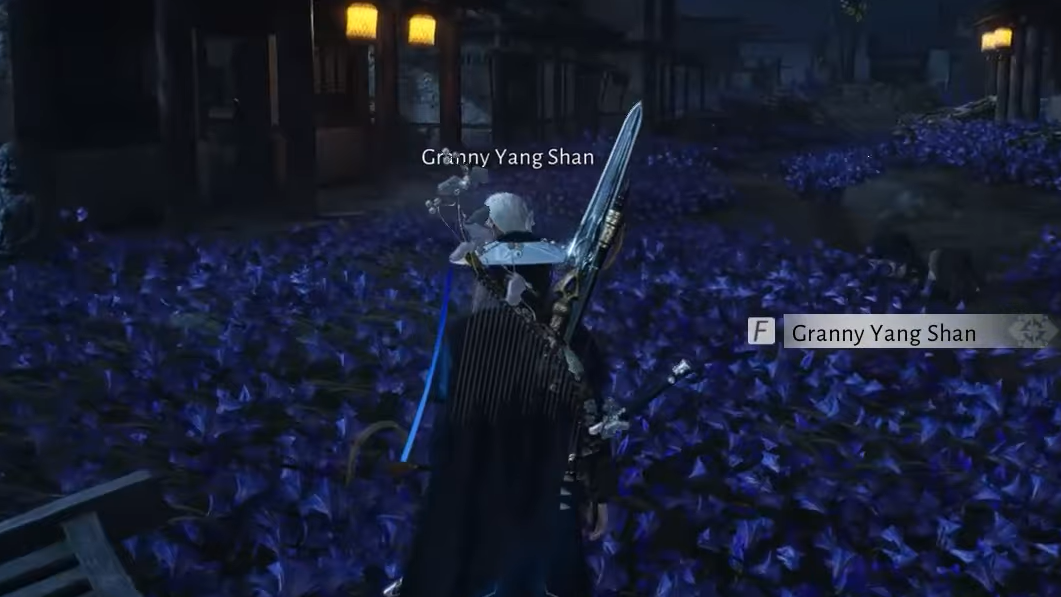
Step 1: After obtaining the Half-Burned Family Letter, leave the ruins and follow the next marked location on your map. The marker leads you to Granny Yang Shan, who is associated with Mercyheart Town and its surrounding fields.
Step 2: Approach Granny Yang Shan and start a conversation. She is tied to a backstory involving a relative who “made a grave mistake and took many lives in town,” which led to her family being hated and driven away by several clans.
Step 3: When prompted, hand over the Half-Burned Family Letter to Granny Yang Shan. This act closes the loop between the ruined home and its surviving family member and resolves the Wandering Tale.
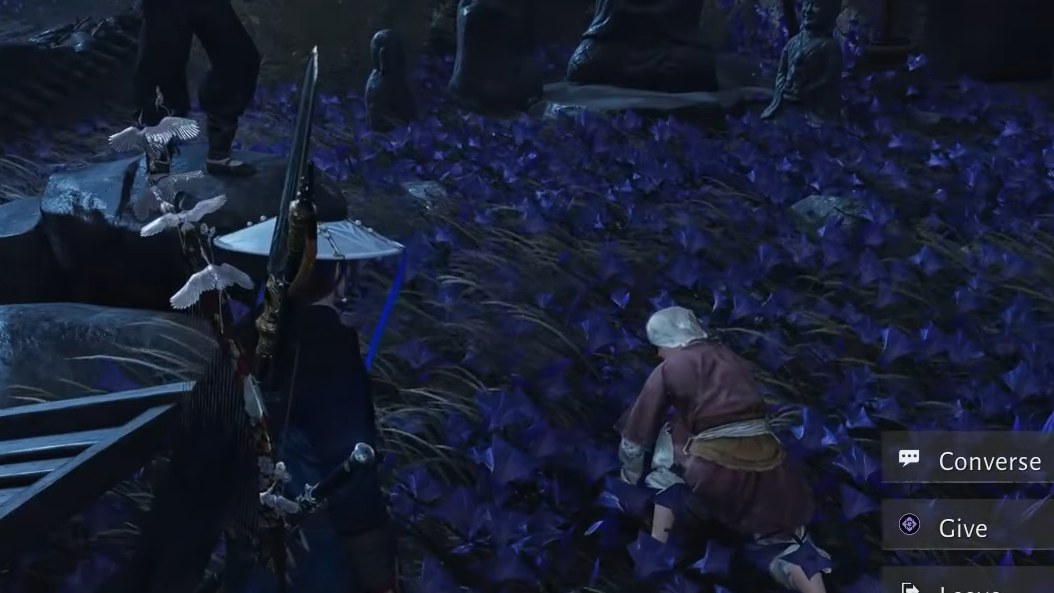
In the related quest dialogue, Granny speaks about planting Buddha flowers to “atone for our sins,” acknowledging that rituals and offerings cannot erase the past but are meant to lessen the burden on the next generation. Returning the letter fits that same theme: you are not rewriting what happened, but you are helping someone face it directly rather than leaving it buried in the ashes.
Quest themes: Karma, winds, and inherited guilt
The narrative around Eternal Flames of Karma connects loosely with Buddhist ideas of karma and the subtle “winds” of the mind. In that framework, actions driven by delusion generate “impure winds” that carry distorted appearances, while actions rooted in compassion or renunciation generate “pure winds” that support clearer, more wholesome experiences.
Applied to this Wandering Tale, several ideas stand out:
- Contaminated karma: The family’s violent past is described as a grave mistake that cost many lives, leading to collective resentment and exile. This is karma expressed as harm spreading outward through a community.
- Ritual as response: Granny’s planting of Buddha flowers is framed as an attempt to create new, pure karma. The rituals cannot retroactively “cleanse” the past, but they are a deliberate shift in how future actions are motivated.
- Legacy and burden: Granny explicitly states her wish that her grandson will not have to “carry the burden of sin.” In karmic terms, that means using present choices to soften the impact of old actions rather than leaving descendants to face them alone.
Within broader Buddhist tantric explanations of karma and winds, impure winds kick up “waves” of painful experiences that eventually subside, while pure winds support appearances that are recognized as inseparable from the mind itself. Eternal Flames of Karma sits at the point where those waves are still crashing, but where a character is consciously trying to generate different winds through confession, remembrance, and offerings.
Rewards for finishing Eternal Flames of Karma
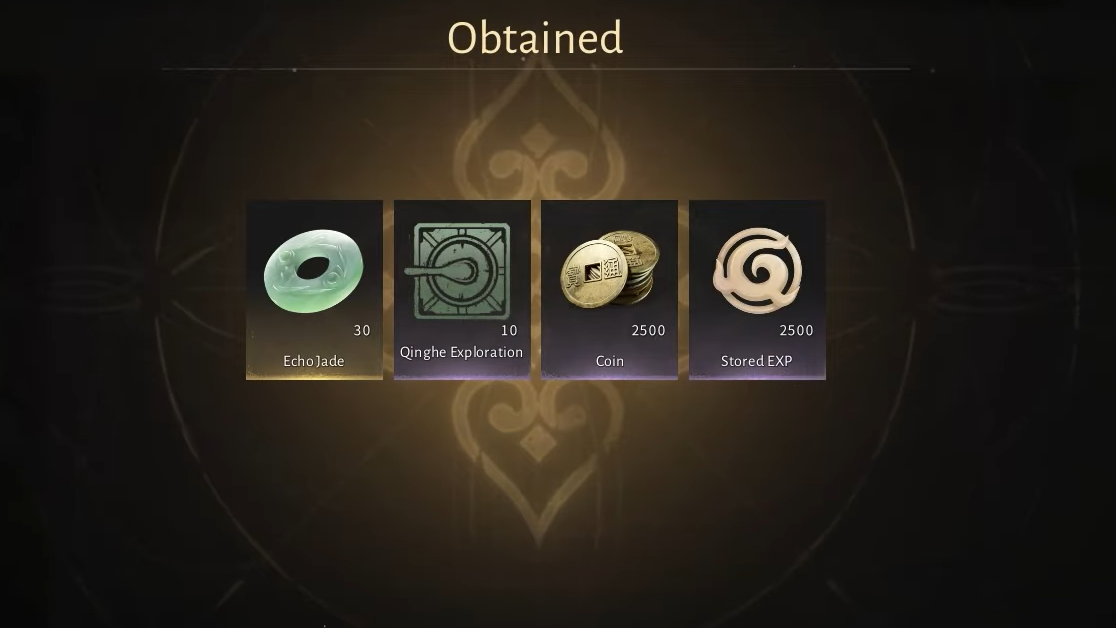
Finishing the Wandering Tale by giving the Half-Burned Family Letter to Granny Yang Shan grants a small but useful set of rewards:
| Reward | Amount |
|---|---|
| Echo Jade | x30 |
| Qinghe Exploration | x10 |
| Character EXP | x2500 |
| Coins | x2500 |
Echo Jade and Coins feed directly back into progression and purchasing, while Character EXP pushes your level upward. Qinghe Exploration points contribute to regional completion, which can unlock further rewards and incentives to keep clearing local activities and stories.
How Eternal Flames of Karma fits into Where Winds Meet’s design
Wandering Tales in Where Winds Meet are designed to be compact but thematic. Eternal Flames of Karma contains almost no mechanical complexity: you pick up a letter, deliver it to its intended recipient, and receive your rewards. The weight comes from the focus on remorse, the belief in karmic consequence, and the idea that effort in the present is meant less to erase the past and more to prevent its repetition.
Granny Yang Shan’s insistence on bearing her own sins, rather than pushing them onto her grandson, mirrors a core karmic idea: even when past actions still generate waves, new choices determine how those waves eventually settle. In gameplay terms, the Wandering Tale is over in a few interactions. In thematic terms, it quietly anchors the game’s wuxia drama in questions about responsibility, memory, and what it means to live under the “winds” kicked up by earlier deeds.