Combat in Far Far West runs on reactions. Each spell belongs to one of five elements (Acid, Fire, Electric, Voodoo, Cactus), and the cards you bring matter less than the order you cast them. A puddle on its own does almost nothing. A puddle hit by the right trigger element clears a chokepoint, spawns a roaming tornado, or duplicates your heaviest damage card.
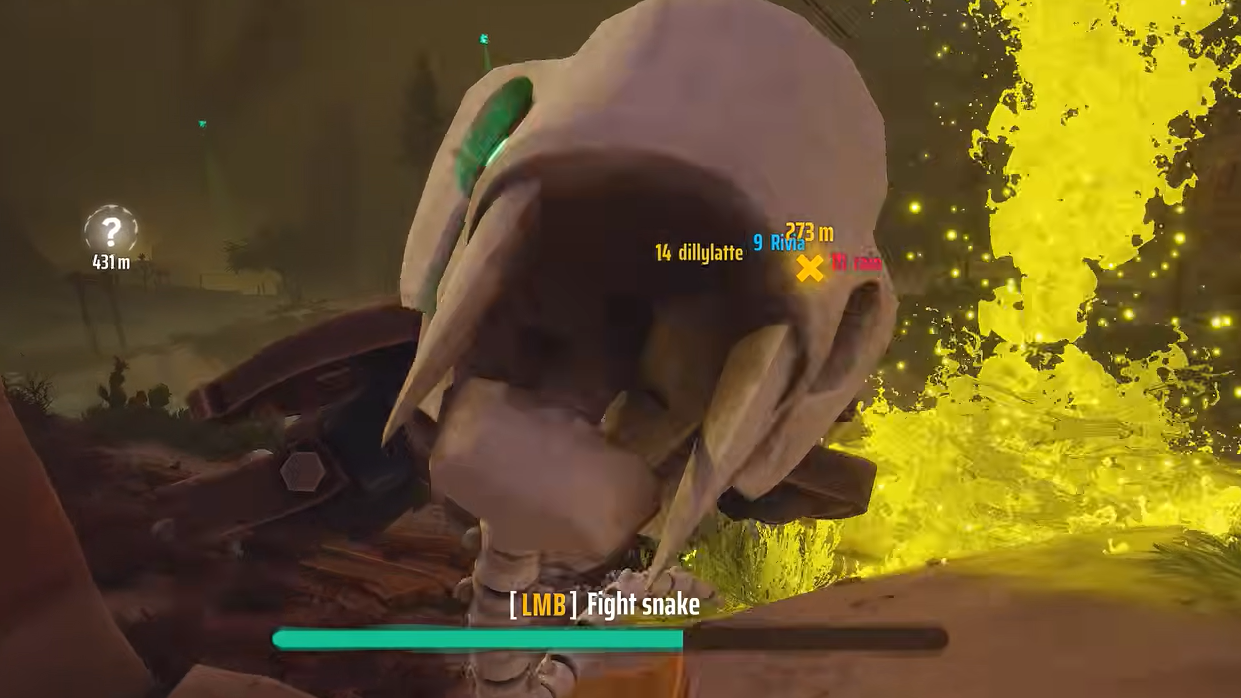
How spell reactions resolve
You can equip up to three spells at once. A reaction needs two pieces on the field: a setup (usually a lingering puddle, summon, or deployable) and a trigger (usually Fire or Electric damage from a spell or an elemental weapon). Cast the setup first, then hit it with the trigger.
Elemental sidearms count as triggers, too. A lightning revolver shot into a Geyser fires the same reaction a Strikes spell would. That means weapon choice directly feeds your combo plan, and a fire-enchanted weapon can stand in for Fireball when your spell is on cooldown.
Acid reactions
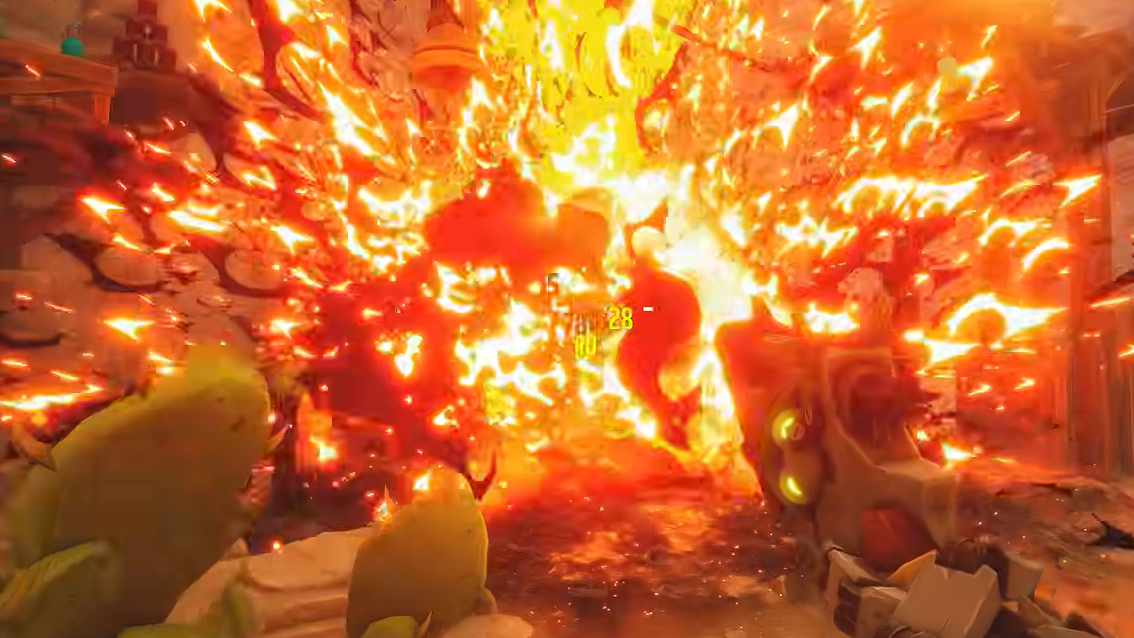
Acid is the most flexible element because every Acid spell that lingers on the ground is volatile. Hit it with Fire and you get a fire explosion. Hit it with Electric and you get an electric explosion. The trigger element decides the damage type.
Beyond the basic detonation, three Acid spells have specific transformations worth memorizing.
| Setup | Trigger | Result |
|---|---|---|
| Any Acid puddle | Fire or Electric damage | Localized explosion of the trigger element |
| Geyser | Lightning puddle | Spawns three additional acid geysers |
| Bubble | Fire puddle | Roaming fire tornado dealing continuous damage |
| Bubble | Electric puddle | Splits into three bouncing bubbles |
| Acid Rain | Strikes | Becomes a thunderstorm that auto-targets enemies |
The Bubble-on-fire-puddle tornado is the easiest reaction to land, since the tornado wanders on its own and pulls aggro while you reload. Acid Rain plus Strikes scales best in long fights where the storm has time to rack up hits.
Fire and Electric triggers
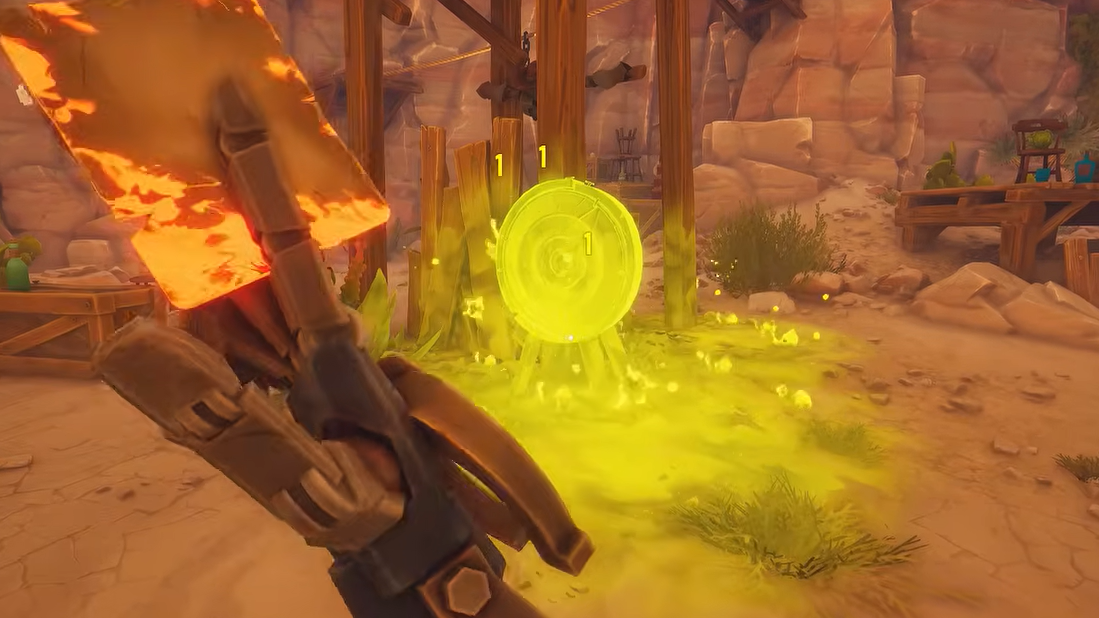
Fire and Electric carry the offensive load. They both detonate Acid, and each has its own specialty: Fire creates the tornado-style transformations, while Electric upgrades summons and feeds the spread effects.
Wisp is the standout summon interaction. A standard Wisp hovers on a single target. Hit that Wisp with any Electric damage (or have it target an already-electrified enemy), and it transforms into an Electric Wisp that swaps targets quickly and applies burn to crowds.
Portal is the highest-ceiling Electric-tree spell. Any spell card thrown through an active Portal is duplicated. Stack a Portal in front of a boss, dump your heaviest damage cards through it, and a single rotation can pay for two.
| Setup | Trigger | Result |
|---|---|---|
| Wisp | Electric damage | Becomes an Electric Wisp that spreads burn across multiple targets |
| Boing | Thunderstrike | Temporary movement speed boost |
| Portal | Spell card thrown through it | Duplicates the card |
| Gold vein | Fireball | Instantly mines the vein |
| Geyser + Fire Beam through paired Portals | Electric arrow into Geyser first | Dual stationary fire tornado |
Voodoo and healing candles
Voodoo is the support tree. Casting any Voodoo spell on an ally, on an enemy, or near an existing elemental puddle spawns floating purple candles. Each candle restores 3 HP when picked up. The number sounds small, but those increments stack quickly during sustained fights and effectively turn every Voodoo cast into chip healing.
The strongest healing rotation pairs the area regen Voodoo spell with the healing bottle utility, since the two effects stack rather than overwriting each other. That gives you a sustained heal zone on top of your usual potion economy.
| Setup | Trigger | Result |
|---|---|---|
| Any Acid, Fire, or Electric remains | Any Voodoo spell (Drain, Corruption, etc.) | Spawns 3 HP healing candles |
| Healing bottle utility | Area regen Voodoo spell | Healing effects stack |

Cactus deployments
Cactus covers your stationary defenses: mines, turrets, walls, and decoys. The class rule is that any deployment inherits the element of whatever damages it. Shoot a Pistolero with a fire weapon, and its outgoing shots gain burn. Hit a Mino with Electric, and it converts into a Tesla tower that arcs lightning.
Cactus also produces some of the strongest cross-tree synergies in the game when combined with Voodoo or Strikes.
| Deployment | Trigger | Result |
|---|---|---|
| Mino | Electric damage / Strikes | Becomes a Tesla tower arcing lightning to nearby enemies |
| Mine, Pistolero, Wallo, or Decoyo | Strikes | Six-strike flowering area-of-effect pattern |
| Bandito | Fire and Electric | Turns pink, gaining melee damage and movement speed |
| Mino or Decoyo | Drain or Corruption | Explosion mind-controls surrounding enemies |
| Pistolero, Wallo, or Decoyo | Ritual | Spawns a healing circle centered on the deployment |
The combos worth learning first
If you only carry a handful of reactions into a run, prioritize the ones that pay off without precise timing. Bubble dropped on a fire puddle is the most forgiving entry point because the tornado handles its own targeting. Acid Rain plus Strikes is the next pick for longer fights, since the storm keeps firing without input.
Fire Beam into a Geyser produces a reliable tornado for clearing chokepoints. Wisp plus an Electric trigger is the cleanest summon upgrade once you want spread damage. Portal sits at the top of the skill curve and rewards coordination, so save it for boss windows or co-op groups that can route their cards through it.

Solo versus co-op priorities
Solo runs reward Acid and Voodoo. You control enemy pathing, so pre-placed Acid puddles trigger on your schedule, and candle healing extends your survival window without a teammate revive. The Cactus tree is also strong solo because mines and turrets buy you space to reposition.
Co-op runs unlock the Portal-heavy plays. One player drops the Portal, another routes high-damage cards through it, a third manages Acid setups, and a fourth handles Voodoo coverage. Splitting the spell roles is more effective than every player trying to run a self-contained combo loop.
Stick to one or two reliable reactions per run rather than trying to thread every combo at once. A clean Acid-into-Fire tornado on a chokepoint outperforms five half-finished setups that never trigger.