Engine swaps in Forza Horizon 6 work the way they always have in the series. You spend credits in the upgrade shop to drop a different powerplant into a supported chassis, then build around it with forced induction, drivetrain, and tire upgrades. The catalog largely carries forward the conversion pool from Forza Horizon 5, which itself pulled from years of Forza Motorsport engine data.
Quick answer: The conversion menu is sorted by upgrade price, but the useful sorting is by stock horsepower. The lightweight workhorses are the 2.0L I4 VVT (Honda K20), 1.6L I4 Turbo Rally (Ford Fiesta RS), 2.6L I6 TT (Nissan RB26DETT), and 6.2L V8 (GM LS3). The top-end options are the 7.4L V8TT (Funco F9), 2.6L 4-Rotor Racing (Mazda), 8.0L W16 Quad Turbo (Bugatti), and 12.8L I6T Diesel (Volvo Iron Knight).
How engine swaps work in Forza Horizon 6
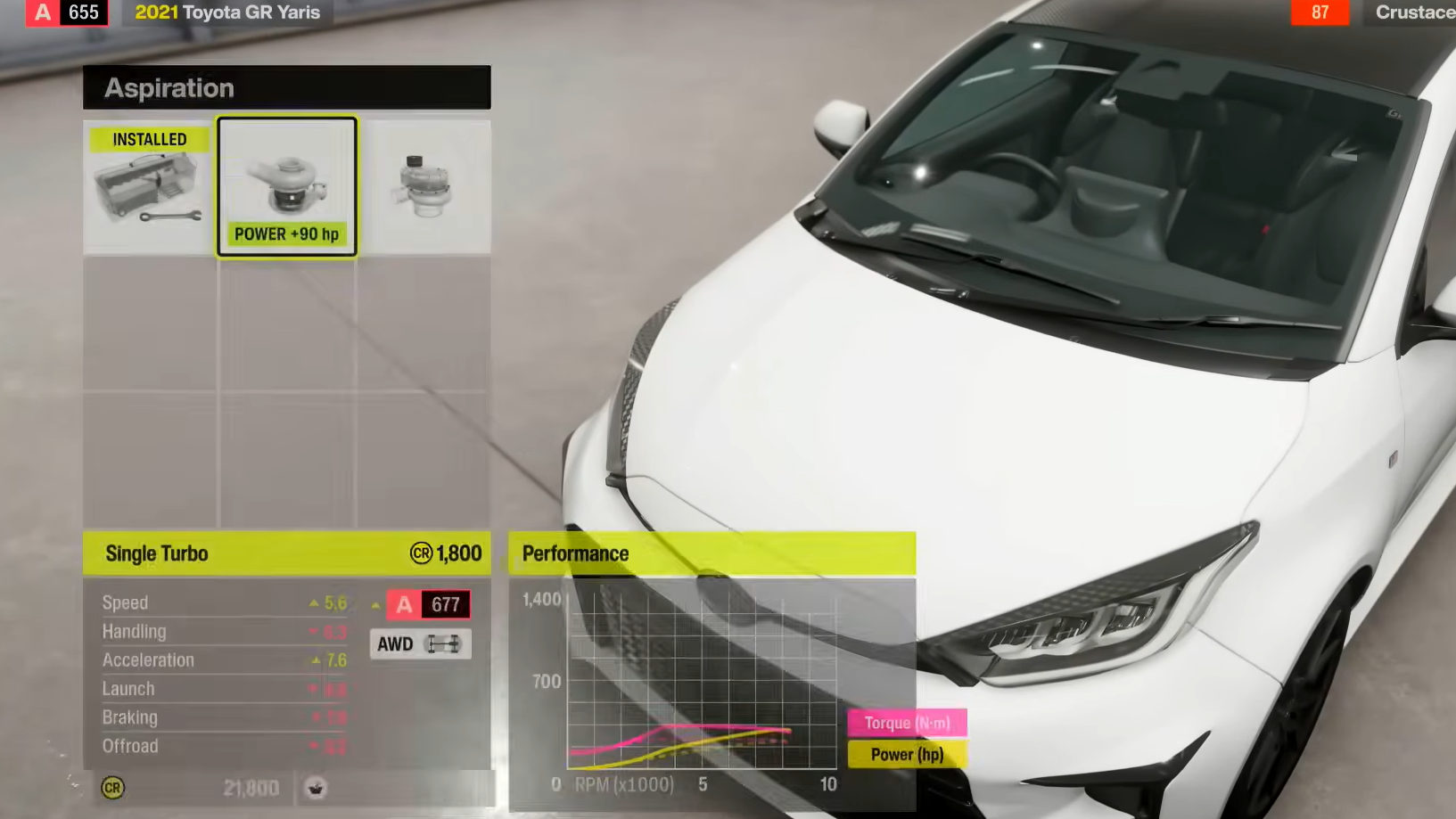
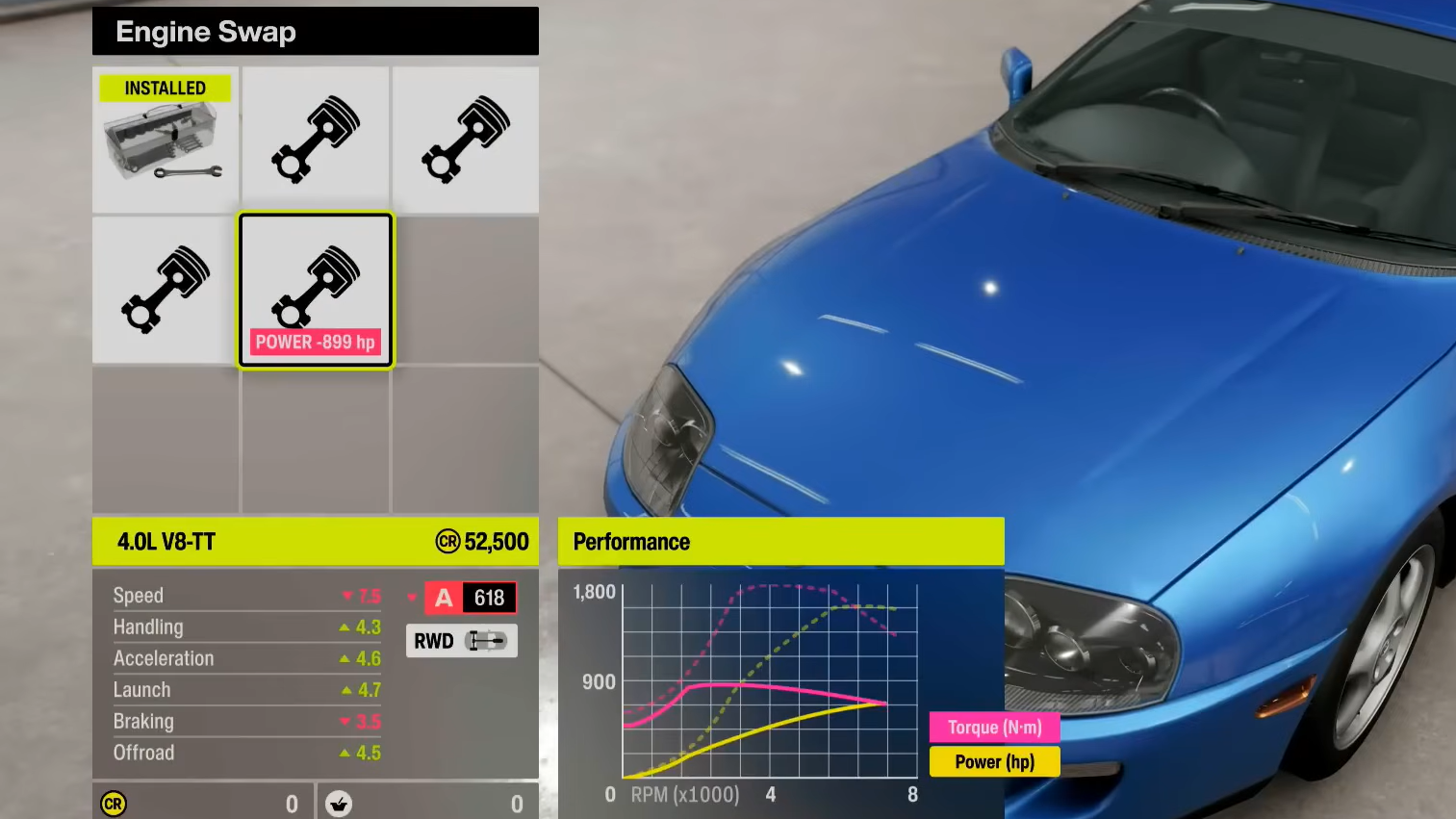
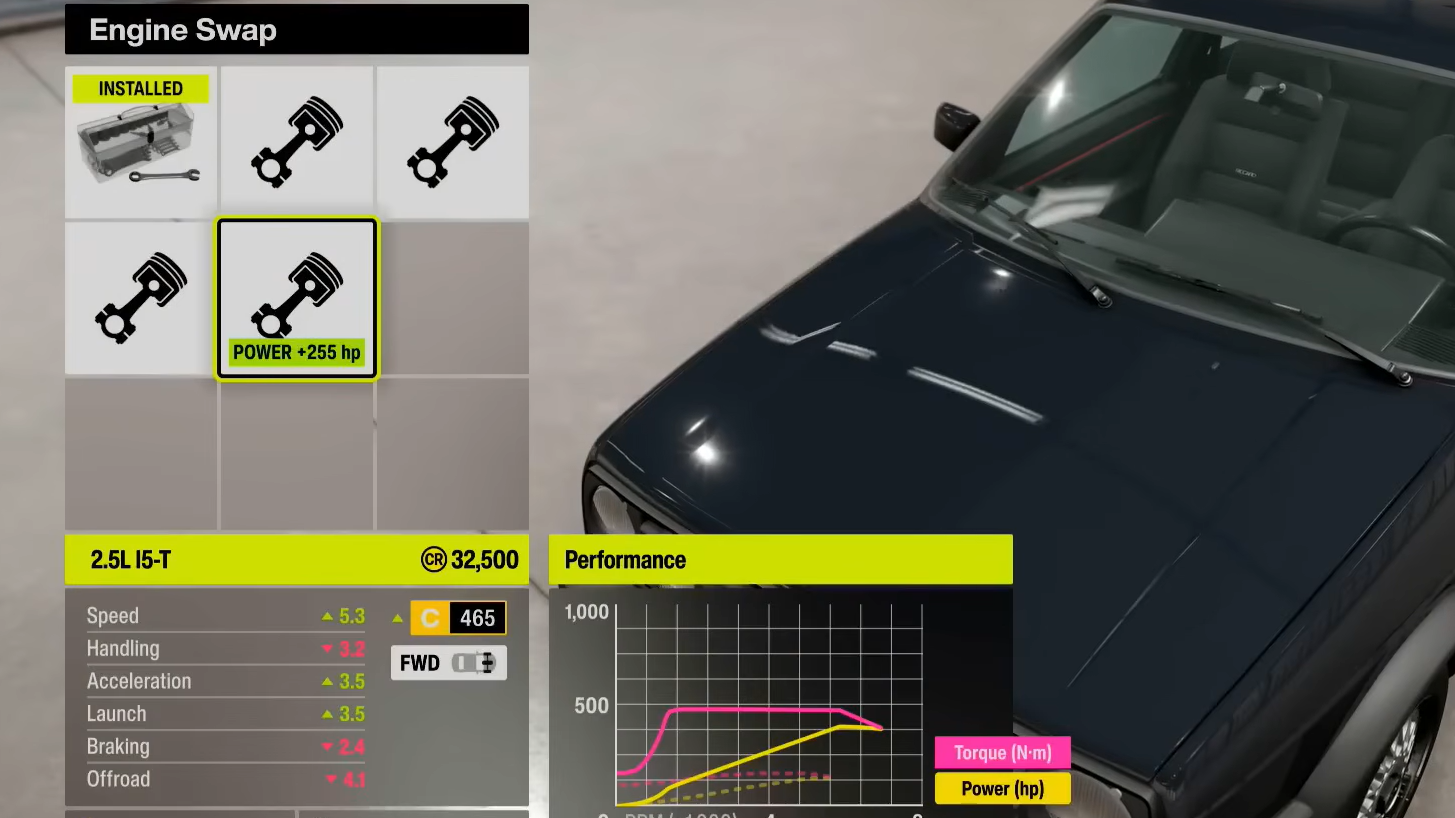
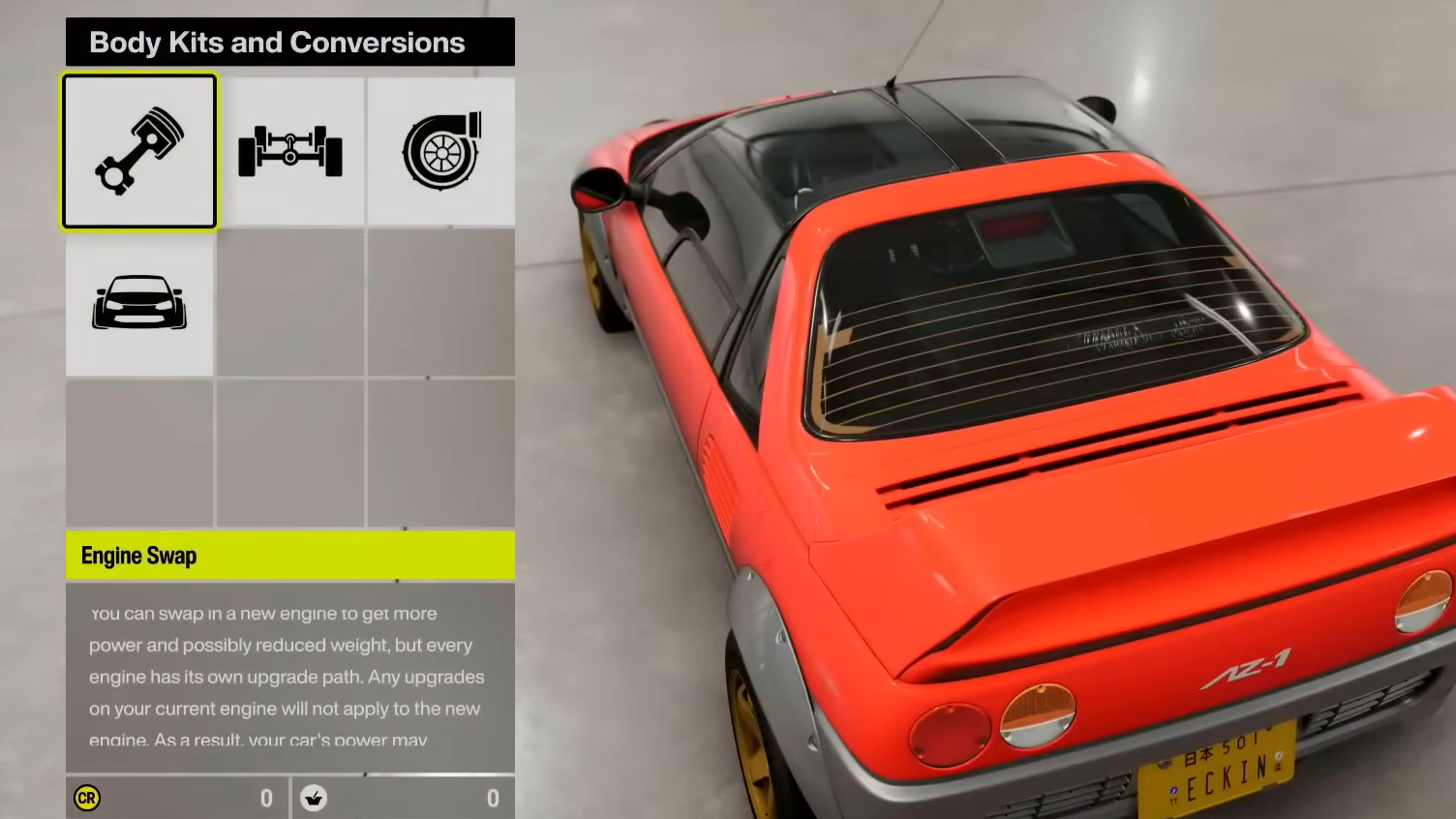
Open the upgrade shop, scroll to the Engine Swap tab, and the game lists every conversion supported by that specific chassis. Each entry shows stock horsepower, torque, and the price in credits. Aspiration options (turbo, twin turbo, centrifugal supercharger, positive displacement supercharger) appear after the swap is installed and depend on the engine.
Not every car supports swaps. Some licensed vehicles and most hypercars have locked upgrade paths. The Engine Swap tab simply will not appear for those models. You can revert to the stock engine at any time, but you won’t get a full refund for the swapped block.
Forza Horizon 6 engine swap list
The conversion pool is the same engine library used across recent Forza titles, organized below by configuration. Power figures are stock numbers as they appear in the swap menu before forced induction or other tuning.
4-cylinder swaps
| Engine | Stock HP | Torque | Aspiration | Real-world origin |
|---|---|---|---|---|
| I4 Motorbike Engine | 196 | 113 lb-ft | NA | Suzuki Hayabusa |
| 1.6L I4 VVT | 182 | 118 lb-ft | NA | Honda Civic EK9 (B16B) |
| 1.6L I4 Turbo Rally | 300 | 332 lb-ft | Turbo | Ford Fiesta RS |
| 1.8L I4 Turbo | 200 | 188 lb-ft | Turbo | Peugeot 205 T16 |
| 2.0L I4 VVT | 212 | 149 lb-ft | NA | Honda Civic Type R EP3 (K20) |
| 2.0L I4 Turbo | 224 | 224 lb-ft | Turbo | Ford Escort RS Cosworth |
| 2.0L I4 Turbo | 250 | 203 lb-ft | Turbo | Nissan Silvia Spec-R S15 (SR20DET) |
| 2.0L I4 Turbo | 280 | 300 lb-ft | Turbo | Mitsubishi Lancer Evo VI (4G63) |
| 2.0L F4 Turbo | 278 | 290 lb-ft | Turbo | Subaru Impreza WRX STi ’04 (EJ20) |
| 2.0L F4 Turbo Rally | 330 | 480 lb-ft | Turbo | Subaru WRX VT15R |
| 2.0L Turbo VVT | 306 | 295 lb-ft | Turbo | Honda Civic Type R FK8 |
| 2.1L I4 Turbo | 506 | 401 lb-ft | Turbo | Ford RS200 Evolution |
| 2.5L F4 Turbo | 305 | 290 lb-ft | Turbo | Subaru WRX STi ’11 (EJ25) |
6-cylinder swaps
| Engine | Stock HP | Torque | Aspiration | Real-world origin |
|---|---|---|---|---|
| 1.8L I6 | 112 | 109 lb-ft | NA | Volkswagen Golf ’83 |
| 2.6L I6 TT | 327 | 293 lb-ft | Twin Turbo | Nissan Skyline GT-R R34 (RB26DETT) |
| 2.7L F6 | 207 | 188 lb-ft | NA | Porsche 911 Carrera RS |
| 2.8L V6 | 172 | 173 lb-ft | NA | Volkswagen GTI ’98 VR6 |
| 2.8L V6 | 178 | 177 lb-ft | NA | Volkswagen Corrado VR6 |
| 3.0L I6 Turbo (Racing) | ~805 | 775 lb-ft | Turbo | Toyota racing inline-6 |
| 3.2L I6 | 321 | 258 lb-ft | NA | BMW M3 E36 (S50) |
| 3.3L F6 Turbo | 296 | 304 lb-ft | Turbo | Porsche 911 Turbo ’82 |
| 3.5L V6 TT Hybrid | 573 | 476 lb-ft | Twin Turbo + Electric | Acura NSX (2017) |
| 3.5L V6 TT | 450 | 500 lb-ft | Twin Turbo | Ford F-150 Raptor |
| 3.5L V6 TT | 542 | 473 lb-ft | Twin Turbo | Jaguar XJ220 |
| 3.5L V6 TT | 630 | 539 lb-ft | Twin Turbo | Ford GT ’17 |
| Racing V6 TT | ~914 | 953 lb-ft | Twin Turbo | Ford Hoonitruck |
| 3.8L V6 TT | 542 | 466 lb-ft | Twin Turbo | Nissan GT-R R35 (VR38DETT) |
| 3.8L F6 TT | 691 | 553 lb-ft | Twin Turbo | Porsche 911 GT2 RS |
| 4.0L F6 | 493 | 339 lb-ft | NA | Porsche 911 GT3 RS |
| 12.8L I6T Diesel | 2,400 | 4,425 lb-ft | Turbo Diesel | Volvo Iron Knight |
V8 swaps
| Engine | Stock HP | Torque | Aspiration | Real-world origin |
|---|---|---|---|---|
| 3.0L V8 Racing | 475 | 268 lb-ft | NA | Ariel Atom V8 |
| 3.5L V8 (NA) | 375 | 288 lb-ft | NA | Ferrari F355 Berlinetta |
| 3.5L V8 TT | 550 | 471 lb-ft | Twin Turbo | Nissan R390 GT1 |
| 3.9L V8 TT | 660 | 560 lb-ft | Twin Turbo | Ferrari 488 GTB |
| 4.0L V8 | 414 | 295 lb-ft | NA | BMW M3 E92 (S65) |
| 4.5L V8 | 562 | 398 lb-ft | NA | Ferrari 458 Italia |
| 4.6L V8 Hybrid | 887 | 830 lb-ft | Turbo + Electric | Porsche 918 Spyder |
| 5.0L V8 DSC | 550 | 502 lb-ft | NA | Jaguar Land Rover AJ-V8 |
| 5.1L V8 TT | 1,341 | 1,011 lb-ft | Twin Turbo | Koenigsegg One:1 |
| 5.2L V8 (Voodoo) | 526 | 429 lb-ft | NA | Ford Shelby GT350R |
| 5.5L V8 TT | 577 | 590 lb-ft | Twin Turbo | Mercedes E63 AMG ’13 |
| 5.8L V8 DSC | 662 | 631 lb-ft | NA | Mustang Shelby GT500 |
| 6.2L V8 | 415 | 415 lb-ft | NA | Chevrolet LS3 |
| 6.2L V8 | 510 | 457 lb-ft | NA | Mercedes-AMG M156 |
| 6.2L V8 DSC | 707 | 650 lb-ft | Supercharged | Dodge Hellcat |
| 6.7L V8 Turbo Diesel | 475 | 1,050 lb-ft | Turbo Diesel | Cummins (Ford Super Duty) |
| 7.0L V8 | 485 | 475 lb-ft | NA | Ford GT40 |
| 7.0L V8 H | 425 | 490 lb-ft | NA | Mopar 426 Hemi |
| 7.0L V8 (LS7) | 505 | 481 lb-ft | NA | Chevrolet Camaro ’15 |
| 7.2L V8 | 1,000 | 738 lb-ft | NA | Ford Mustang RTR |
| Racing 7.2L V8 | 850 | 640 lb-ft | NA | RJ Pro 2 Truck |
| 7.4L V8 TT | 1,750 | 1,476 lb-ft | Twin Turbo | Funco F9 |
| 8.9L V8 DSC | 1,500 | 1,101 lb-ft | NA | Cummins big block |
V10, V12, W16 and rotary swaps
| Engine | Stock HP | Torque | Aspiration | Real-world origin |
|---|---|---|---|---|
| 4.8L V10 | 552 | 354 lb-ft | NA | Lexus LFA |
| 5.0L V10 | 500 | 383 lb-ft | NA | BMW M5 E60 (S85) |
| 5.2L V10 | 602 | 413 lb-ft | NA | Lamborghini Huracán |
| 8.4L V10 | 640 | 600 lb-ft | NA | Dodge Viper |
| 3.0L DSC V12 (Vintage) | 483 | 361 lb-ft | NA | Mercedes-Benz W154 |
| Racing V12 | ~750 | 384 lb-ft | NA | Ferrari F50 |
| 5.2L V12 TT | 608 | 516 lb-ft | Twin Turbo | Aston Martin DB11 |
| 6.0L V12 | 650 | 484 lb-ft | NA | Ferrari classic V12 |
| 6.1L V12 | 627 | 480 lb-ft | NA | McLaren F1 |
| 6.3L V12 Hybrid | 1,036 | 664 lb-ft | NA + Electric | Ferrari LaFerrari |
| 6.5L V12 | 700 | 509 lb-ft | NA | Lamborghini Aventador |
| 6.9L V12 TT | 622 | 539 lb-ft | Twin Turbo | Mercedes CLK GTR |
| 7.0L V12 | 820 | 590 lb-ft | NA | Aston Martin |
| 7.7L V12 | 800 | 650 lb-ft | NA | TVR Cerbera Speed 12 |
| 8.0L W16 Quad Turbo | 1,183 | 1,106 lb-ft | Quad Turbo | Bugatti Veyron/Chiron |
| 1.3L 2 Rotor TT | 261 | 217 lb-ft | Twin Turbo | Mazda RX-7 FD (13B-REW) |
| 2.6L 4 Rotor Racing | 690 | 448 lb-ft | NA | Mazda 26B |
Build categories and recommended swaps
Most chassis can fit several blocks, but only a few combinations make sense once weight and drivetrain are factored in. The pairings below reflect the dominant meta carried over from the previous title.
| Build type | Recommended swap | Why it works |
|---|---|---|
| Drift / Gymkhana | 2.6L 4-Rotor Racing | High-rev power band, low rotational inertia, predictable throttle response. |
| Track / Circuit | 6.2L V8 (LS3) | Mid-weight, naturally aspirated throttle response, broad torque curve. |
| Drag | 7.4L V8 TT (Funco) or W16 Quad Turbo | Massive power ceiling once tuned for straight-line. |
| Rally / Cross-country | 1.6L I4 Turbo Rally or 2.0L F4 Turbo Rally | Low weight, strong low-end torque, suited to AWD launches. |
| Lightweight road | 2.0L I4 VVT (K20) or 2.0L Turbo VVT | Preserves balance in small chassis without overwhelming traction. |
Things that block or break a swap
A few specific conditions cause an otherwise tempting swap to underperform:
- Dropping a V12 or large V8 into a sub-1,000 kg chassis usually destroys front grip and creates terminal understeer.
- Swapping without upgrading the differential leads to wheel spin in third gear and above.
- Forced induction adds heat and power that stock brakes and tires cannot manage. Upgrade braking and rubber first.
- Some hypercars and licensed vehicles lock the Engine Swap tab entirely. If the tab is missing, the chassis is not eligible.
Confirming a swap worked
The upgrade shop updates the car’s PI (Performance Index) and stat bars the moment a swap is purchased. The engine name on the car info card changes to the new block, and the aspiration options refresh to reflect what the new engine supports. If the PI does not change after purchase, the swap did not apply, and the credits should auto-refund within the menu.
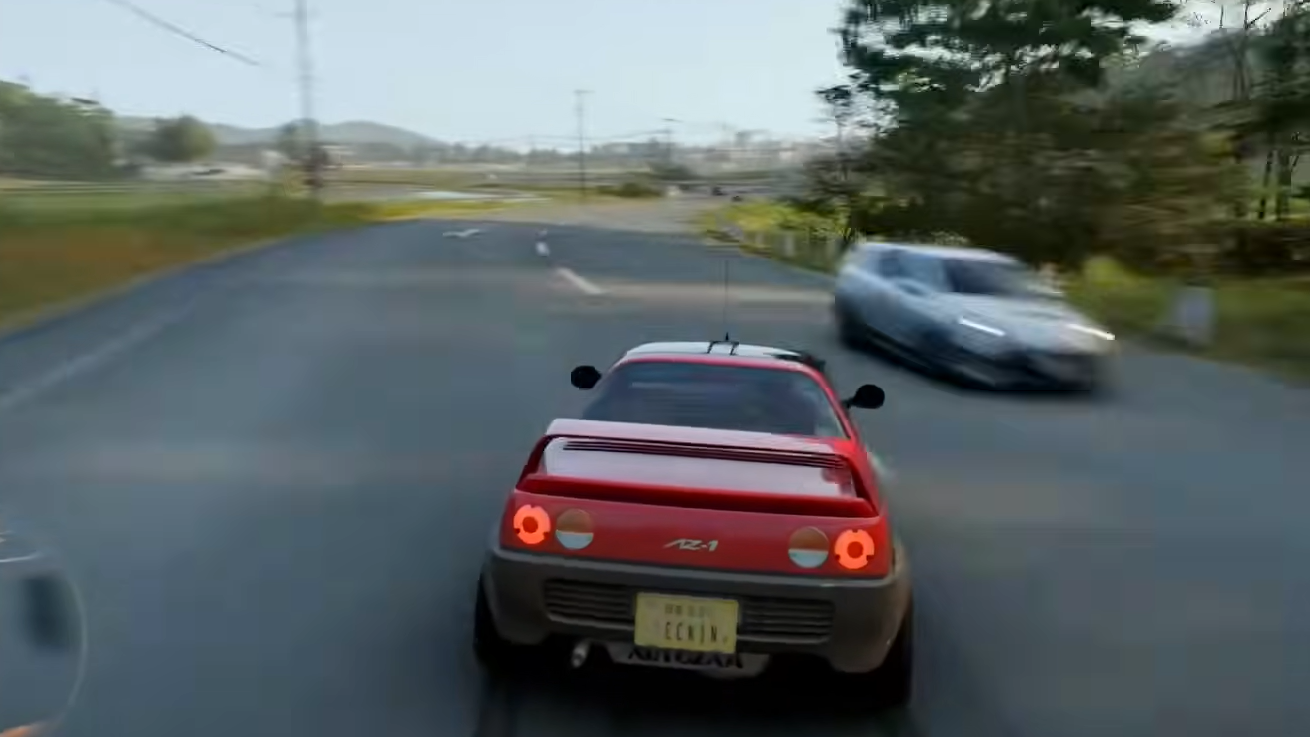
For real-world feel, the audio is the fastest tell. The 2.6L I6 TT has a distinct RB26 whine, the 6.2L V8 has the familiar LS3 burble, and the rotary options produce the unmistakable Wankel buzz at high RPM. If the sound has not changed, neither has the engine.