
Graveyard Keeper’s economy is deceptively punishing. Unlike most management sims, you can’t just mass-produce one item and dump it on a vendor forever — the game enforces a supply-and-demand system that tanks prices when you oversaturate a buyer. Vendors consume roughly six items per in-game night, so flooding them with dozens of the same product craters your margins and takes ages to recover. Earning real money means diversifying your income and understanding which methods scale best at each stage of your playthrough.
Quick answer: The three most reliable long-term income sources are weekly church sermons with a high-quality Combo Prayer and upgraded graveyard, merchant crate sales (ideally automated with zombie farms from the Breaking Dead DLC), and the Talking Skull Tavern from the Stranger Sins DLC.
Supply and Demand — The Rule That Governs Everything
Before diving into specific methods, you need to internalize one mechanic. Every vendor in Graveyard Keeper has a hidden demand pool for each item type. Selling large quantities of the same thing in a single week drives the price down sharply, and it takes a long time for that vendor’s demand to recover. The practical ceiling is about six units of any given item per vendor per week if you want to maintain stable prices. The one major exception is Burial Certificates, which are immune to this system.
Early Game Income
Burial Certificates
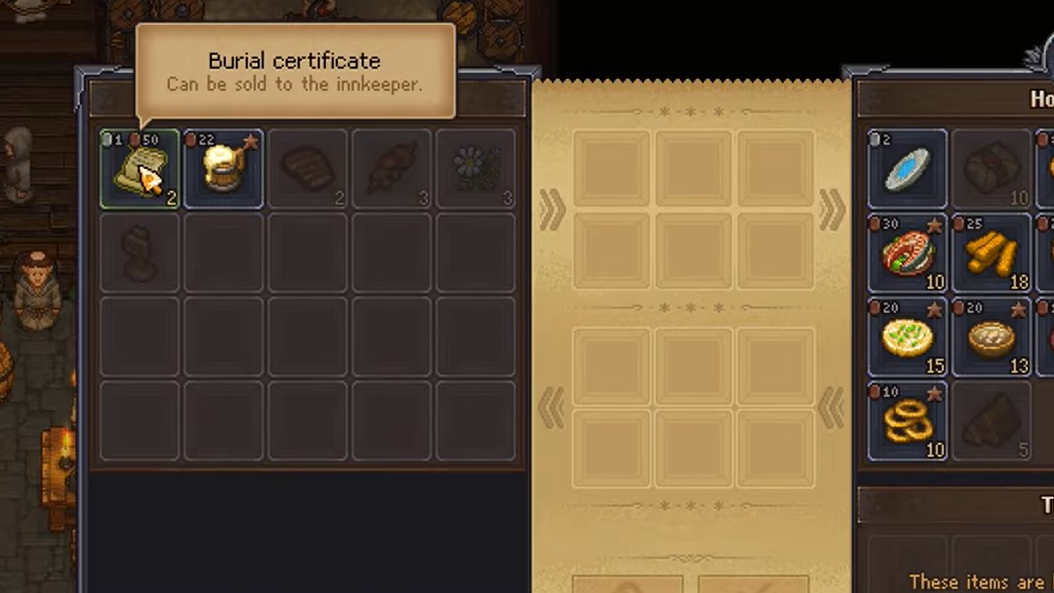
Every body you bury generates a Burial Certificate worth 1 silver and 50 copper, which you can sell to Horadric at the Dead Horse tavern. These certificates are the only product completely exempt from supply-and-demand price decay, meaning you can sell them in bulk without penalty. To keep the bodies flowing, buy carrots from the farmer and grow them yourself so you always have enough to pay the donkey for deliveries. This is your bread-and-butter income for most of the game.
Selling Stone, Billets, and Iron
In the very first days, before farming or the church is up and running, you can sell excess stone to Cory and wooden billets to Tress. If you’ve unlocked a furnace and anvil, simple iron bars or simple iron parts sell to the blacksmith (Krezvold) for a decent return. Just remember the six-per-week guideline to avoid crashing his prices.
Coal and Graphite
The coal deposit is northwest of the graveyard, next to the whitish quarry. You can sell raw coal to the blacksmith, but he runs out of money quickly. A better play is smelting coal into graphite at a Furnace II or III. Five coal produces one graphite at a tier-two furnace, or two graphite at tier three. Each piece of graphite sells for about 40 copper, and the blacksmith buys it at a relatively stable price — making it a low-effort early income supplement.
Basic Crop Farming
Once you unlock the garden, the Merchant will offer you a loan to buy seeds. Buy from the farmer, grow the crops, sell the produce back, and reinvest the profit into more seeds. It’s not glamorous, but it gets you through the early cash crunch. Use fertilizer (crafted at an alchemy workbench) to push crop quality up to silver or gold, which significantly increases sale value. Silver-quality fertilizer only requires a tier-one bench; gold-quality fertilizer needs a tier-two alchemy table and ingredients like flavor enhancer.
Mid-Game Income
Church Sermons and the Combo Prayer
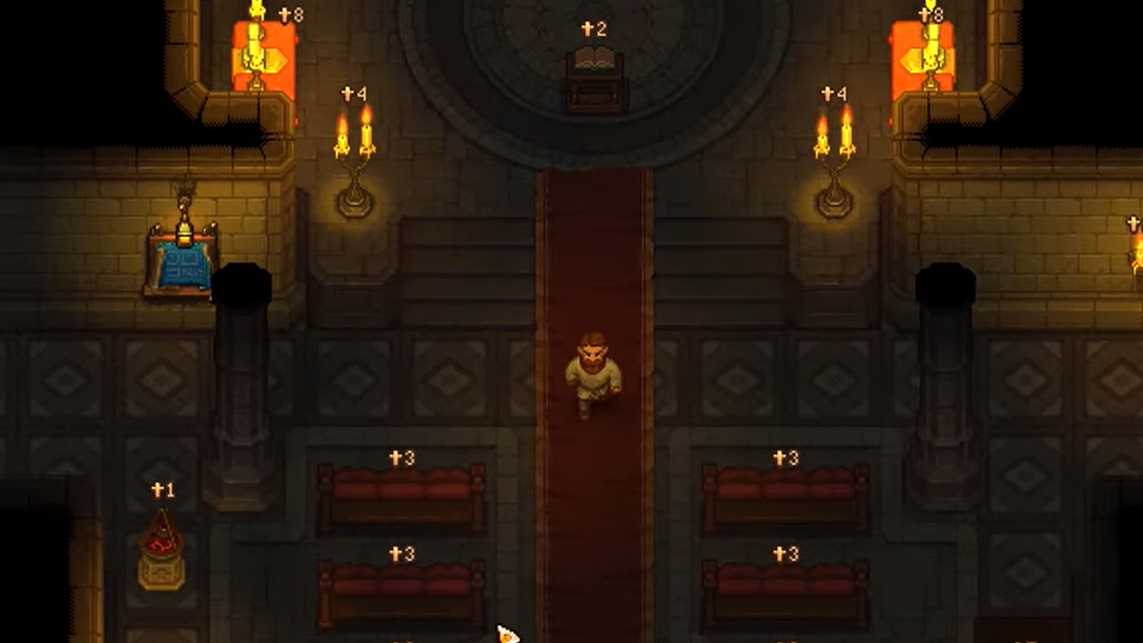
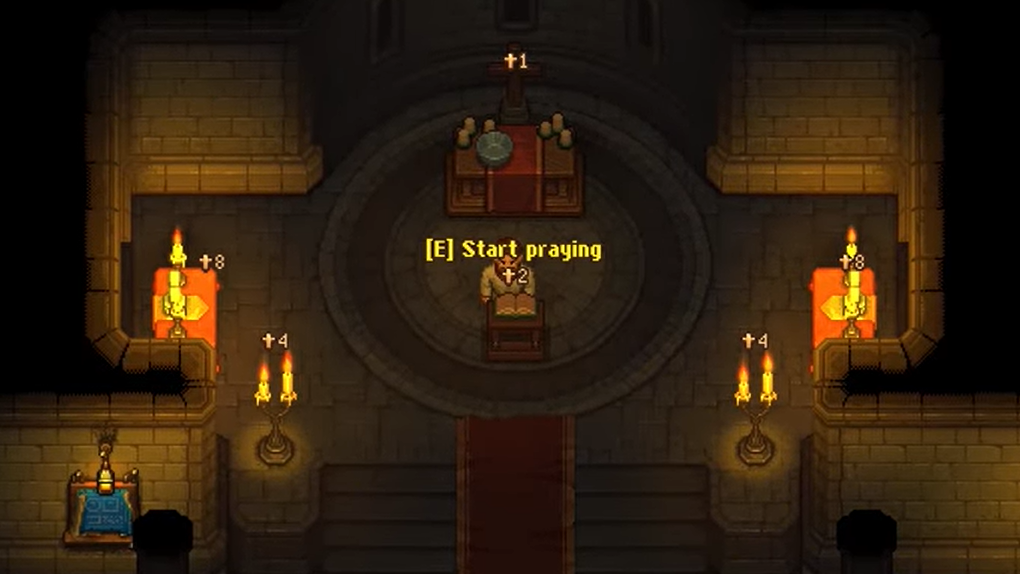
Sermons happen once per week on Pride Day and are one of the strongest recurring income sources in the game. The Bishop gives you a Casual Prayer to start, which pays 3 copper per point of graveyard quality plus 1 Faith per 5 church quality. You should upgrade to a Combo Prayer as soon as possible — it combines the donation prayer and the faith prayer into one, boosting both by 50%, 100%, or 150% depending on its quality tier (bronze, silver, or gold).
You can buy the Combo Prayer from the Bishop for 1 silver and 12 copper, or craft it at the Church Workbench using one book and seven Faith. The gold version is the goal: craft a gold-quality book at a Desk II, then use it to make a gold Combo Prayer. With a graveyard rating above 200 and church quality above 70, a single sermon can net you upward of 30 silver. Lighting candles before the sermon further increases the payout.
Merchant Crate Sales
At 30 reputation with the Merchant, you unlock a questline that leads to a business deal. You’ll need a Trade License, which costs 50 silver and is purchased through the kingdom mailbox by the church. Once you have it, a trade office opens where you can sell produce and products in crate form — up to 10 crates per week.
| Crate Type | Sale Price |
|---|---|
| Silver crate | 10 silver, 75 copper |
| Gold crate | 16 silver, 50 copper |
| Goods crate | 15 silver |
Pumpkins are among the best crops for crate-selling because of their high yield. You assemble crates in your home’s front yard. At full capacity, 10 gold crates per week brings in over 1 gold and 60 silver — a massive weekly haul.
Wine Production
The vineyard unlocks through the Inquisitor’s questline and sits between Witch Hill and your house. You can clear a path from the vineyard to just north of your home to shorten the commute. Grapes grown with gold-quality fertilizer produce gold-star wine, which sells to the Merchant for a strong price. Bronze and silver wines can be sold to Horadric at the Dead Horse instead. Wine production requires investing blue science points into the wine-making tech tree, but once it’s running, the returns are substantial — especially if you limit sales to about six bottles per vendor per week to keep prices healthy.
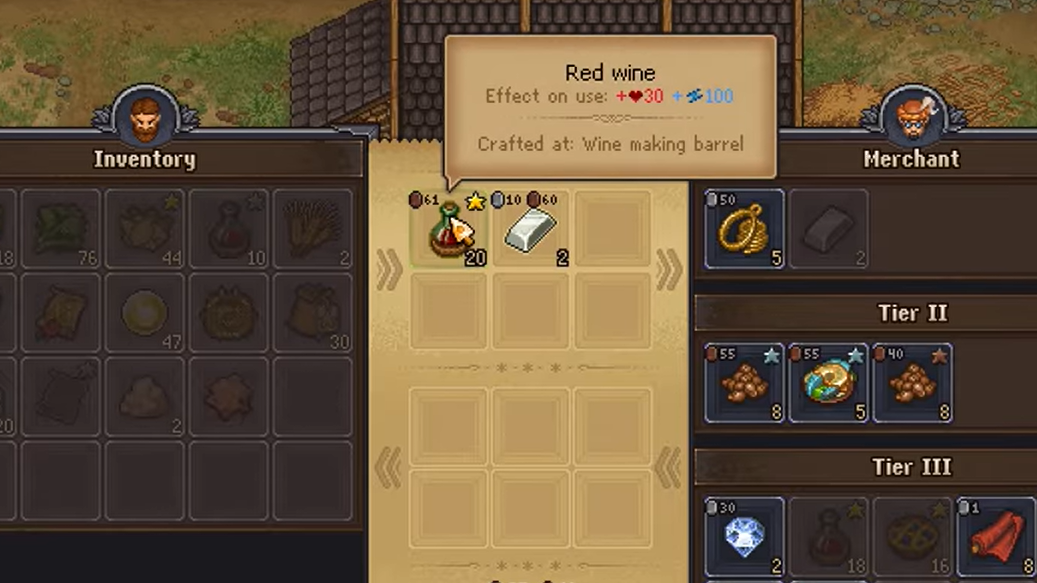
Witch Burning Burger Stand
At 40 reputation with the Inquisitor, he asks you to build a buffet tent for witch burnings. Stock it with five gold-quality burgers (made from gold onions) and ten gold-star mugs of beer (made from gold hops). After each buffet event, you earn 33 silver and 4 Faith. This is repeatable and one of the more lucrative mid-game methods, though it requires a reliable supply of gold-quality crops.
Selling Books to the Astrologer
Once you unlock the Desk and the Books section of the tech tree, you’ll produce books for prayers and science. Surplus books — especially silver and gold quality — sell well to the Astrologer. Silver books go for 13 silver and 26 copper; gold books fetch 26 silver and 52 copper. This is a solid way to monetize excess writing output after you’ve crafted all the prayers you need.
Processing and Packaging Flesh
Corpses on the autopsy table yield flesh, but selling it to the tavern requires a stamp proving it’s “authentic” meat. You can get this stamp by reaching 30 reputation with Snake through his questline, or by purchasing it through Royal Services at the church mailbox for 50 silver. Once stamped, combine the flesh with clean paper in your kitchen to create sellable meat packages.
Late Game Income
Zombie Farms (Breaking Dead DLC)
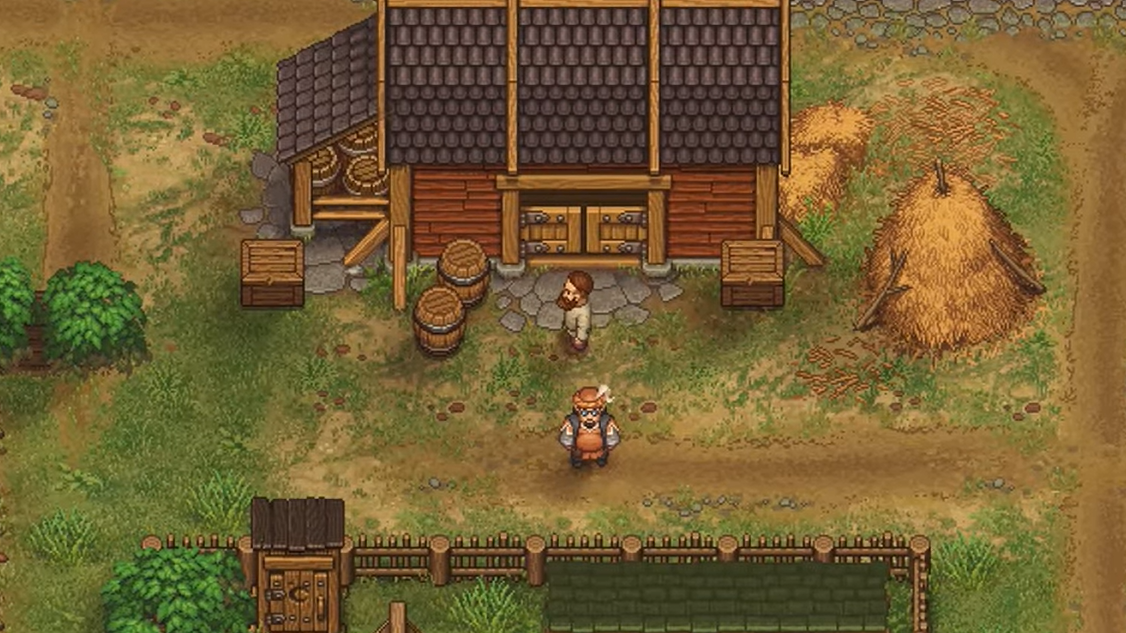
The Breaking Dead DLC lets you resurrect corpses into zombies through a questline involving Gunter. These zombies can be assigned to crop farms, the quarry, or the lumber area, where they produce and transport materials back to your home automatically. The real power move is setting up multiple zombie farms growing gold-quality pumpkins, lentils, or onions, then packing the harvest into crates for the Merchant each week. With three or four zombie farms running, you can fill your weekly crate allotment without lifting a finger — turning crate sales into a truly passive income stream worth over 1 gold per week.
The Talking Skull Tavern (Stranger Sins DLC)
The Stranger Sins DLC grants access to the Talking Skull, your own tavern. Stock the crates with alcohol and food, and patrons generate passive income every time you visit. As Tavern Quality increases, more customers show up. You can also organize events, stocking the Barman’s inventory with food and drink to boost event earnings further. This becomes one of the most hands-off money generators in the late game.
Dungeon Loot and Jewelry
Clearing the dungeon levels (required for Snake’s final quest anyway) yields silver ore, gold ore, and diamonds. Silver ore has no crafting use beyond being sold to the Merchant. Diamonds can be turned into jewelry at a crafting station and sold to Ms. Charm on a weekly basis. Any leftover diamonds also sell directly to the Merchant. This isn’t a repeatable weekly grind in the same way as crates or sermons, but it provides a significant cash injection when you need it.
Vendor-Specific Selling Tips
| Vendor | Best Items to Sell | Notes |
|---|---|---|
| Horadric (Dead Horse) | Burial Certificates, bronze/silver wine, beer | Certificates have no price decay |
| Merchant | Gold crates, gold wine, silver ingots, diamonds | Visits weekly; 10-crate cap |
| Blacksmith (Krezvold) | Graphite, iron bars, iron parts | Limited funds; runs out fast |
| Astrologer | Silver and gold books | Only buys silver+ quality |
| Ms. Charm | Diamond jewelry | Weekly purchase limit |
| Inquisitor (Burger Stand) | Gold burgers, gold beer | 33 silver + 4 Faith per event |
| Farmer / Miller | Crops, flour | Good early; use Prayer of Prosperity to level them up |
The most efficient path through Graveyard Keeper’s economy follows a clear arc: lean on Burial Certificates and basic resource sales early, transition into church sermons with upgraded prayers and graveyard quality in the mid-game, and then automate crate production with zombie farms while running the Talking Skull Tavern for passive income in the late game. Resist the urge to dump hundreds of one item on a single vendor — patience with the supply-and-demand system is what separates a struggling keeper from a wealthy one.