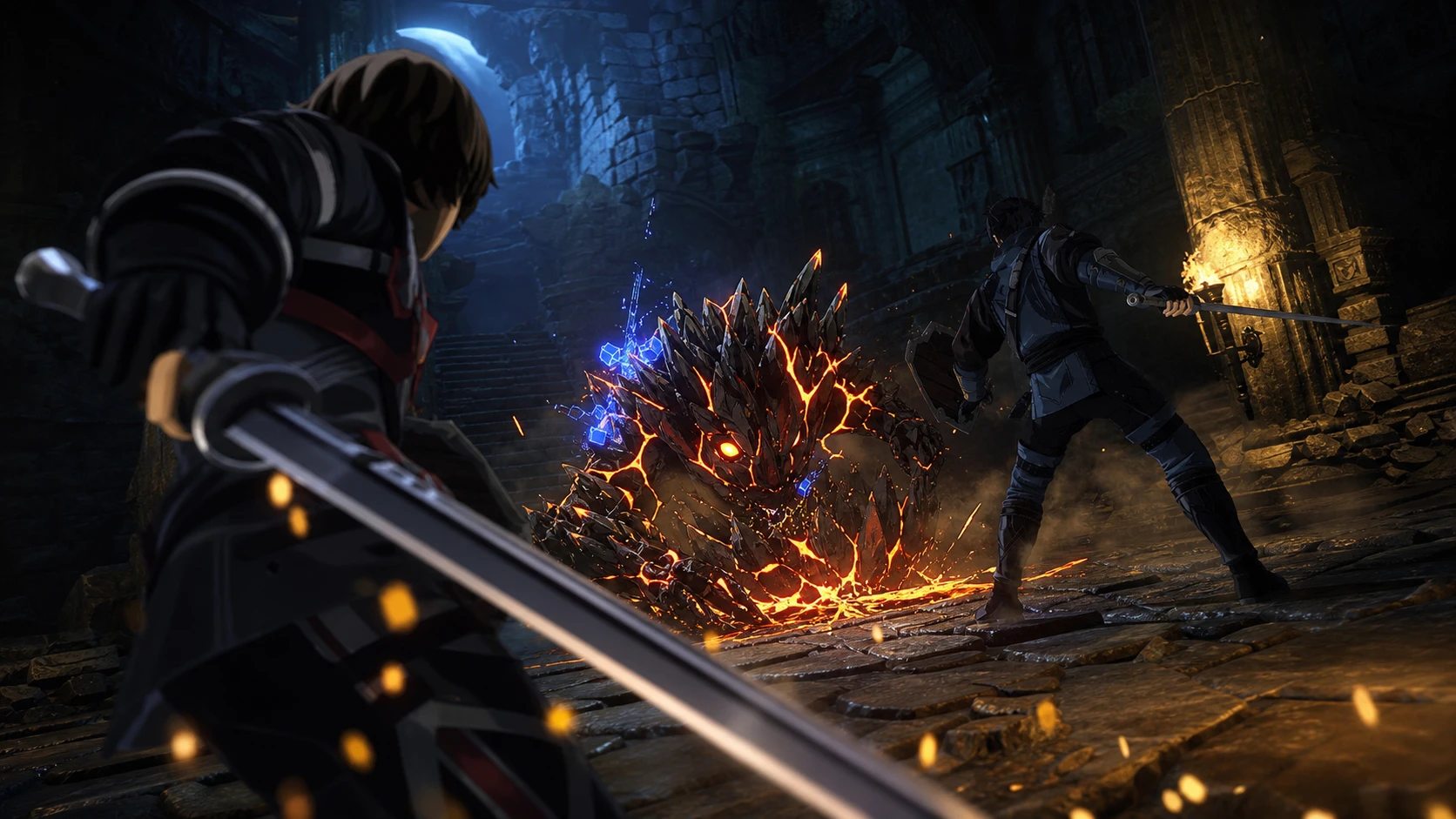
Echoes of Aincrad runs on familiar action RPG rules with a Sword Art Online layer on top. Real-time fights ask you to manage two resources, pick from six weapon types, lean on an AI partner, and then funnel everything you earn back into your stats and gear between trips into the floating castle. The two systems are tied together. You fight to level up, and you level up to fight tougher enemies.
Quick answer: Combat drains Stamina on attacks, dodges, and guards, while Sword Skills drain SP, so you alternate basic combos with skills and recover HP using Healing Crystals at Safety Areas. Progression is separate from your level. You spend Growth Points at the inn’s Chest Orb to raise stats that match your weapon’s scaling, and you upgrade weapons at the blacksmith.
Echoes of Aincrad combat: Stamina, SP, and healing
Every offensive and defensive action costs Stamina. Attacking, dodging, and raising a shield to guard all pull from the same bar, and when it empties your options shrink until it refills. That makes Stamina the throttle on how aggressive you can be in any exchange.
Sword Skills sit on a second resource called SP. These are your heavy, high-damage moves, and they burn SP fast. Spam them and you leave yourself open, so the intended rhythm is to weave normal hits between skills rather than chaining specials back to back.
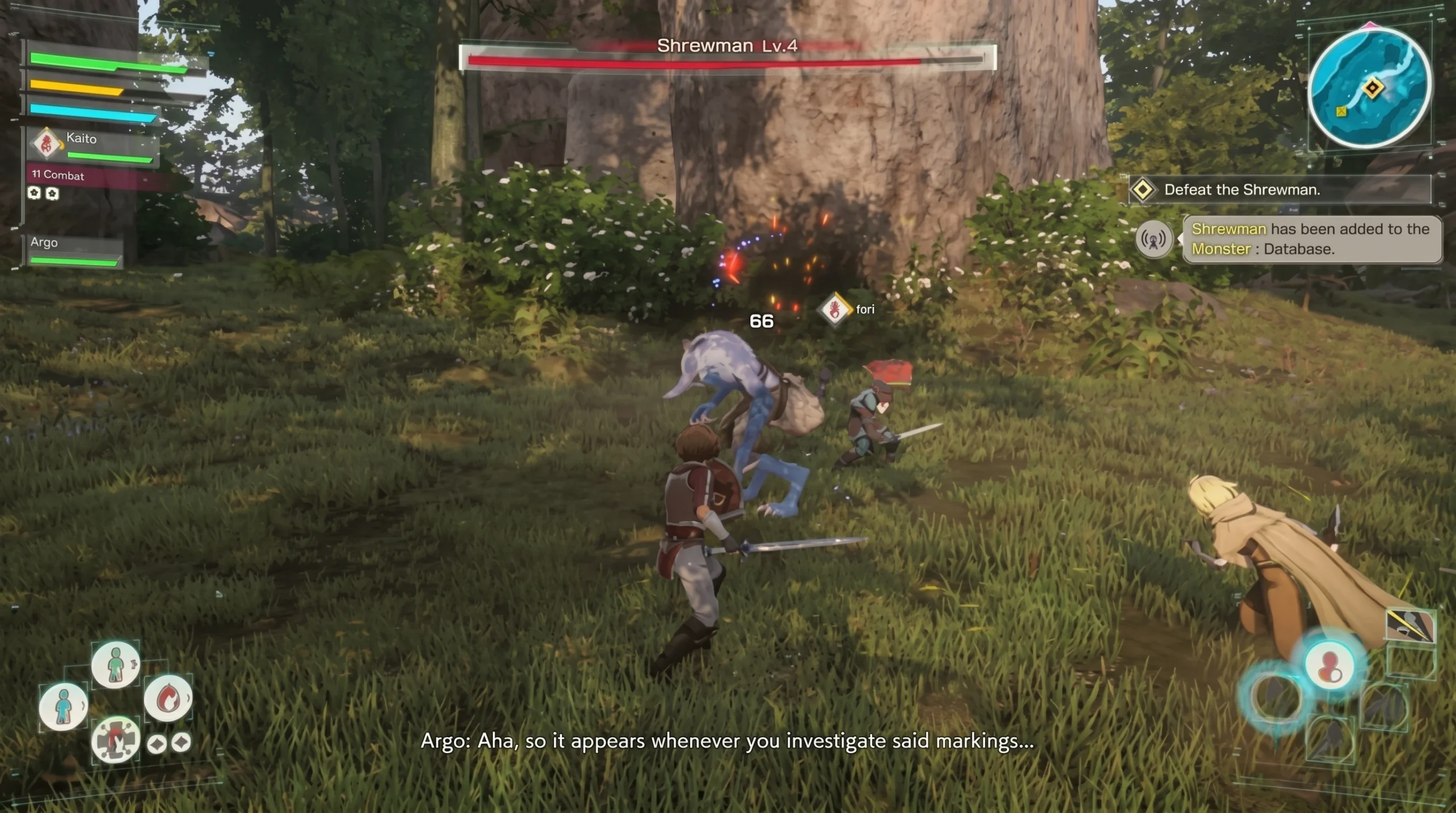
Healing leans on preparation. You restore HP with Healing Crystals, which top back up when you rest at Safety Areas, and you can stack them with healing potions and other consumables you gather along the way. The system also supports more advanced defense. Perfect guards, parries, dodges, and a dedicated counter called Reversal Slash let you punish enemies instead of just tanking hits. After a successful parry, pressing the attack button (square on PlayStation, X on Xbox) triggers a counterattack from your active partner.
You can also bring battlefield tools. Mines, explosive stones, and debuff items can swing a tough fight if you time their use well.
All six weapon types and how they scale
There are six weapon types, each with its own skills, speed, and reach. A one-handed sword frees up a shield slot for a balanced offense-and-defense build, while the heavier two-handed options give up the shield for raw power and unique techniques. Your stats decide how hard each one hits, so the weapon you main should line up with the stats you invest in.
| Weapon | Playstyle |
|---|---|
| Sword (with shield) | Balanced offense and defense, parry-friendly, beginner-friendly |
| Dagger | Very fast, high mobility, short reach, combo-focused |
| Rapier | Quick, accurate strikes with high critical-hit potential |
| Mace | Slower hits with guard breaks, staggers, and crowd control |
| Two-handed sword | Heavy, aggressive damage, slow swings, no shield |
| Two-handed axe | Pure offense with crushing blows and unique techniques |
Note: Naming for a couple of types varies by region and build, with the two-handed sword sometimes shown as a greatsword and the axe as a battleaxe. Some skills also stay locked until you progress the story or raise affinity with a specific partner.
Partner system: Switch Mode and Free Mode
Each quest lets you bring one AI partner, and they act like an extension of your own kit. Every partner has a distinct Special Skill plus Support Skills and Combination Skills, so the companion you pick shapes how a fight plays out. By default a partner is set to a support inclination, and pressing triangle (Y on Xbox) flips them to offense so they take the lead on attacks.
Two behavior modes control the flow of battle, and you can flip between them instantly:
- Switch Mode splits a single enemy’s attention between you and your partner, which takes pressure off you during tough single-target fights.
- Free Mode lets both of you focus the same target together or break off to clear multiple enemies one at a time.
Knowing when to swap between the two is the core of clearing harder encounters efficiently. Known partners include Iori, Argo, Zash, Wyzeman, Saayu, and Stina, with all but Argo being original to this story.
Boss fights and the no-retreat rule
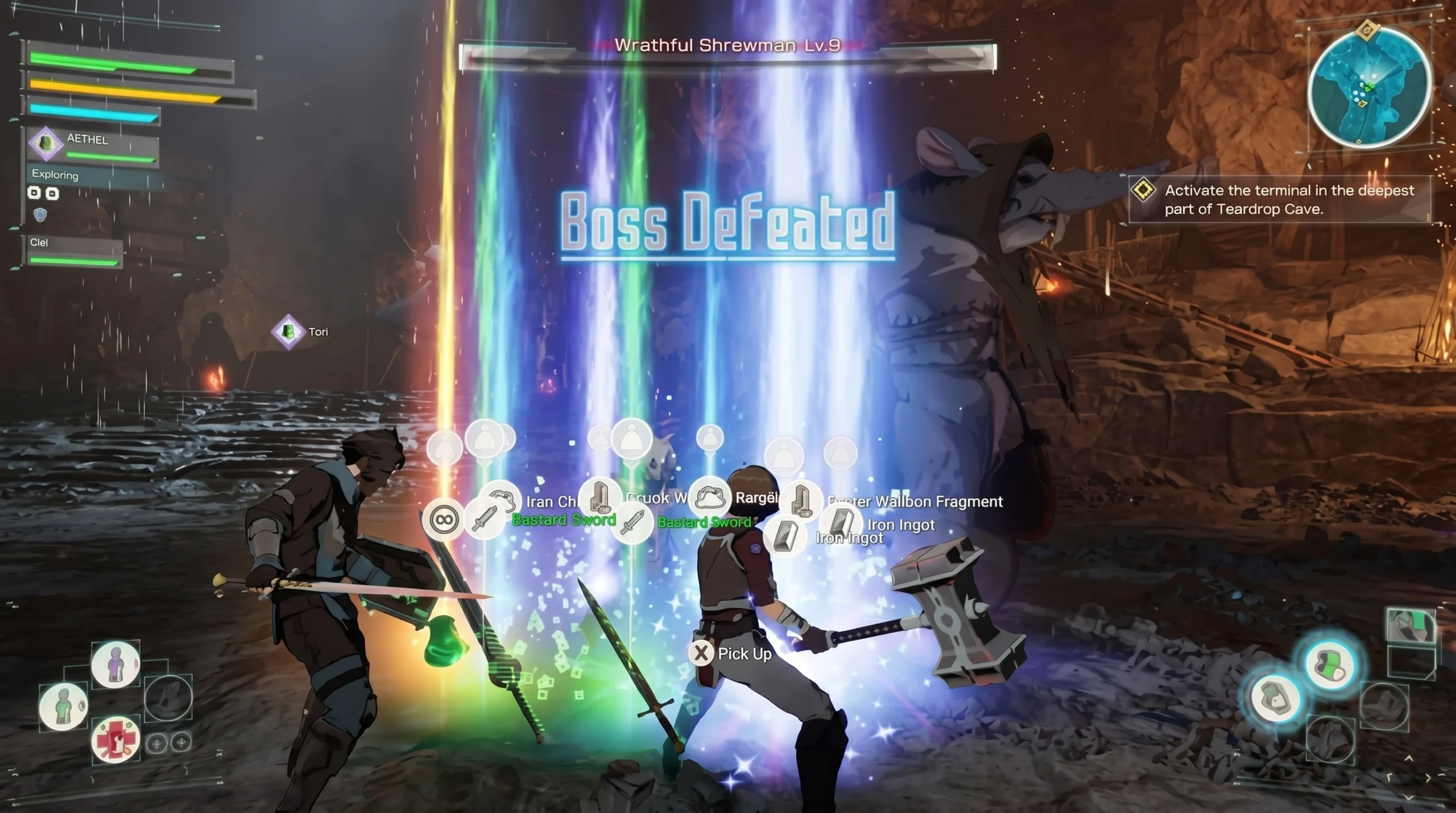
Bosses cap off the harder stretches of exploration, and they punish careless play. The reliable approach combines parries, dodges, and Reversal Slash to open windows for damage rather than trading blows head-on. The important constraint is that you cannot retreat once a boss battle starts. Return to base, restock, and pick your partner before you step into a boss room, because there is no backing out afterward.
Echoes of Aincrad progression: Levels, stats, and Growth Points
Progression splits into two tracks, and this trips people up. You earn XP by exploring, defeating bosses, and finding treasure, and your level rises automatically once you hit each threshold. But leveling alone does not raise your stats. Your level mainly gates which quests and bosses you can take on in the main story.
To actually get stronger, head to base towns such as the Town of Beginnings and use the Chest Orb at the inn. There you spend Growth Points from leveling to raise stats like stamina, strength, and dexterity. Because stats drive your weapon’s attack power, the payoff comes from pumping the stats that match your equipped weapon’s scaling rather than spreading points evenly.
Crafting, weapon upgrades, and EX-MODs
Gear keeps pace through the town economy. You spend Col earned during your travels at the item seller for potions and supplies, and you can craft consumables by combining materials you collect. The blacksmith handles weapons, where you can upgrade, fuse, and craft them. Enhancement follows a tempering loop similar to Nioh, where you sacrifice unused weapons to strengthen the one you actually use.
EX-MODs add the build depth. These grant special effects at random, and you can transfer an effect to another weapon of the same type. Combining EX-MOD effects with raw equipment performance, stat scaling, and repeated synthesis lets you assemble very different builds. Once your weapon is ready, accept a quest from the Main Terminal, lock in a partner, and head back into the field.
Echoes of Aincrad launches July 10, 2026 on PlayStation 5, Xbox Series X|S, and PC via Steam, and a demo is already available for players who want to test these systems before release. Across combat and progression the loop stays consistent. Manage Stamina and SP in the moment, lean on your partner’s modes, then convert XP, Growth Points, and Col into stronger stats and gear before the next floor.