

Farming in Hytale sits alongside combat, exploration, and building as a core system. It covers both crops and livestock, and it is designed to produce renewable food and other resources rather than just piles of unused ingredients. Even from pre-release footage and documentation, a clear pattern emerges: farming is slower and more deliberate than quick hunting, but it pays off once you invest in tools, land, and animal care.
How crop farming works in Hytale
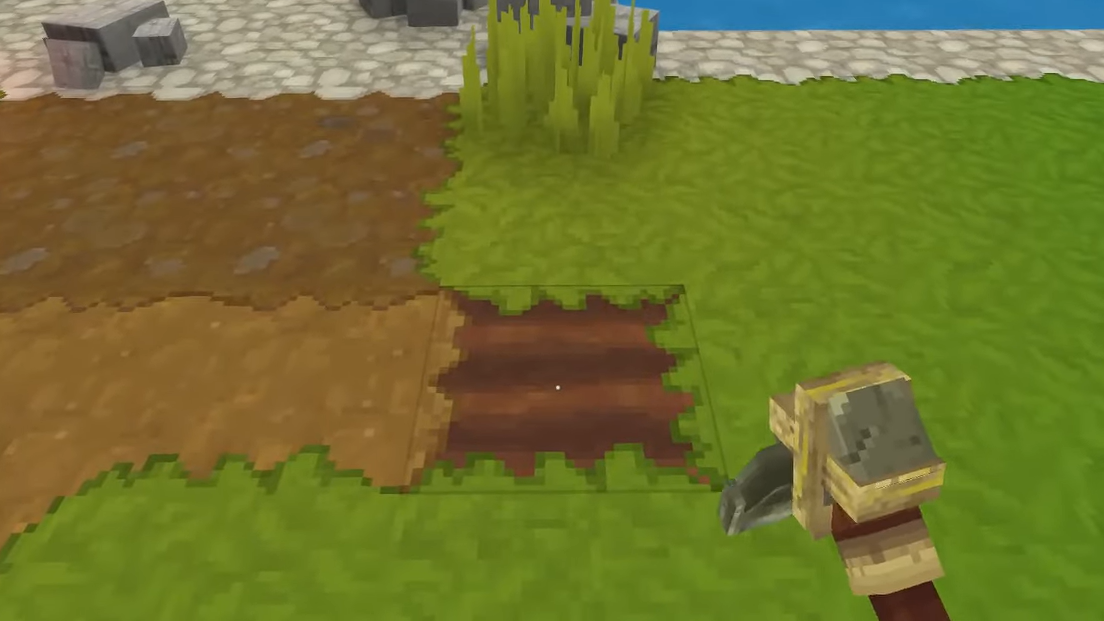
Crops in Hytale start with basic ground preparation. A hoe is required to turn ordinary dirt into farmland. Once a tile has been tilled, it becomes suitable for planting seeds and will behave differently from normal terrain. This is the first gate in the farming loop: without crafting or acquiring a hoe, you cannot start a field.
After a tile is tilled, seeds can be planted directly into that farmland. Each seed type corresponds to a specific crop, such as carrots, corn, pumpkins, or eggplants. Once planted, crops progress through their growth stages in real time, measured over several in-game days rather than in a few moments. That timing makes farming something you set up, leave, and return to later, instead of an instant interaction.
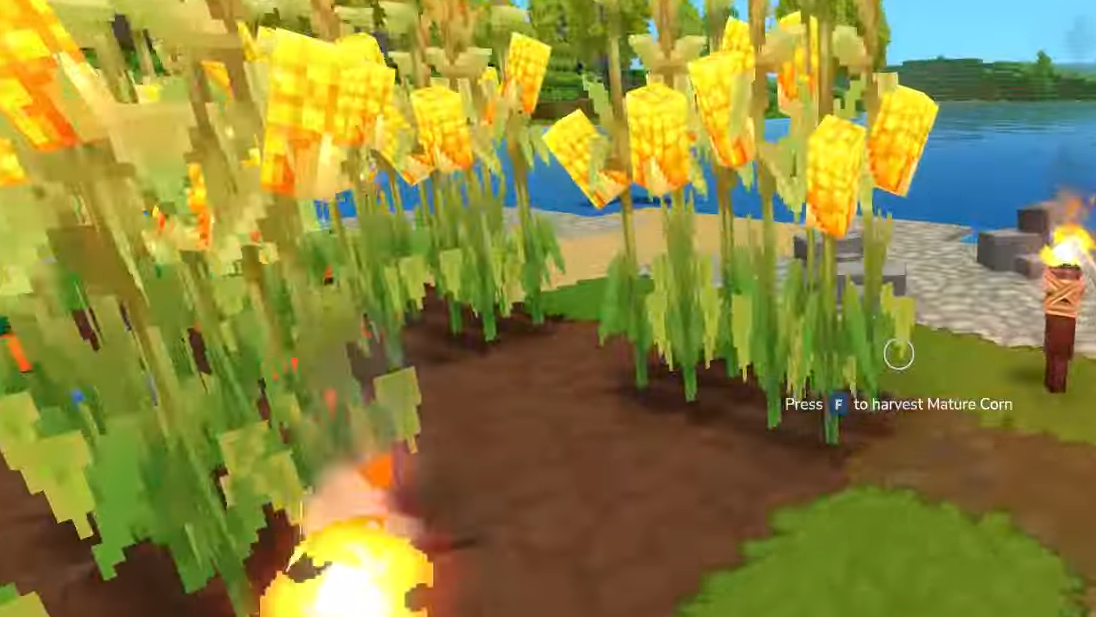
Crop growth is not purely cosmetic. Mature plants become harvestable and supply food items, crafting ingredients, or both. Visual previews show crops at multiple growth stages, which helps you read the field at a glance and decide whether to wait or harvest.
Basic crop farming steps
Step 1: Obtain or craft a hoe so you can convert dirt into farmland. Without this tool, you cannot start a crop field.
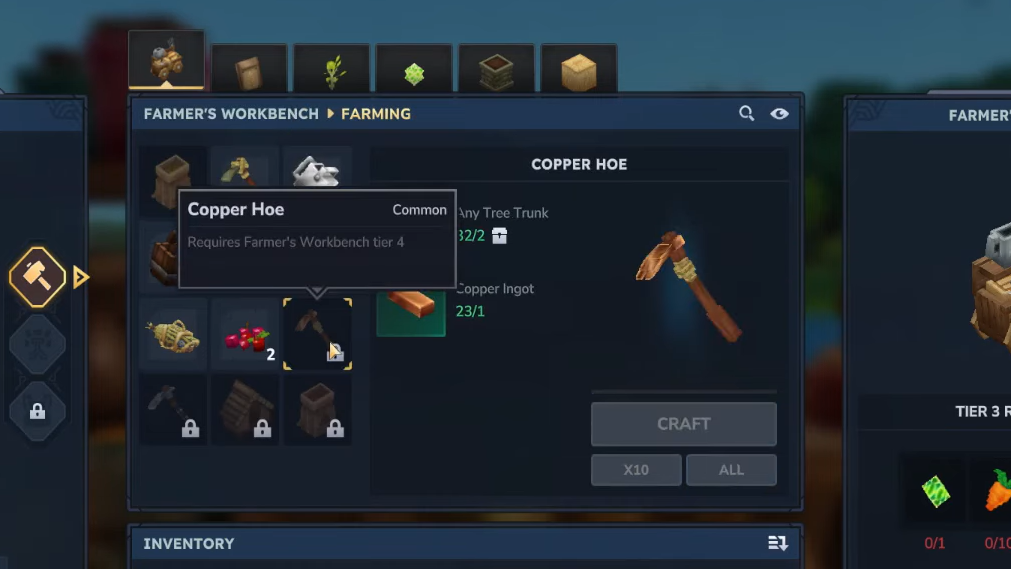
Step 2: Choose a patch of dirt near your base and use the hoe on each block to till it into farmland. Keep the area compact early on so you can easily reach every tile.
Step 3: Plant seeds onto the tilled tiles. Each planted seed will occupy its own farmland block and begin its growth cycle.
Step 4: Leave the field to grow over several in-game days, returning periodically to check progress and handle watering or fertilizing when needed.
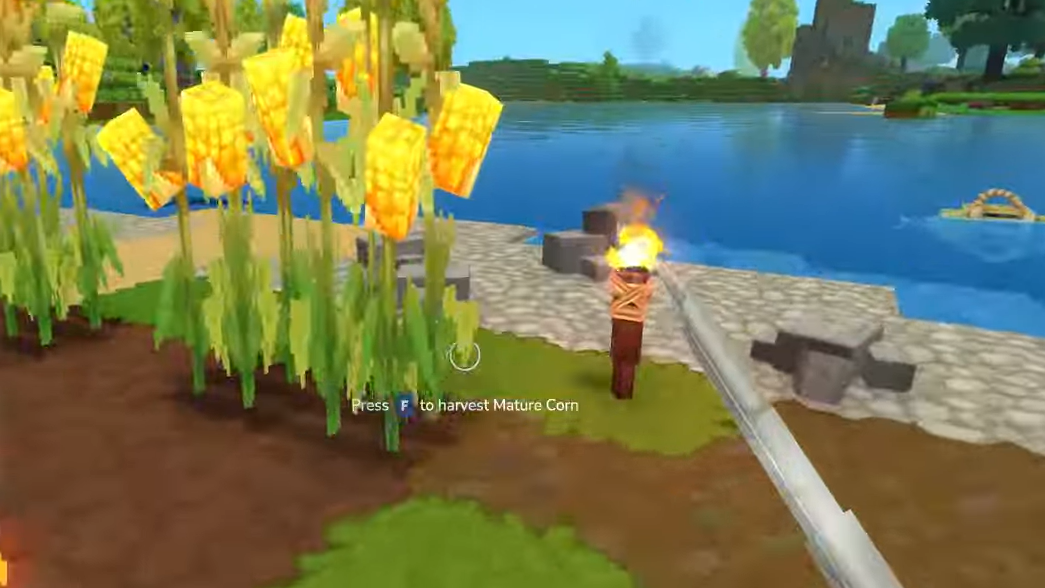
Step 5: Harvest crops once they visually reach their final growth stage. Replant seeds from your yield to expand or maintain the field.
Farmer’s Workbench and farming tiers
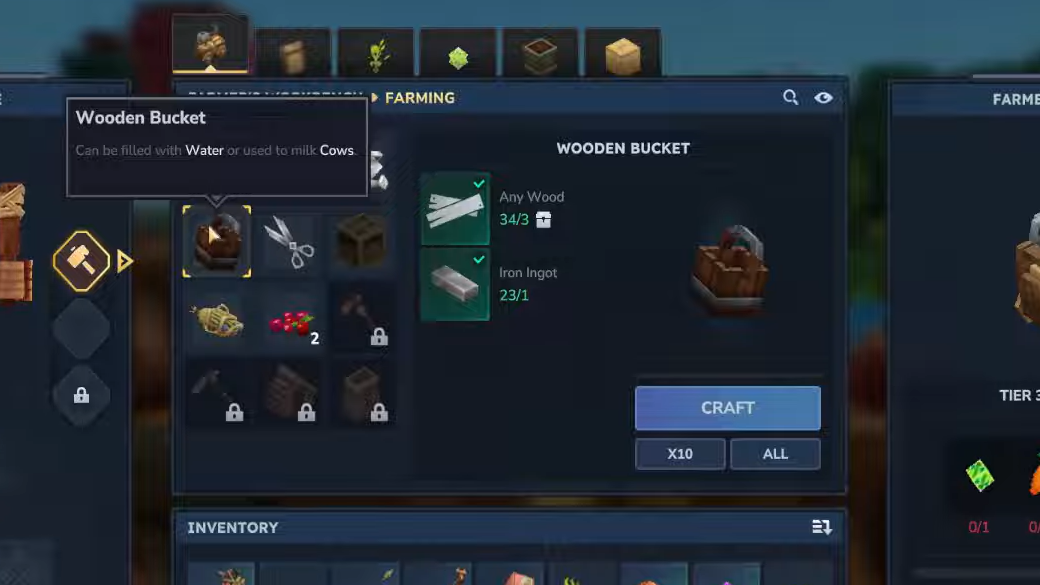
Footage of early farming setups shows a dedicated Farmer’s Workbench as a key structure. This workbench anchors farming progression into tiers: higher tiers unlock better tools, more complex seeds, or additional farming items. Starting that progression early gives more time for both crops and farming skills to develop alongside your character.
The Farmer’s Workbench fills a similar role to other crafting stations in Hytale, but focused on agriculture. It concentrates recipes for hoes, watering cans, and farming-related items into one place. As you progress, later farming tiers are expected to introduce better efficiency or access to more demanding crops, reinforcing farming as a long-term playstyle rather than a one-off task.
Watering, fertilizer, and plant care
Crops are not purely time-based. Screenshots show watering cans being used on fields, which signals that moisture can affect growth. In practice, this means you are expected to check in on your plants rather than only planting once and ignoring them until harvest.
Manure appears as a distinct item and is described as usable fertilizer. Applying manure allows you to enrich farmland and improve yields or growth speed. That creates a natural link between livestock and crop farming: raising animals produces manure, which then supports larger or more productive fields.
Plant care, therefore, has multiple layers. You prepare soil with a hoe, use water to maintain crop health, and add manure to boost growth. Neglecting any of these can slow down your returns, while regular attention lets a relatively small field produce a steady stream of food.
Known crops and where they fit
Crops in Hytale span basic vegetables, fruit, and non-food plants that still have economic or crafting value. The world is divided into zones with distinct climates, and each plant’s real-world behavior suggests where it is most likely to thrive.
| Crop | Category | Likely zone fit | Notable traits or uses |
|---|---|---|---|
| Apples | Tree fruit | Zone 1 (temperate) | Grow on trees; support orcharding as a sub-discipline of farming. |
| Carrot | Vegetable | Zones 1–3 | Hardy, low maintenance, useful for both food and animal feed. |
| Cauliflower | Vegetable | Zone 1 | Demands fertile soil and cooler temperatures, more care-intensive. |
| Corn | Grain/vegetable | Zone 1 | Longer growth time, staple crop with strong yield. |
| Cucumbers | Vegetable | Zones 1–2 | Cannot tolerate frost, but highly productive once established. |
| Cotton | Fiber | Zone 1 swamps | Non-food crop likely used for clothing and textiles, needs plenty of water. |
| Eggplant | Vegetable | Zone 2 | Suited to warm conditions with moist, well-drained soil, good for cooked meals. |
| Aloe Vera | Medicinal plant | Indoor or controlled plots | Well-known for burn relief and healing properties, a natural match for potions or herbal remedies. |
The Emerald Grove in Zone 1 features many of the classic field crops shown so far, including wheat, pumpkins, carrots, eggplants, and corn. These crops represent the baseline farming experience and will likely be the first ones you encounter when you start a homestead in a temperate region.
Farming cart and other field structures
A recurring piece of equipment in farming screenshots is a tool-filled cart parked near fields. Its exact mechanics have not been detailed, but its constant presence indicates a dedicated farming structure beyond the Farmer’s Workbench.
Visually, the cart functions as a mobile hub for tools, seeds, and farm-related storage. By clustering farming infrastructure in a small radius, it encourages players to design fields and animal pens around these objects rather than scattering single plots far from any shelter or support.
Combined with farmhouses, water troughs, and fences, these structures help turn a patch of dirt into a recognizable farm complex. They also signal that farming will likely integrate into base building, not only exist as isolated rows of crops.
Livestock farming and animal happiness
Farming in Hytale extends to animals, with a system that tracks animal happiness. Domesticated creatures respond to multiple conditions: how hungry they are, whether they have proper bedding, and whether they are kept near others of their kind. Satisfying these needs keeps them content and productive.
Hunger connects livestock to your crop fields. Animals will draw on your harvests for feed, turning part of your output into an investment in meat, secondary products, or manure. Bedding points toward crafted materials like straw or cloth, likely tied back to crops such as wheat or cotton.
Group size and social needs push players toward building proper pens and barns rather than leaving animals scattered. Happy animals are less likely to cause problems and more likely to provide consistent resources. Because animal manure can be used as fertilizer, a well-designed barn or pen directly boosts your crop yields.
Cooking and the purpose of food
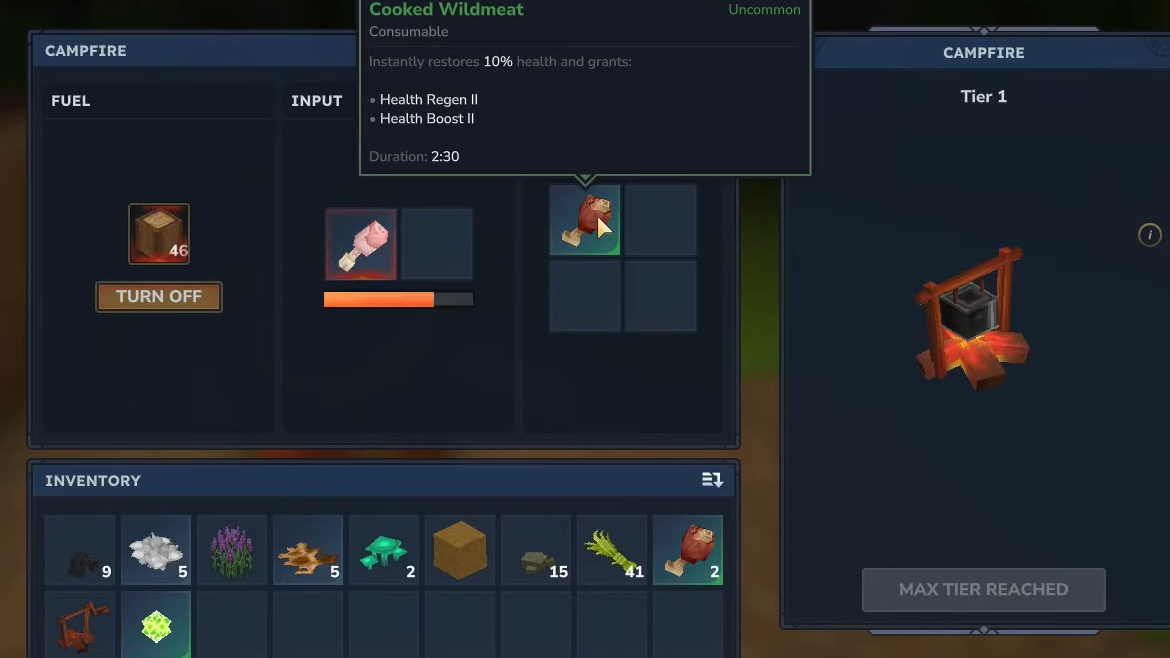
Food in Hytale is not just a hunger bar filler. Basic items like raw vegetables or meat can be eaten for quick sustenance, but cooking systems allow you to turn those ingredients into higher-value meals. Simple cooking scenes show meat over fires and spits, while more complex dishes like salads, soups, or stews depend on a dedicated cooking bench.
That distinction matters for farming because it determines what types of crops you prioritize. A field focused on carrots, corn, and eggplants will support a different set of recipes than an orchard heavy on apples or a plot full of medicinal plants. Farming, therefore, feeds directly into your long-term survivability and combat readiness through better meals, not just stockpiles of raw ingredients.
The game’s design goal is for a farming-focused playstyle to feel meaningful. Players who commit to large-scale agriculture should find steady outlets for their produce, such as trading, advanced cooking, or supporting communities and companions, rather than ending up with endless stacks of unused bread.
Planning your first Hytale farm
When you start playing, the most efficient approach is to anchor a small but functional farm near your first long-term shelter. Focus on a few hardy crops such as carrots and wheat or corn and make sure you place a Farmer’s Workbench within easy reach. Even a handful of tilled tiles will start a growth cycle that passes in the background while you explore.
Once basic food is secure, add animals close to your fields so you can easily feed them and collect manure. As your livestock numbers rise, start using manure on crops that take longer to grow or that you rely on for key recipes. Over time, you can diversify into more demanding plants like cauliflower, warmth-loving vegetables designed for hotter zones, and non-food crops that feed into clothing or potion-making.
The strength of Hytale’s farming systems lies in the interplay between tools, crops, animals, and cooking. Treat the farm as an ecosystem instead of a single patch of dirt, and the game will reward the effort with steady resources, flexible playstyles, and a base that feels alive even when you are away from it.