

Hytale’s early access launch finally lets players turn its concept art cottages and blocky castles into real bases. Between Exploration mode’s survival pressure and Creative mode’s endless palette, the house you build becomes more than a screenshot backdrop. It’s your spawn point, storage system, workshop cluster, and often the center of your multiplayer world.
Building is still evolving and some players already want more advanced block shaping, but the current toolset is enough to support a wide range of house archetypes. The most useful builds today fall into a few clear categories: fast starter shelters, expandable survival bases, style‑driven “flex” homes, and functional farm or town hubs.
Starter Hytale houses that get you out of the dirt box
Every Exploration run starts the same way: no tools, limited daylight, and monsters on the way. Your first priority is a structure that keeps you alive and gives you a place to drop a bed as soon as you can craft one from a Furniture Workbench.
Basic beginner house (10×10 log cabin) focuses on escaping the improvised “ash wood and dirt box” phase without demanding rare materials. A 10×10 footprint keeps requirements low but big enough to place early workbenches and a few storage crates.
- Structure uses easily gathered wood, logs, and stone bricks.
- Layout is simple: single room, one entrance, enough wall height for a proper roof.
- Works well on PvP servers where you need a fast base that can still be moved or rebuilt later.
Functionally, this is the first house that feels like a home rather than a panic bunker. You can claim a bed to move your spawn away from the starting temple, arrange your Builder’s Workbench and basic crafting, and start stockpiling ore and food instead of scattering it in chests you’ll abandon.
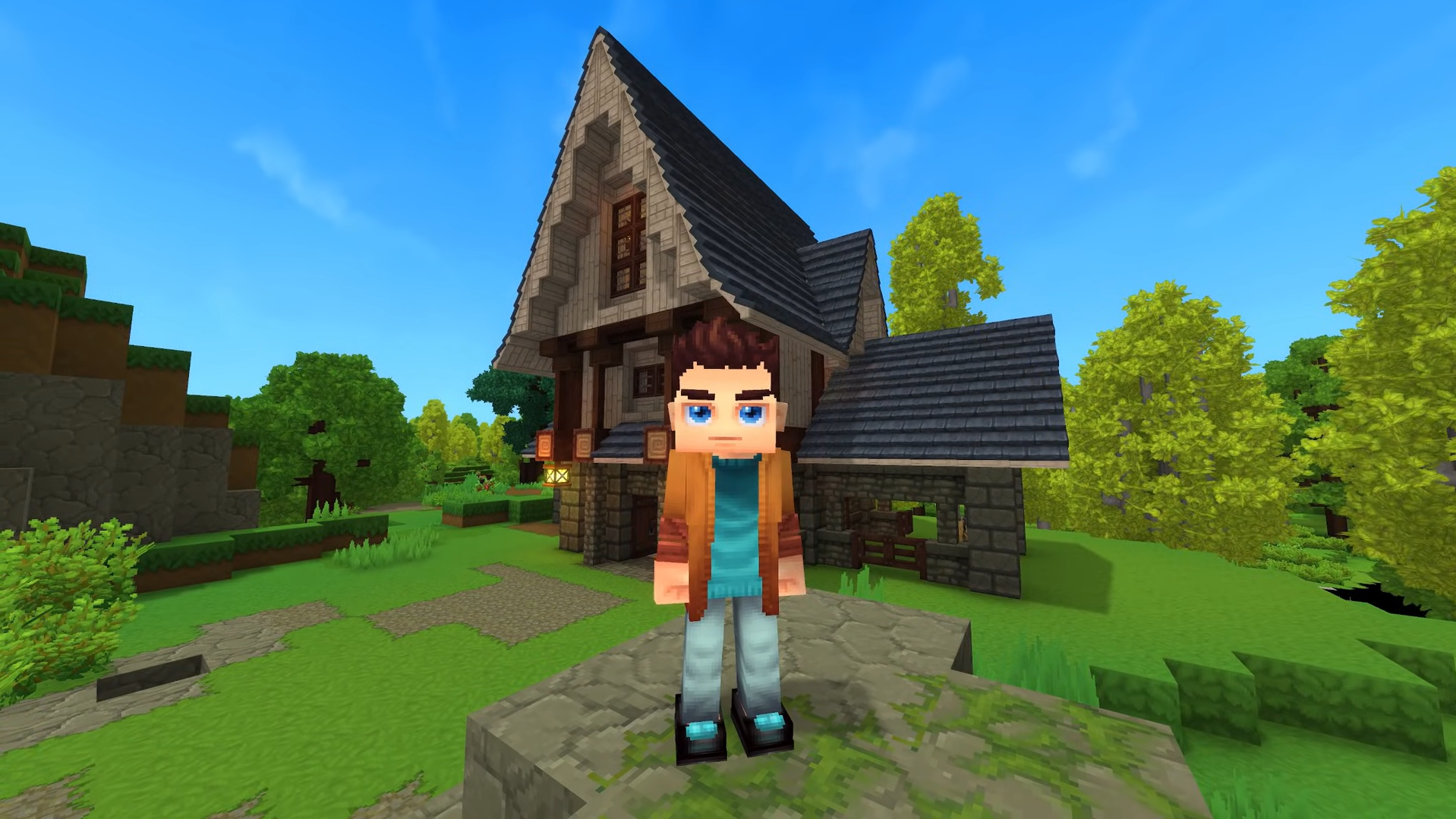
Vertical survival bases when space is tight
Once storage chests pile up and more workbenches unlock, that 10×10 floor fills quickly. You can expand horizontally, but in many worlds it’s easier to build up than to clear a larger area or flatten steep terrain.
Multi‑storey beginner house addresses the second phase of survival: more systems, more loot, same amount of land.
- Compact footprint that extends vertically instead of sprawling out.
- Ground floor dedicated to crafting stations and builder or furniture workbenches.
- Upper floors for storage, sleeping area, and optional specialty rooms (enchanting, portals, or modded workbenches).
Stairs placed inside the footprint keep travel safe at night and let you add exterior doors or balconies on upper levels later. Because early Hytale building struggles with fine‑grained depth in tight spaces, taller walls and offset floors help create visual interest without custom block chiseling.
For long‑term worlds, this is one of the most practical survival layouts. You can bolt extra rooms or towers onto the sides, or duplicate the vertical stack elsewhere once you move to a new biome.
Modern Hytale houses when you want a late‑game flex
After a dozen hours in a world, surviving nights stops being the main problem. At that point, many players pivot from “functional shed” to “somewhere that looks like a concept render dropped into Emerald Wilds.”
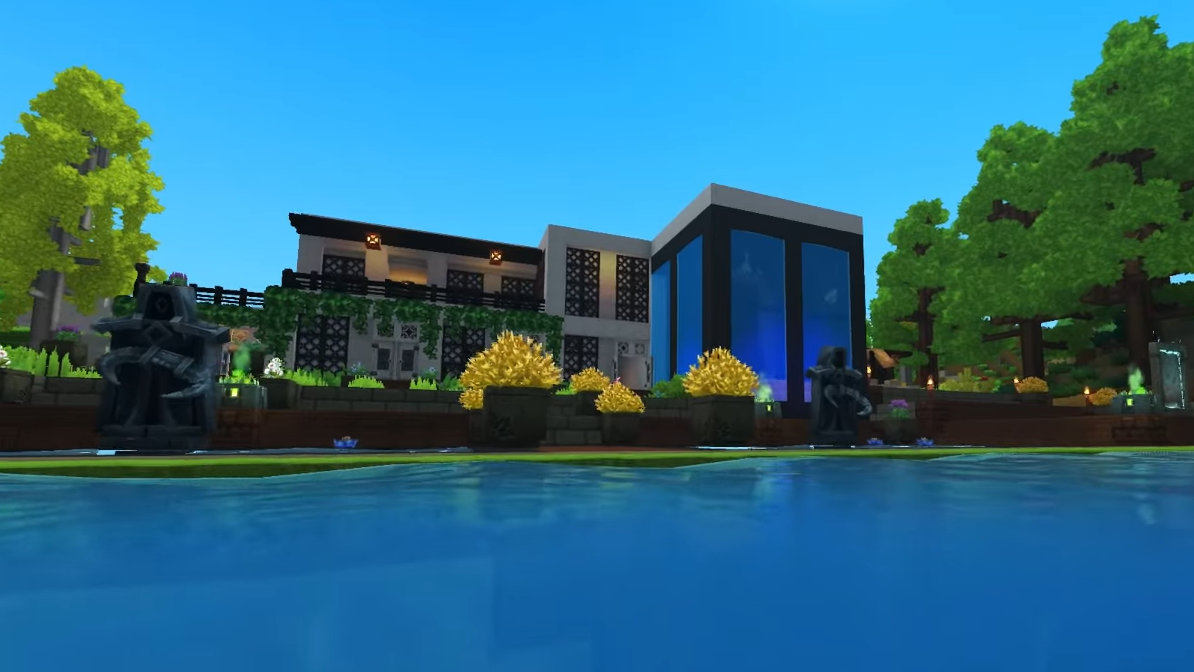
Modern house (18×11 footprint) is a clear example of that shift. It’s resource‑heavy but takes advantage of Hytale’s cleaner textures and glass to create a low‑profile, contemporary build instead of another medieval roofline.
- Primary materials: marble bricks, concrete blocks, extensive glass windows, polished wood floors.
- Emphasis on flat planes, clean lines, and large openings instead of heavy beams.
- Exterior detailing with lantern‑lit paths, potted plants, trimmed bushes, and even a small pool.
This type of house suits mid to late game once you’ve automated or at least stabilized your resource gathering. It doesn’t add new mechanics, but it leverages the Builder’s Workbench catalog: every new stone or wood type you bring home unlocks more decorative variants, and that variety pays off visually in a modern build.
Cozy fantasy houses built around a fireplace
Hytale’s art style naturally leans into “storybook” builds: chunky beams, steep roofs, soft lighting. The most popular early examples online often share a common core idea — a compact, heavily detailed cottage where the interior is as considered as the exterior.
Cozy starter house captures that approach without requiring advanced block manipulation.
- Walls blend regular and mossy cobblestone with several wood types for contrast.
- A central fireplace anchors the layout and doubles as both decoration and cooking point.
- Interior workbenches and storage blocks are placed with intent, so the space feels lived‑in rather than crammed.
This is where Hytale’s furniture and small props start doing heavy lifting. Players already want more freedom to place everyday items like tools against walls or make piles of ingots, but even the current selection of crates, shelves, pottery, and seasonal decor makes these builds feel like real homes instead of hollow boxes.
Cute survival bases with purpose‑built rooms
Some players want something between the ultra‑compact starter hut and sprawling town: one building that feels organized, expandable, and aesthetically consistent.
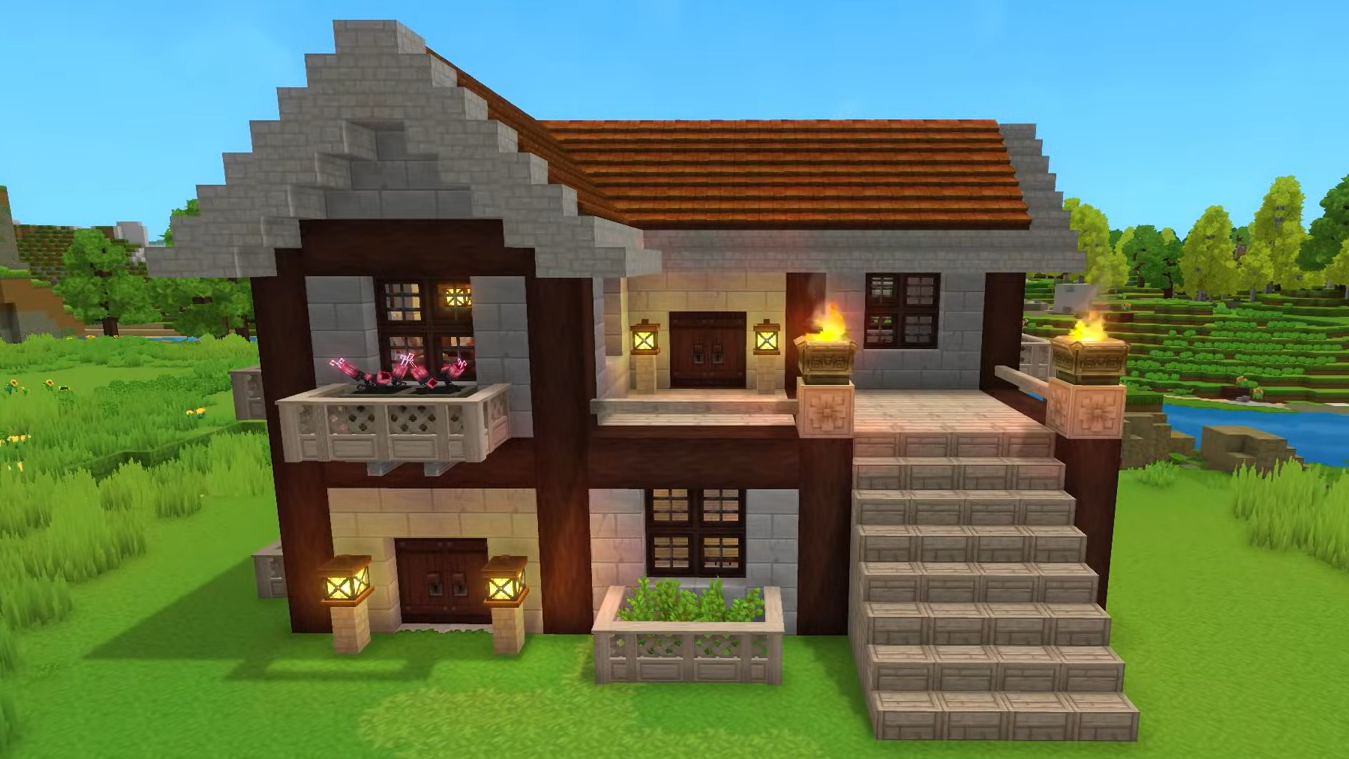
Cute survival base (11×11 plus 6×6 wing) fits that niche by carving the footprint into clearly defined spaces.
- Main 11×11 square for core living space and work.
- Attached 6×6 section for specialized uses such as portals or rare workbenches.
- Pillars break up the interior into “rooms” without requiring full walls.
- Marble bricks and lightwood planks keep surfaces bright and clean.
Each floor can be dedicated to a specific function — crafting and cooking on the ground level, storage and beds upstairs, and optional magic or portal rooms higher up. It’s a layout that scales well; when the base starts to feel small, you can mirror the wing on the opposite side or stack another floor with the same grid.
Medieval houses for forests and plains biomes
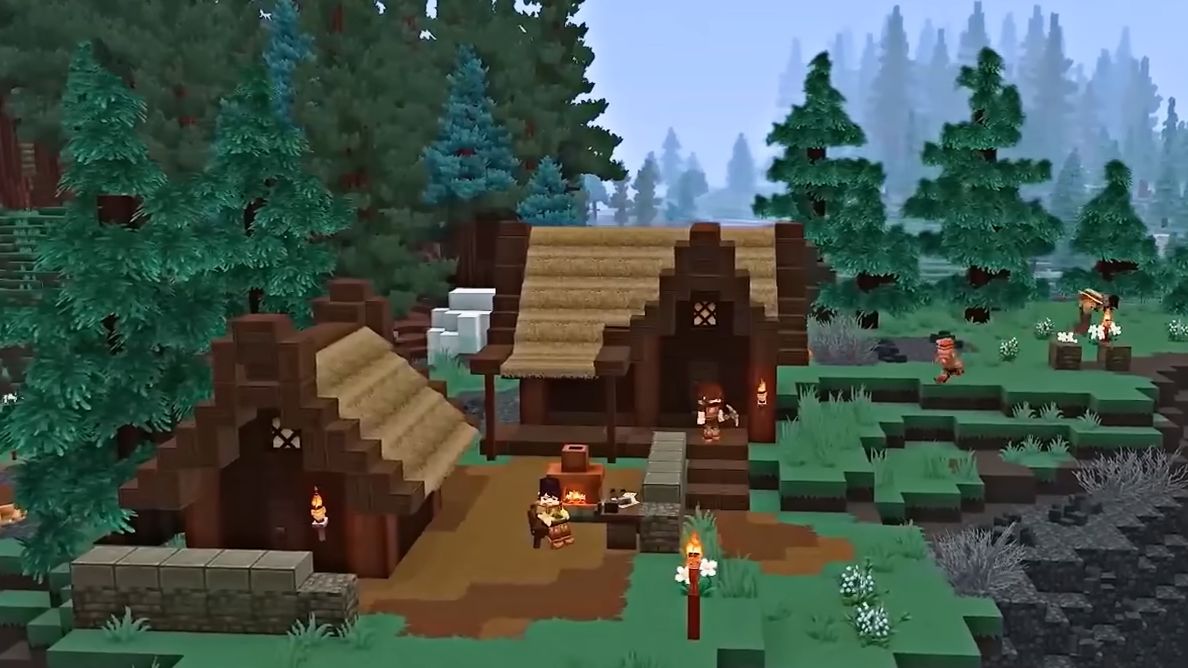
Even with relatively “blocky” building rules, Hytale’s biomes lend themselves to medieval and fantasy architecture. Cobblestone, logs, and simple roofs sit naturally in the Emerald Wilds or Whisperfrost Frontiers screenshots the developers have shared.
Medieval house (12×14 footprint) is a straightforward but reliable pattern for that setting.
- Cobblestone base and walls with log pillars on the corners and structural lines.
- Wooden roof elements with overhang to give depth to facades.
- Enough internal floor area to host all utility blocks without feeling empty.
- Detail through stairs, windows, and fences rather than small custom block cuts.
This type of build takes advantage of Hytale’s current world generation plans. As Orbis and its zones become more curated under the newer V2 generator, designers intend to scatter prefabs and terrain patterns that read clearly in‑world. A cluster of small medieval houses near a gateway or river fits that philosophy and can evolve into a settlement once more building tools arrive.
Barnhouses and farm‑focused builds
Food is non‑negotiable in Exploration mode. Berries and mushrooms carry the earliest days, but long‑term runs benefit from structured farming so you’re not constantly foraging or cooking the same basic recipes.
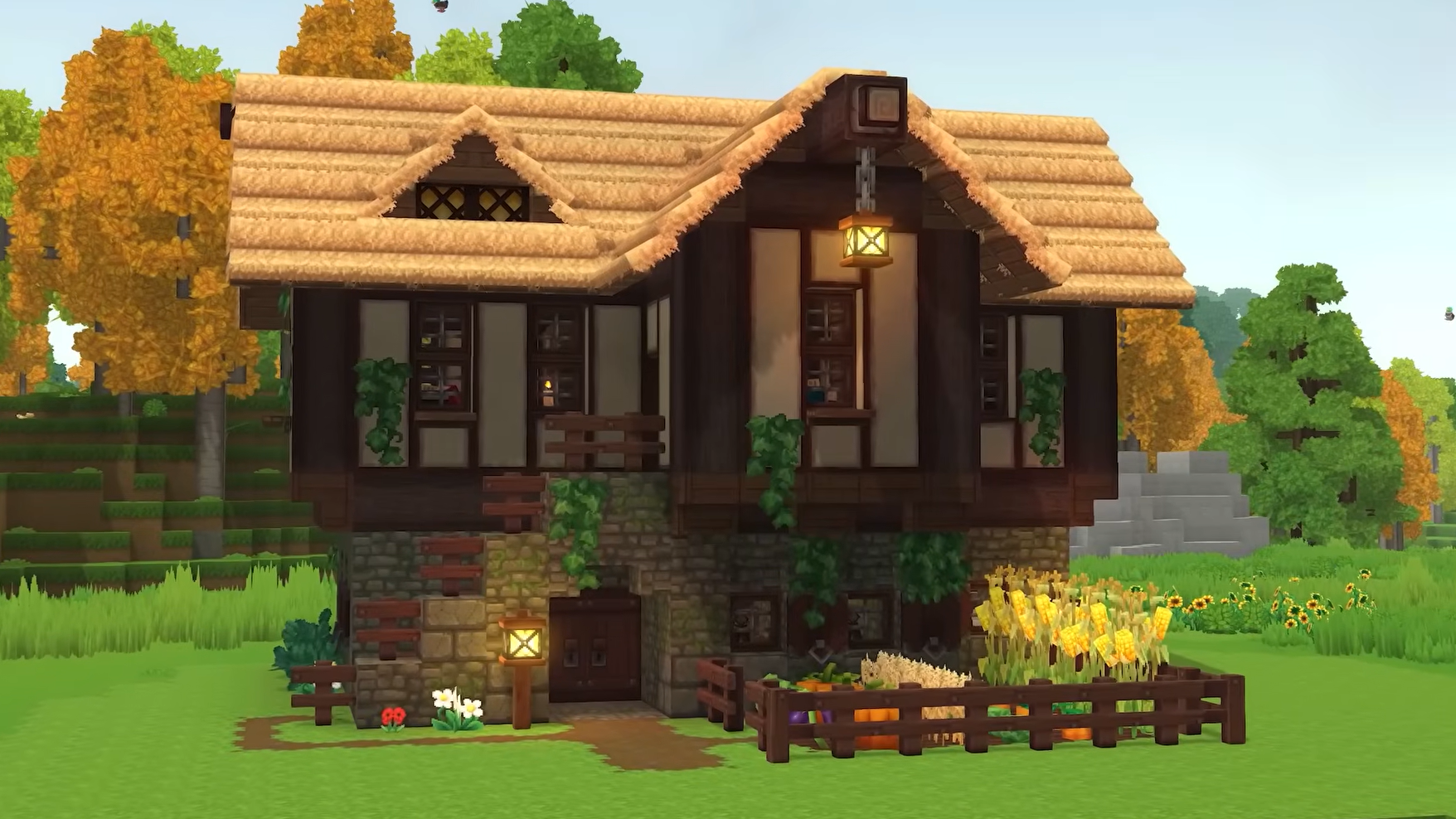
Barnhouse builds turn that need into a design opportunity and often pair with a farmhouse‑style home nearby.
- Materials: cobblestone, hardwood planks, and logs for big framed silhouettes.
- Wide entrances and doors so animals path and move cleanly.
- Interior bays or stalls to keep livestock and storage separated.
- Clear space outside for tilled fields and fenced pens.
Crop mechanics in early access already expect you to plan plots, till soil, and water plants. A barn or agricultural yard next to your main base cuts travel time and makes it easier to keep animals safe once fuller animal farming updates land. Because these structures are mostly big boxes with rhythmic framing, they are also forgiving practice for players still learning how to mix materials and repeat patterns without looking flat.
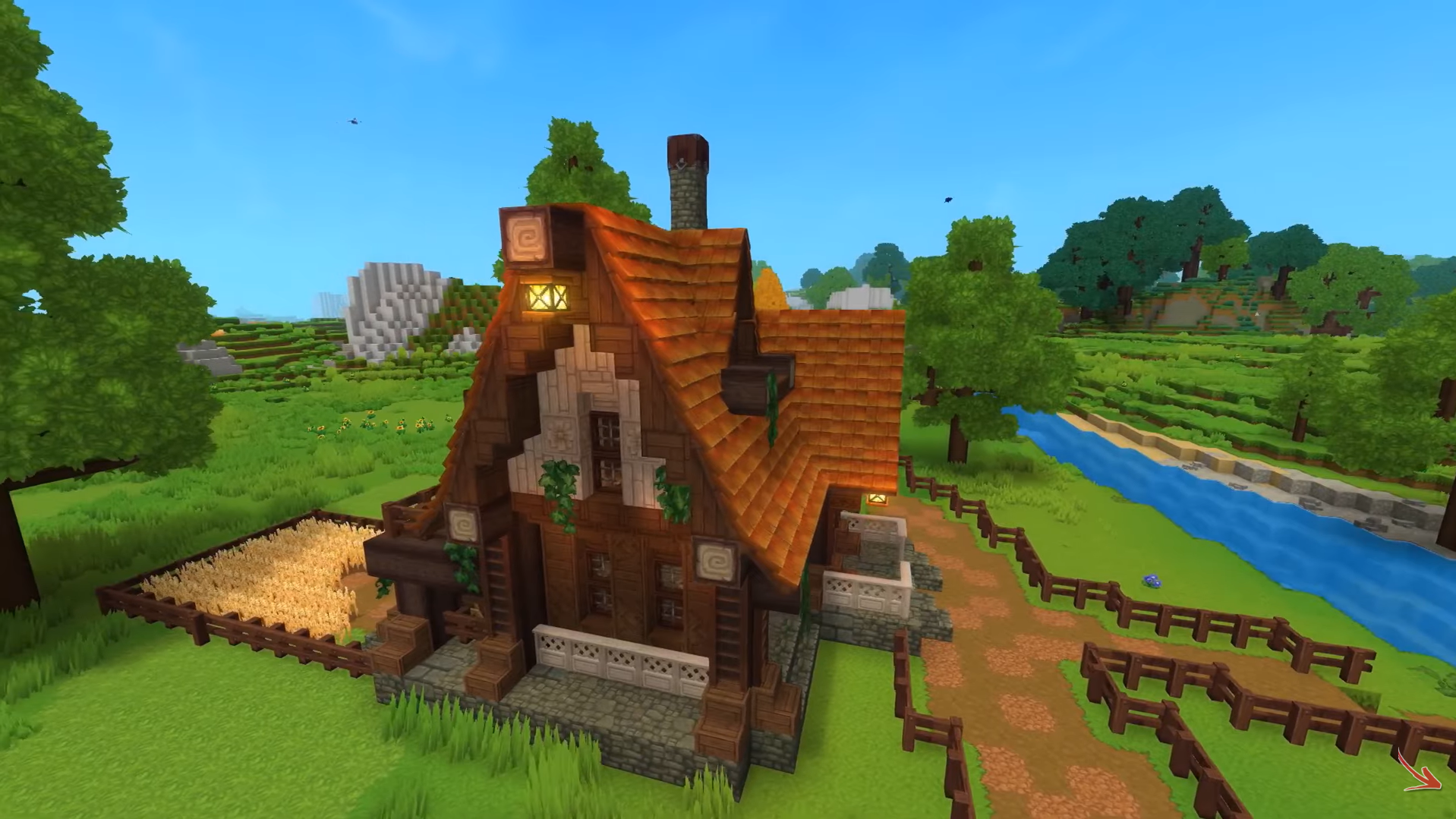
Cottage templates and town‑ready designs
In Creative mode, the constraints shift. You’re no longer racing the sun or scraping together enough ash wood; you’re exploring the full catalog and thinking in terms of neighborhoods instead of one house.
A good example comes from players who build a single “template cottage” before committing to a full town. After a few hours of experimenting with blocks, they settle on:
- A default cottage shape they can repeat and lightly vary across a village.
- Layered roofs, flower boxes, and placeable bushes (snipped from foliage with scissors) to avoid flat walls.
- Tightly packed interiors with furniture, beams, and ceilings just high enough to feel snug instead of oppressive.
This approach matters because Hytale’s building toolkit today cannot mix multiple slab types in the same block or chisel meshes down to sub‑voxel detail the way some other block games do. Instead of fighting that, successful cottage towns lean into dense decoration, props, and strong silhouettes. You pick a floor‑space rectangle, build up, and let lighting, plants, and furniture handle the nuance.
Using Hytale’s systems to support your house builds
Regardless of style, strong Hytale houses take advantage of a few core mechanics that already exist in early access.
Beds and spawn points. Until you sleep in a bed, deaths send you back to the starting temple. Dropping a bed in any house — even if the walls aren’t finished — immediately turns that structure into a checkpoint. For remote builds, placing and using a bed before nightfall saves long treks after missteps.
Builder’s Workbench. This upgraded workbench turns raw wood and stone into shaped materials like walls, roofs, fences, and sometimes basic furniture. Each new resource you haul back unlocks additional recipes, so a “finished” house can change dramatically once you find a new tree species or stone type.
Furniture Workbench. Once basic survival is handled, this workstation opens up beds, lights, pottery, seasonal decor, colored wools, and more. These items don’t just look nice; they let you tune interior brightness, sightlines, and traffic flow in a way raw blocks cannot.
Location and world generation. Worldgen V1 currently drives Exploration mode, but the upcoming Orbis world on V2 is being built to communicate with players through patterns. Ash trees that grow only above deeproot caves, distinctive log bridges across rivers, and flower meadows in specific terrain dips are all examples of “heuristics” that signal resources or points of interest. Placing your house near those landmarks positions you close to mines, gateways, or future prefab clusters.
Where Hytale building stands in early 2026
Hytale’s first public build already offers more block variety and decorative pieces than many older block games had at launch, yet experienced builders are also pushing against its limits. You can’t currently mix different slabs within a single voxel or carve existing meshes the way Vintage Story does, and creating depth in small exterior spaces often means scaling up the entire structure.
At the same time, Hypixel Studios is designing the new world generator and asset pipeline with creators in mind. The V2 node editor lets non‑programmers assemble biomes, materials, and props with live reload in‑game. Every biome built for Orbis is planned to be shared so players can study and remix them, and the studio intends to hire dedicated World Designers from the community after early access.
For house builders in 2026, that means two parallel tracks. In the short term, the best builds lean into what the current block set does well: clean grids for modern homes, chunky silhouettes for medieval houses and barns, and prop‑heavy cottages that get their charm from clutter rather than micro‑detail. Over the longer term, procedural architecture plans and new blocks should broaden what “home” can look like across Orbis and any future worlds.
If your goal is long‑term survival, the multi‑storey beginner houses and cute survival bases remain the strongest foundations, with enough room to grow and clear roles for each floor. For pure style, the cozy cottages and modern homes make the most of Hytale’s lighting and materials today. Whatever you pick, the most important thing is simple: get a roof over your head, a bed under your spawn, and space left outside the walls for the farms and workshops you’ll inevitably add next.