

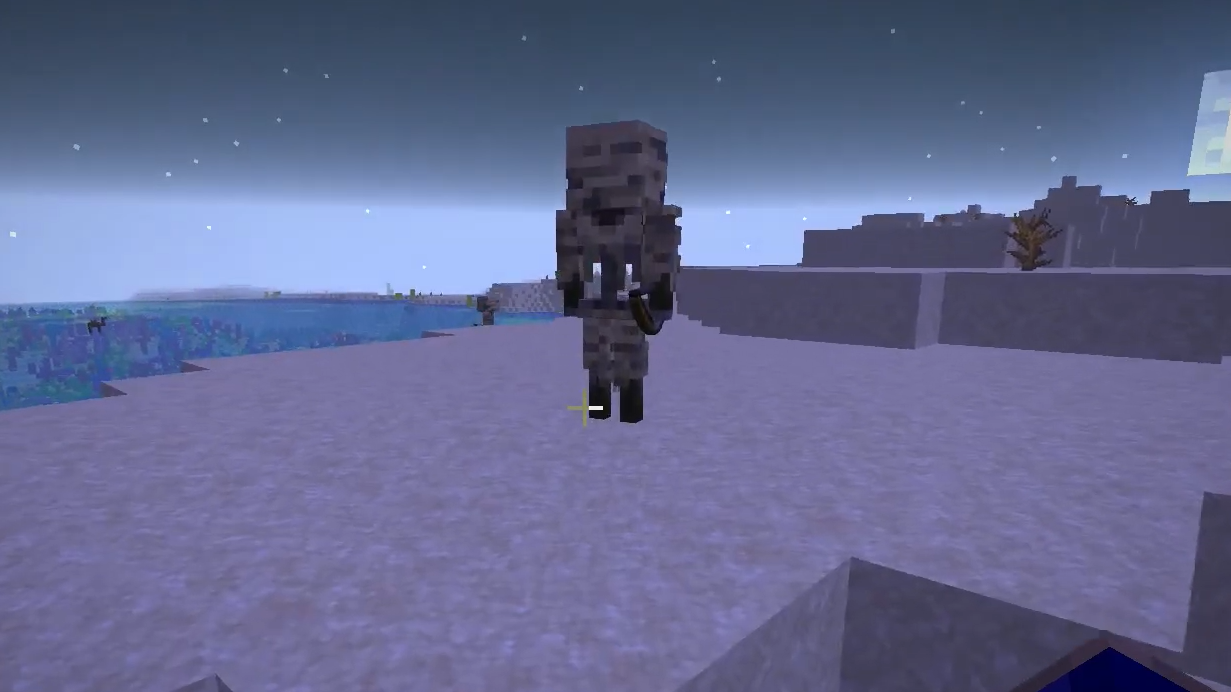
The Parched is a new skeleton variant built for Minecraft’s deserts. It combines familiar ranged behavior with status arrows, daylight persistence, and new jockey setups that make desert exploration riskier at every hour.
Minecraft Parched basics: stats and identity
| Property | Value |
|---|---|
| Mob type | Hostile, Undead, Monster, counted as a skeleton-type mob |
| Health | 16 HP (8 hearts) |
| Armor | 0 armor points by default; can gain armor from equipment |
| Primary attack | Bow with Arrows of Weakness |
| Ranged damage (Java) | Easy: 2–4 HP; Normal: 3–5 HP; Hard: 4–8 HP per arrow |
| Ranged damage (Bedrock) | Easy/Normal: 1–4 HP depending on distance; Hard: 1–5 HP |
| Melee damage | Easy: 2 HP; Normal: 2 HP; Hard: 3 HP |
| Status effect | Weakness for 30 seconds on arrow hit |
| Sunlight | Does not burn in sunlight |
| Edition | Upcoming Java Edition 1.21.11 and Bedrock Edition 1.21.130 |
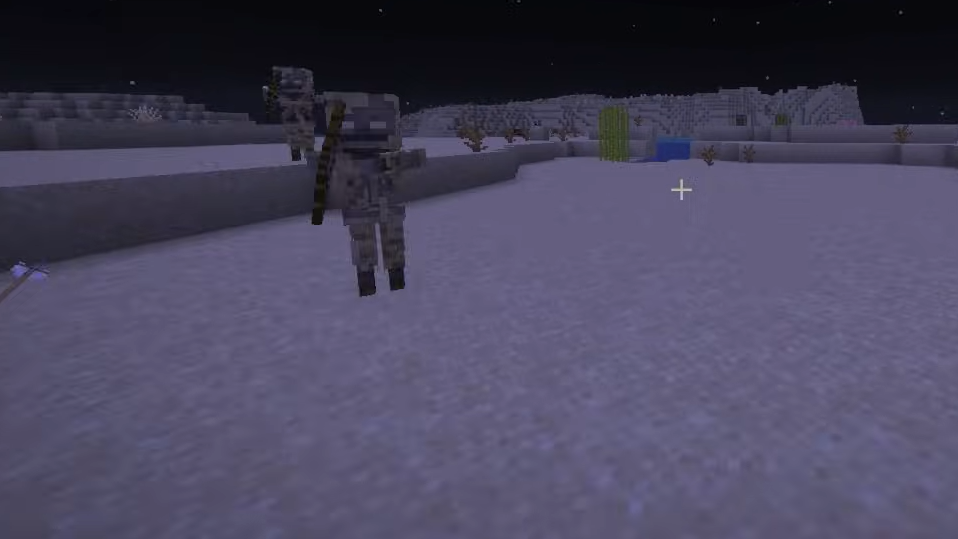
Parched share most of their AI and movement patterns with standard skeletons, but swap normal arrows for tipped Arrows of Weakness. They have a slower firing cadence and slightly less health than a skeleton, but their projectiles debuff your damage output for a full 30 seconds, which can quickly turn a routine fight into a dangerous brawl if other mobs are nearby.
Like other undead mobs, they:
- Are damaged by Instant Health and healed by Instant Damage.
- Ignore Regeneration and Poison.
- Take extra damage from the Smite enchantment.
- Are ignored by the Wither.
Where the Parched spawns (deserts, jockeys, and conditions)
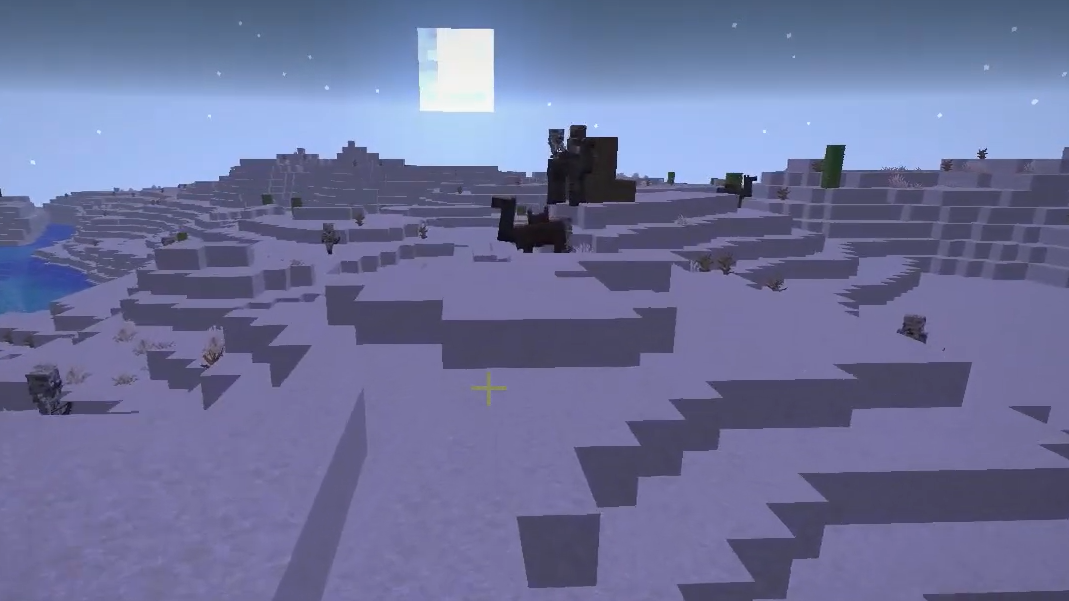
Parched are tied directly to the desert ecosystem and to the new Camel Husk jockeys from the Mounts of Mayhem update.
Parched natural spawning in deserts
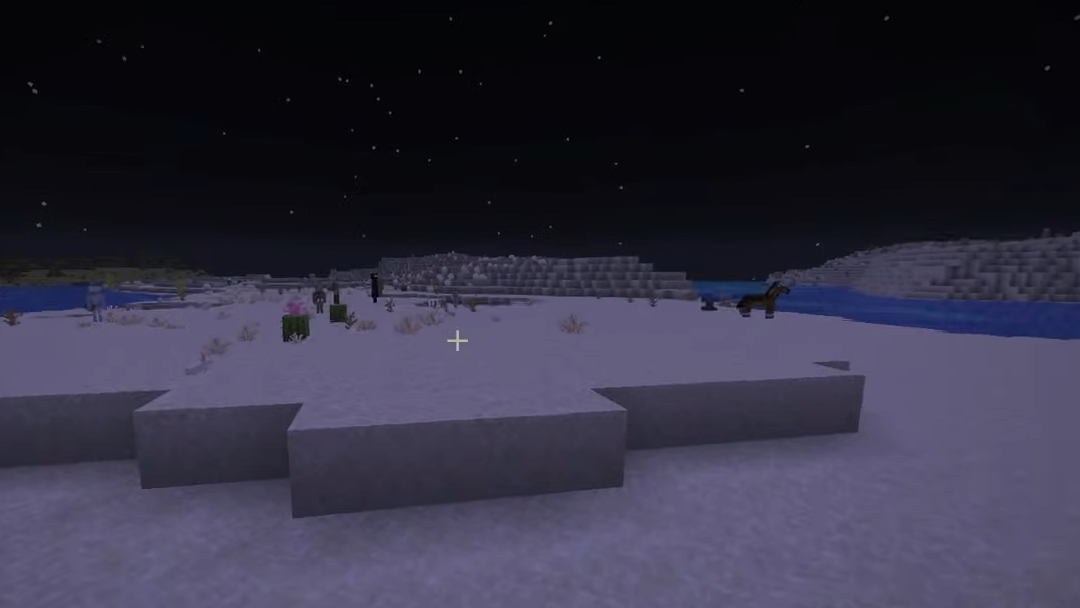
- Biome: Desert only.
- Light level: 0.
- Placement: Must spawn directly under open sky, not in caves or covered structures.
- Time: At night or during thunderstorms.
- Replacement rate: Roughly 50% of skeleton spawns in deserts become Parched.
- Group size: Up to four Parched in a single pack.
This means any time you would expect skeletons on the surface of a desert at night, there is a good chance you will instead face Parched, often in small clusters that layer Weakness on you repeatedly.
Camel husk jockey: Parched as a second rider
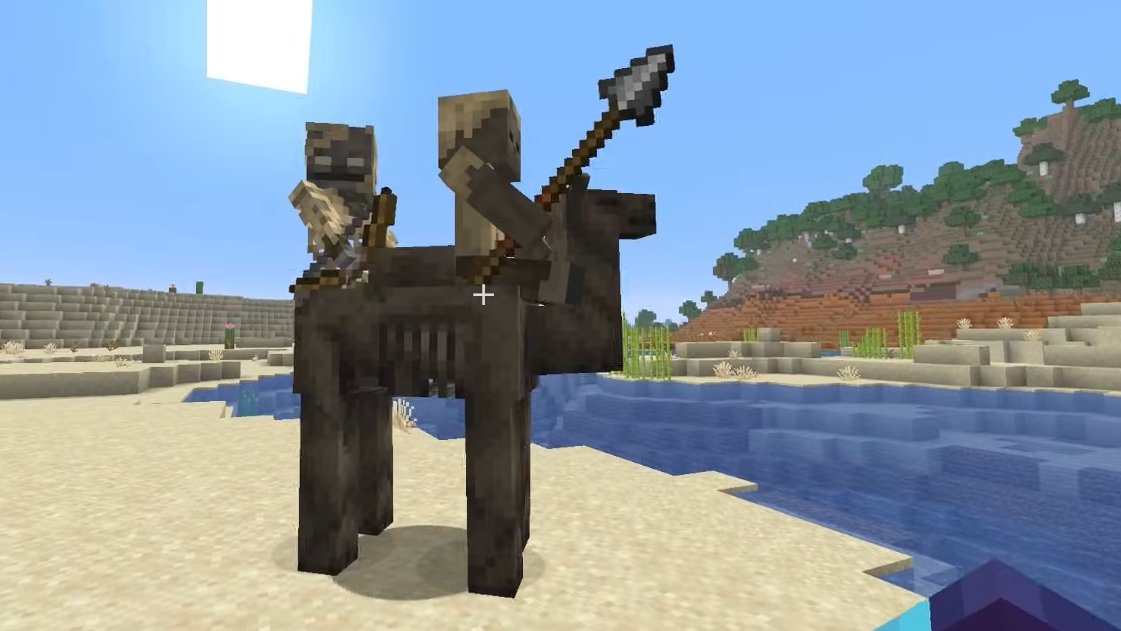
Parched are also part of a new three-mob configuration: the camel husk jockey. This setup combines:
- A Camel Husk as the mount (an undead camel variant).
- A Husk wielding a spear as the primary rider and controller of the camel.
- A Parched occupying the second rider slot on the same camel.
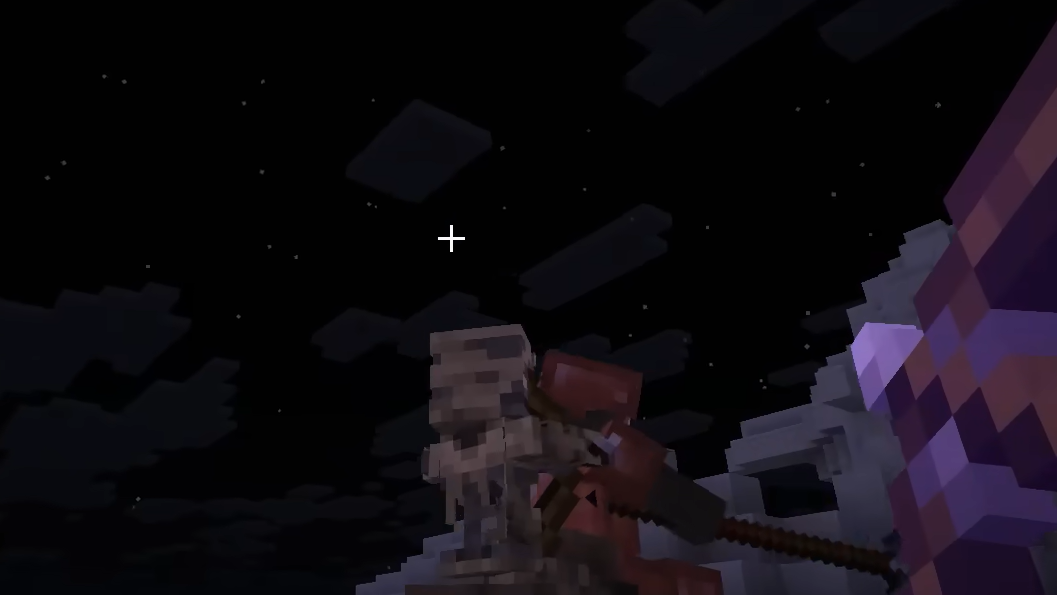
When a Husk attempts to spawn in a suitable space that can fit a Camel Husk, there is a 10% chance for a Camel Husk jockey to appear instead. In that case, the game spawns the passive Camel Husk, the spear Husks as the driver, and a Parched as the second passenger. You then face melee spear attacks and ranged Weakness arrows from the same moving platform, and this can happen at any time of day because both riders ignore sunlight.
In Bedrock Edition, Parched can also interact with camel husks in a different way: if pushed into a Camel Husk, they will ride it even outside the natural jockey spawn scenario.
Spider jockeys in Bedrock Edition
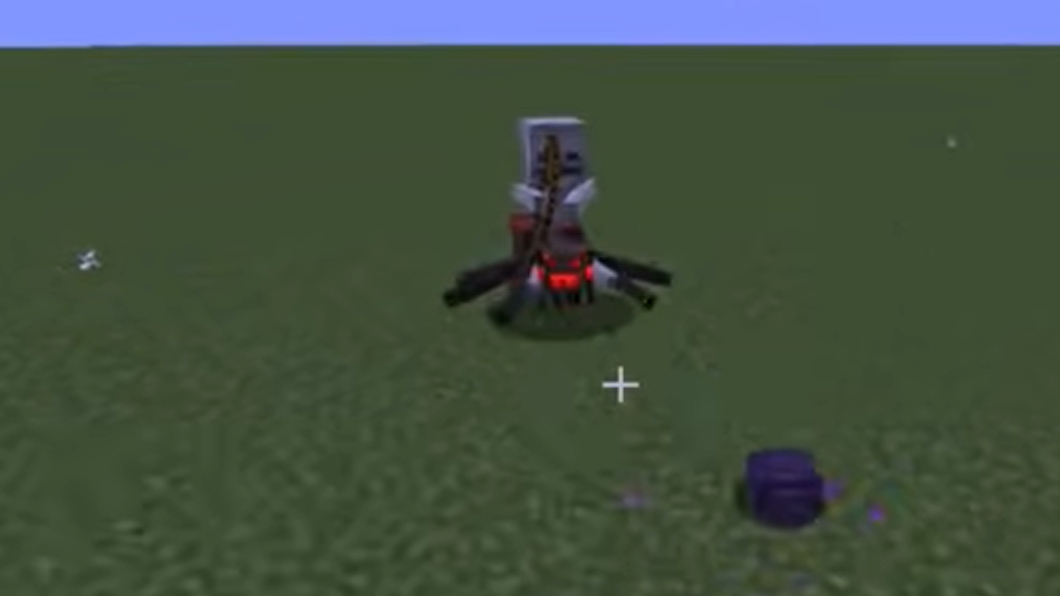
On Bedrock Edition, Parched participate in an additional jockey type:
- Spiders and cave spiders that spawn in deserts have a 1% chance to become spider jockeys.
- When that happens, there is an 80% chance that the rider will be a Parched instead of a standard skeleton.
This desert-only behavior turns night-time dunes into a mix of mobile, leaping spiders and ranged Weakness fire, especially on Hard difficulty, where arrow damage spikes.
Behavior and Weakness-arrow combat pattern
Functionally, Parched behave like skeletons with two important twists: their arrows, and their pacing.
- Projectile type: They always use Arrows of Weakness rather than normal arrows.
- Effect: Each hit applies Weakness for 30 seconds.
- Fire rate: They take longer between shots than a skeleton:
- Easy/Normal: fire roughly every 3.5 seconds.
- Hard: roughly every 2.5 seconds.
- Sunlight: They do not burn during the day, so they remain active in bright conditions.
- Freeze damage: Like bogged, they take damage from powder snow and never convert into strays.
- Weakness immunity: Parched themselves are unaffected by the Weakness effect.
Because they count as skeletons for entity tags, any creeper killed by a Parched’s arrow will drop a random music disc from the usual overworld set. They also fear wolves in the same way other skeleton variants do and will keep distance if wolves approach.
Beyond combat, Parched share several world interactions with other undead:
- They cannot swim but do not drown when submerged.
- They cause armadillos to retreat into their shells on sight.
- They target and trample turtle eggs they find, similar to some other hostile mobs.
Parched drops and loot tables
Parched share the familiar skeleton drops, with a twist around their status arrows. The exact numbers differ slightly between Java and Bedrock, especially when Looting is involved, but the structure is the same.
Standard item drops
When killed by a player or tamed wolf (Java) or by a player (Bedrock), a Parched can drop:
- Bones: 0–2 by default, scaling up to a maximum of 5 with Looting III.
- Arrows: 0–2 by default, also scaling to 5 with Looting III.
- Arrows of Weakness: 0–1 in Java; up to 4 in Bedrock with Looting III.
The expected (average) amounts grow with each Looting level, making Parched a viable renewable source of both regular and Weakness-tipped arrows once you have an efficient farm.
Equipment and armor drops
- Natural equipment: Any bow or armor they spawn with has an 8.5% base chance to drop, increased to 9.5%, 10.5%, and 11.5% with Looting I–III.
- Picked-up equipment: Any armor or items they pick up from the ground always drop at 100% and keep their damage state.
Their natural bow is typically damaged and may be enchanted. They never drop a skeleton skull even if killed by a charged creeper, which is a key difference from normal skeletons.
Experience
- Base: 5 XP orbs on death when killed by a player or tamed wolf.
- Bonus: An additional 1–3 XP if the Parched was wearing armor.
How to find deserts and spawn Parched yourself
For survival players, the limiting factor is often finding a desert in the first place. Desert biomes most commonly appear near other warm or arid regions, such as badlands and mangrove swamps. Exploring around those edges raises your chances of encountering one.
If you are comfortable using commands, you can jump straight to a desert and then wait for night:
/locate biome minecraft:desertOn servers or single-player worlds where cheats are enabled, you can also spawn a Parched directly for testing or farm setup:
/summon minecraft:parchedIn Creative mode, Parched are also available through a spawn egg once the Mounts of Mayhem content is enabled for your world version.
Combat strategies against Parched
The main danger from Parched is not raw damage; it is the Weakness debuff chain-stacking during larger fights. Treat them as priority targets in desert encounters.
- Carry a shield: Blocking their arrows eliminates both damage and the Weakness application. A successful block also progresses the “Not Today, Thank You” advancement.
- Use Smite weapons: Because they are undead, swords, axes, or maces with Smite deal extra damage and shorten the fight.
- Close distance during reload: Their longer draw time gives clear windows to sprint in and land melee hits before the next shot.
- Control line of sight: Small dunes and cactus clusters in deserts make good cover while advancing.
- Handle the riders: For Camel Husk jockeys, focus down the Parched first to remove Weakness, then deal with the spear Husk and finally the mount.
On Hard difficulty, a single arrow can take a large chunk off your health bar, especially without armor. Getting hit with Weakness while also fighting melee mobs can extend fights, so food and healing items should be ready before you roam the dunes at night.
Farming Arrows of Weakness from a Parched
Because Parched naturally fire Arrows of Weakness and can drop them on death, they are a convenient, renewable source of that otherwise crafting-intensive arrow type.
At a high level, an effective farm setup involves:
- Locating or transporting a named Parched into a controlled chamber in a desert chunk, ensuring it cannot despawn.
- Building a collection system and a safe kill point, where you can finish it off with Looting gear when needed.
- Allowing enough spawn area around the structure so new Parched continue to appear to replenish the farm’s stock if you are running multiple units.
Using a name tag on a Parched stops it from despawning under normal rules, which is useful if you want a permanent arrow trap that continuously shoots Weakness-tipped arrows through a controlled opening for adventure maps or PvE arenas.
How the Parched fits into Minecraft’s mob ecosystem
Parched extend the pattern Mojang has followed with other skeleton variants like Stray and Bogged: regional enemies built around status arrows and environmental constraints. Desert nights were already dangerous because of open sightlines and mixed hostile spawns; adding a ranged mob that ignores daylight and debuffs your damage pushes deserts closer to permanent high-threat status zones.
Combined with Camel Husk jockeys, Parched turn deserts into roaming mini-raids, particularly in mid-game worlds where players may not yet have optimized armor or enchantments but are seeking desert-exclusive resources. Preparing for Weakness and accounting for the Parched’s presence in advancement runs and music-disc farms is now part of planning serious overworld worlds that include the newest Mounts of Mayhem content.