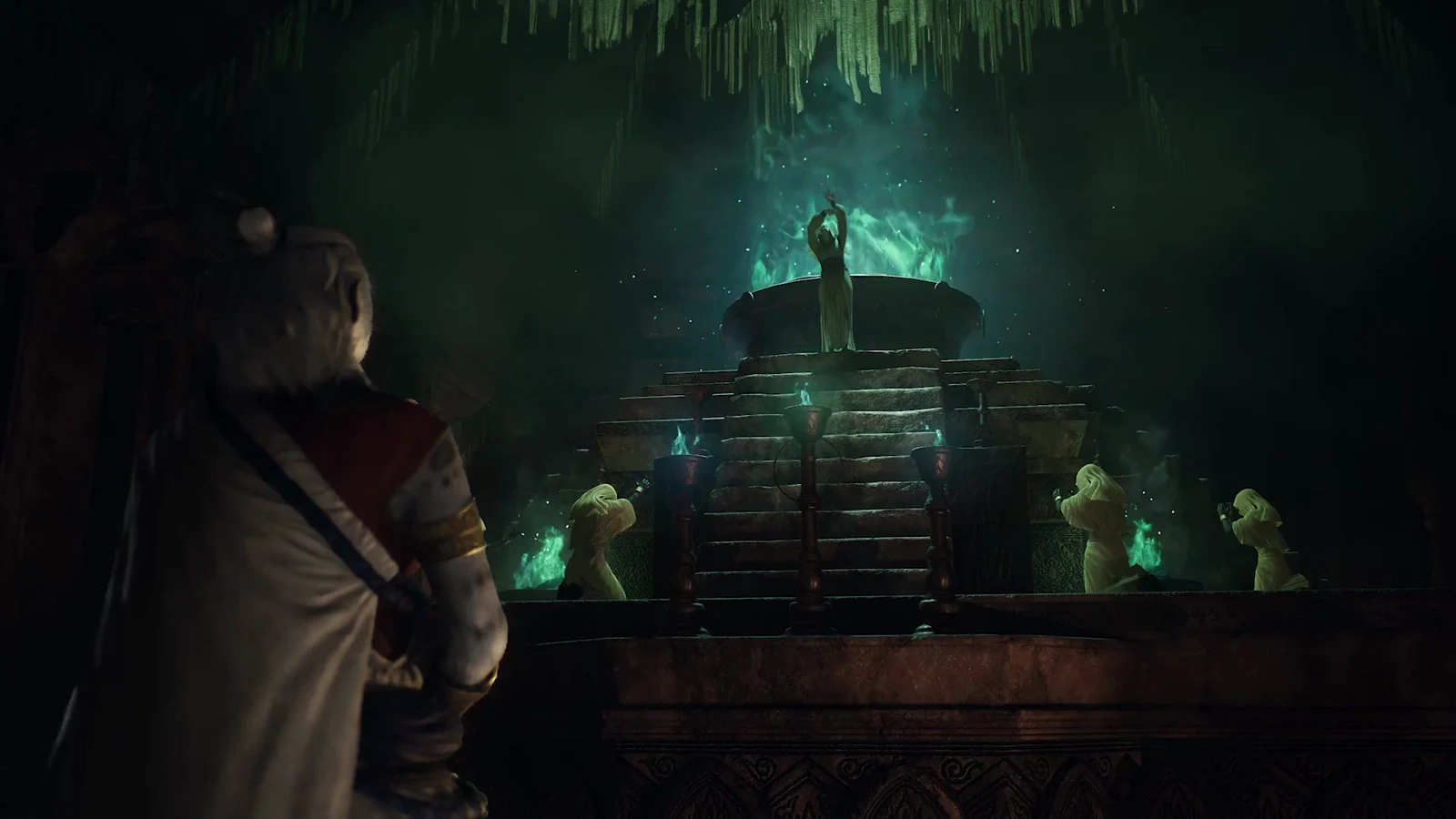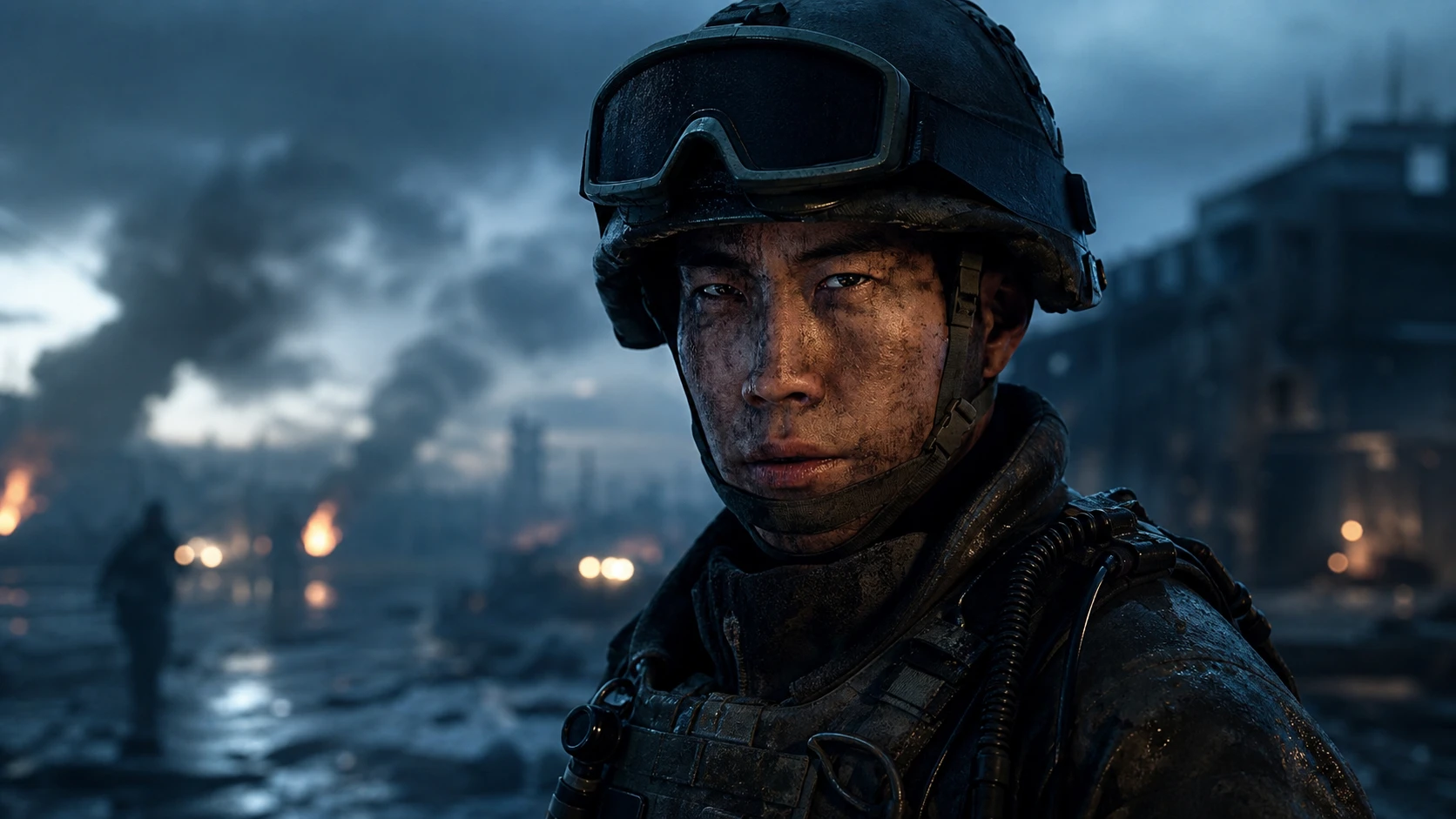
DMZ returns in Call of Duty: Modern Warfare 4 as the game’s third pillar, sitting alongside Campaign and Multiplayer. This time it drops the free-to-play structure of its 2022 beta and arrives as a fully built extraction shooter set in a new Korean exclusion zone called Hajin. You deploy as an off-the-books CIA asset, loot abandoned military tech, fight AI and other players, and try to extract with whatever you can carry.
Quick answer: Modern Warfare 4 DMZ launches on October 23, 2026 as a day-one mode inside the full game. It is not free, so you need to own Modern Warfare 4 to play it on PS5, Xbox Series X|S, PC, or Nintendo Switch 2.
Modern Warfare 4 DMZ release date and platforms
DMZ ships with the rest of Modern Warfare 4 on October 23, 2026. There is no separate launch window or mid-season wait. When the game goes live, the mode goes live with it.
Unlike the original DMZ, which launched free for Modern Warfare 2 (2022) owners, this version is locked behind a copy of the game. You can pre-order Modern Warfare 4 if you want access at launch. The mode runs on current-generation hardware only, leaving PlayStation 4 and Xbox One behind.
| Detail | Information |
|---|---|
| Release date | October 23, 2026 |
| Cost | Requires full game (not free-to-play) |
| Platforms | PS5, Xbox Series X|S, PC, Nintendo Switch 2 |
| Not supported | PlayStation 4, Xbox One, original Nintendo Switch |
How DMZ plays in Modern Warfare 4
DMZ is an extraction shooter. If you have played ARC Raiders, Escape from Tarkov, or Marathon, the loop will feel familiar. You drop into a hostile zone, complete objectives, gather high-value loot, and attempt to escape while AI enemies and rival squads try to stop you. Every deployment puts your gear at risk until you extract.
The story picks up after the Modern Warfare 4 campaign. An exclusion zone across the Korean peninsula is left saturated with abandoned weapons, military technology, and active threats. You operate as a shadow CIA asset sent to recover that tech before hostile forces claim it. Both enemy combatants and Rogue Operators roam the zone, so each squad constantly decides whether to cooperate, fight, or slip away.
You can play solo or in a three-player squad. Matches currently run with up to 20 squads, for a maximum of 60 players on the map, and deployments last roughly 40 to 50 minutes. Player counts and timing are still being tuned, but they already run noticeably longer than the original beta’s 30-minute matches.
Lobbies mix different objective types. Story Mission players, Dynamic Operations players, and Free Roam squads can all share one deployment, with squad counts adjusted so you can pursue missions without being overwhelmed by hostile players.
The Hajin map and points of interest
Hajin is one of the largest maps in Call of Duty history. It sits in a contested tri-point region where the Korean peninsula meets Russia, scarred by a nuclear reactor meltdown that turned the area into a radiation-soaked exclusion zone. The majority of the map is a South Korean zone hit hardest by the fallout, with parts of North Korea and Russia also forming the playable space.
The environment shifts run to run. Dynamic weather can move from sunshine to fog, rain, and snow, and it can change mid-match. Heavy rain cuts visibility, while fog and overcast skies turn familiar routes into tense, uncertain ground. Some points of interest have hidden or sealed areas, and a few entrances are reachable only through water.
Hajin launches with nine distinct points of interest:
- Hajin City
- Casino
- Fallout
- Hospital
- Military Base
- Farmlands
- Prison
- Broadcast
- Town
The eastern Fallout area carries heavy radiation. You need a gas mask to survive there, and it holds loot you can only find in that point of interest.
Story Missions, Dynamic Operations, and Free Roam
There are three main ways to play once you deploy. Each one shapes how you spend your time in Hajin.
- Story Missions continue the Modern Warfare 4 narrative with unique objectives tied to specific points of interest, built for replayability for both solo players and squads.
- Dynamic Operations are multi-step objectives generated per match. The steps are randomized, so when your boots hit the ground the first thing you receive is the main objective. Tasks range from neutralizing abandoned weapons programs to high-risk rescues and assaults.
- Free Roam lets you forge your own path, whether scavenging, hunting rival Operators, tracking dangerous Lieutenants, or breaking into the casino vault without alerting another squad.
Side Ops fill the gaps. You might repair trucks scattered across Hajin to unlock useful functions, recover lost supply drops, or climb damaged radio towers. You can also use phones found in the world to start Dynamic Operations.
Enemy AI and escalating threats
Hostile forces in Hajin guard key areas, move in convoys, fly in helicopters, and travel in coordinated squads. A new squad generation system means AI units navigate, react, and pressure you instead of acting alone. Approach a lone enemy and it may take cover, hold position, freeze, or try to break line of sight.
The threat system tracks your activity and ramps up enemy responses as you draw attention, similar to a GTA-style star rating. As your threat level climbs, the zone sends stronger reinforcements after you.
| Threat type | What it sends |
|---|---|
| Lieutenants | Specialized units led by named enemies |
| Roaming commanders | Tanks, drone swarms, Juggernauts |
| Elite responses | Deathstalker helicopters, Elite Strike Teams |
| Escalation reinforcements | Attack helicopters and heavily armored troops |
The Stealth Meter helps you manage attention, and it was designed mainly for solo players. When you are close to being spotted by AI, an audio cue plays and a HUD indicator shifts from white to yellow to orange. Get into cover before it fills to avoid alerting the enemy. Equipping a suppressor lets the threat system largely ignore you, so you can move quietly and play your own game.
PvP, bounties, and proximity chat
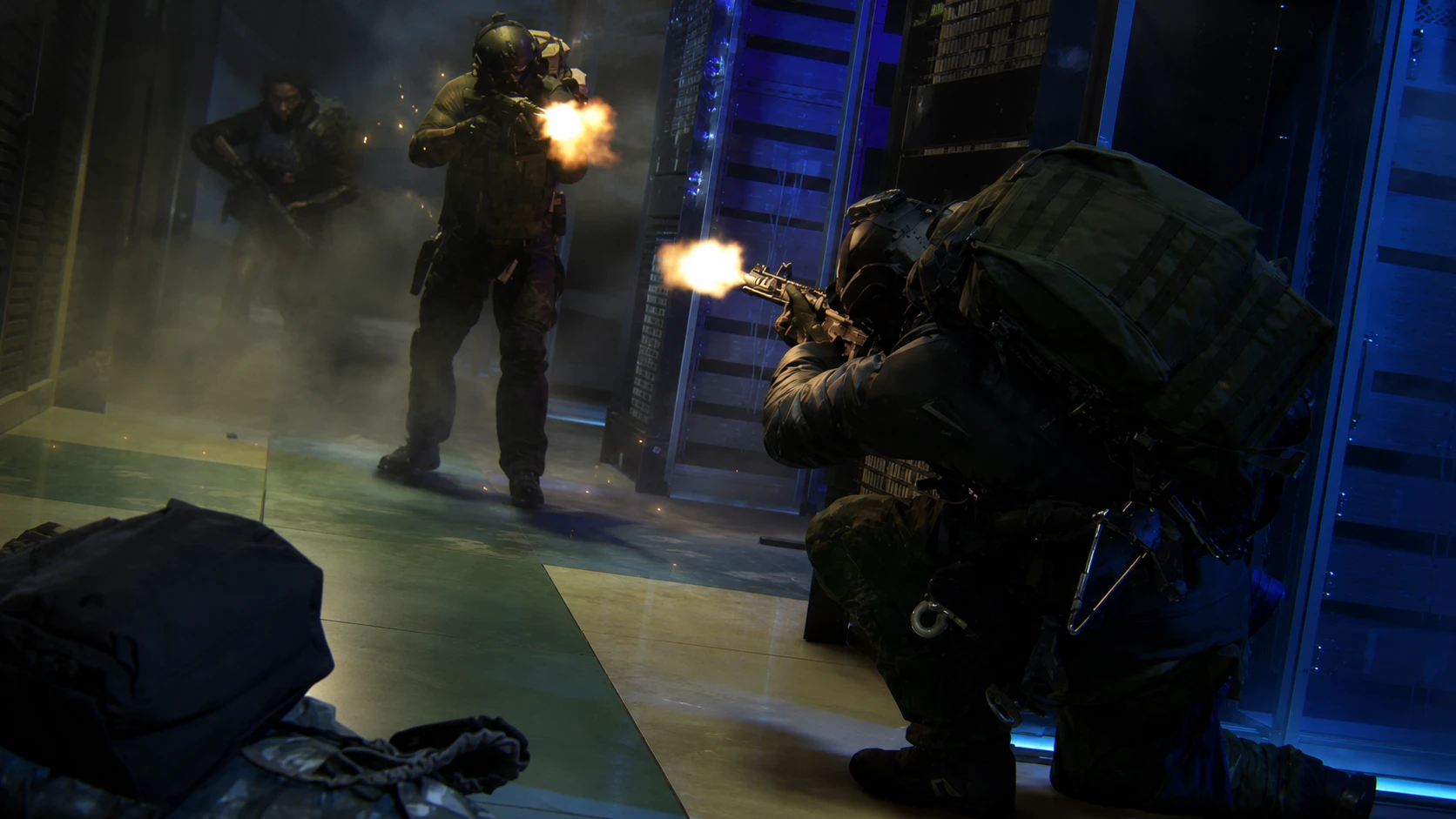
Player versus player combat carries real consequences this time. Gun down other players and you build notoriety, which raises the bounty on your head and makes you more visible and easier to track. The trade-off is a spot on the notoriety bounty leaderboard.
It works both directions. Bounty hunters collect dog tags from downed players and extract with them for a large payout. Hunting bounties also lowers your own notoriety, which is useful when you want to lay low.
Proximity chat drives a lot of the social play. You can listen, mute, or talk to nearby players, whether you are arranging a truce or setting a trap. The audio has been rebuilt with three upgrades:
- Distance-Based Vocal Falloff makes enemies louder the closer they get.
- Directionality helps you pinpoint where chatter is coming from.
- Environmental Voice Reverb bounces sound off structures, hinting at where players are hiding.
Squad assimilation returns, but it is limited. You can recruit only one extra player onto your team, capping a squad at four. Many of these moments happen organically through proximity chat, often when a downed player talks their way into joining you.
Forward Operating Base, Operators, and progression
The Forward Operating Base (FOB) is your hub between deployments. You return here before and after every match to manage gear, regroup with your squad, and prepare for the next run. It functions as both a staging area and a social space.
The FOB houses key services, including the 3D Printer crafting station, the Stash for storing items between deployments, weapon purchasing, a firing range, and bounty boards. Additional upgrade systems unlock over time, expanding what you can do there.
Active Duty Operators and the Trait System
The Active Duty slot system returns from Modern Warfare 2 DMZ, letting you create multiple Operators. Each Operator keeps a persistent loadout and backpack across deployments and progresses independently. As you rank one up, you spend Trait Points on combat, scavenging, and utility skills.
Traits let you specialize. You can build dedicated PvP fighters, infiltration specialists, looters, or cash-focused “mule” Operators, each tuned for a different mission role with passive bonuses layered on top.
Looting and crafting
Loot is contextual. Police stations tend to hold combat gear and tactical equipment, hospitals carry limited medical supplies, and residential areas provide crafting materials and scavenged resources. Hunting rarer components unlocks better gear, including Killstreaks, upgraded Plate Carriers, and specialized Backpack variants.
During a mission, DMZ automatically breaks down collected materials so you spend less time on inventory and more on objectives. Once you extract, you use those resources at the FOB through the upgradable 3D Printer. Upgrading the printer opens access to more advanced recipes and rarer gear.
| 3D Printer category | Examples |
|---|---|
| Gear | NVGs, parachutes |
| Backpacks | Storage with varied capacity and functions |
| Plate Carriers | Different armor vest configurations |
| Tacticals | Non-lethal equipment |
| Lethals | Offensive equipment |
| Consumables | Painkillers, radiation blockers |
| Field Upgrades | Support and intel tools (do not recharge in DMZ) |
| Fire Support Items | Deployable killstreaks |
| Special Items | Unique gameplay items |
Weapon condition and variants
Weapons found in Hajin often show heavy use, with damaged optics, broken or missing attachments, unstable components, and field repairs that affect both look and performance. You can extract these and turn them into something more capable. There are also unique weapon variants that come with specialized attachments and distinctive camo patterns.
Note: DMZ progression is one-way. The XP you earn flows down into Multiplayer, but Multiplayer progress does not carry into DMZ. That keeps the extraction mode feeling fresh from the start instead of unlocking everything after a Multiplayer grind.
Extraction, recovery, and ranking up
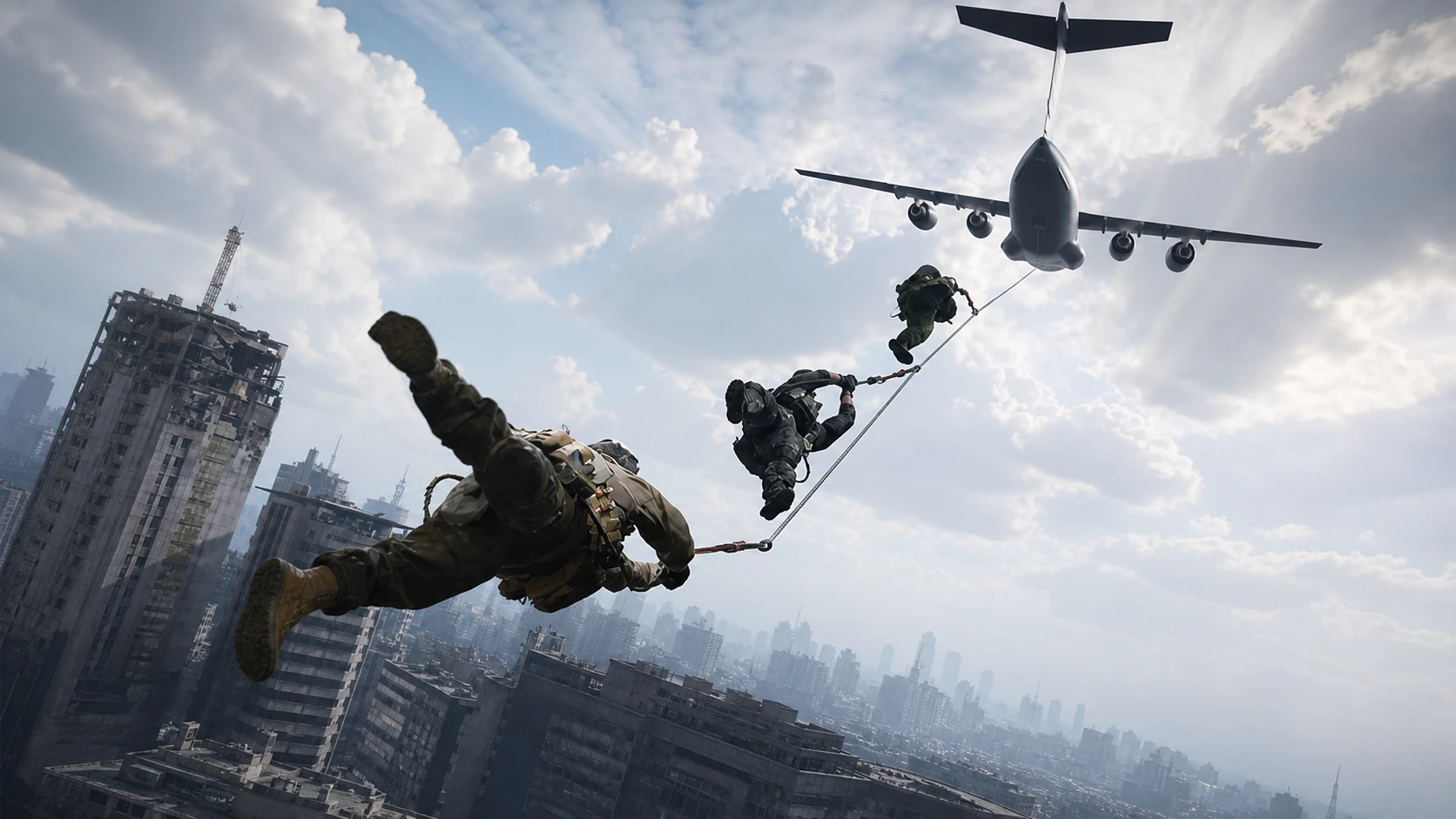
You leave Hajin using helicopters and skyhooks. Extraction is the high-risk payoff of every run, with last-second fights, ammo shortages, and sprints to safety deciding whether you keep what you gathered.
Getting downed is not the end. Several recovery tools keep you in the fight:
- MIA System works like Warzone redeployments. Teammates can spend in-game cash to rescue you, and your progression stays intact when you return.
- Tourniquet gets you back up after being downed, though with reduced maximum health. It is a stopgap, so you still need medical supplies to recover fully.
Your gear and rewards stay at risk until you extract, and a failed run can set you back. Even so, every deployment still earns XP and pushes long-term progression forward, with bigger rewards tied to how well you prepare and play.
Hajin was built with future evolution in mind from the start, with Infinity Ward pointing to lessons learned from the way Warzone maps changed over time. No specific post-launch changes have been detailed yet, but the groundwork for them is already in place.