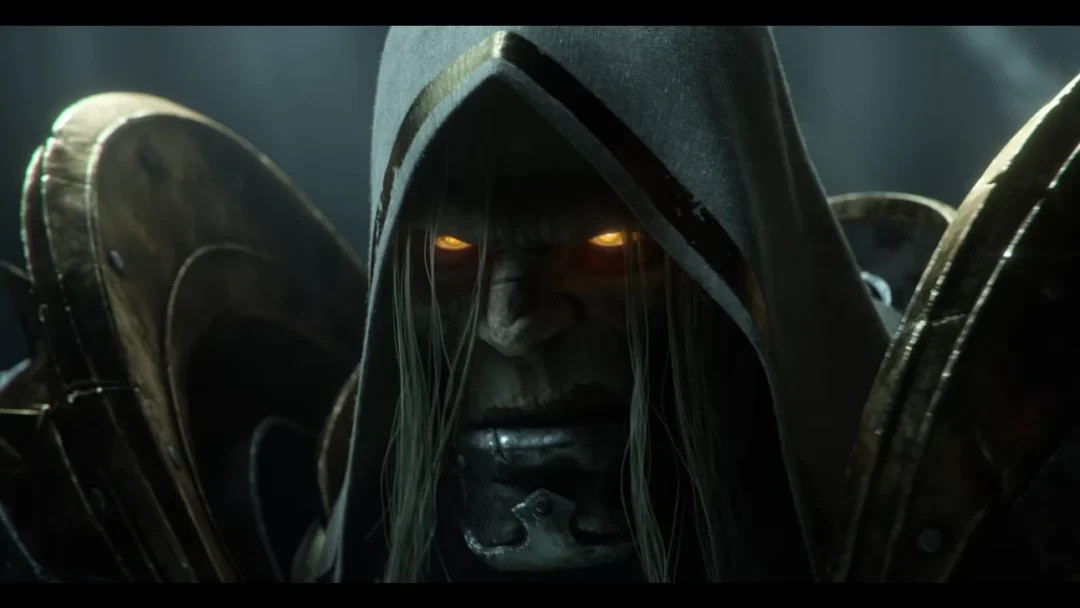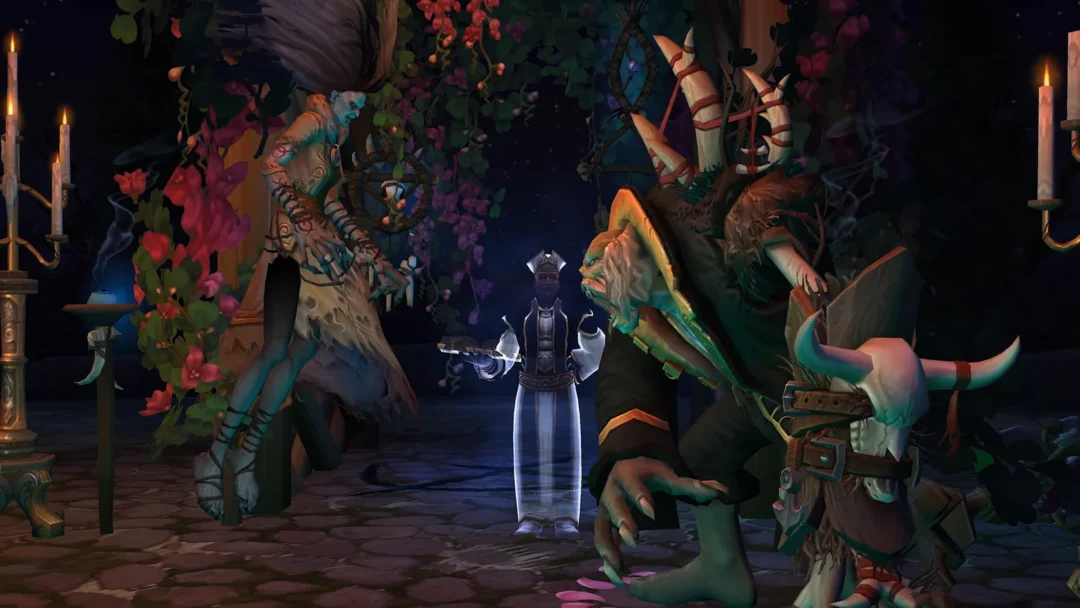
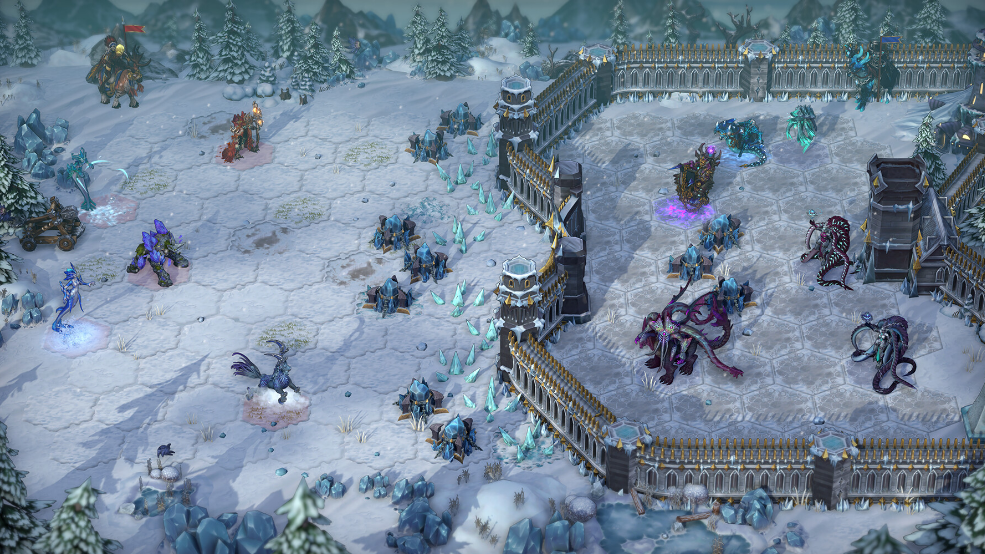
Necropolis in Heroes of Might and Magic: Olden Era wins through attrition. Vampires drain health every swing, Liches punish clumps from range, and Necromancy keeps the army growing after each victory. Picking the right stacks to invest in matters more here than in most factions, because the town’s tier 1 melee line is fragile early, and the strongest units are gated behind specific buildings.
Quick answer: The five Necropolis units that carry the faction are Vampire (T7), Dread Knight (T6), Lich (T5), Graverobber (T4), and Skeleton (T1). Prioritize Skeleton Archer upgrades for early creeping, then rush Dread Knight or Lich production depending on hero.
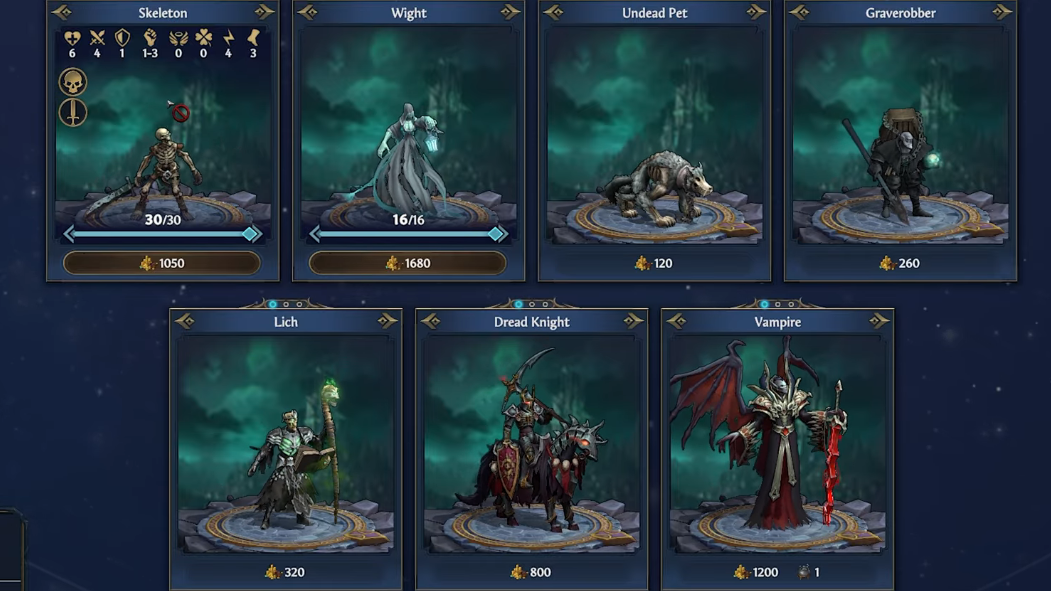
Necropolis roster reference
Each Necropolis tier has two upgrade paths off the base creature. The roster below is the production order in Shadowspire.
| Tier | Base unit | Upgrade A | Upgrade B | Role |
|---|---|---|---|---|
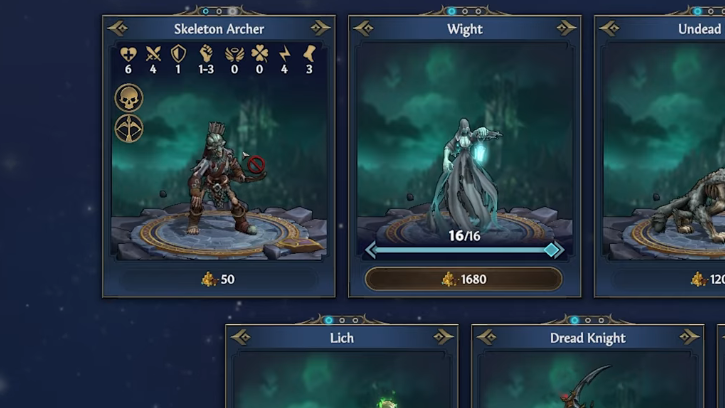
| 1 | Skeleton | Skeleton Warrior | Skeleton Archer | Melee or ranged |
| 2 | Wight | Wraith | Phantasm | Melee |
| 3 | Undead Pet | Barghest | Armoured Hound | Fast melee |
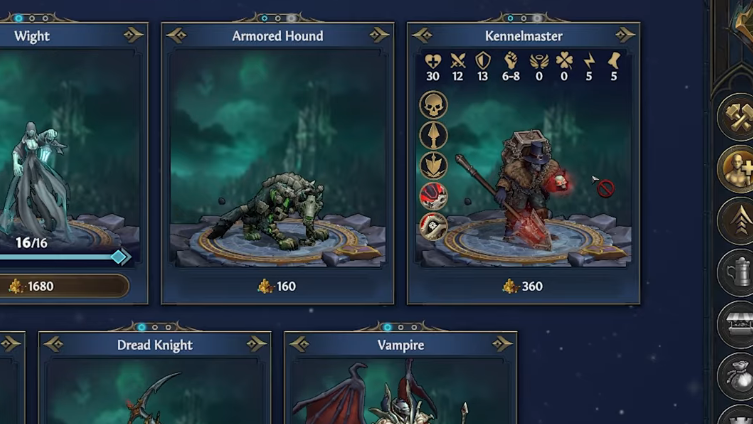
| 4 | Graverobber | Merchant of Death | Kennelmaster | Long reach |
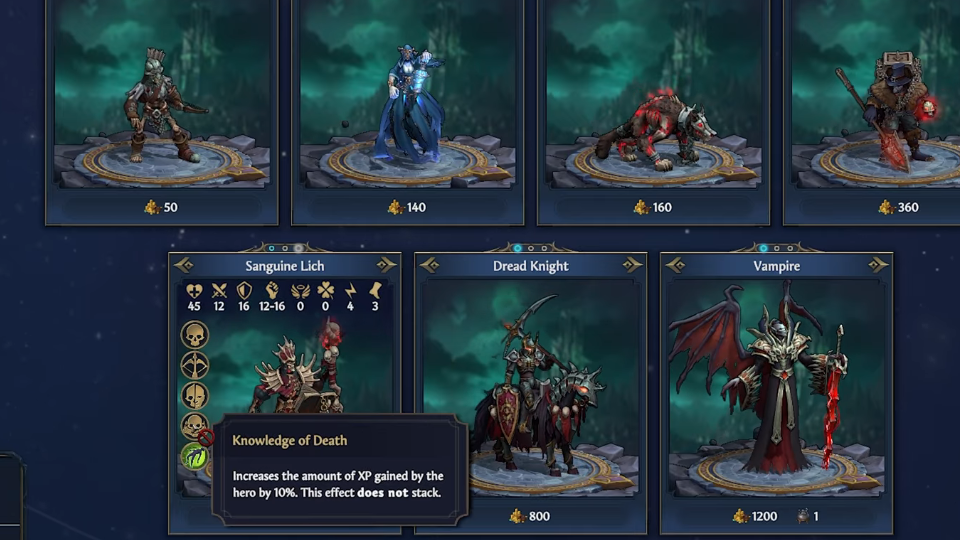
| 5 | Lich | Pestilent Lich | Sanguine Lich | Ranged caster |
| 6 | Dread Knight | Avatar of War | Hollow Reaper | Heavy melee |
| 7 | Vampire | Vampire Lord | Vampire Scholar | Flying melee |
Native terrain is Deathland, and the faction-wide identity is Necromancy. After a victory, a percentage of the strongest enemy stack is converted into friendly undead of the same tier, capped by stored Necromantic Energy. That mechanic shapes which units matter most: the ones that survive long fights and the ones that finish them fast.
1. Vampire (Tier 7)
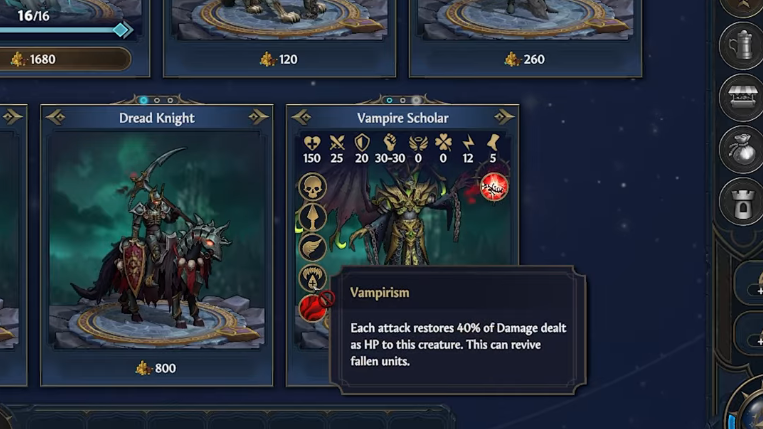
The Vampire sits at tier 7 in Olden Era, a placement that fundamentally changes how late-game Necropolis fights play out. It flies, hits in melee, and steals life with every strike, which means a single full-week stack can heal back to full inside a battle if it lands clean swings.
Both upgrades are strong, but they answer different problems. The Vampire Lord leans into raw front-line dominance and benefits the most from the lifesteal-heavy meta. The Vampire Scholar absorbs health to heal allies and carries a corpse explosion effect, with a mid-range attack that reduces retaliation exposure. If you expect long, drawn-out fights, the Lord wins on its own. If your army leans on a vulnerable mid-tier carry that needs topping up, the Scholar pays for itself.
2. Dread Knight (Tier 6)
The Dread Knight is the unit that defines early-to-mid Necropolis matchups. It hits twice per attack and has high enough damage to delete a tier 5 stack outright on a good swing. In direct comparisons with Temple armies, six Dread Knights are routinely worth roughly ten to twelve top-tier Temple units, which is why Necropolis pressure builds so quickly once the kennel chain and Dread Knight building are up.
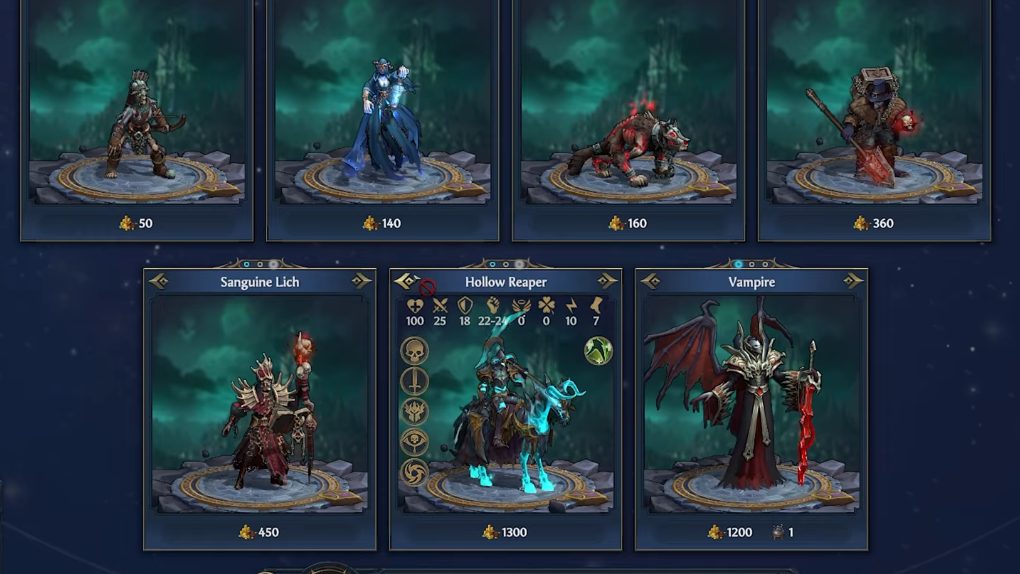
The Hollow Reaper upgrade is named in unit comparisons as the “Harbinger of War” path, and its double strike makes it a top-four contender across all faction tier 6 units. The Avatar of War path is the heavier-hitting variant and the more straightforward pick when you simply want a single dominant melee stack.
Specific heroes accelerate this plan. The Necropolis starter who begins with Dread Knights can rush a Kennel, fortifications, and the Dread Knight building in the opening days, then start clearing biomes faster than almost any other character in the faction. Pair Dread Knights with Nightshade Magic so the stack carries debuffs into every engagement.
3. Lich (Tier 5)
The Lich is the only true ranged carry Necropolis has beyond the Skeleton Archer, and both upgrades are worth building toward.
The Pestilent Lich (sometimes shown as Plague Lich in comparison tables) deals area-of-effect damage on its attack and amplifies curse damage on targets it hits. That makes it the natural partner for a damage-over-time build paired with Merchants of Death, Phantasms, or Nightshade spells. The Sanguine Lich’s strength lies in a resurrection effect, which lets it bring fallen undead back, inside the fight rather than waiting on post-battle Necromancy.
A common strong composition stacks three to four Liches behind a wall of Skeleton Archers. The Skeletons soak first turns through sheer numbers, and the Liches drop AoE damage onto whatever clumps up to attack them.
4. Graverobber (Tier 4)
The Graverobber line is the glue unit of a Necropolis army. The base creature uses Long Reach, an attack that targets the hex directly behind an adjacent hex, ignores counterattack on that hit, and does not move the attacker next to the target. That alone makes it valuable as a safe poke against high-retaliation enemies.
The Merchant of Death is the upgrade most players take. It carries Long Reach, Dig Up Bones, and Blighted Corpses:
| Ability | Effect |
|---|---|
| Long Reach | Attacks the hex behind an adjacent hex without provoking counterattack. |
| Dig Up Bones | Summons skeletons equal to twice the stack size on an adjacent hex; they disappear after the battle. |
| Blighted Corpses | Long Reach attacks poison the target for 2 rounds; poisoned creatures take stackable magic damage at the start of their turn. |
| Undead | Neutral morale; fallen Merchants of Death do not count toward Necromancy reanimation after battle. |
The Kennelmaster path trades some of that utility for a charge-based debuff that marks an enemy to always take maximum damage, and summons Undead Pets instead of skeletons. Pick Kennelmaster when your army leans on a small number of hard-hitting stacks; pick Merchant of Death when you want a wall of summoned bodies and stacking poison damage.
5. Skeleton (Tier 1)
Skeletons are not strong on a per-unit basis, but the Necropolis hero economy is built around having a lot of them. A standard Necromancer opening produces around 80 Skeletons in the first days, with the option to upgrade them into Skeleton Archers on day one.
That Skeleton Archer upgrade is the single most important early decision in the faction. Without it, Necropolis has no ranged answer in the first week and bleeds units against ranged-heavy opponents. With it, a stack of around 75 archers can carry mid-game creeping with minimal losses and feed Necromancy gains every fight. The Skeleton Warrior path bumps defense to 3 and keeps the stack as a melee shield, which is the right pick only when your build leans on Merchants of Death and Liches for ranged pressure.
Build priorities by hero start
The five units above stay strong across most matchups, but the order you build them in depends on the starting hero and template.
| Starting hero focus | Open with | Tech toward |
|---|---|---|
| Skeleton-heavy Necromancer | Skeleton Archer upgrade on day one | Lich (Pestilent or Sanguine) |
| Dread Knight starter | Kennel, fortifications, Dread Knight building | Dread Knight numbers, then Vampires |
| Undead Pet starter | Upgrade pets, push to Graverobbers | Lich for ranged pressure |
| Nightshade caster | Skeleton Archers as a shield | Pestilent Lich + Merchant of Death damage-over-time |
Across all openings, the same pattern holds. Skeletons buy you time, Graverobbers and Liches deal damage from safety, Dread Knights settle the middle of the fight, and Vampires close it out. Build in that order and Necropolis turns slow first weeks into late-game fights that are very hard to lose.