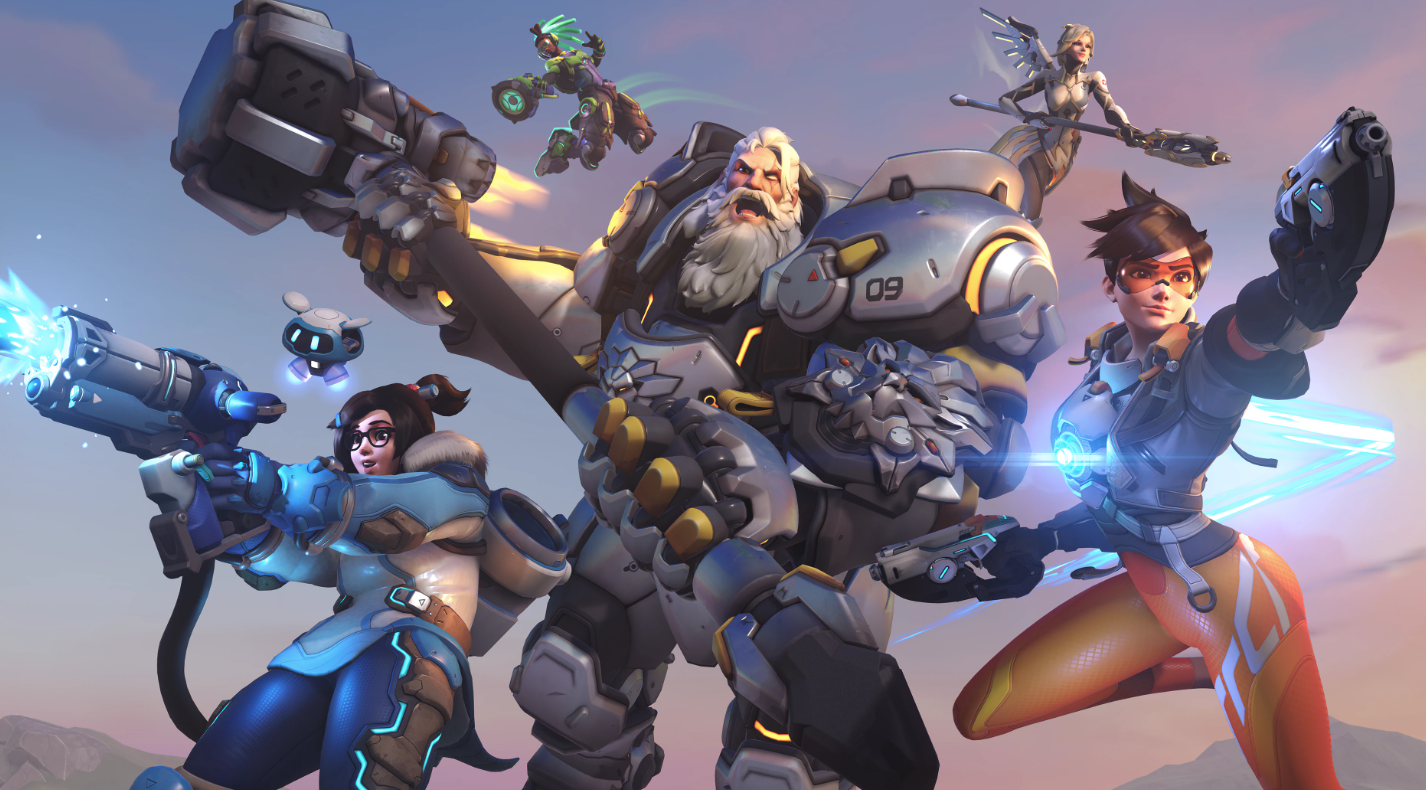
Every hero in Overwatch carries a set of abilities that define how they fight, move, and support teammates. Unlike weapons, abilities never draw from your ammo pool. Their use is gated by cooldowns and charge instead, and most of them shut off the moment a hero is hacked.
Quick answer: Abilities come in three kinds. Normal abilities run on cooldowns and sit on [L] Shift and E, ultimate abilities must be charged by healing or dealing damage, and passive abilities apply on their own.
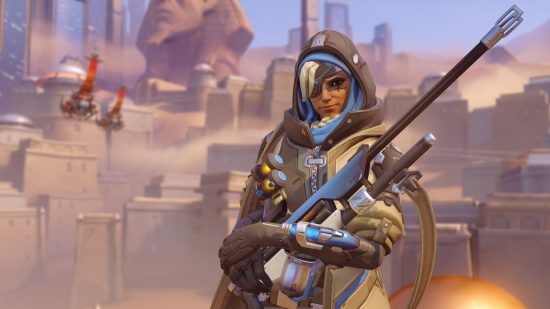
The three ability types in Overwatch
All heroes share the same three-part structure for their kit. Knowing which slot an ability sits in tells you how often you can use it and what charges or limits it.
| Type | How it works |
|---|---|
| Normal | Usually limited by cooldowns. Every hero has at least two, mapped to [L] Shift and E, though some heroes carry more. |
| Ultimate | Powerful abilities that must be charged before use. You build charge by healing or dealing damage. |
| Passive | Innate effects that apply automatically. Some passives cannot be hacked. |
Damage from any of these counts as “ability damage,” which matters for effects that key off it. Doomfist’s passive, The Best Defense, generates temporary overhealth specifically when he deals ability damage.
Effect types: how abilities reach their targets
Beyond the slot they occupy, abilities differ in how they deliver their effect. Five effect types cover almost everything in the game.
| Effect type | Behavior |
|---|---|
| Area of effect | Hits every hero inside the area. Needs an unobstructed line of sight, so terrain, terrain-like objects such as Mei’s Ice Wall, and most barriers can block it. Many are spheres, but shapes vary, like Shockwave. |
| Projectile | Fires a projectile or arcing projectile that applies its effect on collision. Projectiles have a size and a travel time. |
| Hitscan | A projectile with no travel time. It applies to the first target in its path. |
| Targeted | Applies directly to a chosen target with an unobstructed line of sight. Enemy barriers usually block this line of sight. |
| Movement | Grants a burst of motion through dashes, leaps, or teleports. Abilities that only raise movement speed do not count here. |
Movement abilities have an important weakness. They are disabled and interrupted if the hero is stunned, knocked down, hacked, rooted, or hindered, with a few exceptions.
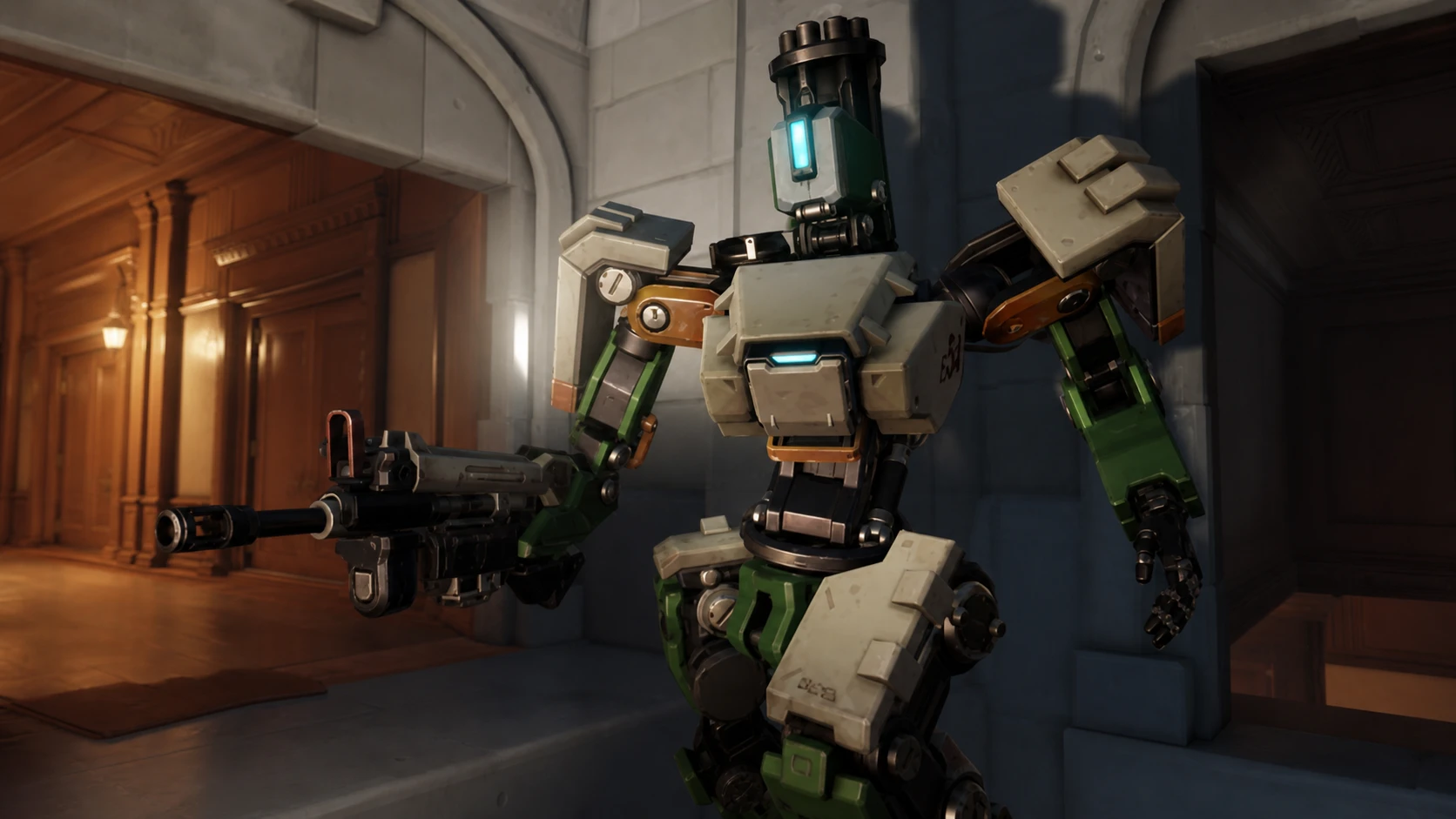
Cast types: when crowd control can interrupt an ability
Cast type decides whether stuns, knockdowns, and hacks can cut an ability short. This is the single most important thing to understand for timing your ultimates and reading enemy counters.
Channeled abilities
Channeled abilities are longer-lasting effects that break if the user is stunned, knocked down, or hacked at any point while active. They usually lock the hero out of weapons and other abilities for the duration. Pharah’s Barrage and Roadhog’s Take a Breather are classic examples.
There are exceptions. Moira can use Fade during Coalescence, and Sigma can fire his primary after targets are lifted by Gravitic Flux. Some mechanics also override interruption entirely. Orisa’s Terra Surge makes her immune to stuns and knockdowns for its duration.
Transformation abilities
Transformation abilities are the opposite of channeled ones. Crowd control cannot interrupt them at all. They end only when their duration expires or the user is eliminated. These abilities typically reshape the hero by changing HP, weapon, or other abilities, or granting effects such as seeing through walls with Infra-Sight.
Because they do not restrict weapons or abilities, you can keep fighting throughout. Winston’s Primal Rage, Genji’s Dragonblade, and Ramattra’s Nemesis Form all work this way.
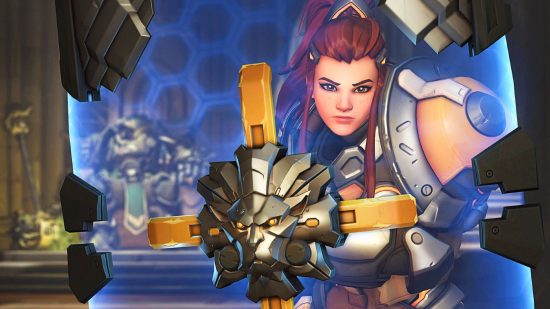
Cast time abilities
Cast time abilities sit between the two. Crowd control can interrupt them during the startup window, but once startup finishes, they are locked in and can no longer be stopped. Lúcio’s Sound Barrier and Tracer’s Pulse Bomb are examples.
“Cast time” also refers to a general property nearly every ability has, including channeled and transformation abilities. It splits into two parts. Startup is the time from pressing the button to the ability activating, and the phase where a cast time ability can be interrupted. Recovery is the time before you can use your weapon, quick melee, or other abilities after the effect has applied.
Confirmation input abilities
Some abilities that place a stationary object first open a targeting interface. You preview the location, adjust orientation, and confirm with primary fire. The targeting can be cancelled or interrupted, but the activation itself cannot once confirmed.
The key benefit is that nothing is spent until you confirm. The ability does not go on cooldown or consume ultimate charge during targeting, so a cancelled cast lets you try again right away. Symmetra’s Photon Barrier and Mei’s Ice Wall both use this scheme.
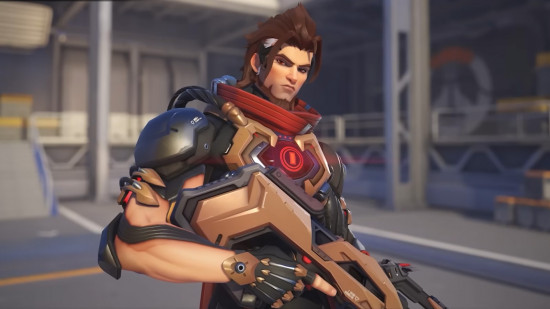
Tank hero abilities and cooldowns
Tank kits mix barriers, mobility, and crowd control. The table below covers the normal abilities for several tanks, with their shot type and cooldown.
| Hero | Ability | Effect | Cooldown |
|---|---|---|---|
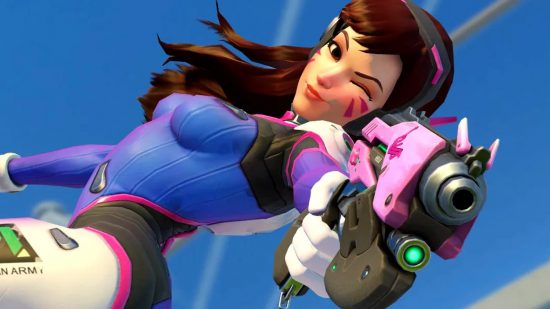
| D.Va | Defense Matrix | Blocks projectiles in an area in front of you. | 1s |
| D.Va | Boosters | Fly in the direction you face. | 4s |
| D.Va | Micro Missiles | Launches a volley of explosive rockets, 11 per second. | 7s |
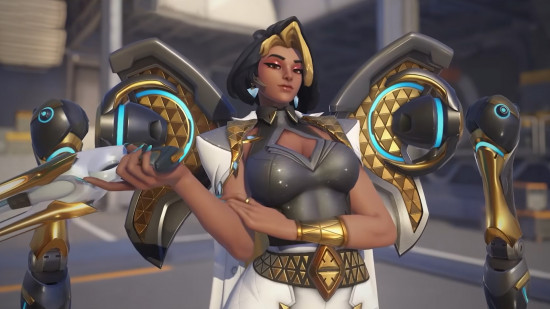
| Domina | Barrier Array | Builds a segmented barrier. | 14s |
| Domina | Sonic Repulsors | Pushes enemies back, stunning them if they hit a wall. | 7s |
| Domina | Crystal Charge | Projects an explosive crystal; reactivate to detonate. | 8s |
| Doomfist | Rocket Punch | Hold to charge, release to launch forward and knock an enemy back. More damage on a wall hit. | 4s |
| Doomfist | Seismic Slam | Leap forward and smash the ground. | 6.5s |
| Doomfist | Power Block | Protects from frontal attacks; blocking heavy damage empowers Rocket Punch. | 7s |
| Hazard | Spike Guard | Protects from frontal damage while firing homing spikes and regenerating ammo. | — |
| Hazard | Violent Leap | Lunge forward; activate again to slash and knock enemies back. | 5.5s |
| Hazard | Jagged Wall | Launches a spiked wall that damages and knocks back nearby enemies. | 12s |
| Junker Queen | Jagged Blade | Throw the blade; reactivate to pull it and any impaled enemy back. Wounds on melee and throw. | 6s |
| Junker Queen | Commanding Shout | Grants temporary health and movement speed to you and allies. | 12s |
| Junker Queen | Carnage | Wounds enemies in front of you; cooldown drops 2s per enemy hit. | 9s |
Doomfist’s Rocket Punch and Seismic Slam both feed his passive, which generates temporary overhealth whenever he deals ability damage.
Hero roster by role
Heroes are sorted into three roles: Tank, Damage, and Support. Several heroes appear in role lists across the roster as the game has evolved.
| Role | Heroes |
|---|---|
| Tank | D.Va, Doomfist, Junker Queen, Orisa, Reinhardt, Roadhog, Sigma, Winston, Wrecking Ball, Ramattra |
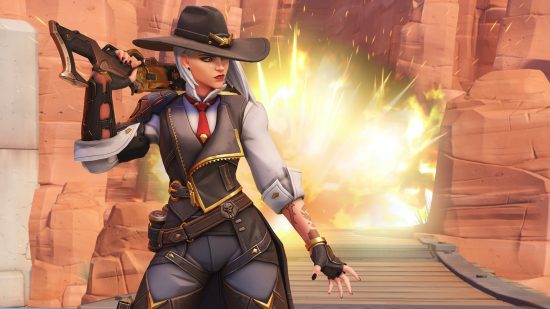
| Damage | Ashe, Bastion, Cassidy, Echo, Genji, Hanzo, Junkrat, Mei, Pharah, Reaper, Sojourn, Soldier: 76, Sombra, Symmetra, Torbjörn, Tracer, Widowmaker |
| Support | Ana, Baptiste, Brigitte, Kiriko, Lúcio, Mercy, Moira, Zenyatta |
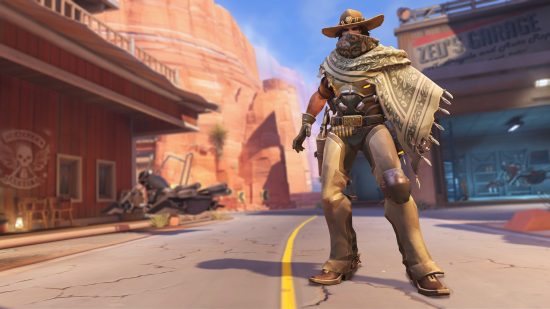
Overwatch Classic heroes
The Overwatch Classic mode brings back the original lineup of 21 heroes, organized into the older tank, offense, defense, and support categories.
| Category | Heroes |
|---|---|
| Tank | D.Va, Reinhardt, Roadhog, Winston, Zarya |
| Offense | Cassidy, Genji, Pharah, Reaper, Soldier: 76, Tracer |
| Defense | Bastion, Hanzo, Junkrat, Mei, Torbjorn, Widowmaker |
| Support | Lúcio, Mercy, Symmetra, Zenyatta |
In this mode, Reaper can collect Soul Globes to restore health, reflecting how the original kits behaved.

Once you can read an ability by its type and cast rules, the rest of the kit falls into place quickly. Check the shot type to know how it lands, check the cast type to know when an enemy can interrupt it, and the cooldown tells you how often you can rely on it in a fight.