

Crimson Desert launched on March 19th, 2026, to a whirlwind of hype, mixed reviews, and two million copies sold in a single day. But the conversation quickly shifted from combat mechanics and open-world ambitions to something far less flattering: a series of in-game paintings so visually broken that players immediately recognized them as generative AI output. Developer Pearl Abyss initially said nothing, then confirmed the AI-generated assets were "unintentionally" left in the final build — a claim many players find difficult to accept.
Quick answer: Pearl Abyss has confirmed that generative AI art shipped in Crimson Desert's release build, added a belated AI disclosure to the game's Steam page, and pledged to audit and replace all affected assets.
What Players Found — and Why It Was Obvious
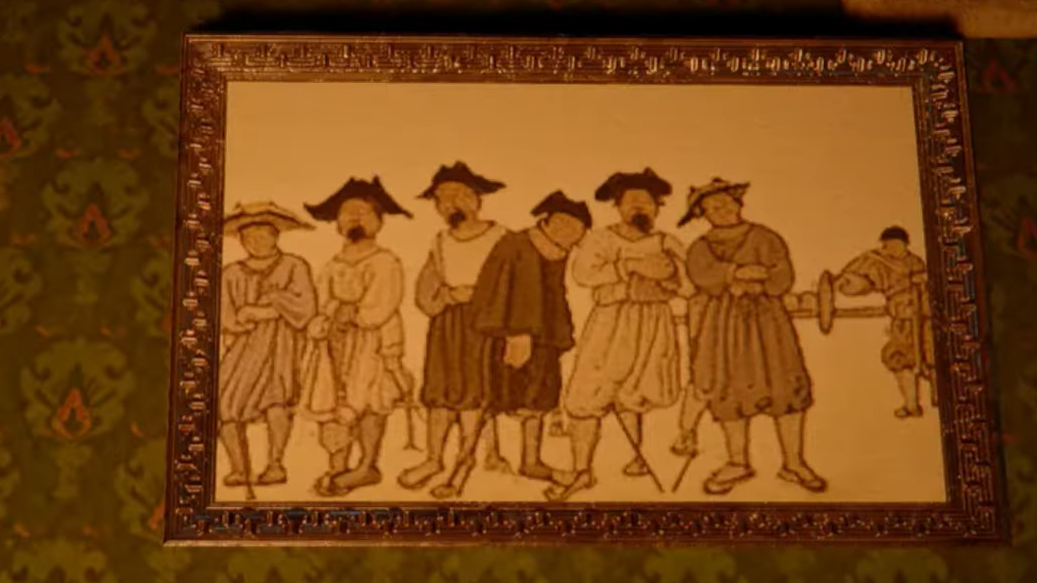
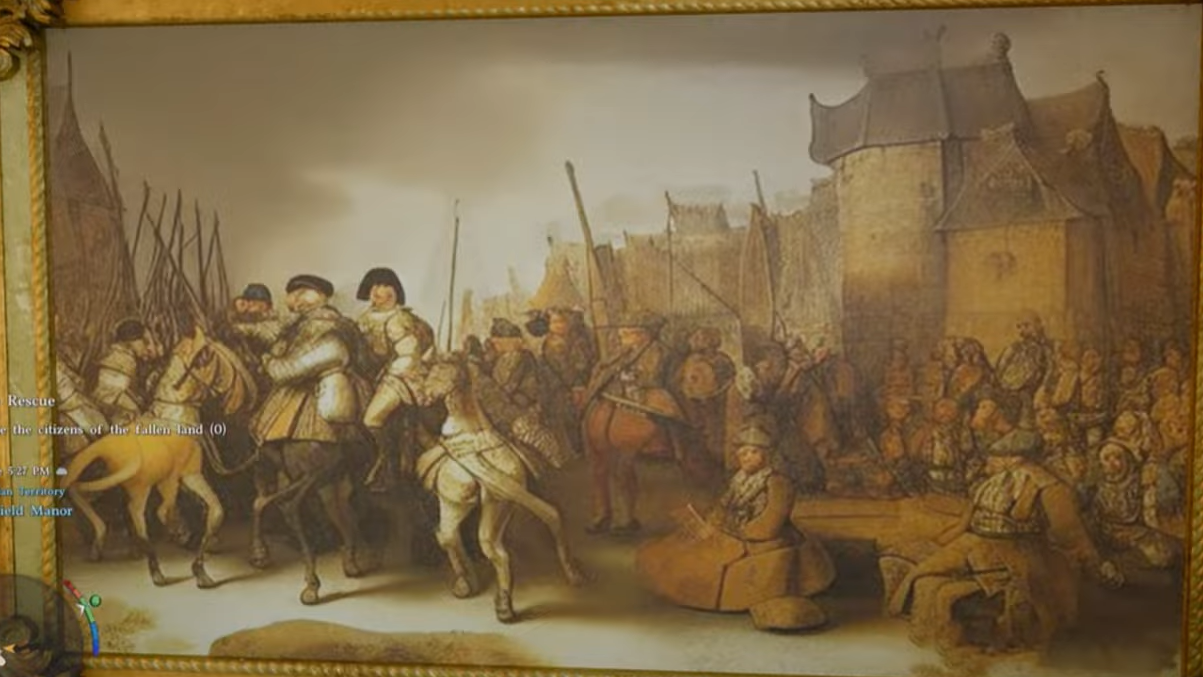
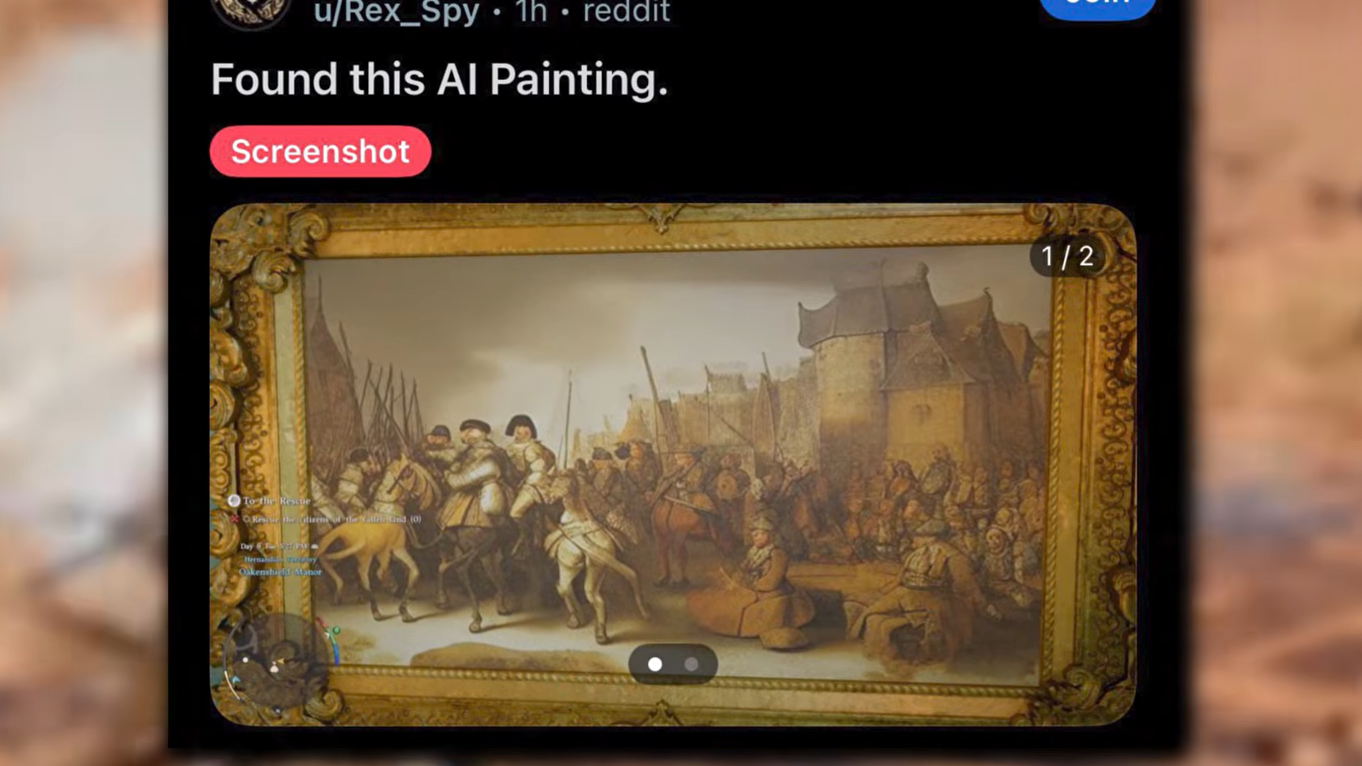
Within roughly 24 hours of Crimson Desert going live, a player exploring Oakenshield Manor — a location in the game's first major town — noticed a large framed painting on a staircase wall. The image was meant to depict a historical battle scene with warriors and horses. Instead, it showed human figures fused with horse bodies, limbs sprouting from impossible angles, and faces that dissolved into featureless blurs. It was, by any reasonable standard, unmistakably the output of an early-generation image model.
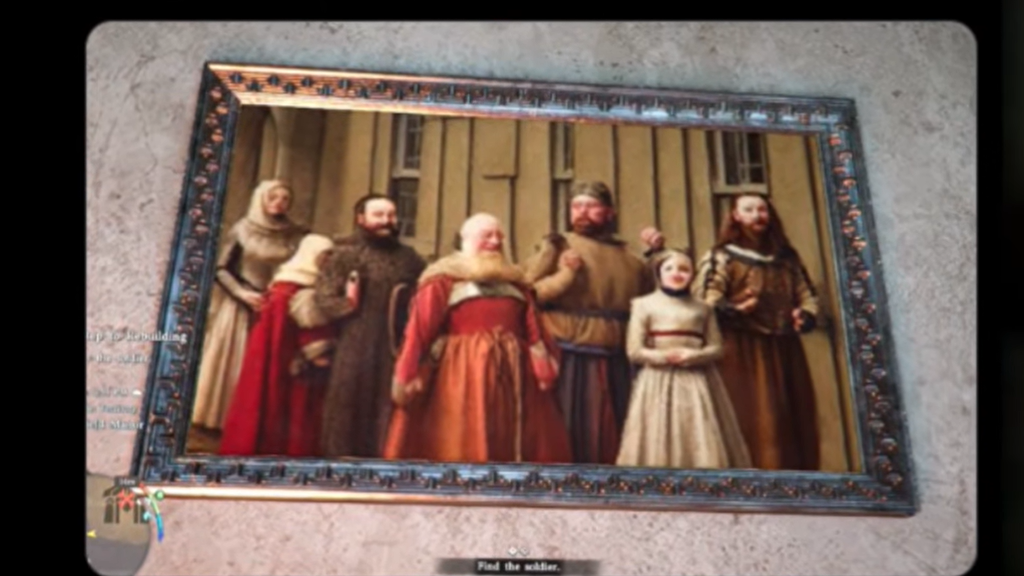
That first painting was only the beginning. Additional players quickly cataloged more examples scattered throughout the game world: signs depicting merchants with the wrong number of fingers on each hand, portraits of gentlemen with anatomically nonsensical proportions, and multiple horse-themed compositions where the animals' legs multiplied and merged with riders in ways no human illustrator would produce. Several of these images bore the hallmarks of models like DALL-E or early Stable Diffusion from around 2022 — technology that was notorious for mangling hands, limbs, and animal anatomy.
Pearl Abyss's Response and the "Placeholder" Defense
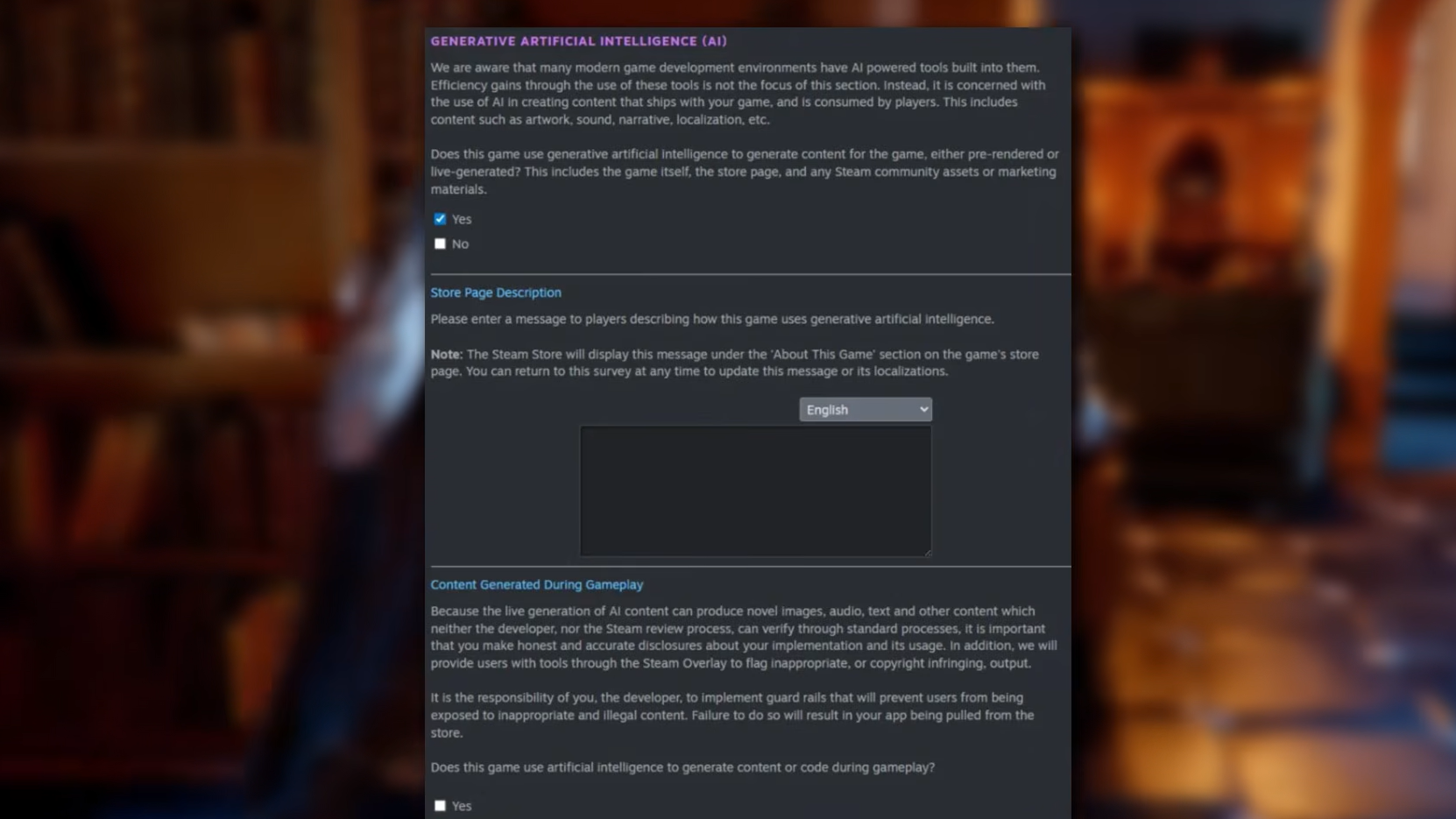
For roughly two days after the initial discovery, Pearl Abyss said nothing publicly about the AI art. The game's Steam store page carried no generative AI disclosure — a notable omission given that Valve updated its content policy in 2024 to require developers to flag any use of generative AI in shipped products.
On March 22nd, Pearl Abyss broke its silence. The studio confirmed that the flagged assets were created "as part of early-stage iteration using experimental AI generative tools" and that they were intended to help the team "rapidly explore tone and atmosphere in the earlier phases of production." The company said these assets were always meant to be replaced before release, but slipped through into the final build. Pearl Abyss took responsibility, apologized for the lack of transparency, and announced a comprehensive audit of all in-game assets to catch any remaining generative AI content.
A generative AI disclosure was simultaneously added to the game's Steam page. Notably, SteamDB records show that an AI disclosure had actually been added to the page before launch — and then removed. That detail has fueled skepticism about the "unintentional" framing.
Why the Lack of Disclosure Matters More Than the Art Itself
The paintings in question are decorative background assets. They don't affect gameplay, quest progression, or combat. In isolation, a few bad wall textures would barely register as a controversy. The real issue is the missing disclosure and what it signals about Pearl Abyss's approach to transparency.
Steam's AI content policy places the burden squarely on developers to honestly report whether generative AI was used in their game's creation. Failing to disclose puts a title in violation of the platform's rules and, more practically, means players who care about AI-generated content have no way to make an informed purchase decision. Several players have noted that non-disclosure of generative AI use could serve as grounds for a Steam refund request, even beyond the standard two-hour playtime window, since it constitutes a form of misrepresentation.
Pearl Abyss's marketing director, Will Powers, had generated positive press just weeks before launch by confirming that all main and quest NPCs were voiced by human actors across multiple languages. That goodwill evaporated quickly when the AI art surfaced, and players began questioning whether other aspects of the game — dialogue writing, background NPC voices, environmental textures — might also involve undisclosed generative tools.
A Pattern Across the Industry
Crimson Desert is far from the first game to face this kind of backlash. The past year has seen a steady drumbeat of similar controversies involving major studios and generative AI assets.
| Game / Studio | What Happened | Outcome |
|---|---|---|
| Clair Obscur: Expedition 33 (Sandfall) | AI-generated placeholder texture found in final build | Patched out quickly; stripped of an indie Game of the Year award |
| Call of Duty (Activision) | Ongoing use of generative AI assets across multiple release cycles | Disclosed on Steam; continued use despite backlash |
| Battlefield (EA) | Players spotted what appeared to be AI-generated promotional imagery | Criticism but no major policy action |
| Divinity (Larian Studios) | Revealed in interview that generative AI was used for concept art and placeholder text | Public backlash; Larian clarified no AI in final shipped product |
| Mario Kart World (Nintendo) | In-game billboards sparked AI speculation | Nintendo denied any generative AI use |
The Expedition 33 comparison has been especially prominent in community discussions. That game faced a nearly identical situation — AI placeholder art that shipped by mistake — but its developer patched the assets out within days, and the controversy faded relatively quickly. Whether Crimson Desert receives the same grace depends largely on how fast Pearl Abyss follows through on its audit and replacement promises, and on the broader context of the studio's other transparency issues.
Pearl Abyss's Broader Credibility Problem
The AI art controversy doesn't exist in a vacuum. Crimson Desert's launch has been dogged by a series of disclosure failures that have collectively eroded trust in Pearl Abyss.
The studio did not reveal that the game uses Denuvo DRM until just days before release. It withheld console review codes, providing only PC copies to press, and reacted poorly when journalists pushed for PlayStation 5 and Xbox Series X footage. When console codes were eventually offered to Digital Foundry, they proved useless because the game's servers weren't active until launch. Intel has stated publicly that it reached out to Pearl Abyss for years to ensure Crimson Desert would support Arc GPUs, but the game shipped without Arc compatibility — and Pearl Abyss never disclosed this limitation before release. The studio even included performance targets for the ROG Ally handheld in its marketing materials, despite the game running poorly on that device.
Each of these issues might be individually forgivable. Stacked together, they paint a picture of a studio that consistently withholds unflattering information until after customers have committed their money.
The "Old Model" Question
One detail that has generated significant debate is the apparent age of the AI model used to create the offending paintings. The output is so crude — with the kind of limb-merging and facial distortion characteristic of 2022-era generators — that many players find it implausible as a deliberate final asset. A studio intentionally using generative AI to cut corners in 2025 or 2026 would presumably use a modern model capable of producing far more convincing results.
This observation actually lends some credibility to the placeholder theory. If the images were generated during early production several years ago, when the technology was less capable and less controversial, it's at least plausible that they were meant as rough stand-ins and were simply never flagged for replacement during the final QA pass. The counterargument is equally straightforward: placeholder assets in professional game development are traditionally marked with obvious visual indicators — bright colors, watermarks, or "TEMP" labels — specifically so they can't be missed. Using a passable-looking painting as a placeholder, even a bad one, invites exactly the kind of oversight that occurred.
What Happens Next
Pearl Abyss has committed to replacing all generative AI content and conducting an internal process review. The Steam disclosure is now live. Whether the studio follows through promptly — and whether any additional undisclosed AI use surfaces during the community's ongoing scrutiny — will determine how much lasting damage this controversy inflicts.
For players who already purchased Crimson Desert and feel misled, Steam's refund system does allow requests outside the standard return window when a game's store page misrepresents its contents. The absence of an AI disclosure at the time of purchase could support such a request, though Valve evaluates these on a case-by-case basis.
The broader takeaway extends well beyond one game. Generative AI placeholder assets are becoming a recurring flashpoint in game development, and the "we forgot to swap them out" explanation is wearing thin with a player base that has now heard it multiple times from multiple studios. The gaming industry's relationship with generative AI remains deeply contentious, and every undisclosed instance — accidental or not — makes the next one harder to explain away.