
Windrose hands you stat points every time you level up, and the menu does not spell out exactly what each attribute changes. The system splits into six primary stats, three of which scale specific weapon families and three that govern survival and crit. Picking the wrong one wastes points until you reset, so the per-point values and weapon scaling matter more than the descriptions suggest.
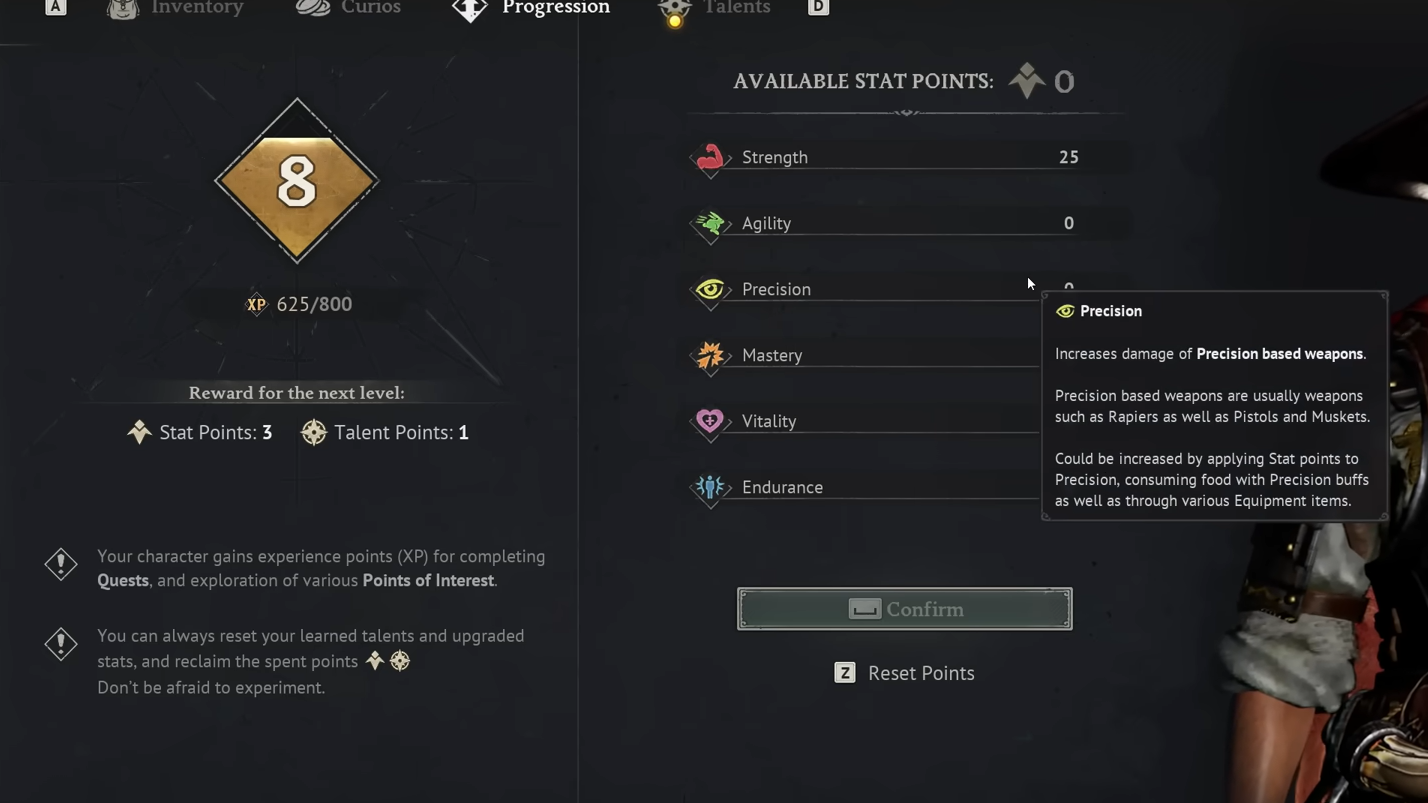
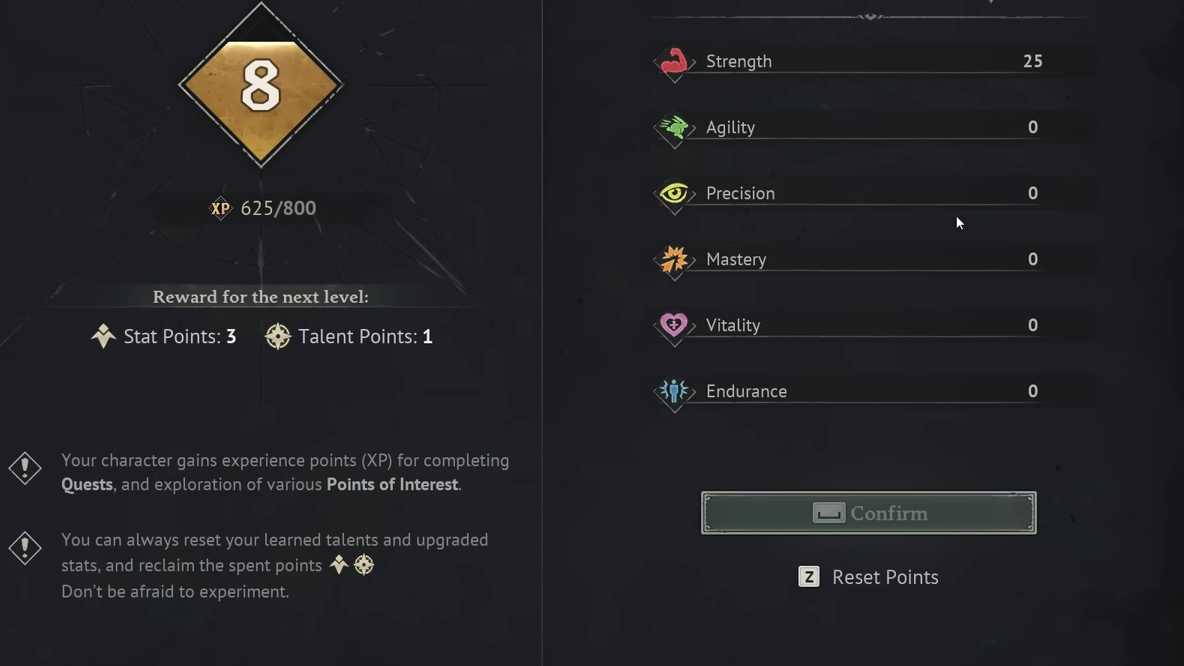
The six primary stats and what each point gives you
Three stats are tied directly to weapon damage scaling, and only the matching weapon type benefits. The other three are universal. Stats and talents can be reset at any time, so swapping builds when you change your main weapon carries no permanent cost.
| Stat | Per-point effect | Weapons it scales |
|---|---|---|
| Strength | Increases damage of heavy melee weapons | Club, Halberd |
| Agility | Increases damage of fast and sweeping weapons | Saber, Greatsword, Blunderbuss |
| Precision | Increases damage of ranged and technical weapons | Rapier, Pistol, Musket |
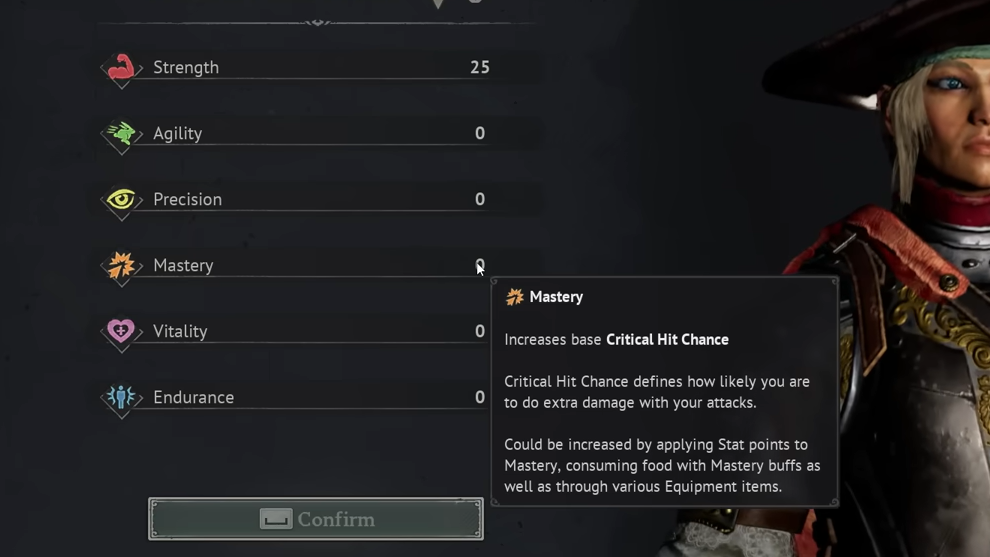
| Mastery | +0.5% Critical Hit Chance | Affects every weapon |
| Vitality | +13 Health | — |
| Endurance | +5 Stamina | Bonebreaker (2H Club) gains bonus damage from Stamina |
How weapon damage actually scales
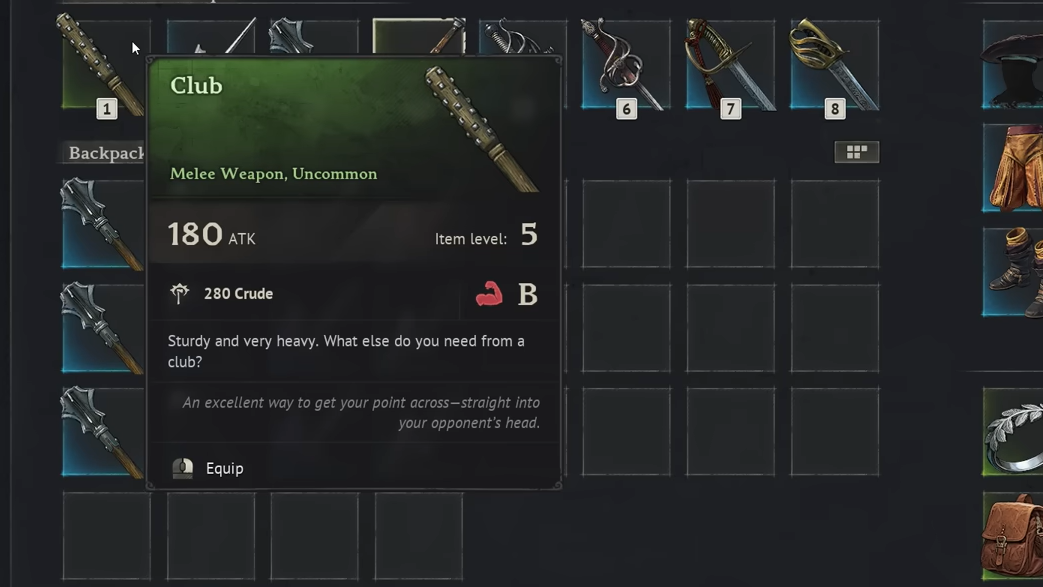
Each weapon shows a letter grade (A, B, or C) on its tooltip next to the attack value. That letter sets how much extra damage you get per point invested in the matching primary stat. If you put zero points into the relevant stat, the letter does nothing.
The number that matters on a weapon tooltip is the smaller damage figure at the bottom (the Slash, Pierce, or Crude value), not the large ATK number. That bottom value is the damage you deal to an enemy of the same level as the weapon. Fighting an enemy one level higher drops your damage to roughly 87% of base, and the penalty grows from there. Hitting lower-level enemies pushes damage above 100%.
Practical takeaway: weapon item level and upgrades move damage far more than stat points do. Picking the right weapon for your level and upgrading it produces a bigger damage swing than dumping points into Strength, Agility, or Precision.
Stat bonuses driven by attributes, talents, gear, and food
Beyond the six attributes, the character sheet tracks 14 stat bonuses. These are the numbers that actually appear in combat math, and they go up through attribute investment, talents, equipped gear, the Comfort buff from a rested base, and food or elixirs.
| Stat bonus | What it does |
|---|---|
| Health | Damage you can absorb before death |
| Defence Power | Reduces incoming damage |
| Attack Power | Outgoing damage, set by your weapon |
| Stamina | Resource for attacks, dodges, sprinting |
| Stamina Recovery Rate | How fast Stamina regenerates while idle |
| Damage Resistance | Resistance to all damage types |
| Critical Hit Chance | Chance to roll a crit |
| Critical Damage | Damage multiplier on crits, headshots, and weakspots |
| General Damage | All damage types |
| Melee Damage | Bonus to melee attacks |
| Ranged Damage | Bonus to ranged attacks |
| Crude Damage | Clubs, Halberds, and other Crude weapons |
| Slash Damage | Sabers, Greatswords, and other Slash weapons |
| Pierce Damage | Rapiers, Pistols, Muskets, Blunderbusses |
How to spend your first stat points
Endurance is the most universally useful early investment because every meaningful action — swinging, dodging, sprinting, mining, chopping — drains stamina. Without enough of it, fights end with you exhausted mid-combo and exposed to counterattacks.
Vitality matches Endurance as a survivability floor. Health pads you against the burst damage that early bosses and Foothills enemies deal, and food buffs that grant temporary Vitality stack on top of your invested points.
Once you have a stamina and health base, push points into the damage stat that matches your main weapon. Mastery is worth adding later because crit chance can also come from gear like the Privateer’s set and the Razor weapon, which stretch your stat points further.
Stat priorities by build
| Build | Primary | Secondary | Playstyle |
|---|---|---|---|
| Strength | Strength | Vitality, Endurance | Slow heavy hits, Halberd cleave, durable |
| Agility | Agility | Endurance, Vitality | Fast combos, dodging, AoE clears |
| Precision | Precision | Vitality, Endurance | Ranged plus Rapier, Perfect Block uptime |
| Crit | Mastery | Precision or Agility | Burst damage, weapon-agnostic |
| Tank | Vitality | Strength, Endurance | Massive HP pool, longer fights |
| Hybrid | Two stats split | Vitality or Endurance | Flexible, harder to scale |
Spreading points across all three damage stats is the most common mistake. Because each weapon family only scales with one attribute, points in the other two damage stats add nothing to your hit numbers. Pick a weapon, commit to its scaling stat, and reset later if your loadout changes.
Where stat changes show up in the menu
If a weapon’s bottom damage number does not change after you spend points into a damage stat, check the weapon’s letter grade and confirm the attribute matches that weapon’s family. A Saber will not respond to Strength points, and a Club will not respond to Agility, regardless of the grade shown.