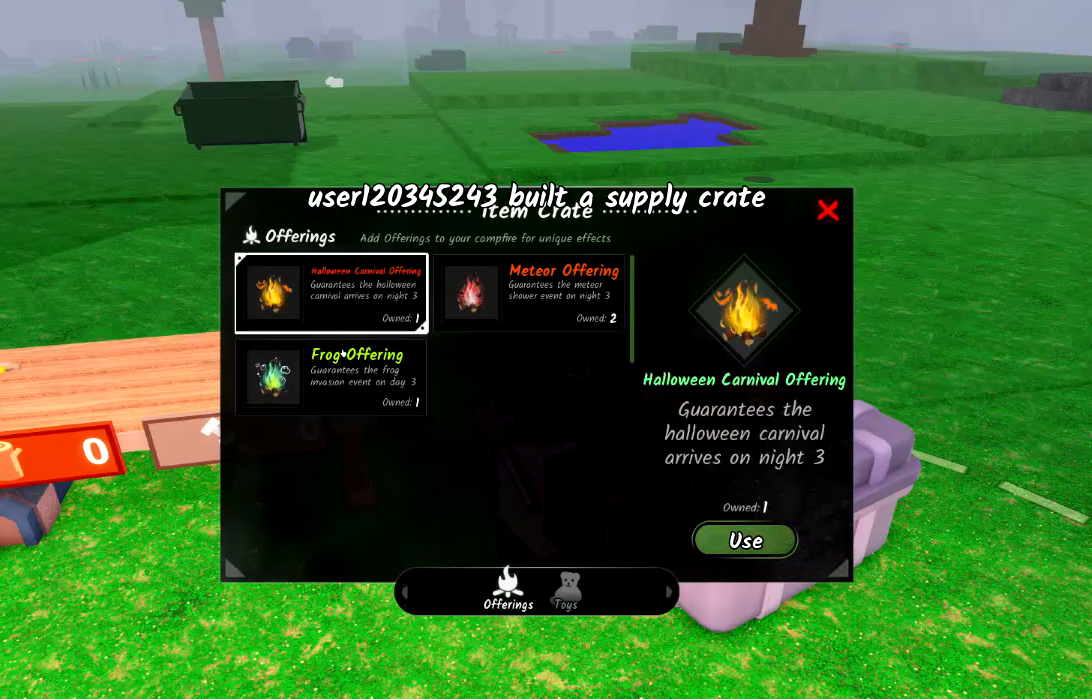
Fire Offerings are a campfire mechanic in 99 Nights in the Forest that let you trigger specific events or buffs on demand instead of waiting on random chance. You pick them up from a traveling NPC, store them between runs, and toss one into the campfire when you want its effect to fire off.
Every Fire Offering and what it does
There are nine offerings in the current pool, and each one has an equal 11.1% chance of dropping when you buy from the Sketchy Salesman. Some trigger full seasonal events, while others quietly boost spawn rates or soften a specific penalty like rain draining your fire.
| Offering | Effect |
|---|---|
| Coinsplosion Offering | Spawns coins near your campfire and raises coin spawn rates across the map |
| Fairy Offering | Applies Fairy Seed effects across the entire map |
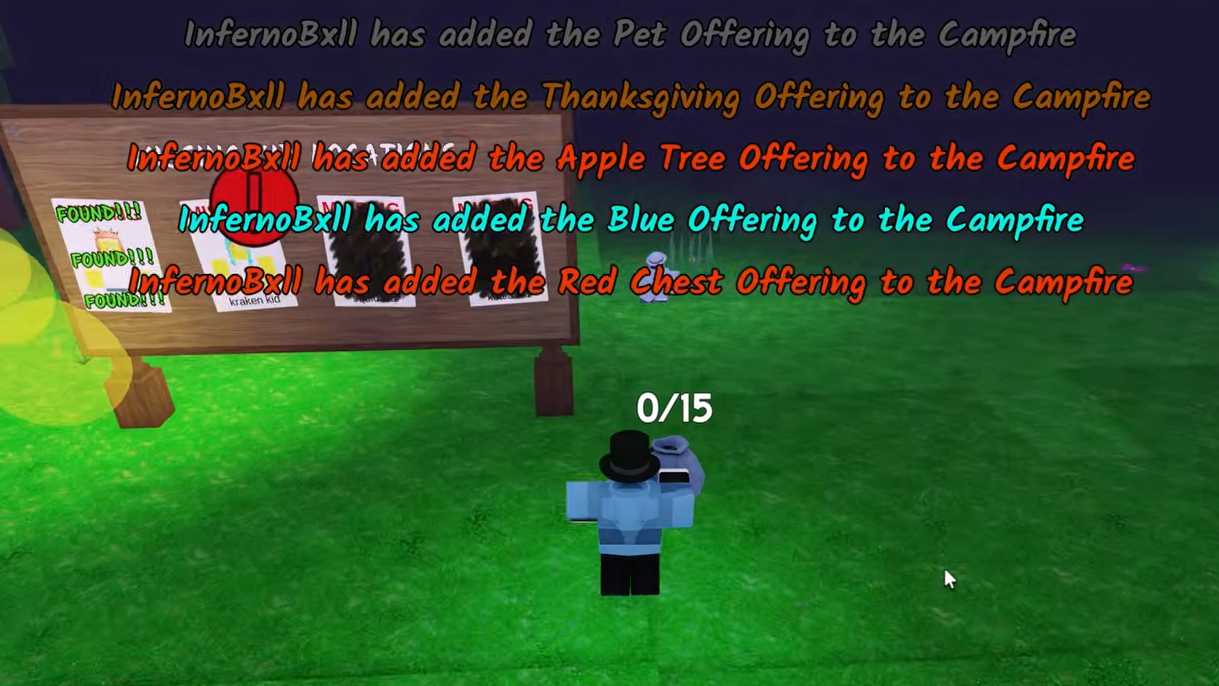
| Blue Offering | Rain drains the campfire much more slowly |
| Red Chest Offering | Increases Red Chest spawn rate |
| Pet Offering | Boosts pet taming effects |
| Thanksgiving Offering | Triggers the Thanksgiving Event |
| Apple Tree Offering | Boosts Apple Tree spawn rate across the map |
| Valentines Offering | Triggers the Valentine’s Event |
| Fishing Offering | Strengthens fishing effects |
Drop rate for each offering from the Sketchy Salesman sits at 11.1%, so pulls are uniform, and you cannot target a specific one. That randomness is the main balance lever, since several offerings either force a full event or dramatically change a run’s economy.
How to get Fire Offerings
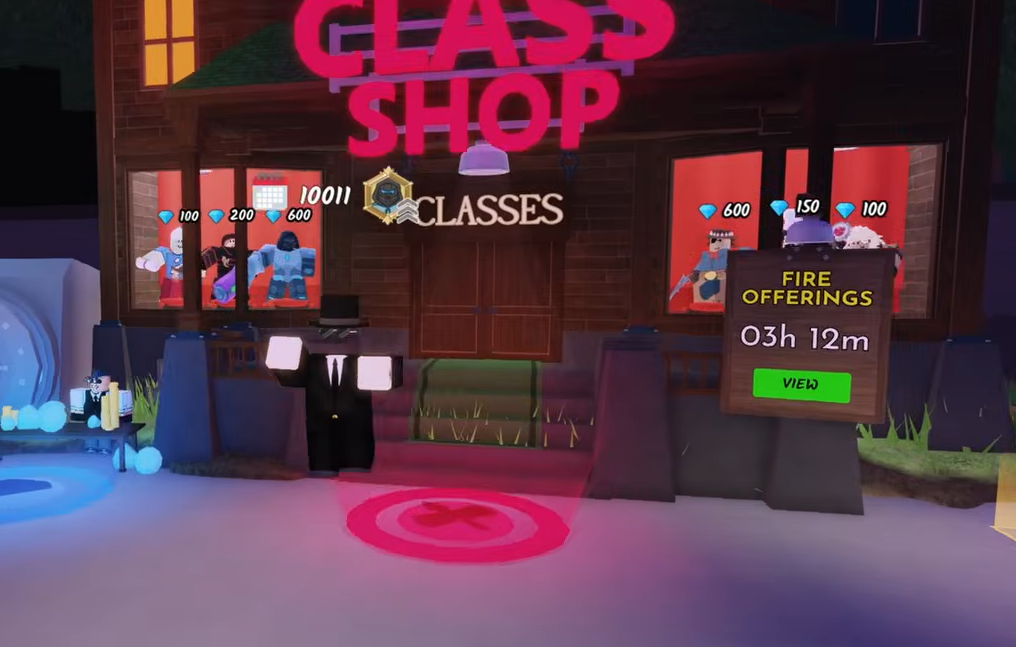
There are two reliable ways to get offerings, and both route through the Sketchy Salesman, a new NPC who shows up near your campfire.
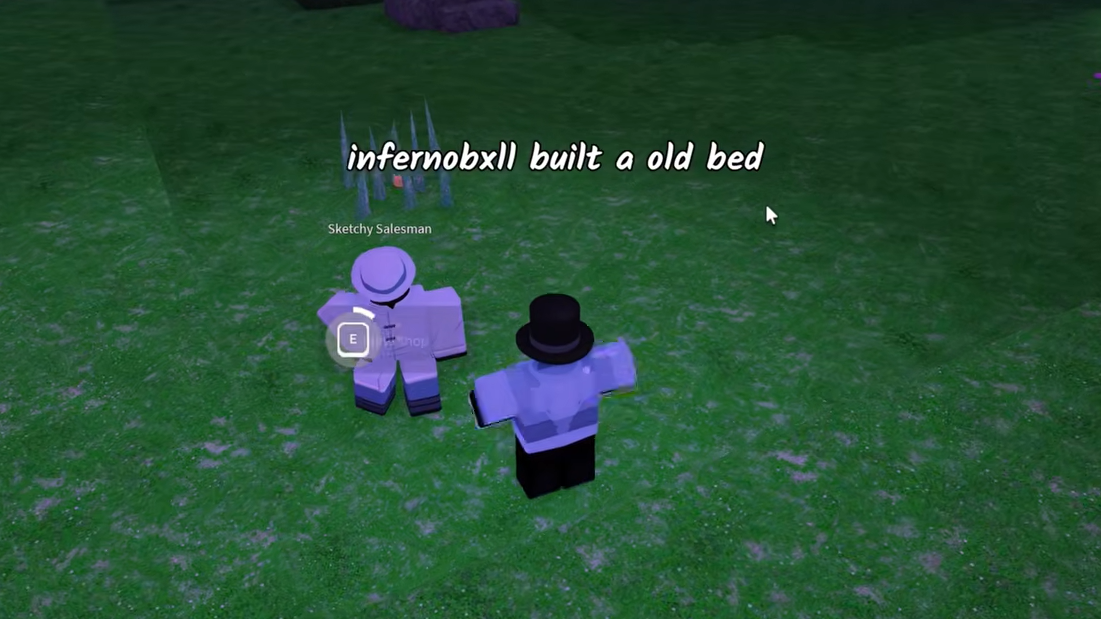
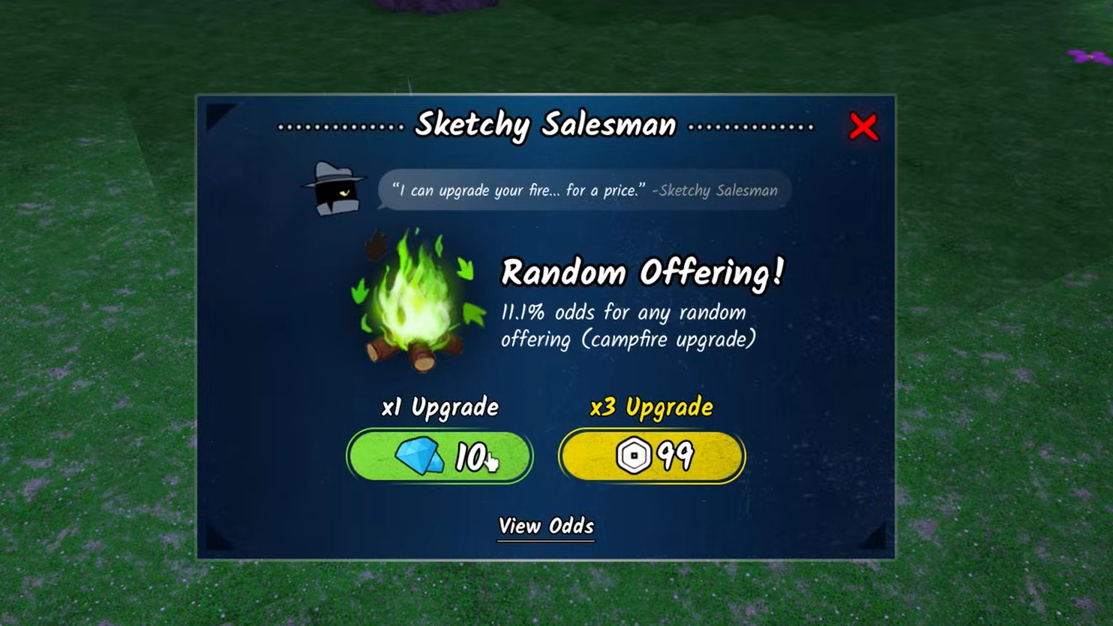
Offerings stay with you between runs. Once purchased, they sit in your inventory and can be used in any future campfire, so it is safe to hold them until you start a run where the effect matters most.
When each offering is actually worth using
Because pulls are random, the real skill is knowing when to burn a specific offering instead of holding it. A rough priority guide based on what each one changes:
| Situation | Best offering to use |
|---|---|
| You need campfire survivability during heavy rain | Blue Offering |
| You want to farm coins for furniture or shop runs | Coinsplosion Offering |
| You want extra seed effects without fairy RNG | Fairy Offering |
| You need Red Chest loot for a specific unlock | Red Chest Offering |
| You are building a pet-focused run | Pet Offering |
| You want the Thanksgiving or Valentine’s event loot pool | Thanksgiving / Valentines Offering |
| You are low on food and need reliable apples | Apple Tree Offering |
| You are fishing for rare drops like poison gear | Fishing Offering |
Event-triggering offerings like Thanksgiving and Valentines are the most dramatic since they fundamentally change what spawns in your world, so save those for runs where you have a stable camp and enough players to take advantage of the extra content.
Costs, storage, and limits
Pricing is straightforward and does not scale with how many you already own.
| Purchase | Cost | Notes |
|---|---|---|
| Single offering | 10 gems | Random pull from the pool |
| Bundle of three | 99 Robux | Still random, no choice of offering |
| Daily quests | Free | Slower drip feed, no gem cost |
Gems are the primary currency, so if you want to collect offerings efficiently, hoard gems across runs before visiting the Salesman. Because you cannot select which offering appears, buying in bulk is how most players end up with the one they actually need.
How offerings fit with the old fire modifier system
Before this mechanic, the main way to force an event was to use flame upgrades at the campfire, which locked event triggers behind specific consumables. Offerings sit alongside that system but shift the focus toward smaller, stackable buffs. Spawn-rate offerings like Coinsplosion, Red Chest, Apple Tree, and Fishing are not events at all, they are passive boosts to what the world generates, which is a different kind of power than forcing an alien or frog invasion.
The practical result is that a well-stocked player can shape a run in two layers: flame upgrades for the big set-piece events, and offerings for the smaller economic and environmental tweaks. Mixing both lets you set up a run where, for example, rain drains your fire slowly while coin spawns are inflated across the map.
Frequently asked questions
Can you choose which offering you get? No. Every pull from the Sketchy Salesman is random at 11.1% per offering, whether you buy one at a time or in a bundle of three.
Can offerings be saved for later runs? Yes. Once you own an offering, it stays in your inventory and can be used in any future run, so there is no pressure to burn them immediately.
When does the Sketchy Salesman appear? He shows up near your campfire at night, most often around Night 3, but the spawn is random, so check around the fire carefully instead of assuming he will appear.
How much do Fire Offerings cost? Each offering costs 10 gems, or you can buy three at once for 99 Robux. Daily quests can also award them for free.
Treat offerings as flexible insurance rather than must-use items. Hold onto the event triggers until a run has stable footing, spend the economic boosts early when they can compound, and use the Blue Offering whenever the weather is actively working against your campfire.