
Unscathed is an aura RNG battling game where the auras you roll act as your class, gear, and combat kit at the same time. Early progress comes down to two things happening together — landing rarer auras more often and taking more rolls per hour — while you slowly build the systems that let both grow. Get the loop right and every future roll is worth more.
Quick answer: Finish the tutorial, roll and equip three auras, pour early skill points into Luck and Roll Speed, unlock Auto Roll with an auto-sell filter, and hold your one-second premium potions until a matching elemental biome is active with the rest of your luck bonuses already equipped.

First steps: tutorial, Traveler, and your first three auras
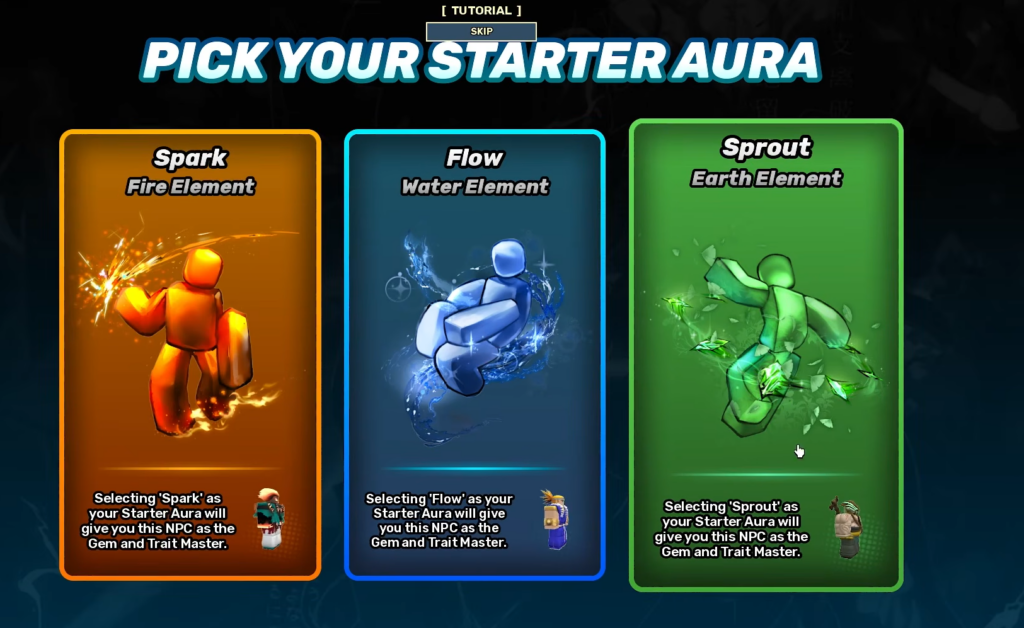
Launch Unscathed and follow the tutorial, then speak with the Traveler and perform your first aura roll. Meet the Sensei next to learn the turn-based combat system and pick a starter aura. Starter auras have different elemental advantages, but you will replace them quickly, so do not agonize over the choice.
One rule shapes your whole early game: you need at least three different auras to enter a battle, and you cannot bring two copies of the same aura. So keep rolling until you have a workable trio, equip the best combat option you find, and only sell safe duplicates.
In the Settings menu, there is a CODES! box with a SUBMIT button. Redeeming RELEASE grants x10 Lucky Potion, x10 Speed Potion, and 100 Cash, which is a useful head start on both luck and roll speed.
Prioritize Luck and Roll Speed above everything
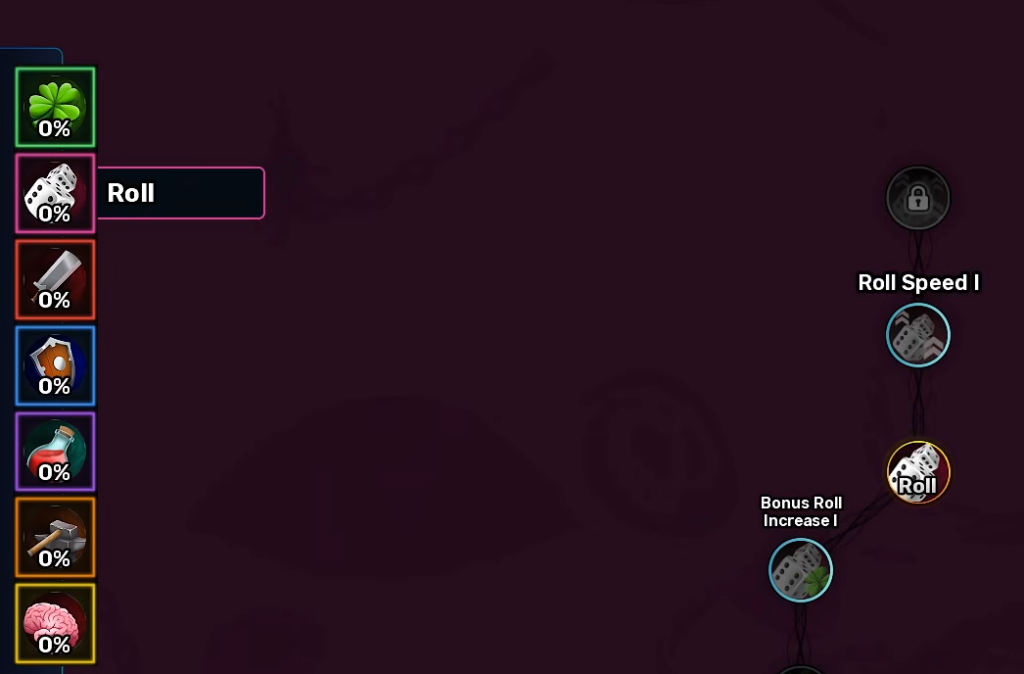
Two stats decide how fast you find rare auras. Luck raises the chance a single roll lands on something rare. Roll Speed, plus bonus and quick rolls, increases how many attempts you get. Good pulls per hour is simply the chance of a good pull per roll multiplied by rolls per hour, so you want both climbing together rather than maxing one and ignoring the other.
Do not confuse duplication effects with luck. Aura and item duplication create extra copies after their own conditions are met, which helps farming, but they never replace the chance of hitting the rare aura in the first place.
Unlock Auto Roll and set an auto-sell filter
Auto Roll and Quick Roll unlock after a stretch of manual rolling early on, and hitting that breakpoint is the first real farming milestone. Around 50 total rolls is a reliable point to expect full automation, so keep manually rolling until the AUTO ROLL ON option appears.
Once Auto Roll is active, open the Aura Filter and set auto-sell to skip anything below Epic or Legendary. That keeps your inventory clean, turns junk auras into passive currency, and lets you farm while you handle other menus or step away.
Skill tree order for early farming
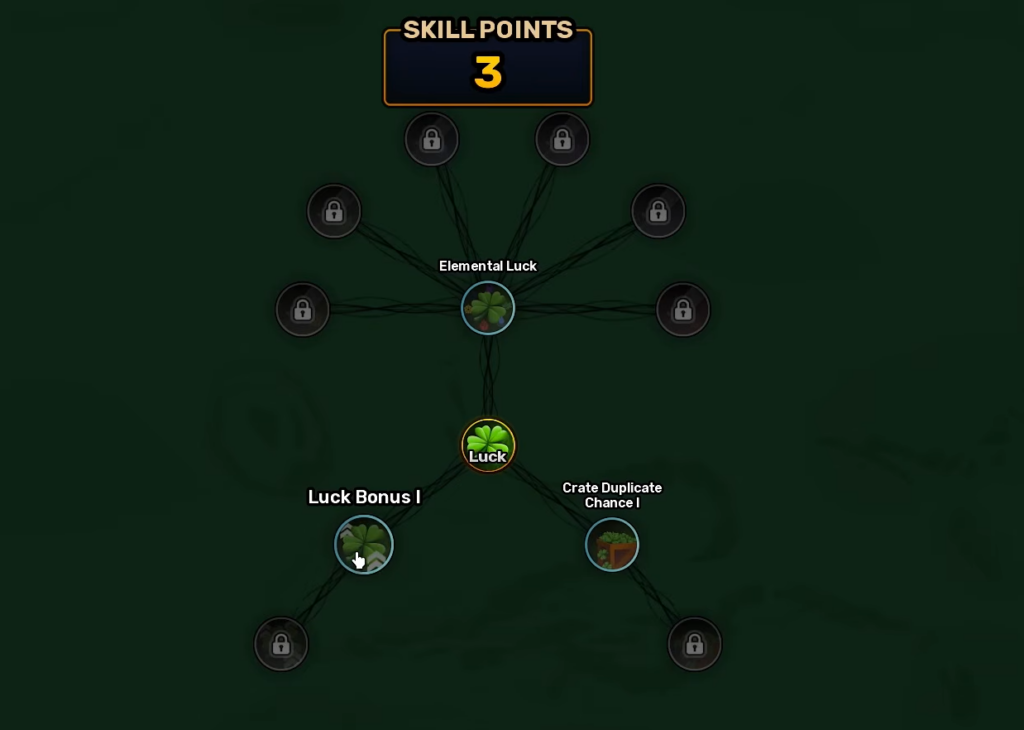
The skill tree branches into Luck, Roll Speed, Attack, Defense, Alchemist, Blacksmith, Strategist, XP gain, Cash gain, and Elemental Luck. For a farming-first start, build bonus roll chance and general aura luck first so quantity and quality rise together, then spend just enough on combat to keep clearing content.
Elemental Luck deserves attention once you commit to a target element, since it feeds directly into biome farming. The Elemental Fortune node, for example, raises all elemental luck, and the tree then branches into element-specific nodes like Water and Fire that stack with a matching biome.
Biomes give +35% elemental luck — match your setup
Every elemental biome grants +35% luck to its matching element. Most last ten minutes, which is enough for a proper potion cycle, while Night lasts only five and Normal has no elemental bonus at all. Normal is the place for cheap rolling, selling, and crafting between valuable windows, never the place to spend premium potions.
| Biome | Boosted element | Duration |
|---|---|---|
| Cyber | Basic +35% | 10 min |
| Eden | Light +35% | 10 min |
| Inferno | Fire +35% | 10 min |
| Monsoon | Water +35% | 10 min |
| Overgrown | Earth +35% | 10 min |
| Rapture | Demon +35% | 10 min |
| Night | Night +35% | 5 min |
| Normal | None | 5 min |
When your target biome appears, equip the matching elemental Gem, confirm the right Trait is active, and make sure Auto Roll is ready. Start long buffs first, then the matching elemental potion, and begin rolling immediately without fiddling in menus. Save the one-second jackpot potions for the exact roll you want boosted.
Potion timing: everyday luck vs one-second finishers
Potions are strongest when their duration matches the job. Long buffs open a biome window, cheap one-minute effects are daily fuel, and one-second effects are finishers you fire off right before a single roll. Watch the active buff timers instead of dumping duplicates blindly.
| Potion | Effect | Best use |
|---|---|---|
| Destiny Potion | +500,000% special luck, 1 sec | Highest-stakes single roll in a matching biome |
| Divine Potion | +100,000% special luck, 1 sec | Same timing rule as Destiny |
| Fate Potion | +100% luck, 3 min | Centerpiece for a targeted session; crafts from 25 Lucky Potions |
| Lucky Potion | +50% luck, 1 min | Everyday luck; also a Fate/Destiny recipe ingredient |
| Soup | +25% luck and +25% Roll Speed, 1 min | Balanced farming food |
| Swift Potion | +20% Roll Speed, 3 min | Speed partner for Fate; crafts from 25 Speed Potions |
| Fresh Water | +5% Roll Speed, 1 min | Cheap filler |
Because Destiny and Divine last only one second, using either in Normal wastes them entirely. Hold them until a matching biome is live and every permanent bonus — equipment, gem, trait, food, and general luck — is already stacked.

Gems, fragments, and trait rerolls
Gems give multiplicative stat bonuses, which makes them one of the highest-return investments for a new player. Upgrade them at the Gem and Trait Master using Fragments earned from battles, and use Shards to reroll Traits. Focus a useful Luck Gem before chasing a perfect Trait, and aim traits toward luck bonuses that trigger in your target biome.
Crafting with the Innkeeper, Blacksmith, and Alchemist
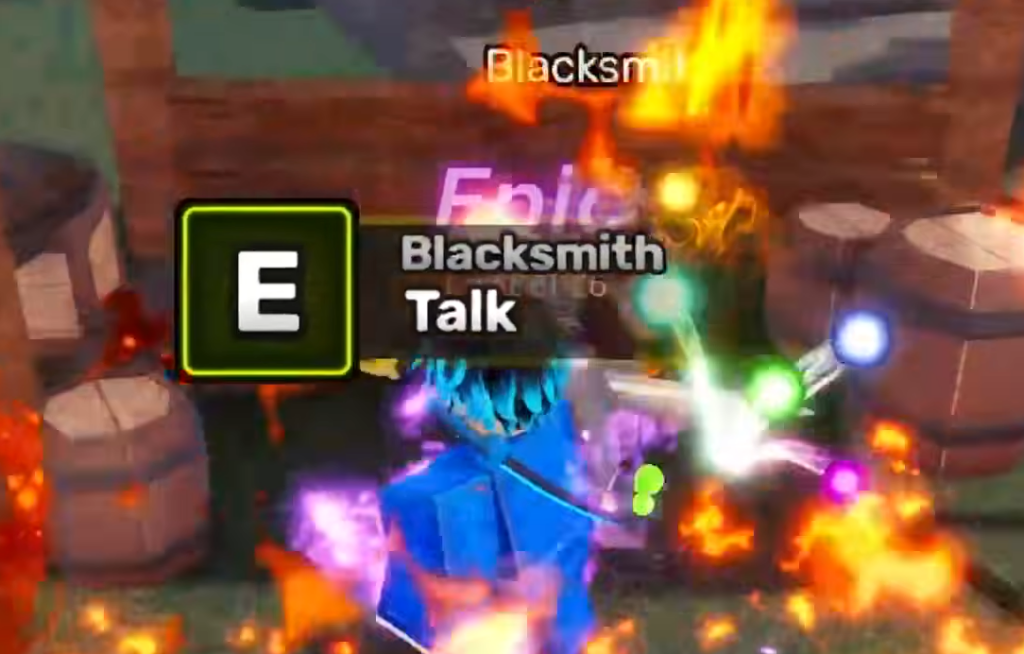
The Innkeeper sells the essential crafting materials — cloth, bread, water, and potions — and hands out quests. Their stock rotates, so if cloth is missing, check back in about four minutes and buy out useful items when they appear.
Take those materials to the Blacksmith to craft gear that boosts your combat stats, and to the Alchemist to brew luck and speed potions, including Fate, Swift, and the Destiny Potion. The Destiny Potion is a massive single-roll luck spike, so brew it toward the endgame and only fire it inside a fully stacked biome window.
Turn-based combat: accuracy, damage, and elemental weakness
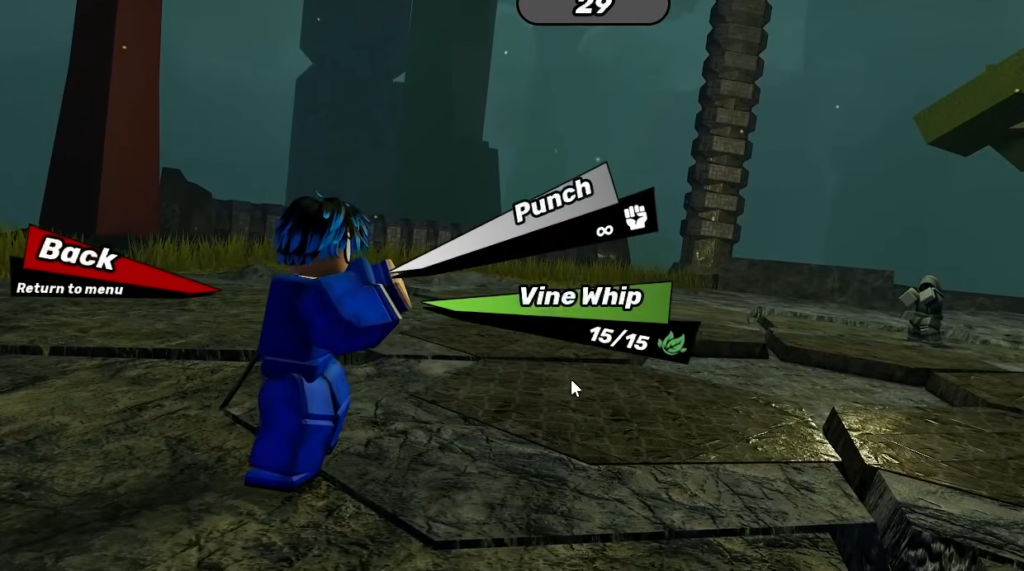
Battles are turn-based, and each of your three auras acts as its own life with a separate health pool. When one drops to zero, you switch to the next. Normal Skills deal 0.33× damage at 100% accuracy, while Critical Skills deal 1× damage at 70% accuracy, so you are trading reliability for a bigger hit.
Elemental matchups swing fights hard. An Earth attack into a Fire target hits far harder, while Fire into Earth is resisted, so check the enemy type before committing to a low-accuracy finisher when your health is thin.
Send auras on expeditions for passive rewards
The Traveler lets you send auras on expeditions that run while you play and return Fragments plus Luck and Speed Potions. Treat those slots like passive income and keep them filled at all times rather than checking them once in a while. High-rarity auras improve expedition reliability, so use spare strong pulls here instead of selling every extra.
When story mode stalls, backtrack and rebuild
Hitting a wall in story mode is not a signal to keep throwing yourself at the same fight. It means your setup needs an upgrade. Farm better auras, level your Gems, spend saved skill points, and craft stronger gear, then return to the stage that stopped you.
Between those upgrades, clear daily missions and claim Achievement and Battlepass rewards, since they return cash, potions, and skill points that feed straight back into the farming loop. Play the systems in the right order and the early grind smooths out fast, turning random luck into steady, repeatable progress.