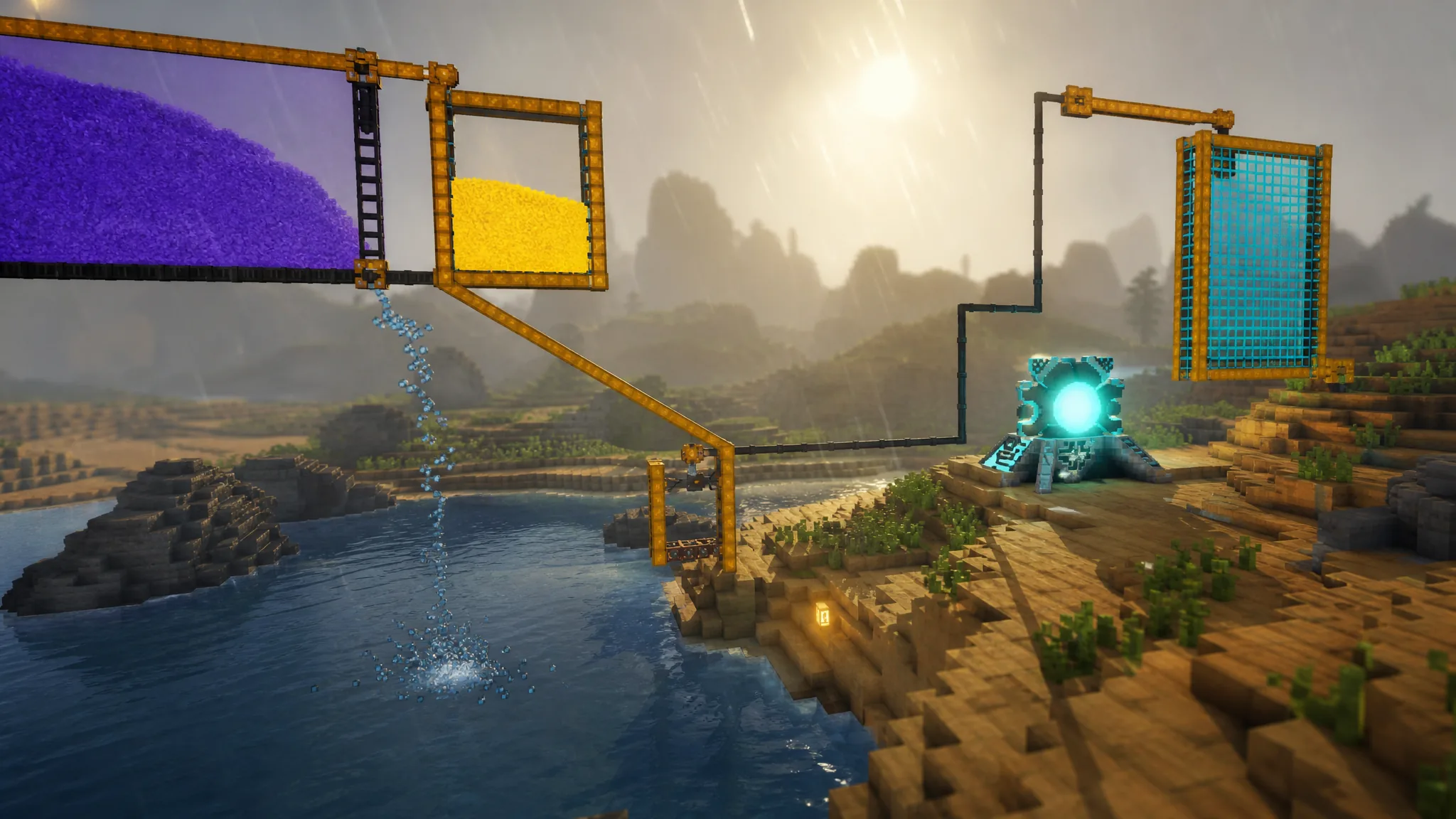
Water sits at the center of the gold loop in Sandustry. You drop dirt into it to make Wet Sand, and Wet Sand is the only thing your shakers accept to filter out gold. Early on you ferry water by hand from a lake or pool, which works but runs dry fast. The permanent fix is capturing Lumlings, small critters that release water on their own once they are penned near your base.
Quick answer: Research the Coraler, capture a few Lumlings while exploring, then build a Critter Fence beside your water system to hold them. Three penned Lumlings produce essentially unlimited water on their own.
What water does in the gold loop
Water is a liquid with a density of 100. When a Sand pixel touches a Water pixel, both are replaced by Wet Sand, so the reaction doubles your material. It also wets seeds, turning a dry seed into a wet one when the two touch. Everything downstream in your factory depends on getting enough water to those contact points.
| Reaction | Result |
|---|---|
| 1 Sand + 1 Water | 2 Wet Sand |
| 1 Seed + 1 Water | 1 Wet Seed |
| Wet Sand on a shaker | Gold + residue (slag) |
Because gold output scales with how much Wet Sand you produce, a starved water supply quietly stalls the whole chain. Empty shakers, skipped dry sand, and idle mixers almost always trace back to water not reaching the mix in the volume you need.
Where water comes from
Several sources feed water into a factory, and they differ in how sustainable they are. Surface lakes and underground deposits are your starting supply. Melting ice and snow adds more. Steam that reaches the sky falls back as rain, which is the basis of a self-refilling loop. Lumlings are the standout because they generate water indefinitely.
| Source | Sustainable? |
|---|---|
| Surface lakes and underground deposits | Finite; drains as you use it |
| Melting ice and snow | Finite unless remade with a Cryoblaster |
| Rain from steam reaching the sky | Renewable with a steam loop |
| Lumlings | Effectively infinite once penned |
Evaporation and flow rules you have to plan around
Water pools in a depression and spreads until it forms a flat surface. Loose droplets skitter back and forth on top of a pool, and any droplet that fails to settle into a depression within 45 seconds evaporates and vanishes. In practice that means every bit of water eventually settles into flat pools while the excess disappears, so vertical digs without a catch basin lose water permanently into the void.
Flow is blocked by Block, Conveyor Belt, Kinetic Press, and Flux Emanator. Water passes through most other building blocks, including standard Filters, which matters when you route channels near belts. One catch to watch for is corner leaks. Liquid cannot pass through a solid block, but it can slip through the point where two block corners meet if nothing plugs that gap.
Note: keep gold collection above any uncontrolled inflow. Open water running over a pickup pit washes gold into cracks you cannot reach, so cover channels and elevate mixer inputs by a tile so overflow drains away rather than flooding your collectors.
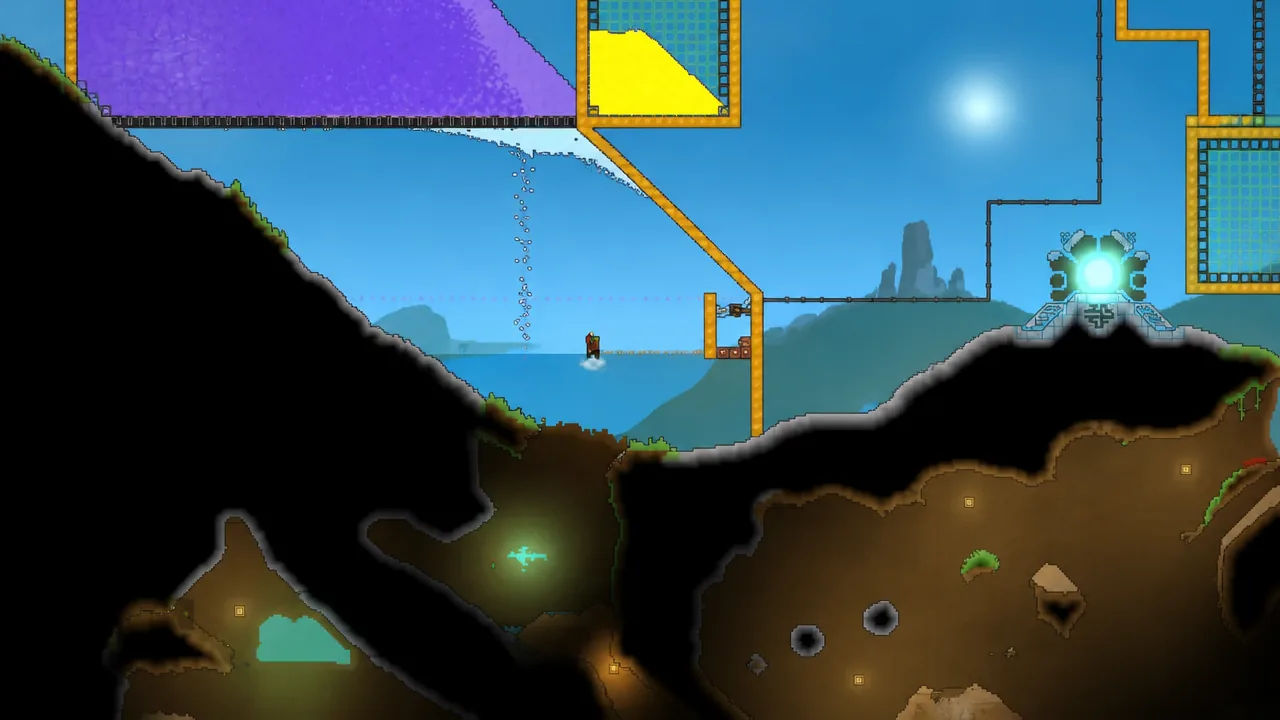
How to get infinite water with Lumlings
Lumlings solve the water problem for good. They are small critters you find while exploring, and they shed water simply by existing. Capturing and penning a few near your water system removes the need to haul water ever again.
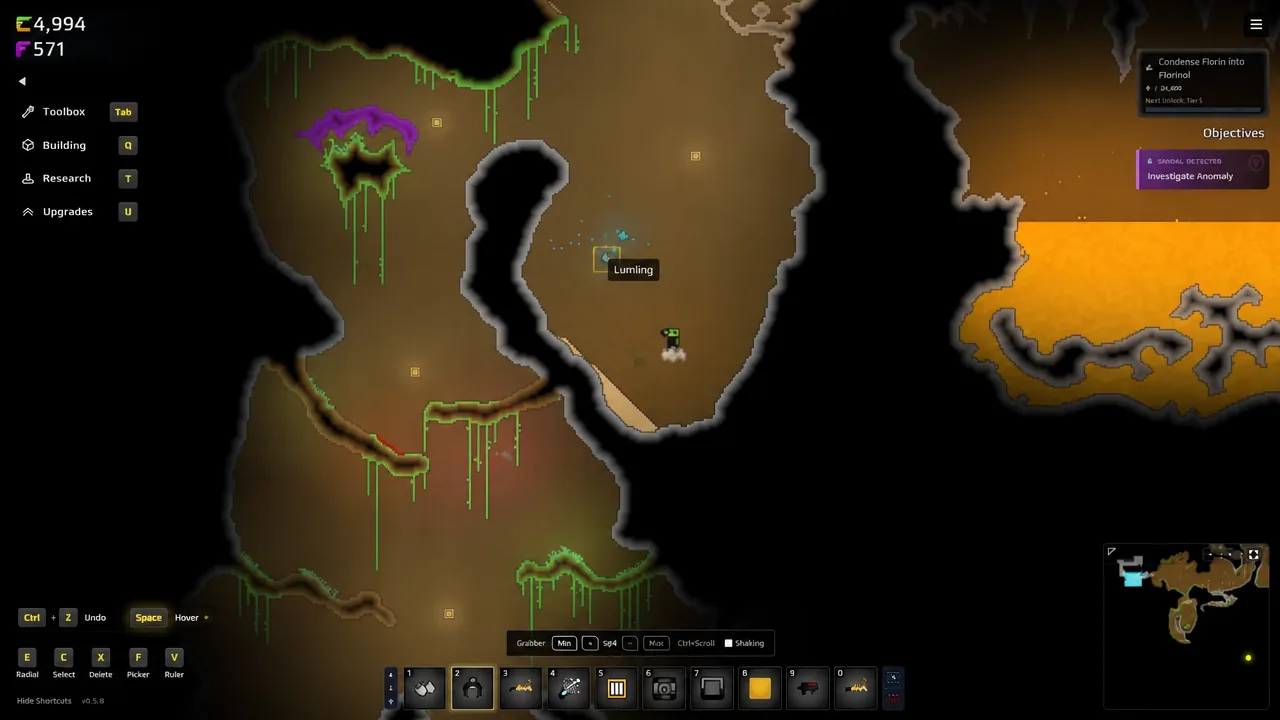
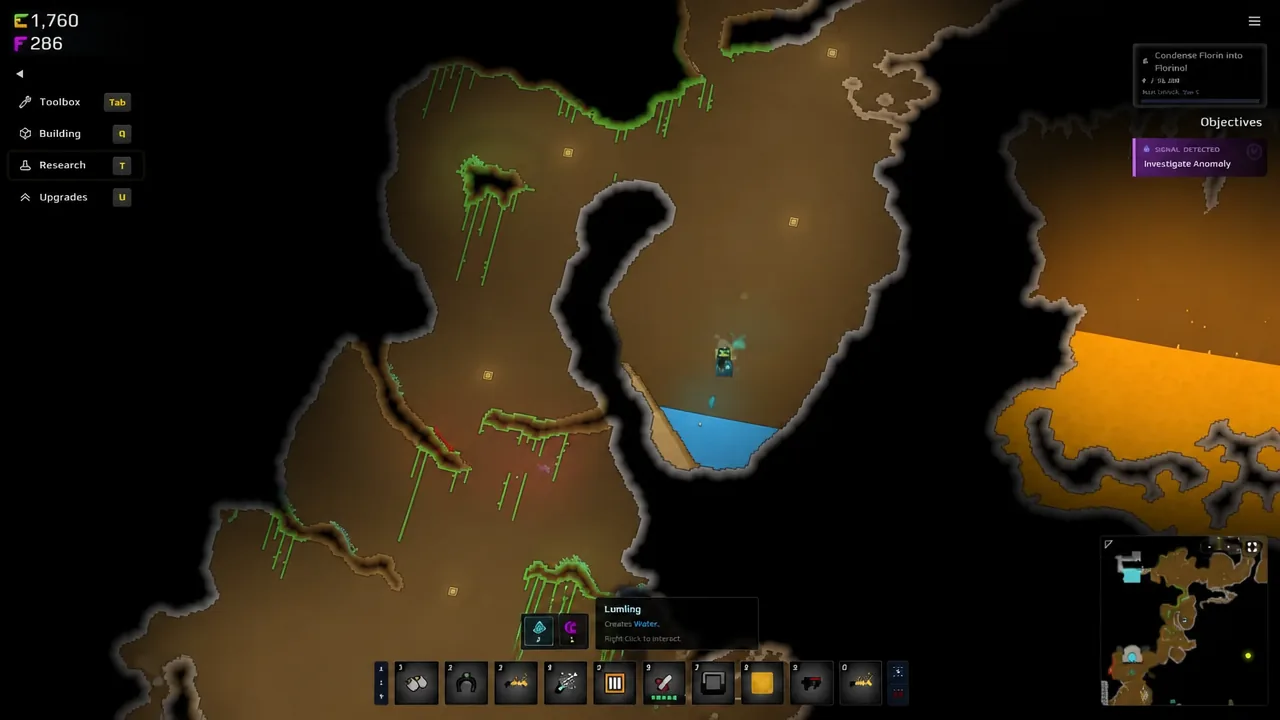
You know it worked when the pool the Lumlings sit above keeps its level or refills while your shakers run. If the water still drops, the critters are producing less than the mix consumes, so add another Lumling or shorten the path between the pen and your mixers.
Moving Lumling water with Pumps and Pipes
A Pump and Pipe pair carries water from the pen to wherever your mixers actually sit. Pipes move water horizontally and vertically without carving open trenches, which keeps it away from sand belts that it would otherwise contaminate. Pumps push water uphill when your refinery sits above the water table or when you recycle from a lower catchment back to upper mixers.
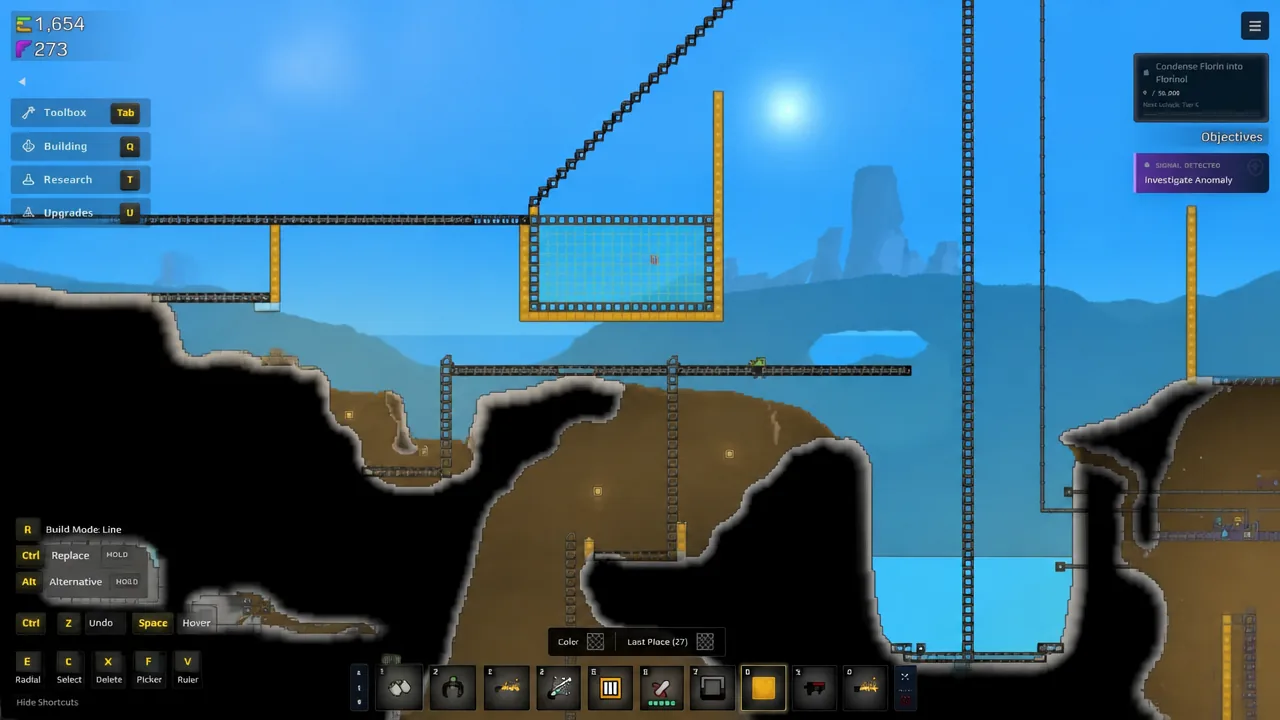
One working build routed evaporated water straight back into the pool automatically, so refills happened without anyone touching it. There is a caveat worth testing first. It is not yet confirmed whether a pump can push water higher than the Lumlings themselves sit, so run a short trial before you design an entire layout around lifting water above the pen.
Tip: keep water mains on a dedicated line, separate from slag and sand conveyors, and add shutoff points by segment. That way a single break drains one section instead of your whole network.
Steam recycling as a backup water loop
Before you have Lumlings, or if a run drains its lakes, water can be recovered through steam. A Flamethrower melts ice back into water and boils water into steam at a 1:1 rate. The steam rises, floats until it reaches the sky, and falls back as rain. Using a Cryoblaster to make snow and then melting it into steam is another way to keep the cycle going.
The trick that produces a net gain is height. If you get some water into a tank near the maximum build height and then apply fire, the water falls straight back into the tank and turns to vapor again, and the tank eventually overflows. Venting also works. Underground vents connected to water reservoirs can be flamed into gas, and that gas rises through channels to the surface and rains down, giving near-infinite water from a lowered vent.
Fluxite upgrades that keep water flowing
Fluxite unlocks a set of upgrades that smooth out the water-to-gold chain by cutting the trips and delays that starve your mixers.
| Upgrade | What it does |
|---|---|
| Material Scanner | Hover over anything to see what you can do with it |
| Expanded Capacity | Bigger grabber, fewer trips for dirt and sand |
| Digging Speed | Faster mining that keeps your launcher fed |
| Hover | Faster movement around the factory for repairs |
Common water problems and fixes
Automating water does not mean walking away. The most common failures are mechanical stalls and flooding, and both are quick to spot once you know the symptoms.
| Symptom | Fix |
|---|---|
| Residue piling inside the Kinetic Press | Burn slag on the belt before it reaches the Press; a Thermal Buffer can do this automatically |
| Launcher stalls | Make sure Wet Sand is landing right at the launcher’s base |
| Dry sand on shakers | Water starved; move the source closer or fix the pump path |
| Mixer idle with sand piled up | No water contact; open the inlet or restore pump power |
| Gold washing away | Cover the channel and lower the drain below the pickup pit |
Check your build regularly, especially right after you scale it up, since a stall that starts small will otherwise leave you with a jammed factory instead of a growing pile of gold. With a few Lumlings penned behind a Critter Fence and a clean pipe run to your mixers, the water side of the loop mostly runs itself while you focus on expanding the gold line.