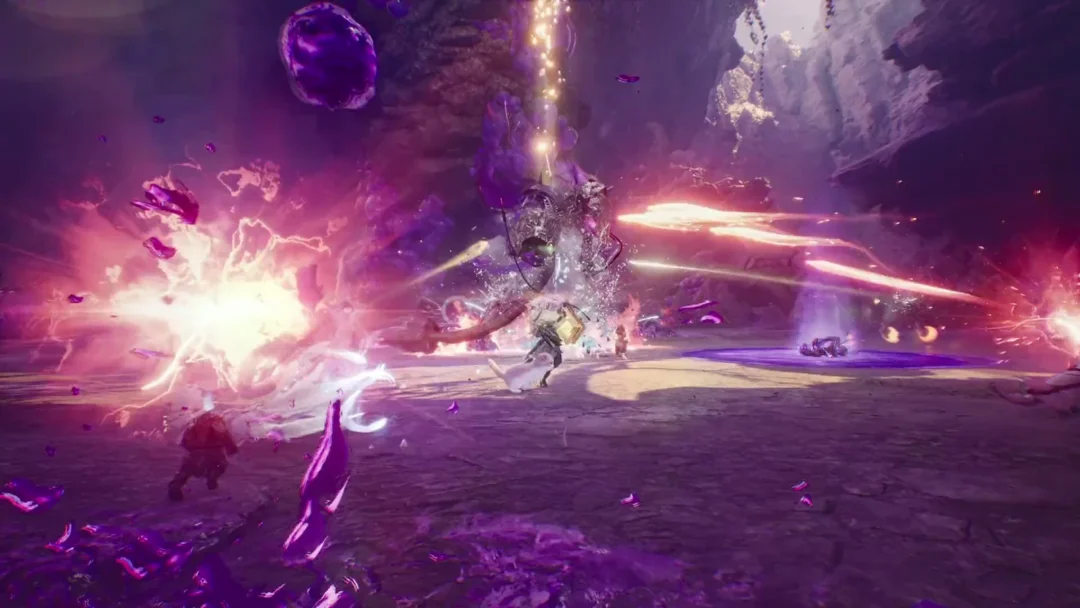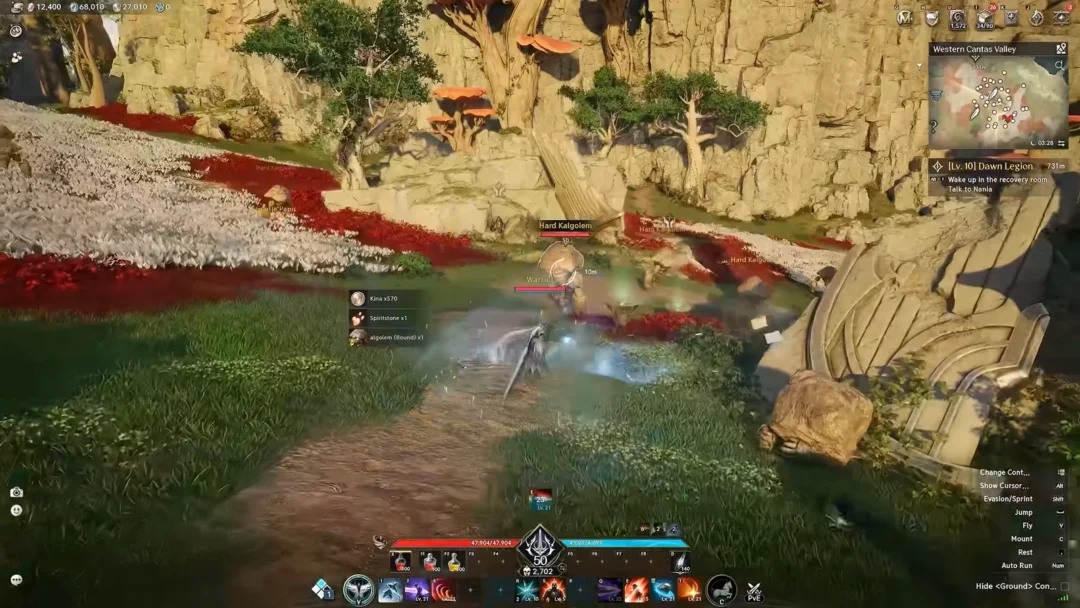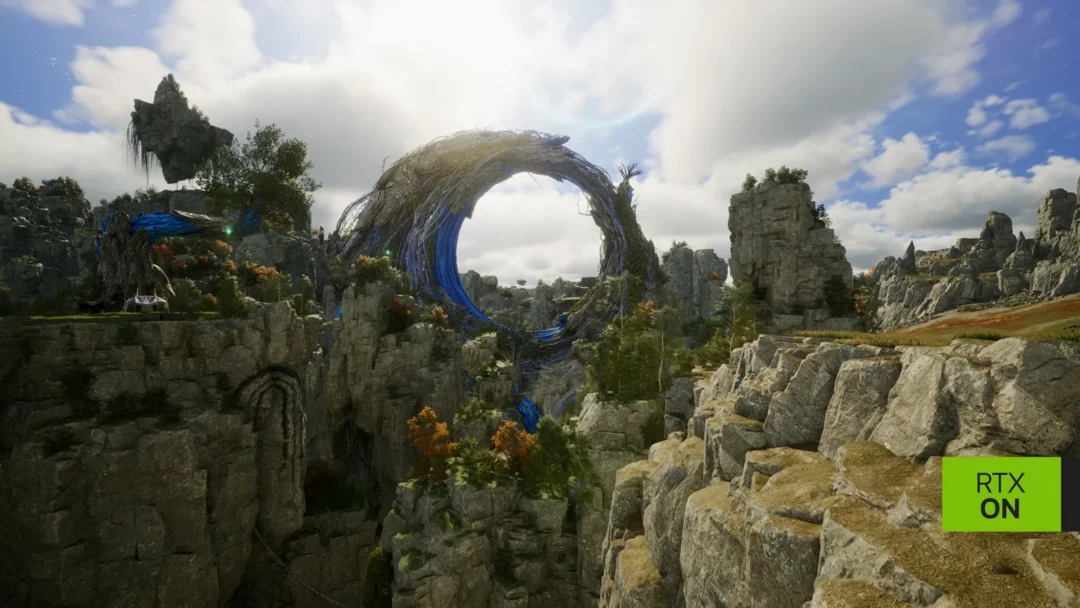
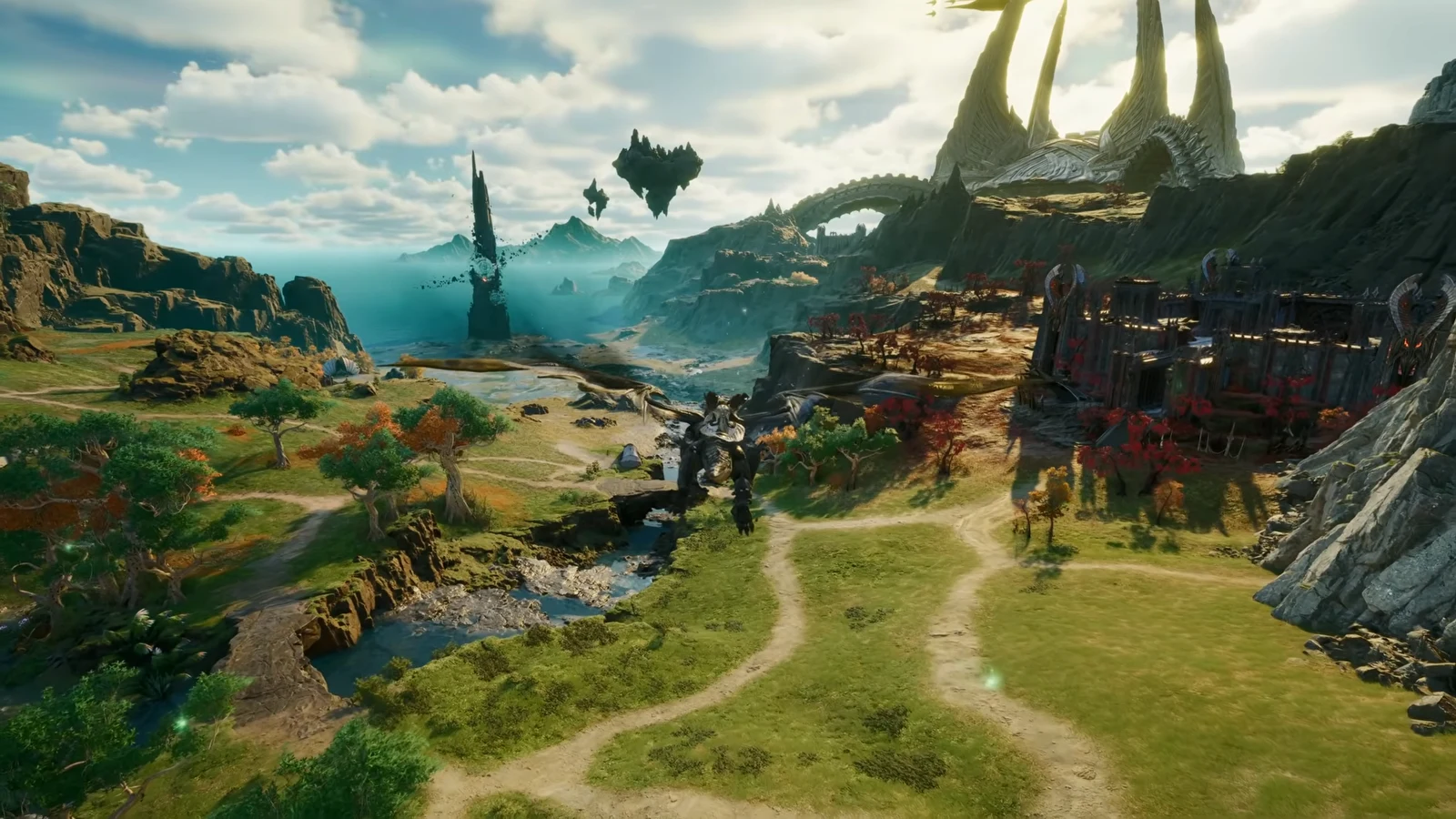
AION 2 is a free-to-play MMORPG set in Atreia, and it drops you into a world of interlocking systems that it rarely bothers to explain. Combat is smooth and class-based, the world is large, and progression runs deep, but most of what actually determines how fast you grow sits behind menus the game never tours you through. Knowing how a few of those systems work before you commit your first few hours will save you from wasting materials and time.
Quick answer: AION 2 costs nothing to download, caps character level at 45 where the real gear grind begins, gates dungeon loot behind Odyle Energy, and sells a subscription that unlocks conveniences many MMOs give away for free.
Servers, regions, and the two factions
Global servers are split across five regions: North America – East, North America – West, Europe, South America, and Asia. Each region holds named servers such as Triniel, Zikel, and Israphel, and the selection screen shows latency and status so you can pick one that runs well for you. The client supports Korean, Japanese, German, French, Spanish, Portuguese, and Russian.
You also choose a faction: the Elyos, framed as the elegant and sacred Daeva of Elysea in the south, or the Asmodians, the rough and ambitious Daeva of Asmodae in the north. The two sides stay separated and cannot interact under normal play, so the choice is worth making deliberately. Unlike the first Aion, there is no longer a visual distinction forcing each side into a light or dark aesthetic.
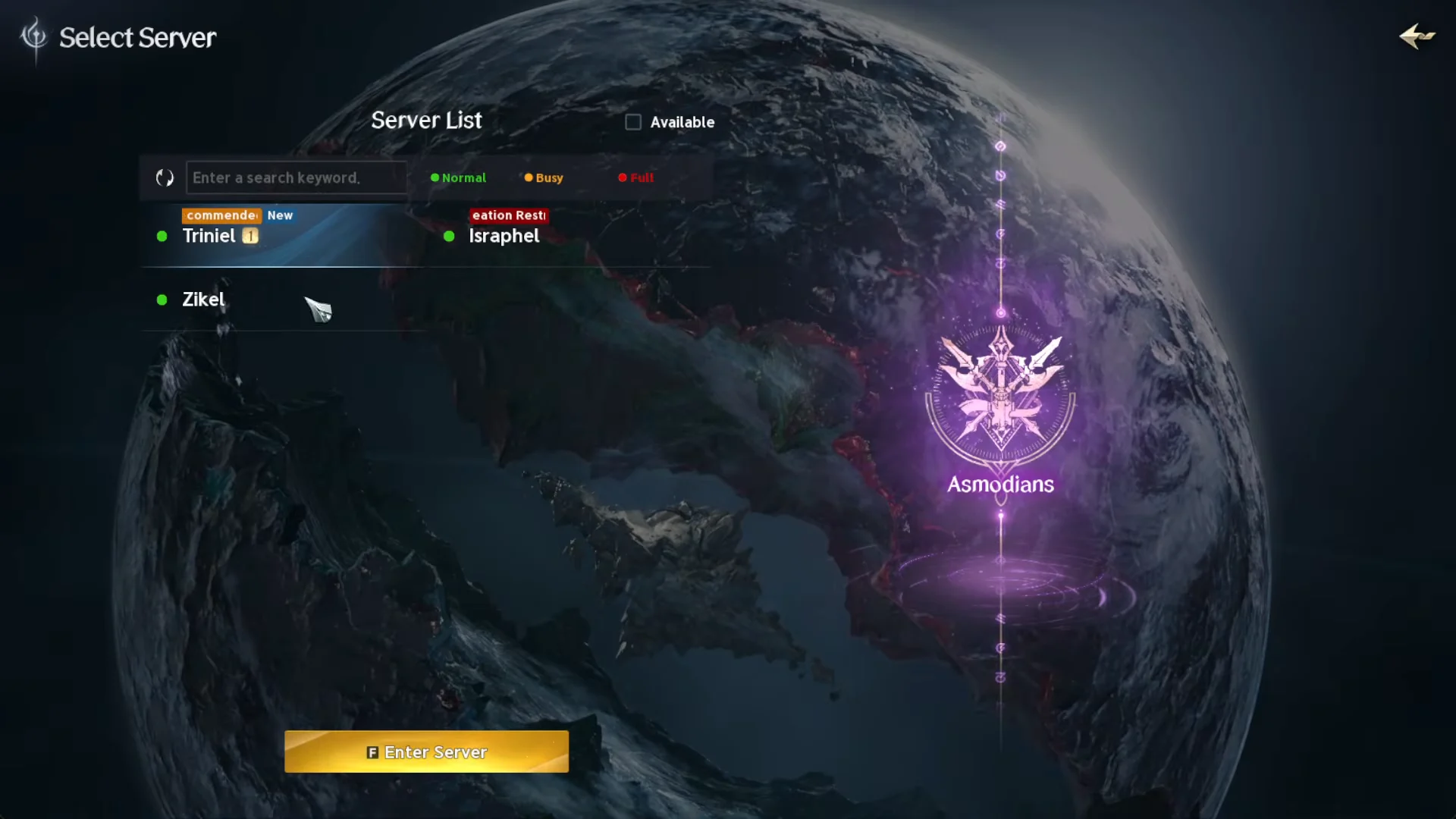
Server transfers will not be available when the game launches. Free transfers between servers on your faction are set to open on October 14th, so you can move to another server on your side once the period begins.
The nine classes and their weapons
Each class is built around a single main weapon and a party role, and the number of skills you eventually manage differs noticeably between them. Learning your class early matters, because skills get added to your hotbar automatically as you level and the game offers no lesson on when to use them. The table below lays out every class, its weapon, its role, and how many regular skills it ends up with.
| Class | Weapon | Role | Skills |
|---|---|---|---|
| Gladiator | Greatsword | Tank, Dealer | 39 |
| Templar | Longsword | Tank | 36 |
| Ranger | Bow | Dealer | 37 |
| Assassin | Dagger | Dealer | 38 |
| Spiritmaster | Orb | Dealer | 44 |
| Sorcerer | Spellbook | Dealer | 39 |
| Cleric | Mace | Healer | 36 |
| Chanter | Staff | Healer, Dealer | 37 |
| Brawler | Fist | Dealer | 36 |
The Spiritmaster carries the largest kit at 44 regular skills, built around summoning and dismissing elemental spirits. The Brawler, which fights bare-handed, is not playable at global launch. Every class also gains access to Stigma skills, a separate pool you unlock and slot into after a level 35 quest, choosing a limited set rather than running all of them at once.
Auto-move and skill macros
Auto-navigation runs your character to quest objectives and landmarks on its own, and it keeps working in the background while you sort your inventory, upgrade skills, or read mail. During long auto-runs your character morphs into a faster traversal form, such as a beast or golem. It is the main way to get around the map without babysitting movement.
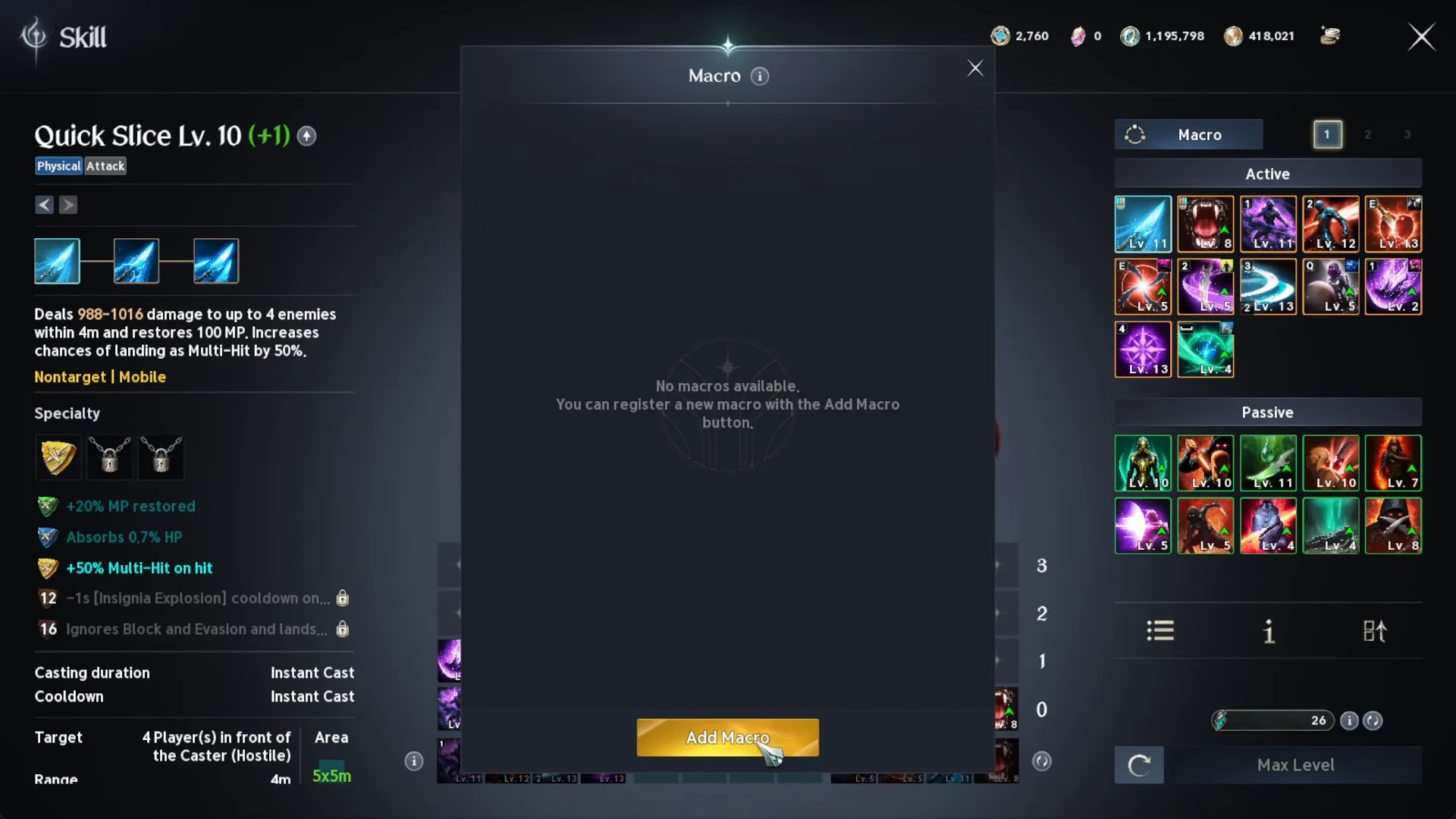
Combat supports macros, letting you chain a sequence of skills onto a single input with a set delay measured in milliseconds between each one. You set these up from the skill menu using an Add Macro option.
Skills, Stigmas, and the Daevanion board
There are three progression layers stacked on top of your character. Regular skills level up as you do and gain extra mod slots around level 8 to 16, where you can socket gems and insignia modifiers. Some of those thresholds change how a skill behaves entirely. The Sorcerer’s Frost Burst, for example, becomes a mobile cast at skill level 8 and starts ignoring Block and Evasion to land as a critical hit at level 12.
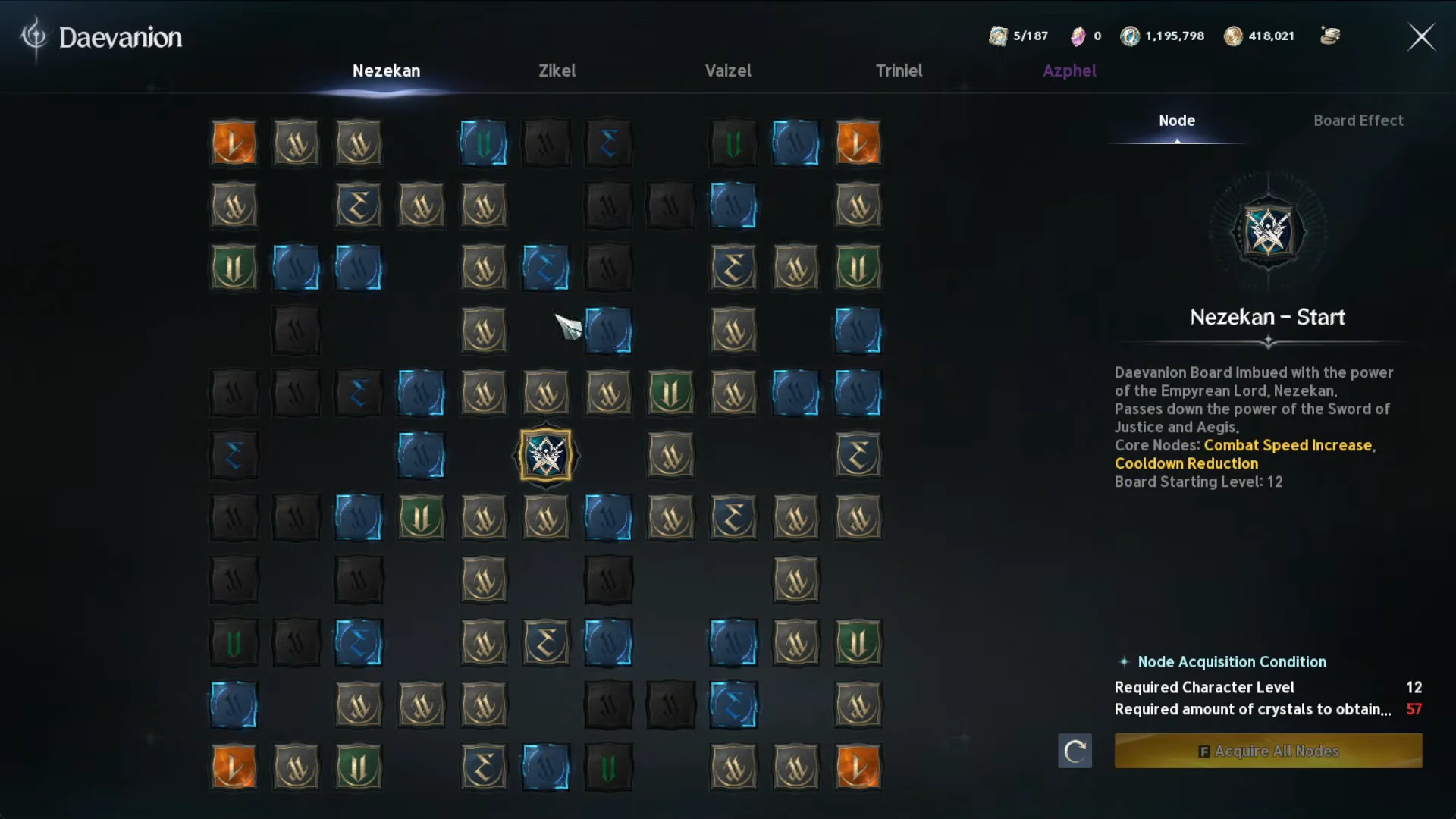
Stigmas expand your class’s skill set; after level 35, you choose a limited number from the available pool. Daevanion is a passive progression grid arranged across constellation boards named for deities: Nezekan, Zikel, Vaizel, Triniel, and Azphel. Spend crystals to unlock nodes that improve base stats and defenses or raise the level of particular skills. Side exploration content is a major source of the points used in this system.
During leveling, two to three core skills carry most classes to the cap. Keep those upgraded rather than spreading points thin across your whole bar.
Exploration and why level 45 matters
Early zones such as Altgard are dotted with question-mark exploration points that lead to Sealed Dungeons, Strongholds, and journal tasks. These regional quests hand out cosmetic titles and accessories that raise your combat power, so they are worth more than their side billing suggests.
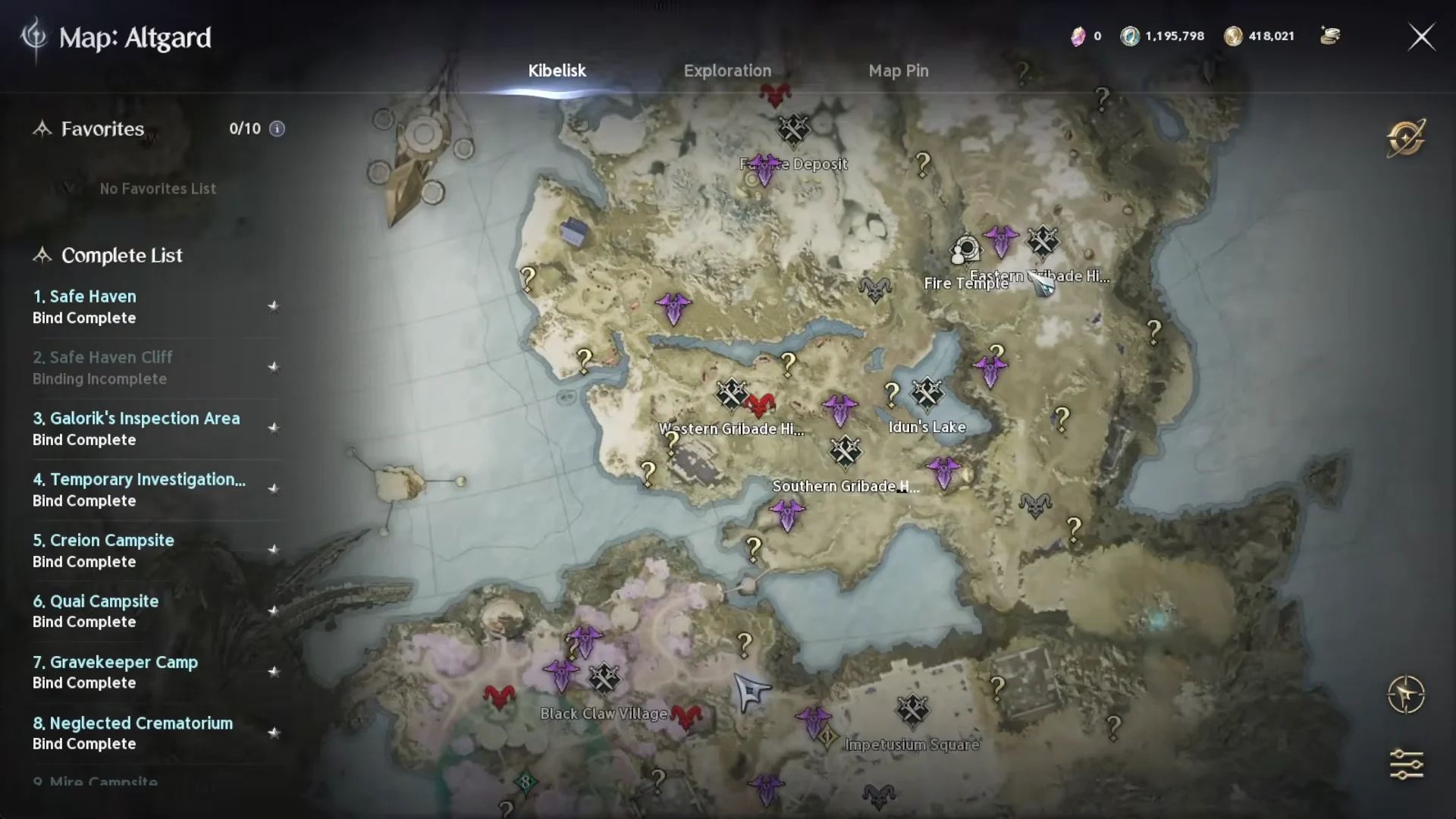
Everything before level 45 is the leveling phase, and the main story is the fastest way through it. Reaching 45 unlocks the endgame loop, including Transcendence, Abyss PvP, Sanctuaries, and the other activities that become your source of real gear. Side missions scale up to your level once you hit the cap, so a quest that was level 16 gets pushed to 45, which makes finishing them along the way far easier than saving them for later.
Expeditions and Odyle Energy
Expeditions are AION 2’s dungeons, scaling from Krao Cave at level 20 up to level 45 instances such as Draupnir, Vakron Sky Island, and Ferocious Horn Den. The level 45 content expects a specific item level to clear comfortably. Vakron Sky Island runs for 2 to 5 players with a 60-minute time limit, while Ferocious Horn Den supports 1 to 5 players on the same timer, both dropping Epic Black Claw and Unyielding gear sets among dozens of obtainable items.
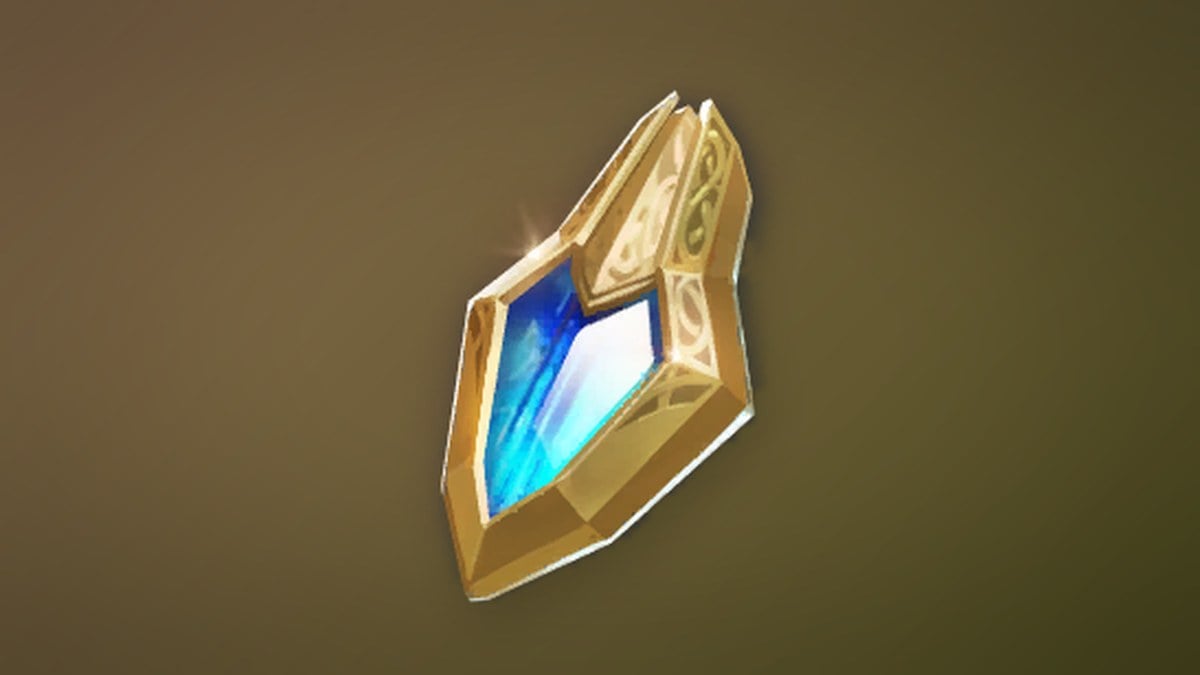
The loot catch is Odyle Energy. Dungeon bosses drop Odyle Energy Cubes, and opening those cubes costs energy from a stamina-style pool. Free players have a limited supply, so you cannot simply farm chest after chest. This is where early loot discipline pays off, since energy spent on a low-level dungeon’s chest is energy you no longer have for the endgame instances worth looting.
Gear enhancement, extraction, and the market
Enhancing gear consumes Enhance Stones and Kinah, and the early upgrade steps carry a 100% success rate. Because leveling gear gets replaced constantly, pouring rare materials into armor you will outgrow in a few levels is wasted. Your weapon is the exception worth keeping at +5, since the clear speed from an upgraded weapon dwarfs the small cost.
When gear falls behind, extract it. Extraction dismantles weapons and armor into Enhance Stones and returns the skin to your Closet, and it refunds roughly half the enhancement stones you invested, with Kinah as the only resource burned in the process. Skins are not purely cosmetic here, because unlocking appearances raises base stats and feeds into combat power.
Anything you would rather sell can go through the player Market Exchange for Kinah. Sales are subject to a 10% market tax, so a listing priced at 349,999 Kinah settles at 314,999 after the cut.
Pets and account-wide bonuses
Pets contribute to passive progression in addition to serving as companions. Collecting and upgrading them grants owned-effect bonuses such as Stamina, HP, and increased ground movement speed while mounted. They also contribute to Genus Insight, which can provide powerful additional bonuses. Pet progression and Genus Insight carry over among characters on your regional server, so you do not have to repeat the grind for each alt.
Where the free-to-play model starts charging
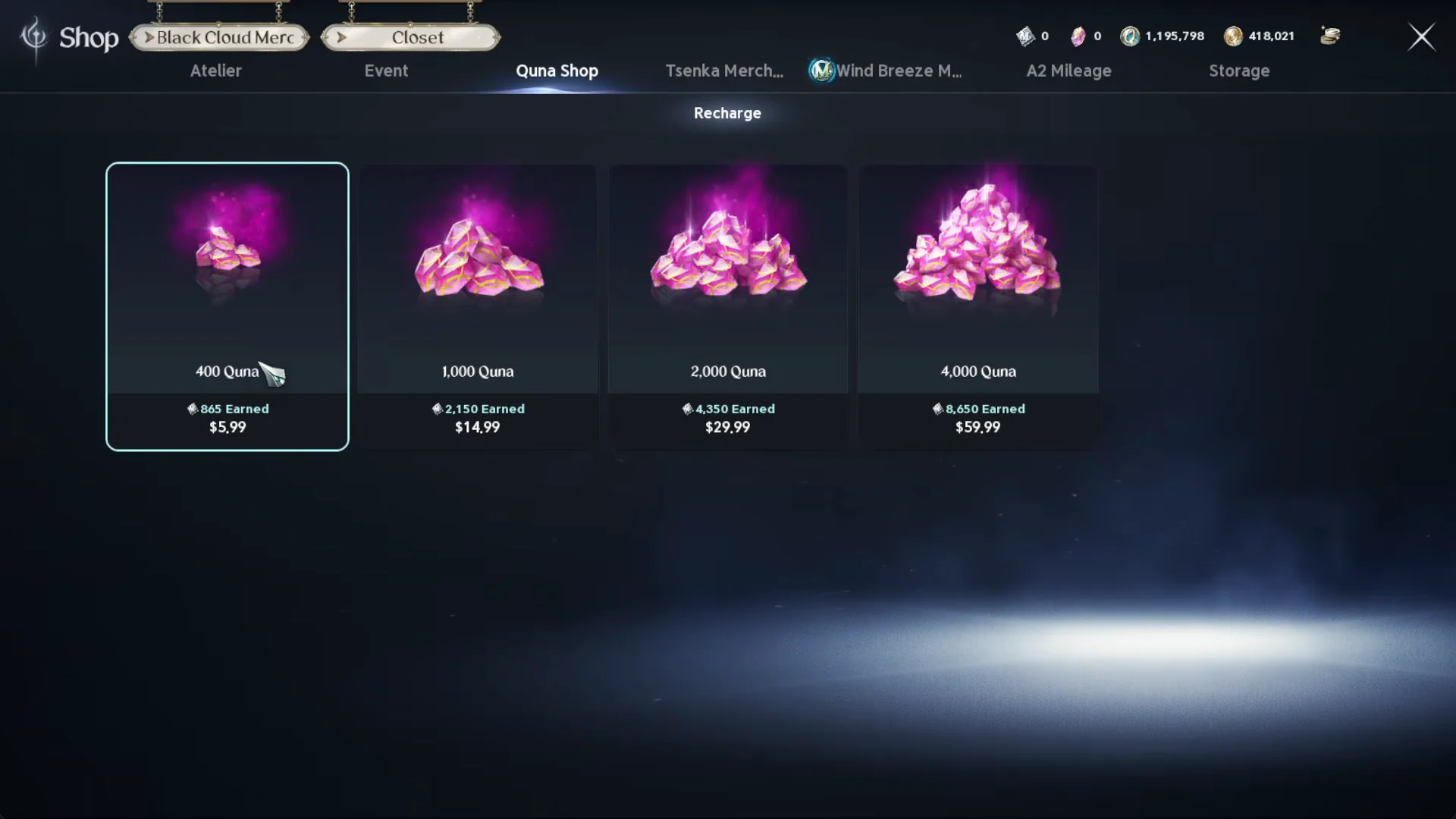
The download is free, but the monetization layers in as you go deeper. Quna is the cash currency, sold in four packages, and the shop stocks cosmetics, consumables, storage expansions, and conveniences.
| Item | Price |
|---|---|
| 400 Quna | $5.99 |
| 1,000 Quna | $14.99 |
| 2,000 Quna | $29.99 |
| 4,000 Quna | $59.99 |
| Season 1 Starter bundle | $19.99 |
| Resurrection Spiritstone | 100 Quna |
| Name Change Voucher | 500 Quna |
 Cube Expansion Voucher Cube Expansion Voucher | 200 Quna |
There are two paid passes running alongside the shop. The Ishalgen Mercenary Daeva Pass costs 1,500 Quna and the Planet’s Call pass costs 1,000 Quna, both handing out Enhance Stones, Soul Crystals, Odyle Energy, and challenge tickets as you climb their reward tracks. Pass holders and Special Quai Membership subscribers also get bonus Odyle Energy storage and recharge items, which directly means more dungeon chests than a free player can open.
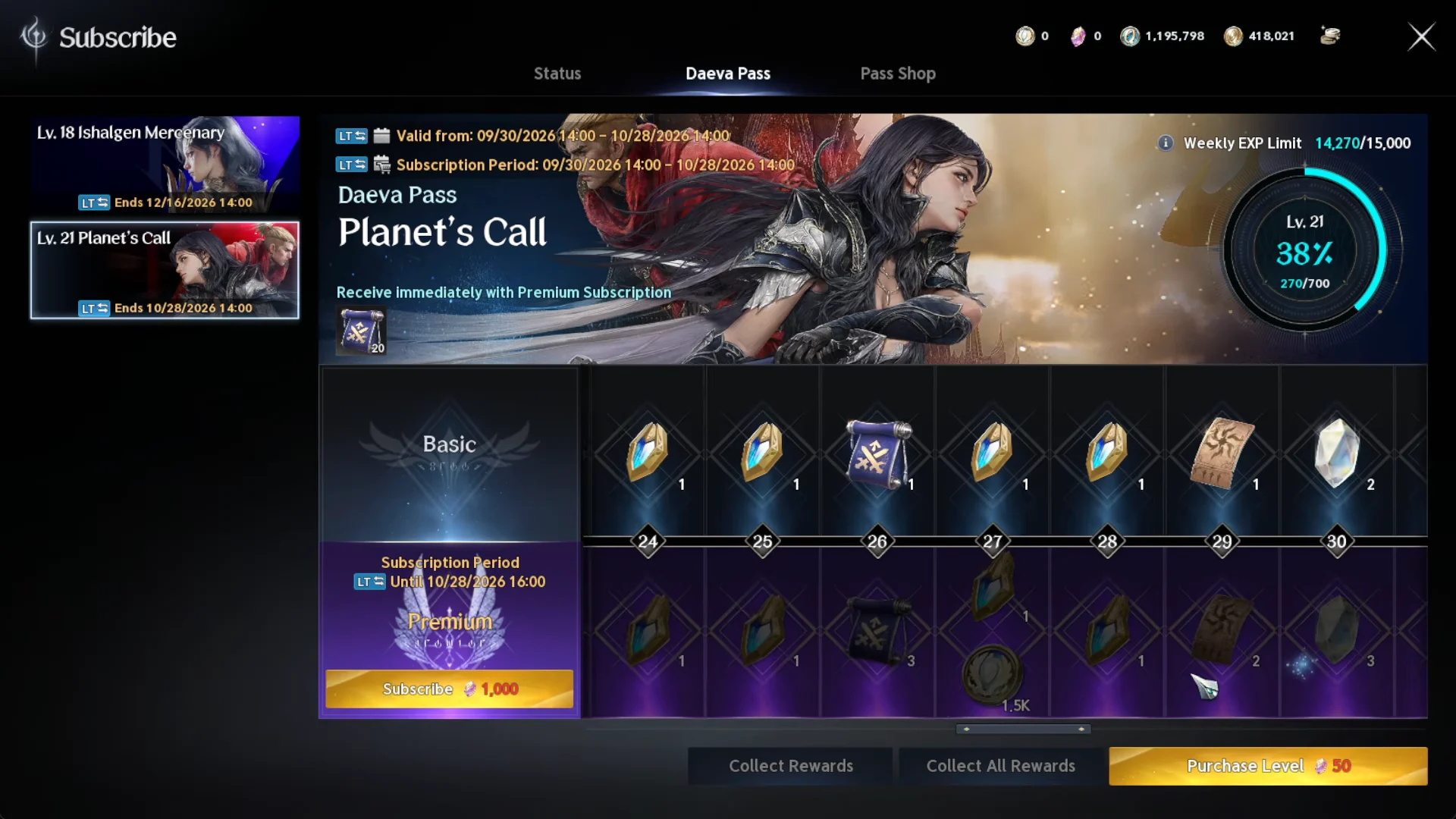
The Special Quai Membership runs $14.99 for 30 days, and it is the purchase that draws the most scrutiny, because it unlocks remote storage access and other conveniences that feel less like optional extras and more like basic MMO functions. Free players can still reach the same storage by visiting the Storage Manager NPC in hub areas and outposts. That trade-off, a genuinely enjoyable game that grows more insistent about your wallet the further you push into the endgame, is the single thing most worth understanding before you start.
Membership Tiers and What Each One Unlocks
Four memberships are account-wide, so every character on your account shares the benefits. Pet Auto-Loot is the exception. The Odyle Energy changes matter most if you plan to open many dungeon cubes.
| Membership | Duration | Benefits |
|---|---|---|
| Wind Breeze Membership | 28 days | Remote Storage, Quna Exchange, Wind Breeze Merchants, Market access, login queue priority |
| Tsenka Membership | 28 days | More Odyle Energy Cube selections in Expedition, Transcendence, and Sanctuary; max Odyle Energy storage of 840; max Shugo Festival Reward Keys of 21; doubled Abyss access hours; login queue priority |
| Special Shugo Membership | 28 days | A discount package combining Wind Breeze and Tsenka. Lists every benefit of both except the doubled Abyss access hours |
| Special Quai Membership | 30 days | Same benefit list as Special Shugo, with a 30-day duration |
| Pet Auto-Loot | 30 days | Automatic item pick-up. Not account-wide |
Tsenka is the only membership that lists doubled Abyss access hours, so it matters for Abyss PvP players. If you want storage and market access without the Odyle Energy changes, Wind Breeze covers them. The Special Shugo and Special Quai bundles cover both sets of benefits except the Abyss doubling.