
Dynasty Mode in College Football 27 puts a full recruiting system in your hands, and how well you work it decides whether your program climbs or stalls. Every week you juggle limited hours, a points budget, and a board full of prospects who all want different things. The teams that win consistently are the ones that scout before they spend and fill real roster holes instead of chasing stars.
Quick answer: Open the Recruiting section from the Dynasty home page, check Team Needs, add prospects who fill those gaps, spend Scouting Hours to reveal their attributes, then offer a scholarship and use Dynasty Points plus recruiting actions to sit at the top of their interest list until they commit.
Start with Team Needs, not star ratings
Before you add a single name, look at Team Needs. This tells you which positions are thin and where a new signing actually improves your roster. A five-star who plays a position you already stack does far less for you than a solid three-star who fills a hole. The smart move is to sort your board around need first, then talent.
From the Recruiting screen, choose Add Prospect to start building your board. The Recommended list is a good first stop, and you can also filter prospects by star rating and other parameters. Once you add players from the Prospect List, they populate your Recruiting Board, which fills in as you go.
Each prospect carries a set of key attributes worth reading before you commit resources to them.
| Attribute | What it tells you |
|---|---|
| Rank | The prospect’s projected rank within their recruiting class. |
| Need | Whether the athlete fills a position where your roster is short. |
| Rating | The star rating, ranging from one to five stars. |
| INT | Interest level, showing how likely the player is to join your team. |
| Stage | How far along you are in the recruiting process for that player. |
Scout before you spend
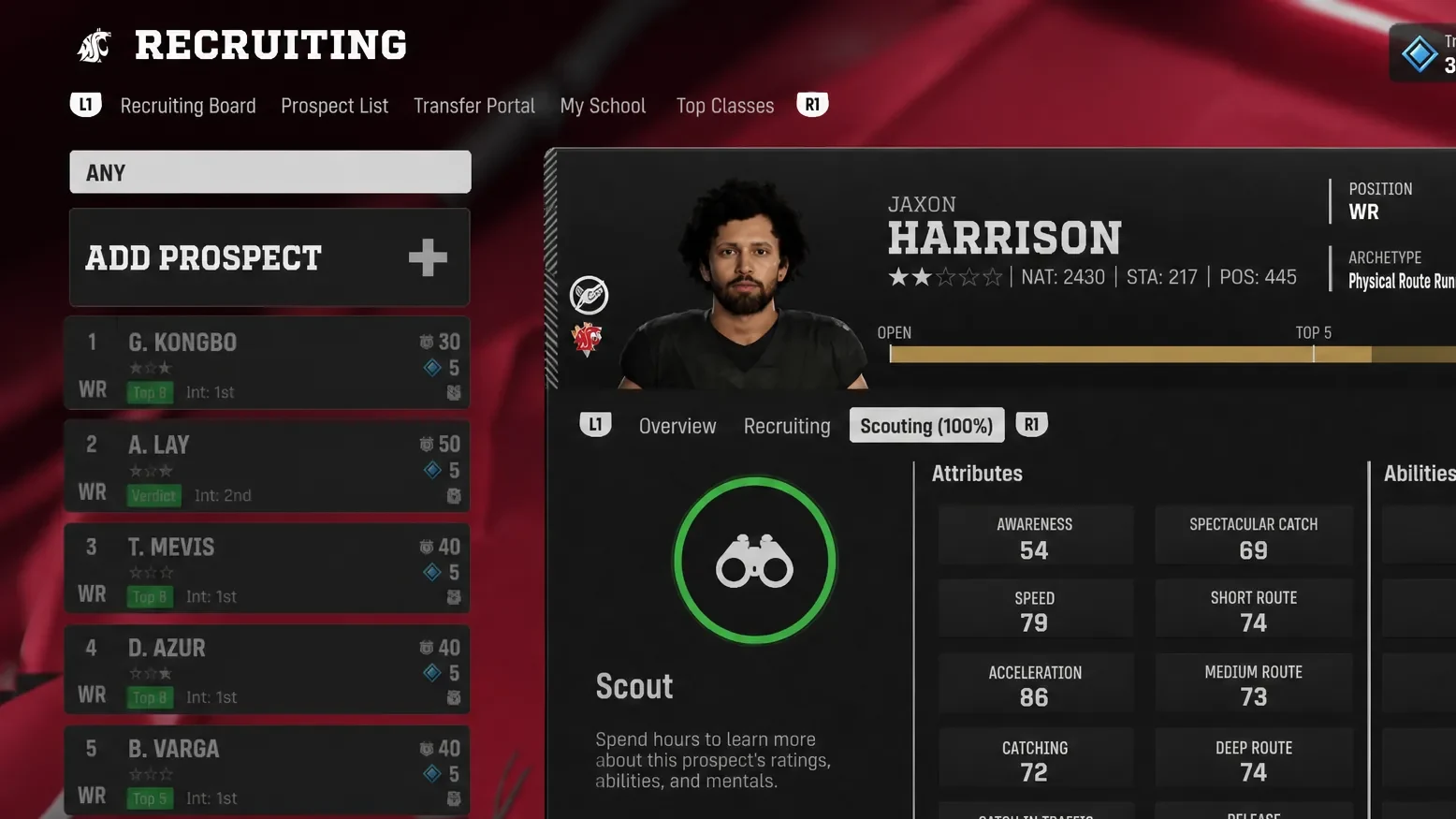
Prospects do not show you everything up front. When you select a player and spend Scouting Hours, you unlock a fuller picture of their attributes, Abilities, and Mentals. This is how you avoid wasting a scholarship on someone who does not fit your system or lacks the ceiling you assumed from their stars.
Make scouting a habit. Always scout an athlete before you pour recruiting effort into them, because the true attributes can change your ranking of the board. A good target here is one who already has your school high on their interest list and fills a Team Need at the same time.
Spending Hours and Dynasty Points to raise interest
Once scouting is done, the real recruiting begins. Select a prospect, switch to the Recruiting tab, and offer the scholarship. From there you build interest using two resources that both run short fast.
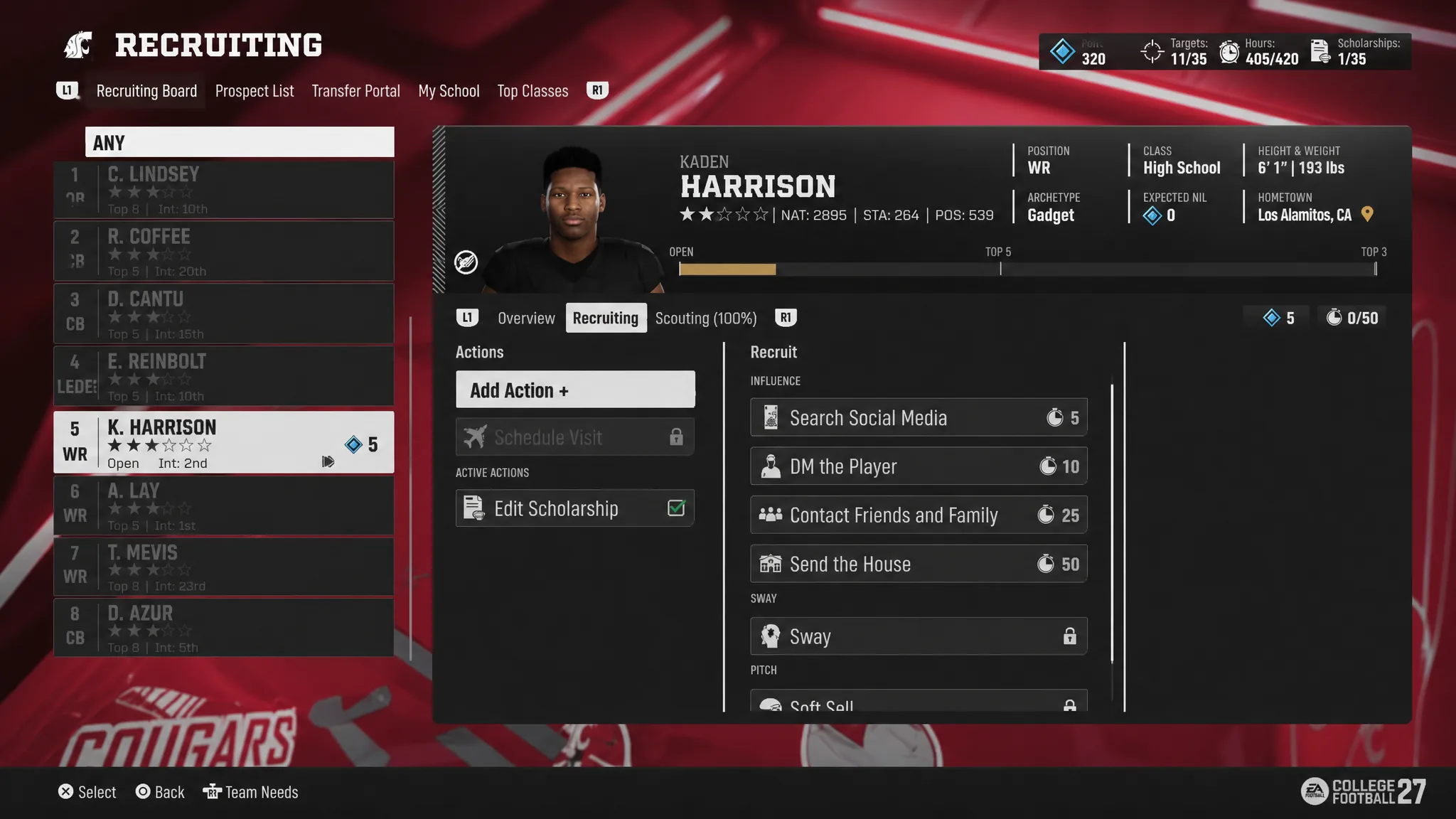
When you have used your actions or run out of Recruitment Hours, advance to the next week. The goal every week is simple. Sit at the top of the athlete’s interest list. If you are already on top, invest more to speed up their decision, or stay passive and watch whether rival interest fades. Prospects will often commit to you when other schools show little movement.
Tip: If you crack a player’s Top 5 and the option is available, schedule a visit. A visit makes it noticeably easier to convince a recruit to accept your offer.
Verbal vs Hard commitment
There are two commitment types this year, and the difference matters for how safe your class really is.
| Commitment | What it means |
|---|---|
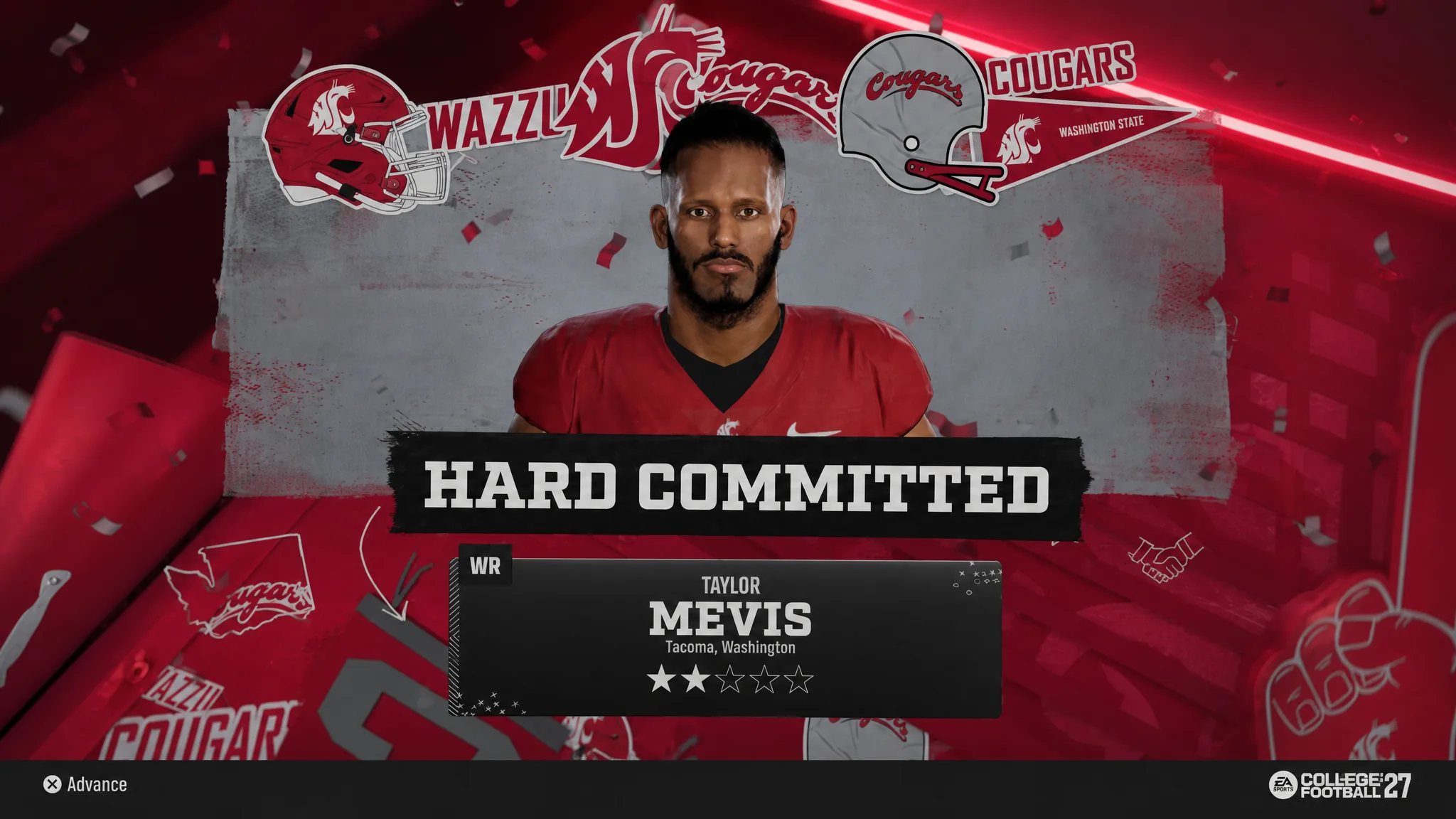
| Verbal | The athlete has agreed in principle, but can still be flipped by another school that comes in with a stronger offer. |
| Hard | The athlete’s decision is locked. No other program can steal them. |
A verbal commit is progress, not a guarantee. Keep an eye on your verbals late in the cycle, because a rival can still pry them loose before the commitment goes hard.
Dealbreakers can end a recruitment before it starts
Pay close attention to Dealbreakers. A Dealbreaker acts like veto power for the athlete. If your school’s grade in that category sits below what the recruit demands, they will never sign with you, no matter how many Hours or Dynasty Points you throw at them.
There is no way around a Dealbreaker, so check it early. Spotting one before you commit resources saves you from chasing a potential superstar you were never going to land, and lets you redirect that budget to targets you can actually close.
Put together, the winning routine stays the same all season. Read your Team Needs, scout broadly, invest in the players who fit and want you, protect your verbals, and respect every Dealbreaker. Do that consistently and even a bottom-tier program can build a class that competes for talent well above its starting prestige.