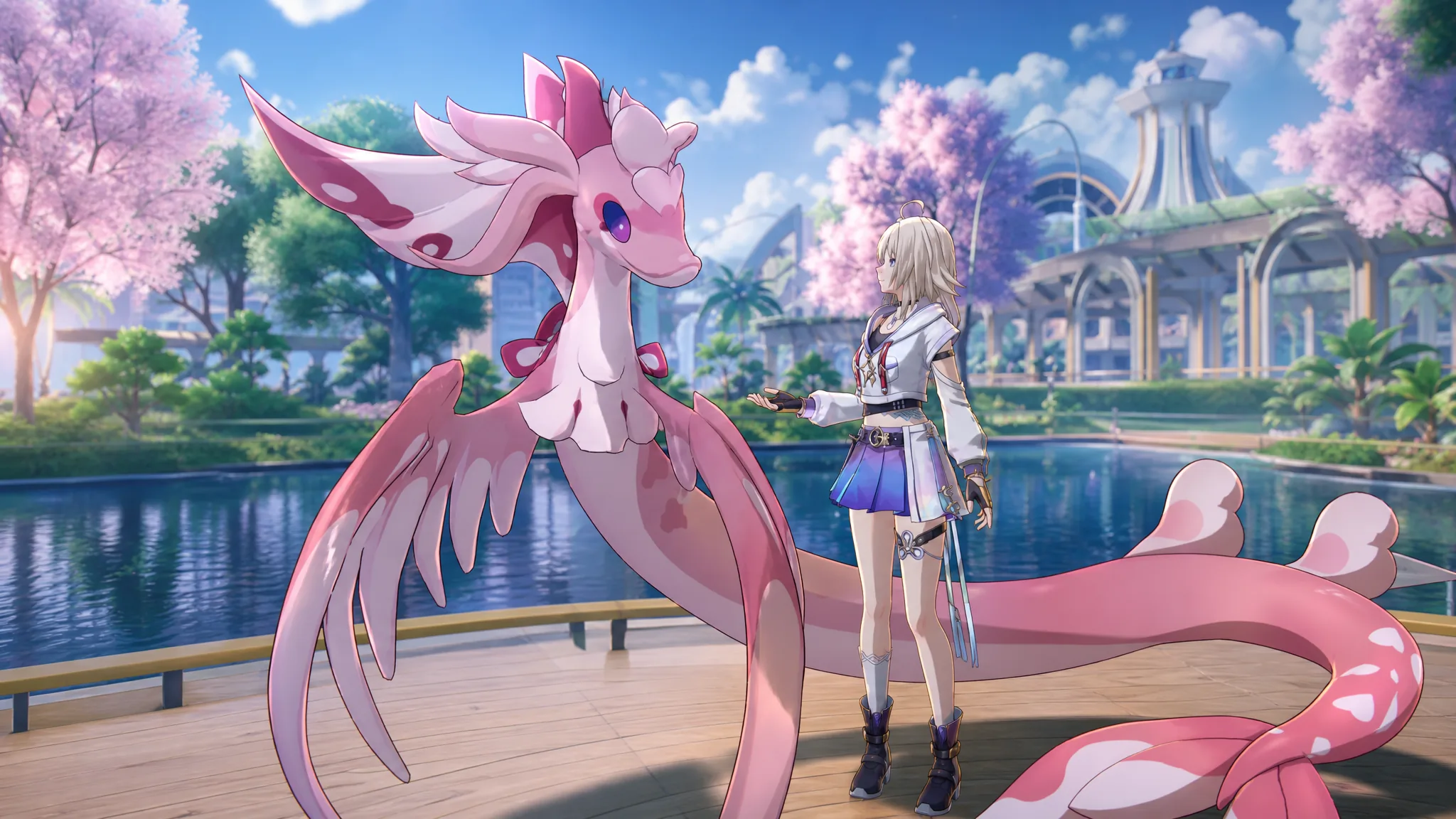
Honkai: Nexus Anima is HoYoverse’s first creature collector, and its Evolution Test beta puts the full loop on display: roam a colorful world, catch creatures called Anima, and send them into auto-chess battles where positioning and team synergy decide the outcome. The test build already shows what makes it distinct from Pokemon and from HoYoverse’s own action games, along with the rough edges you would expect from an early version.
What Honkai: Nexus Anima Is
Nexus Anima is the third title in the Honkai franchise, following Honkai Impact 3rd and Honkai: Star Rail. It is a new HoYoverse IP under the Honkai umbrella, not a sequel, so you do not need to have played the other games to jump in. It builds on three pillars: bonding with and raising Anima, strategic auto-battler combat, and light open-world exploration.
The story starts with a cataclysm called the Sundering, which severed the Nexus that once connected everything and shattered the world into 81 separate universes known as the Planes. The scattered energy gave rise to the Anima. You play a plane-hopping traveler who has escaped captivity, forging bonds with Anima while uncovering your own past. Everyone calls you the World-Ender, and many of the powerful beings around you either fear you or want you dead.
Catching and Bonding With Anima
Anima appear almost everywhere you go, and capture works much like Pokemon. You encounter a wild Anima in the open world, battle it, and form a contract to add it to your collection. Blue and purple tier Anima can be captured directly, while gold tier (5-star) Anima are mostly obtained through quests in the test build.
What sets the creatures apart is how much personality each one carries. They are woven into daily life in the seaside town of Iia, running shops, wandering the streets, or racing one another. You will run into oddball designs like a depressed koala Anima that needs coffee to wake up, and a ninja Anima you can control to stealth past enemies. Some Anima can also be evolved, turning something as silly as Eggluvs into the rabbit-like Eggnok.
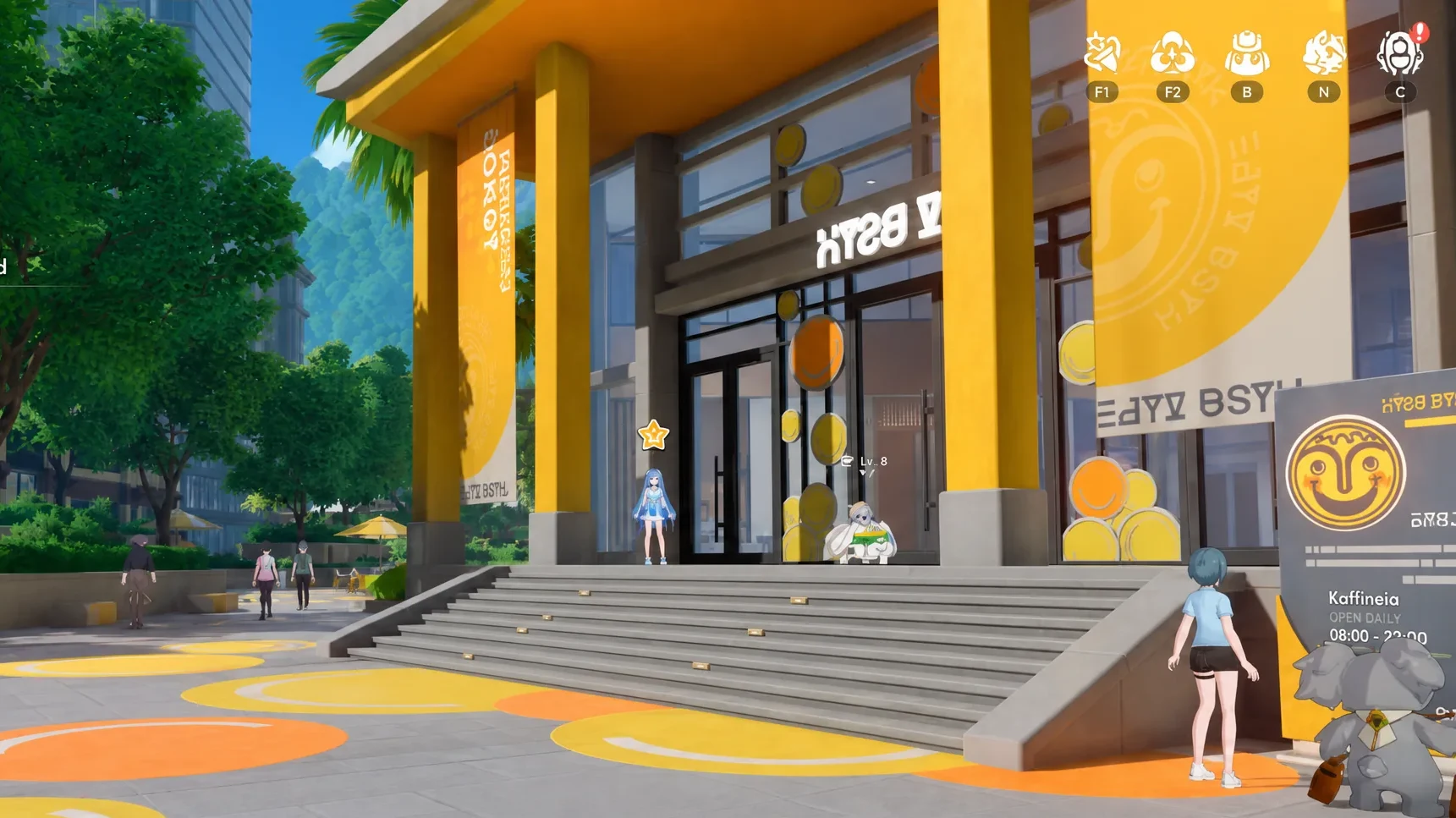
Beyond combat, each Anima has a unique open-world skill. Some let you bounce like a trampoline to reach high ledges, others glide across terrain, break obstacles, or act as mounts. These abilities are tied to exploration and puzzle solving, so building a varied roster opens up more of the map.
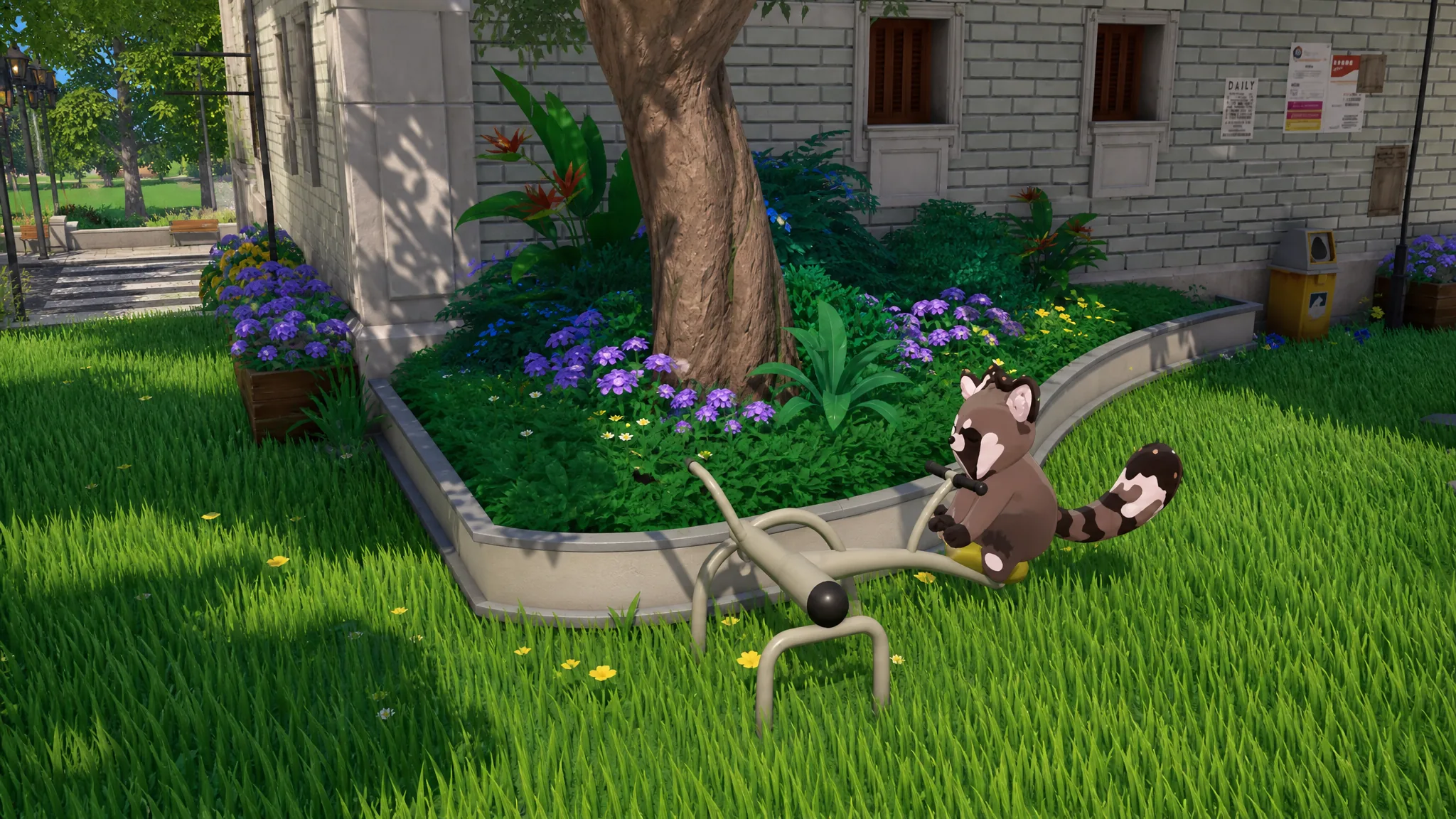
Anima levels are tied to the protagonist’s level, so you do not need to grind each creature individually. Attribute training uses materials that are easy to obtain, and Nexus Threads work like a weapon system, granting extra abilities through quests.
How the Auto-Chess Combat Works
Battles use an auto-chess system similar to Teamfight Tactics rather than turn-based fights. You deploy your Anima onto a grid, and once they are placed, they fight on their own, using skills whenever their energy bar fills. The core decisions happen before the fight through positioning and team composition.
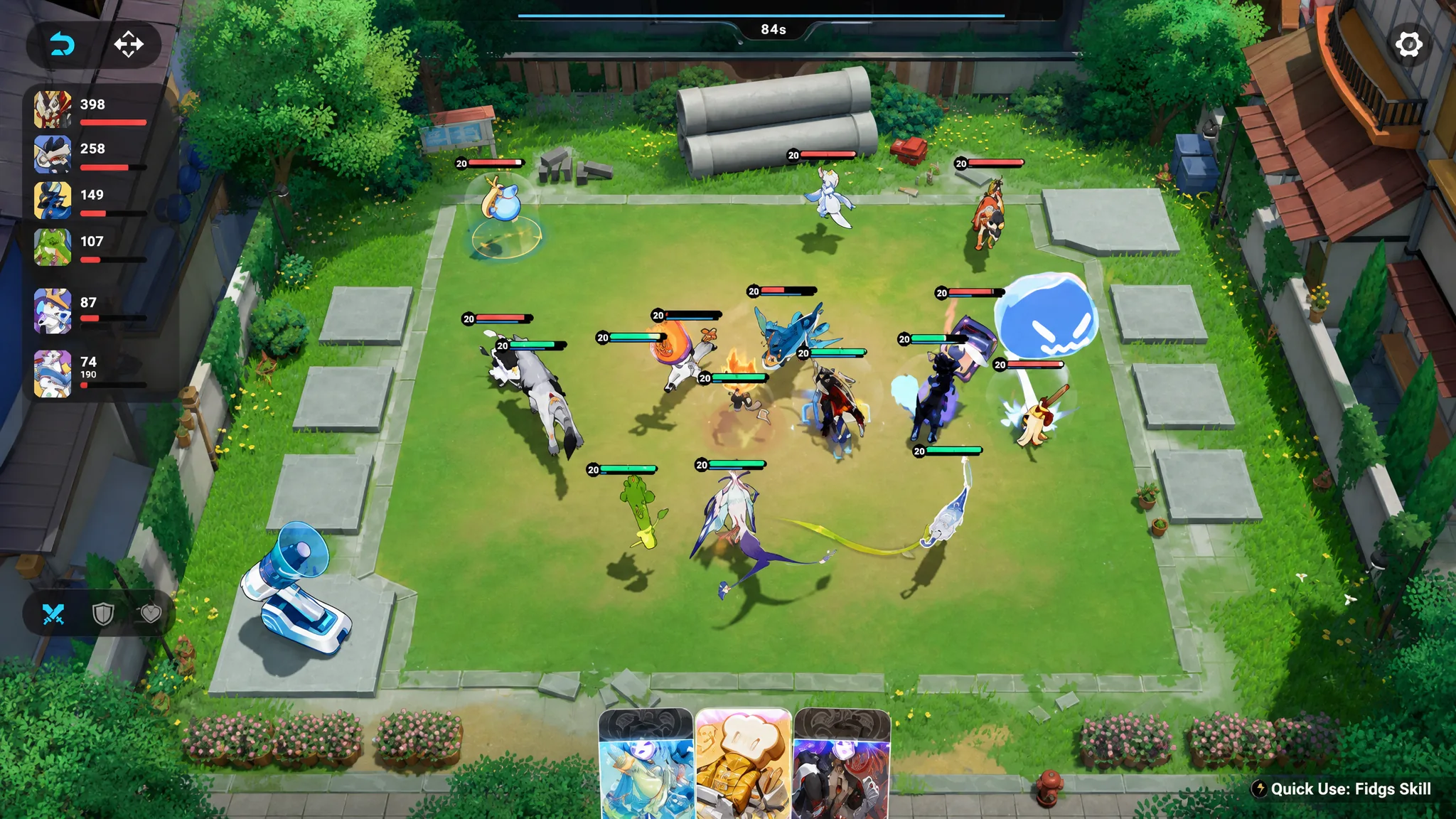
Anima split into frontline and backline roles, which break down further into protectors and damage dealers up front, and burst damage or support in the back. This works more like RPG classes than a Pokemon type chart. Each Anima is also tied to an Aspect, such as Light, Memory, War, Love, or Pride, and stacking multiple Anima of the same Aspect can grant shared bonuses.
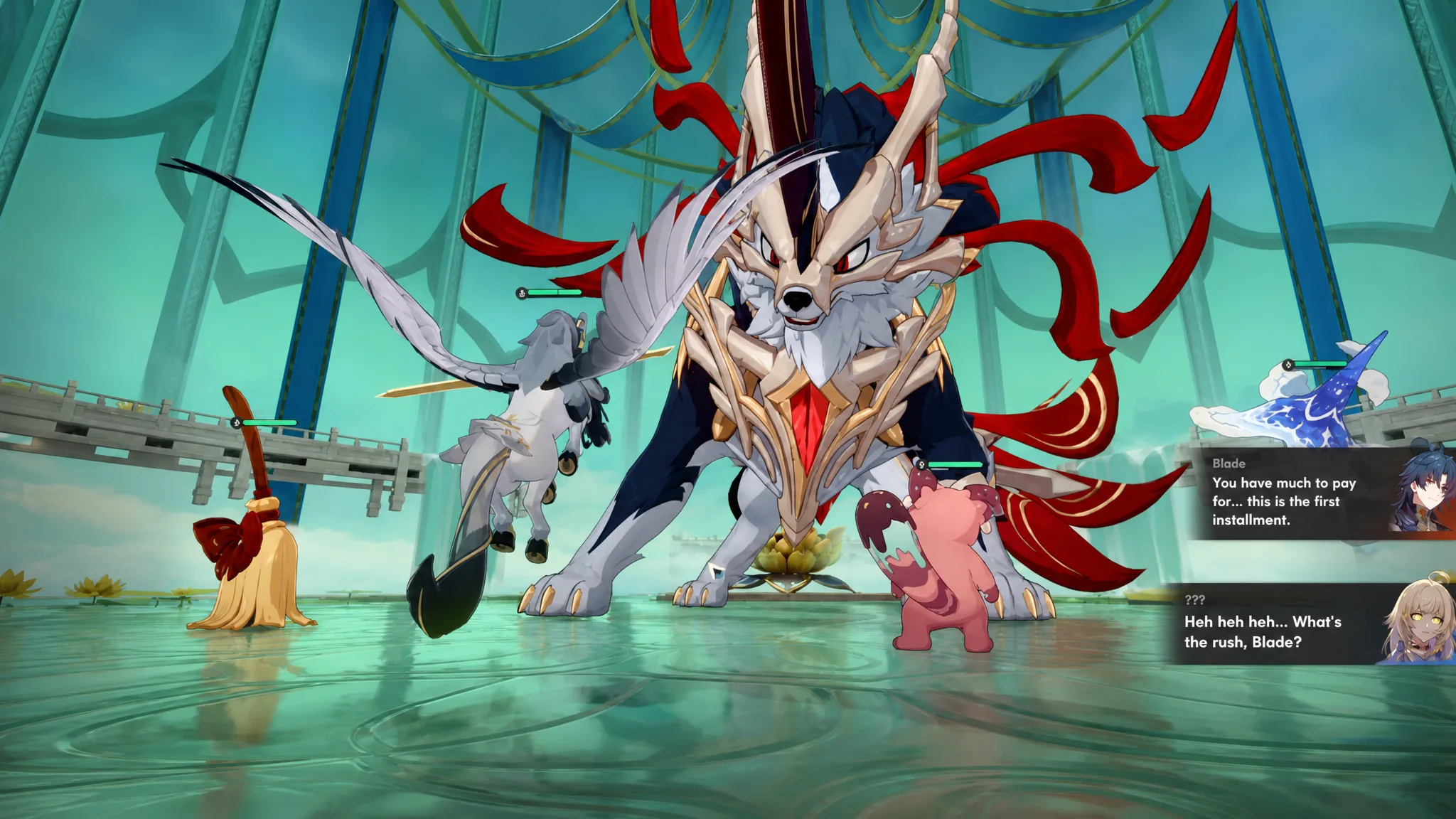
Once the fight begins, your only direct influence comes from character skills. Special characters called Eidos carry abilities you trigger during combat, and they are energy-based, so timing matters. Some deal direct damage, others provide buffs, debuffs, or heals. Blade, a returning face, offers revival and stun effects, while Kiana can summon an extra Anima at the start of battle. Used well, these skills can turn a losing fight around.
| Combat element | What it does |
|---|---|
| Frontline roles | Protectors and damage dealers that absorb hits and hold the line |
| Backline roles | Burst damage dealers and support Anima kept safe behind the front |
| Aspects | Light, Memory, War, Love, Pride and more; matching Aspects give shared bonuses |
| Eidos skills | Player-triggered, energy-based abilities for damage, buffs, debuffs, or heals |
The main limitation is that fights can feel like mindless autoplay once your team is high level and well built. There is real versatility in the system, but the early game rarely demands much active strategy. That may shift in the late game, which the current build does not fully expose.
Dialogue Choices That Change Conversations
Nexus Anima leans harder into RPG mechanics than other HoYoverse games. Dialogue choices are tied to three character attributes: Strength, Charisma, and Intelligence. These stats regularly lock or unlock specific dialogue options, so how you build your character shapes which responses are available.
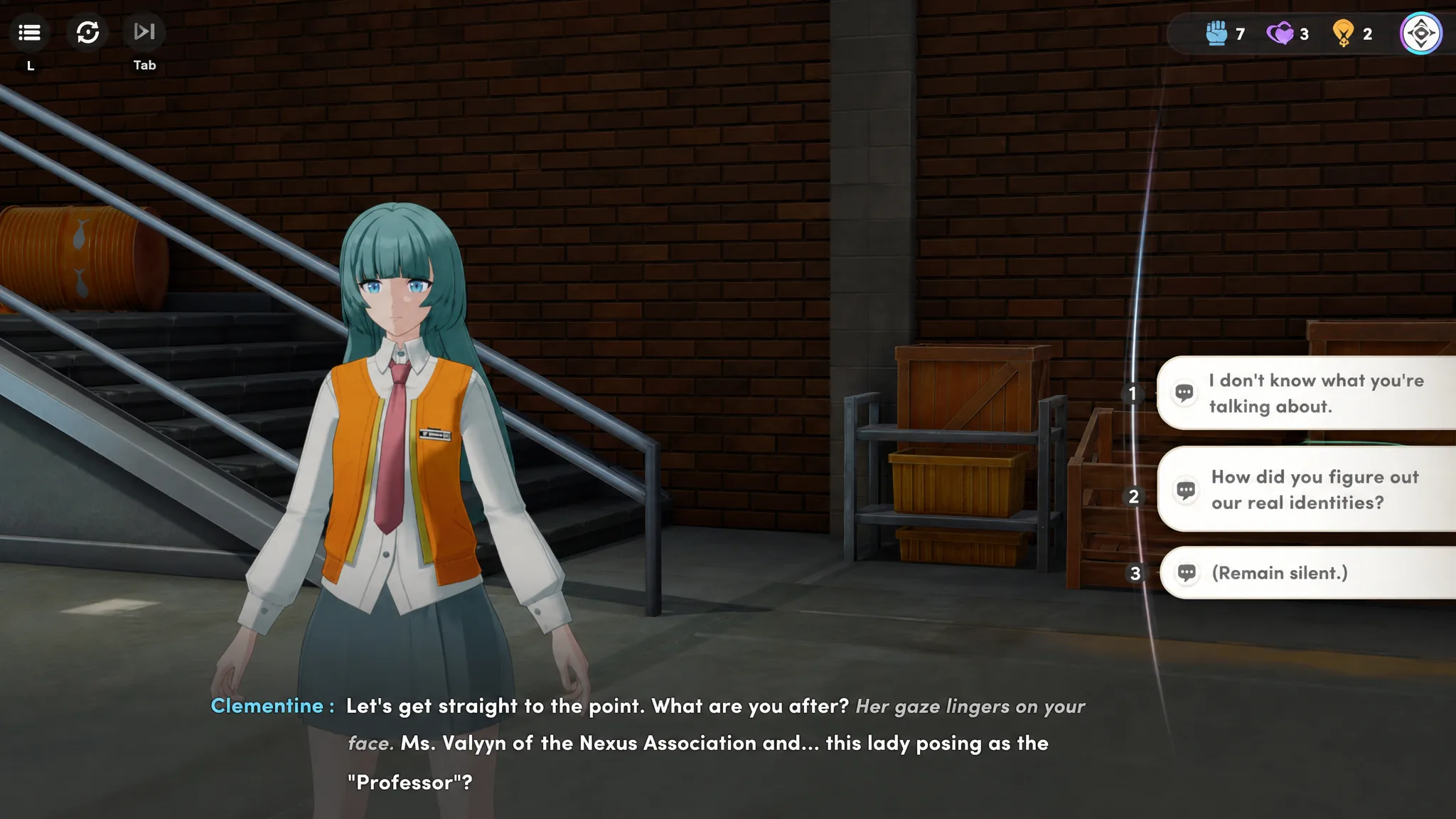
Pour everything into Charisma and your intellect-based options simply vanish; push a stat too high and some responses close off in the other direction. The game also borrows from Telltale, popping up messages that tell you someone noticed your kindness or trusted you less after something you said. Small interactions already branch, like making an actress angry enough to refuse a battle. How much these choices affect the main story is not yet clear in the test build.
The standout system here is the Infinite Vortex, granted early by Apherion, the Sovereign of Infinity and Finity. It lets you revisit past events and explore different outcomes, and the game hints that discovering different endings can affect later quests and unlock additional content.
Where the Story Falls Short
The weakest part of the build is the storytelling. Nexus Anima throws its world at you immediately, dropping terms like the World-Ender, the Sundering, the Nexus, Sovereigns, Novarchs, and Aspects before you have any footing. It mirrors the dense, interdimensional structure of other HoYoverse games, which can feel forced for a creature collector that would work fine with a simpler adventure hook.
Returning characters appear early. You meet the Novarchs Parayaya, Amorphiron, and Blade, then later Nanafey, Bai Mei, Hua, Otto, and Kiana. The test build does not spend much time explaining whether these are the same characters from their original games or variants, which keeps the focus on Nexus Anima’s own plot. Once the introduction is out of the way, the pacing settles and exploration becomes the highlight.
Beta Access and Release Timing
The Evolution Test runs on PC, Android, and iOS from July 9, 2026 at 10:00 AM (UTC+8) until July 27, 2026 at 6:00 PM (UTC+8). It expands the previous closed beta with more characters, Anima, regions, and gameplay systems. As with earlier tests, it is time-limited and will be followed by a data wipe, so progress will not carry into the live game.
Access is decided by lottery from everyone who completes the recruitment questionnaire. You sign up on the official Honkai: Nexus Anima site with the same HoYoverse account you use for Genshin, Star Rail, or ZZZ, and wait for a notification by website message, email, or SMS if you are picked. Separate from the beta, pre-registration for the full launch is open and banks milestone rewards without affecting your lottery odds.
HoYoverse has not announced a global release date. The game was revealed on August 29, 2025, and it continues through closed test phases. No official launch date or window is currently confirmed. Expect the game on PC and mobile, with the studio’s usual pattern of running several betas before release.
The shape of Nexus Anima is already clear: adorable creatures with genuine personality, an exploration loop that makes them feel at home in the world, and combat that trades twitch inputs for team building. The auto-chess fights need more depth and the story could stand to slow down, but the fundamentals of the monster-catching adventure are strong enough to be worth watching as it heads toward launch.