Flower breeding in Animal Crossing: New Horizons looks simple. You put two flowers near each other, water them, and sometimes a new color appears the next morning. The reason a blue rose can take weeks while a purple pansy shows up almost instantly comes down to hidden genetics, watering odds, and how you space the plants. Once you understand those three systems, every hybrid becomes predictable.
Quick answer: Put two flowers of the same species anywhere inside a shared 3×3 area, water both before the day ends, and there is a chance a new flower spawns in a free tile beside them the next morning. Use seed-bag flowers as parents so the genetics are reliable.
Flower growth stages and where flowers can grow
Every flower moves through four visible stages over four days before it reaches full bloom. Breeding does not require a full bloom, though. As soon as a plant shows color at the budding stage, it can produce offspring if you water it.
| Stage | Appearance | Can it breed? |
|---|---|---|
| Stage 1 | Sprout | No |
| Stage 2 | Stem | No |
| Stage 3 | Bud | Yes |
| Stage 4 | Bloom | Yes |
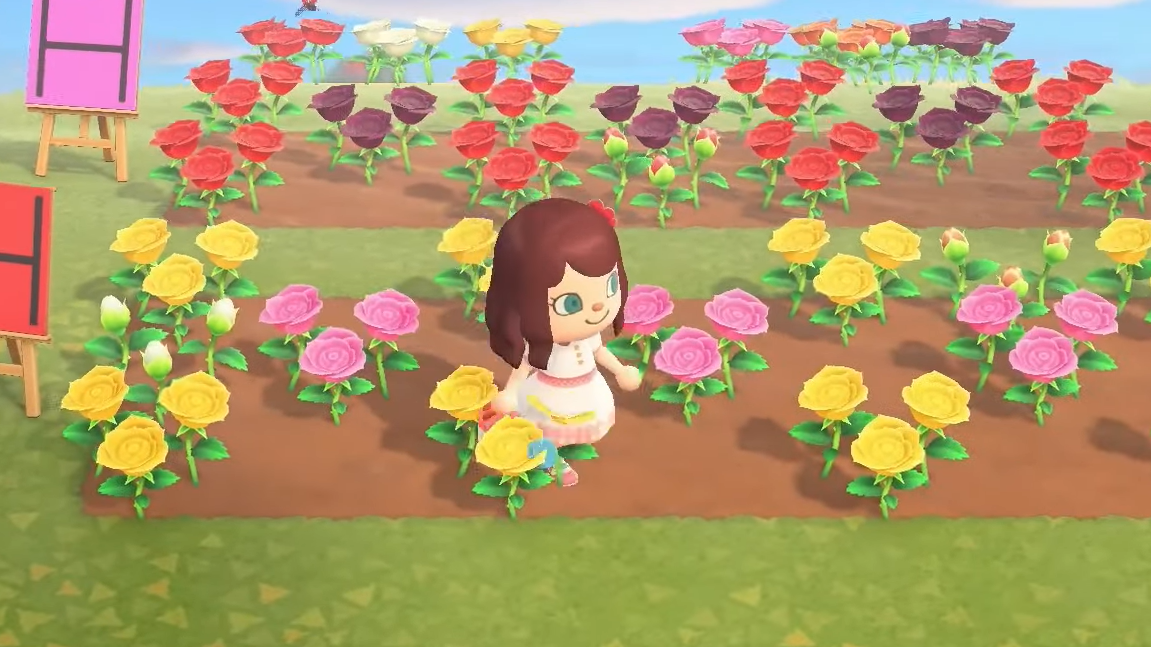
Picking a flower drops the plant back to the stem stage, and running over one reverts it to the budding stage. Neither destroys the plant, so it regrows on its own. Flowers grow on grass, the in-game dirt path, and the in-game sand path, but they will not grow on the actual sand of the beach. You can also dig up an entire plant with a shovel and move it elsewhere.
Watering and the visitor bonus
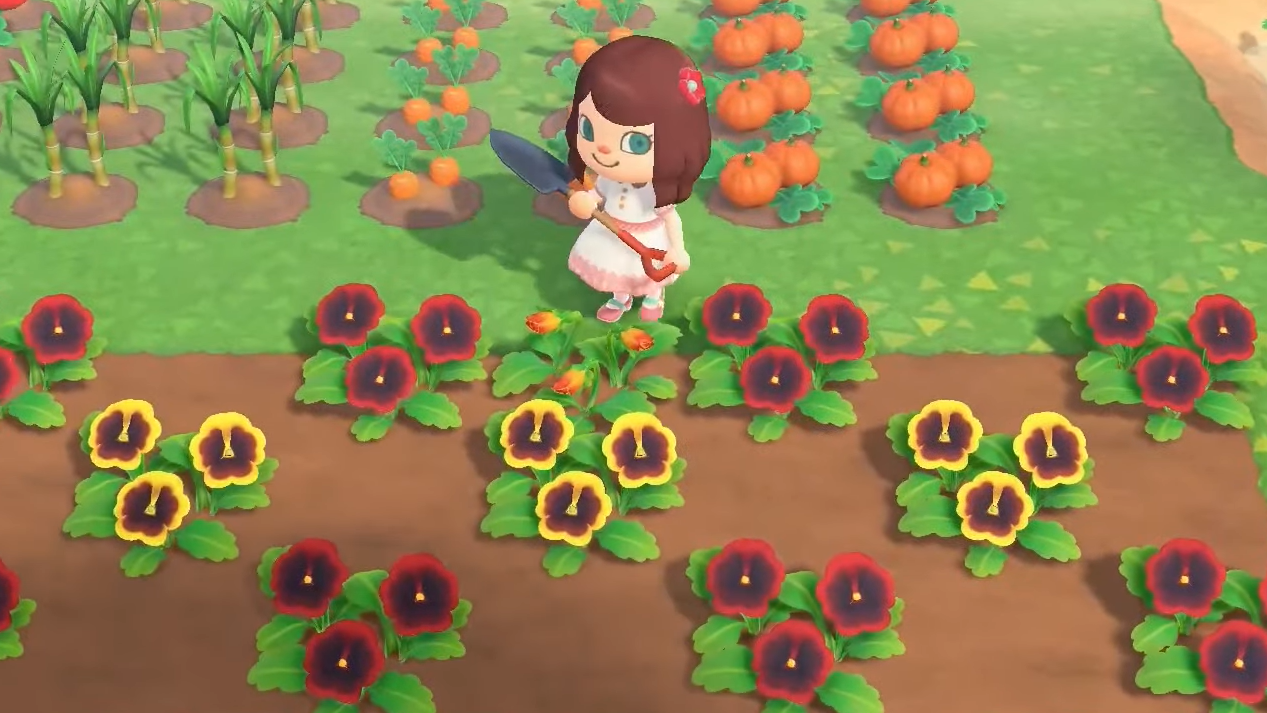
Watering is the one daily action that drives the whole system. Hold a watering can next to a flower and press A. Droplets appear and then turn into sparkles, which confirm the plant is watered for the day. Rain or snow waters every flower on your island at once, so on those days you can skip the watering can entirely.
A flower watered only by you or by weather has a 5% chance to be picked to reproduce overnight at 5 a.m. Visitors from other islands raise that chance dramatically, up to five unique visitors per day. The sparkle grows brighter for each visitor, and at five it turns to a golden shine that every player can see.
| Watered by | Chance per flower |
|---|---|
| You or weather only | 5% |
| 1 visitor | 25% |
| 2 visitors | 35% |
| 3 visitors | 50% |
| 4 visitors | 65% |
| 5 visitors | 80% |
Those numbers apply to each flower individually. Because both flowers in a pair roll separately, the practical odds of a pair producing something climb to roughly 96% after five visitors water. The difference is large in real terms. A garden watered by one player produced around 12 new flowers in a day, while the same garden after five visitors produced 42.
Two warnings matter here. Digging up a flower after a visitor waters it wipes that watering bonus, so move plants before guests arrive, not after. And flowers also carry a bad-luck protection. After being eligible to breed at least four times without success, a flower gains an extra 5% chance each day until it finally reproduces, scaling up to a maximum of 90% after 20 days.
Watering cans and ordinances that speed things up
The Golden Watering Can covers a 3×3 block, watering nine spaces at once, which is the fastest way to maintain a large garden. You receive the recipe from Isabelle the first time your island reaches a five-star rating, and it is also required to produce gold roses. The Beautiful Island ordinance, unlocked after K.K. Slider’s first performance, raises breeding and cloning chances, with the tradeoff that rainy days leave more weeds and stray flowers to clean up.
| Watering can | Coverage / note |
|---|---|
| Flimsy Watering Can | One space at a time |
| Standard / Silver / store variants | Made with an iron nugget; includes outdoorsy, elephant, and colored cans |
| Golden Watering Can | Nine spaces at once; needed for gold roses |
How flower genetics decide the result
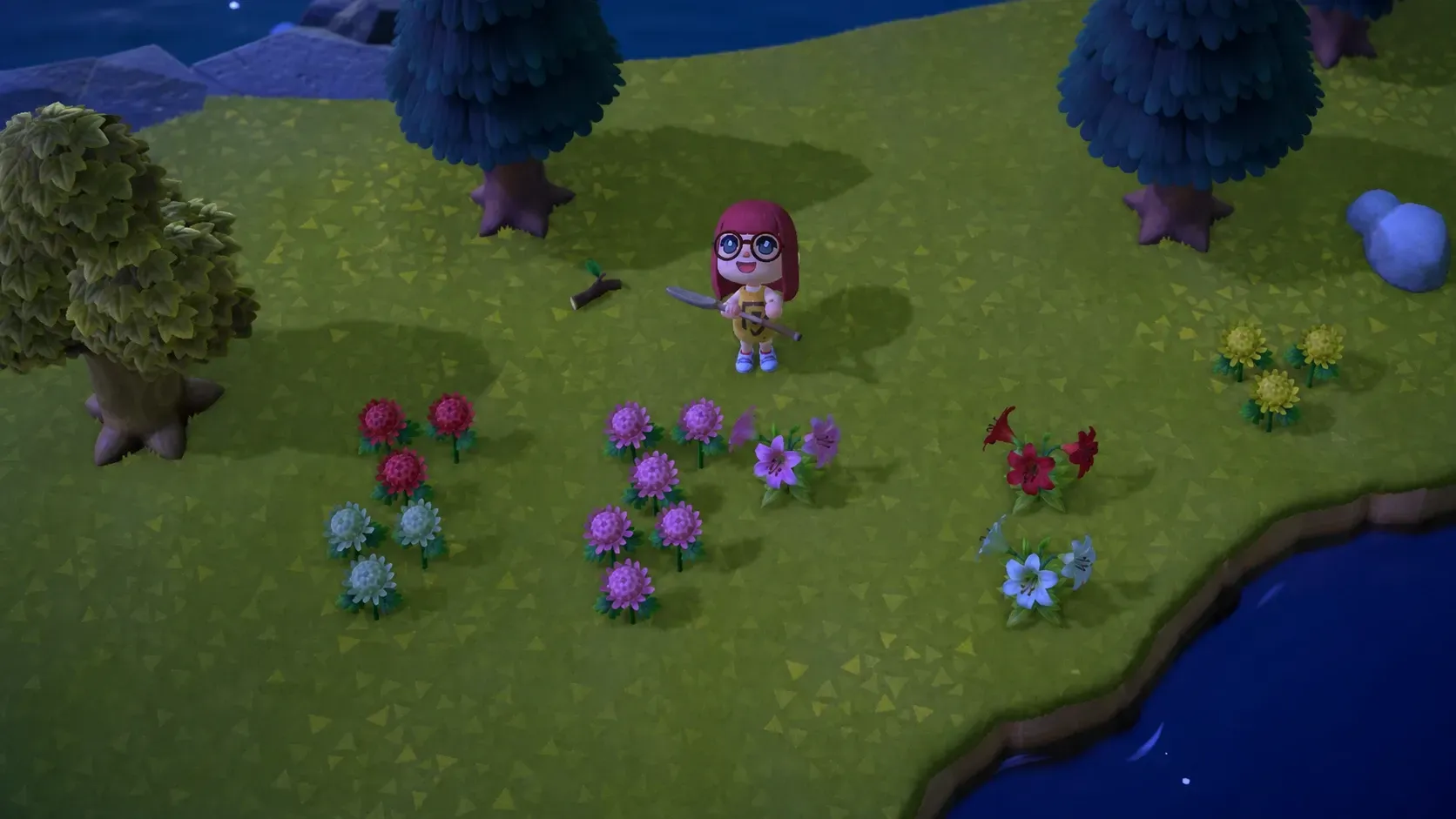
Color alone does not tell you what a flower will produce. Each plant carries hidden genes that control both its color and the colors of its children. Every species has three genes, except roses, which have four. Two flowers that look identical can hold completely different genetics and breed into very different offspring.
This is why starting material matters so much. Flowers bought as seed bags from Nook’s Cranny or Leif, your island’s native flowers, and flowers from Nook Miles Ticket islands all share the same reliable base genetics. The risk comes from flowers that have already bred on your island. They may look the same color but carry the wrong genes for the hybrid you want. For any complex breeding chain, begin from seed bags so bad genes never enter the line. Save native or mystery-island hybrids for cases where you already know their genetics fit the next step.
Tip: Avoid any breeding plan that relies only on color matching. The same color can hide several gene combinations, which is the most common reason results differ from what a chart promises.
Breeding rules, spacing, and the locking mechanic
Breeding produces a child from two parent flowers of the same species. Their genes mix at random, so the offspring can match the parents or come out a new color. A few deterministic rules govern how this plays out each morning.
- Flowers count as touching even diagonally. Any two flowers inside a shared 3×3 area can pair.
- One pair makes at most one offspring per day. After a flower breeds, it cannot reproduce again that day.
- Flowers always try to breed before they clone. If an eligible partner is nearby, they pair instead of duplicating.
- Offspring spawn in a free tile within one space of a parent, including diagonals. If every surrounding tile is occupied, nothing spawns.
The key trap is the locking mechanic. The game picks flowers in a random order, then picks a random available partner. Once two flowers pair, both are locked for the day and cannot serve as a partner for anyone else. In a checkerboard or X-shaped layout, a single pair can lock out several neighboring flowers, and those stranded plants will simply clone themselves instead of producing a hybrid. That makes it hard to tell which new flower came from breeding and which is a duplicate.
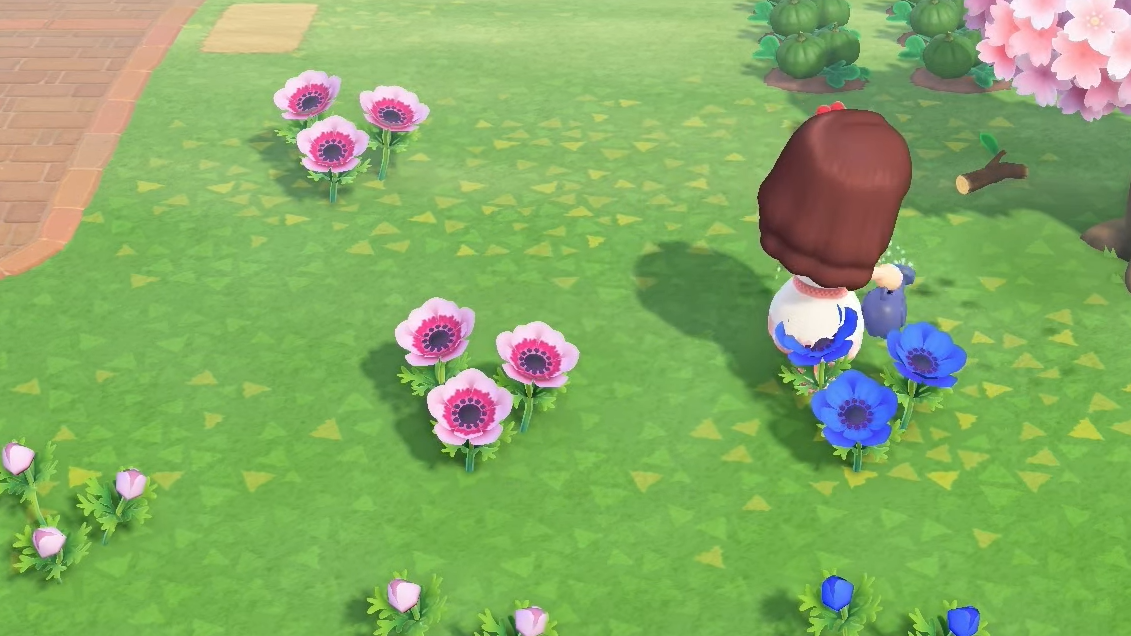
For reliable hybrids, avoid dense checkerboard grids. Pair flowers in clearly separated couples with empty tiles between pairs, so each parent always has its intended partner and a free tile to spawn into. When both parents are the same color, a tight pairing works well. When parents are two different colors, keep each color line organized so you can read the results.
Cloning your rarest flowers
Cloning is what happens when a flower is selected to reproduce but has no valid partner, either because it is isolated or because nearby same-species flowers are already locked. The result is an exact copy with identical genetics. There is no limit to how many new flowers can grow in a single day.
This is the safe way to multiply a hard-won hybrid. Plant the flower you want to duplicate alone, with no other flowers of its species in range, then water it daily. Any offspring it produces will be a genetic clone rather than a random mix, so you preserve the exact genes needed for further breeding.
Confirmed hybrid combinations
The combinations below produce specific hybrids when you use parents with the listed gene codes. Starting from seed-bag stock is what makes these odds hold true.
| Hybrid | Parents | Chance |
|---|---|---|
| Pink Rose | Red Rose × Red Rose | 25% |
| Blue Rose | Red Rose (1110) × Red Rose (1110) | 1.56% |
| Pink Tulip | Red Tulip (201) × White Tulip (002) | — |
| Orange Lily | Red Lily (201) × Yellow Lily (020) | 50% |
| Blue Hyacinth | White Hyacinth (001) × White Hyacinth (001) | 25% |
| Red Windflower | Red Windflower (200) × Blue Windflower (002) | 100% |
You will know breeding worked when a fully formed new plant appears in a tile next to a parent the next morning, often in a different color. If nothing spawns repeatedly, the usual causes are flowers still at the sprout or stem stage, no free adjacent tile for the offspring, parents locked by an earlier pairing, or parents that carry the wrong genes despite matching in color. Fixing the spacing and starting from seed bags resolves nearly every stalled garden.