
Anime Expeditions is a brand-new anime-themed tower defense game on Roblox, and it has quickly grabbed attention as one of the most polished releases in the genre. Often described by the community as an “Anime Defenders replacement,” the game blends gacha-style unit summoning, deep unit customization, and classic wave-based tower defense into a single, gorgeous package. If you are coming from games like Anime Defenders or other universal tower defense titles, you will feel right at home, but Anime Expeditions adds enough of its own twists to stand out.
In this guide, we will walk through everything the game has to offer, from its stunning lobby and summoning system to its units, traits, equipment, game modes, and raids.
A Stunning Lobby That Sets the Tone
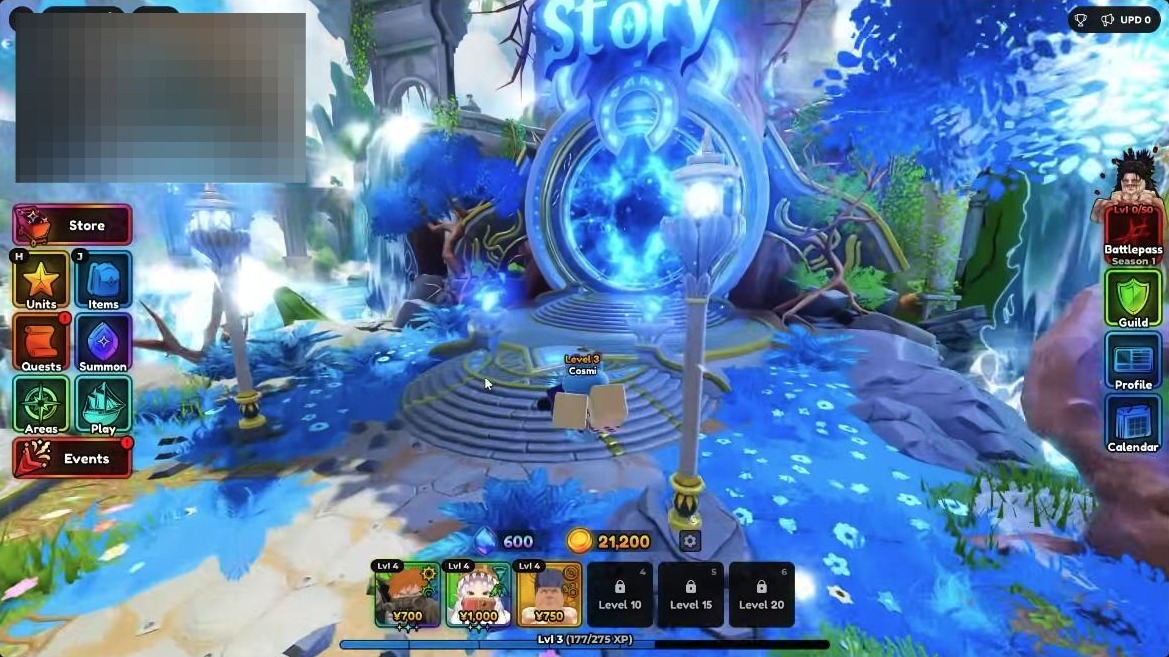
The very first thing you notice when you load into Anime Expeditions is just how beautiful the hub world is. The lobby is a sprawling, magical city filled with vibrant blue and gold trees, flowing water, and grand anime-styled architecture, all set to atmospheric music. It immediately signals that a lot of care went into the game’s presentation, which is not always a given for Roblox tower defense titles.
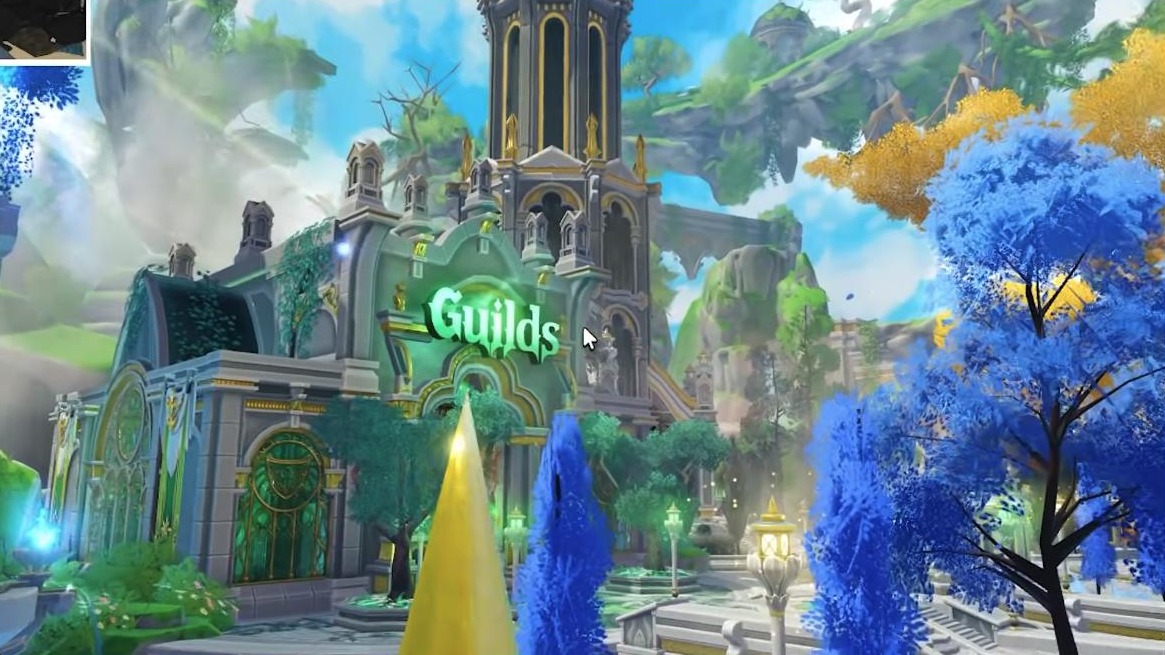
From the lobby you can access a full suite of features through clearly labeled portals and menu buttons. On the sidebar you will find the Store, Units, Items, Quests, Summon, Areas, Play, and Events menus, while the right side gives you quick access to your Battlepass (Season 1), Guild, Profile, and Calendar. Scattered around the world are interactive portals for Showcase, Summon, Upgrades, and a Tournament zone.
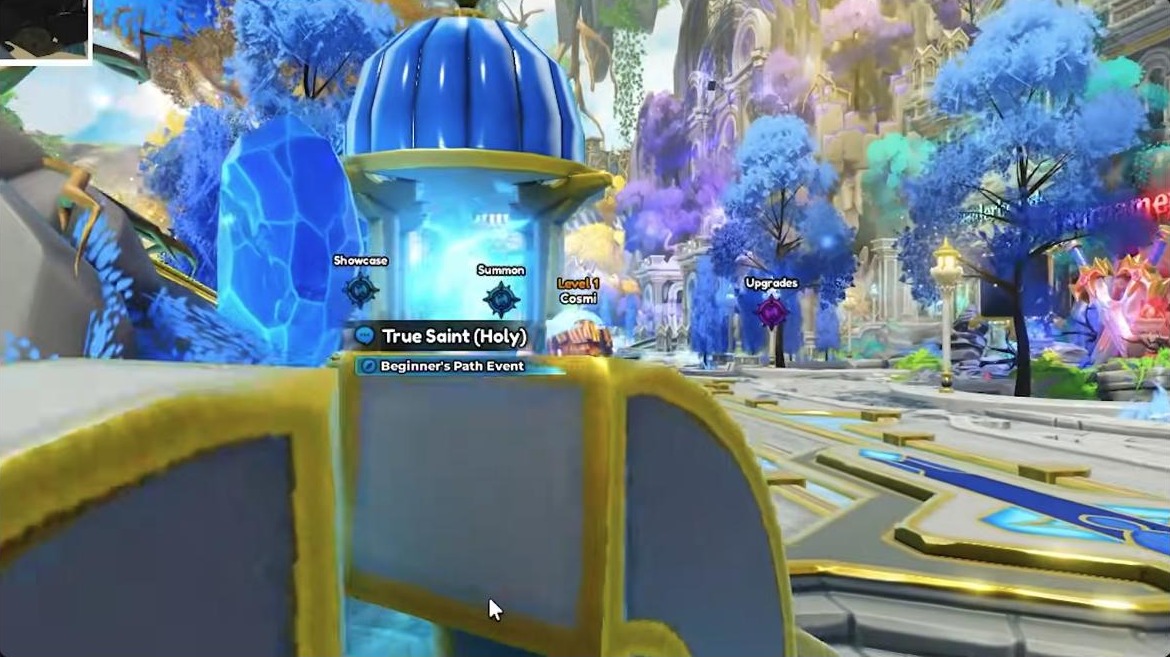
Beyond the core gameplay, the lobby ties together a surprising number of social and progression systems. Guilds and leaderboards encourage competition, raids and an exhibition mode give you tougher challenges to chase, and an AFK mode lets you keep earning rewards even when you step away. It feels less like a single mini-game and more like a full live-service experience.
Summoning: Banners, Mythics, and Pity
At the heart of Anime Expeditions is its gacha-style summoning system, and this is where the “Anime Defenders prime release” comparisons come from. Summons are split across multiple banners: a Beginner’s Banner aimed at new players, a Standard Banner, and a Mini Banner that features a single Mythic unit. The Beginner’s Banner shown below is a Starter Event packed with featured Mythic units to help you build a strong early roster.
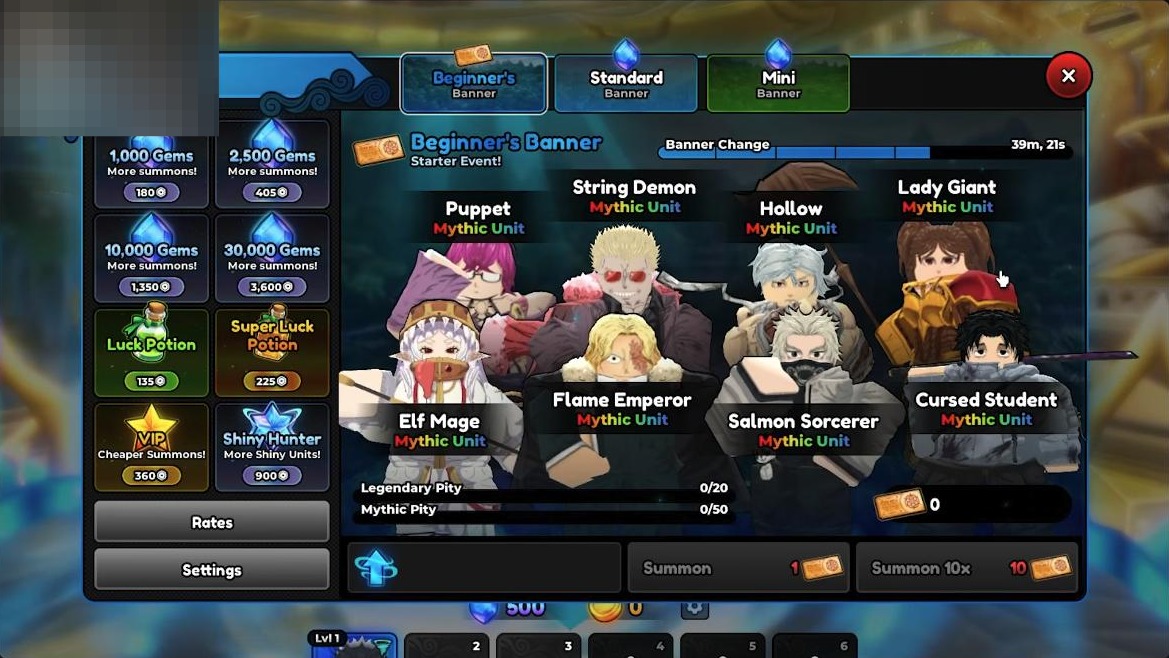
The summon screen makes the odds and economy easy to understand. Gems are the primary summoning currency, sold in bundles such as 1,000, 2,500, 10,000, and 30,000 gems, with optional Luck Potions, Super Luck Potions, VIP cheaper-summon perks, and a Shiny Hunter boost for chasing rare shiny variants. You can pull one at a time or use the Summon 10x option for bulk pulls, and a Rates button lets you check exact drop chances before committing.
| Gem Bundle | Purpose |
|---|---|
| 1,000 Gems | More summons |
| 2,500 Gems | More summons |
| 10,000 Gems | More summons |
| 30,000 Gems | More summons |
| Luck Potion / Super Luck Potion | Boost summon luck |
| VIP | Cheaper summons |
| Shiny Hunter | More shiny unit variants |
To keep things fair, the game uses a pity system. Both a Legendary Pity (0/20) and a Mythic Pity (0/50) track your pulls, guaranteeing a high-rarity unit once the counter fills. The featured Mythics on the starter banner include parody takes on popular anime characters such as Puppet, String Demon, Hollow, Lady Giant, Elf Mage, Flame Emperor, Salmon Sorcerer, and Cursed Student.
| Featured Beginner’s Banner Mythic Units |
|---|
| Puppet |
| String Demon |
| Hollow |
| Lady Giant |
| Elf Mage |
| Flame Emperor |
| Salmon Sorcerer |
| Cursed Student |
Units, Traits, and Stats
Every unit you summon comes with a rarity (such as Rare or Mythic) and a set of traits that dramatically affect its performance. Traits like Storm and Magical modify how a unit behaves on the battlefield, and units can reach an “Unleashed” or “Unbound” state once fully invested in. When you inspect a unit, the game shows a detailed stat card.
The key stats to watch are DMG (damage per hit), SPA (seconds per attack, essentially attack speed), and RNG (range), each given a letter grade so you can quickly judge a unit’s strengths and weaknesses. A combined DPS figure summarizes overall output. For example, a fully upgraded Mythic Elf Mage (Unleashed) can hit around 14,000 damage per attack with a roughly 8.5 second cooldown and an Arcane Magic overcharge ability, putting its sustained DPS near 500 per second.
| Stat | Full Name | What It Means |
|---|---|---|
| DMG | Damage | Damage dealt per hit |
| SPA | Seconds Per Attack | Attack cooldown — lower is faster |
| RNG | Range | How far the unit can target enemies |
| DPS | Damage Per Second | Overall sustained damage output |
During a match you also control how each unit operates. You can set a targeting Priority (such as First, to focus the enemy closest to the goal), Upgrade a unit through multiple levels until it is Maxed, or Sell it to recover some currency. This on-the-fly management is what separates a clutch win from a frustrating loss.
Equipment, Skins, and Customization
Anime Expeditions leans heavily into customization, which gives it a lot of long-term depth. Units have equipment slots for gear like swords and kunai, plus relic-style items such as the Promise Ring that grant passive bonuses. You can also slot in farm units like Ramen Guy and equip money-boosting trays that increase the gold you earn during a stage.
On the cosmetic side, units feature skin slots, accessory slots, and even an adjustable AoE color so you can personalize how your attacks look on the field. There are manga skins, maid skins, and player skins that let you place a version of your own avatar as a tower. Combined with the evolving and “unleashed” mechanics, you can genuinely build and theme your favorite units rather than just collecting them.
Core Tower Defense Gameplay
Once you head into a stage, Anime Expeditions plays like a polished, modern tower defense game. You start with a set amount of Yen and place units along a fixed path to stop waves of enemies from reaching the end. The in-match HUD keeps the essentials front and center: your health, the current wave (for example 7 of 15), the number of enemies remaining, and a timer.
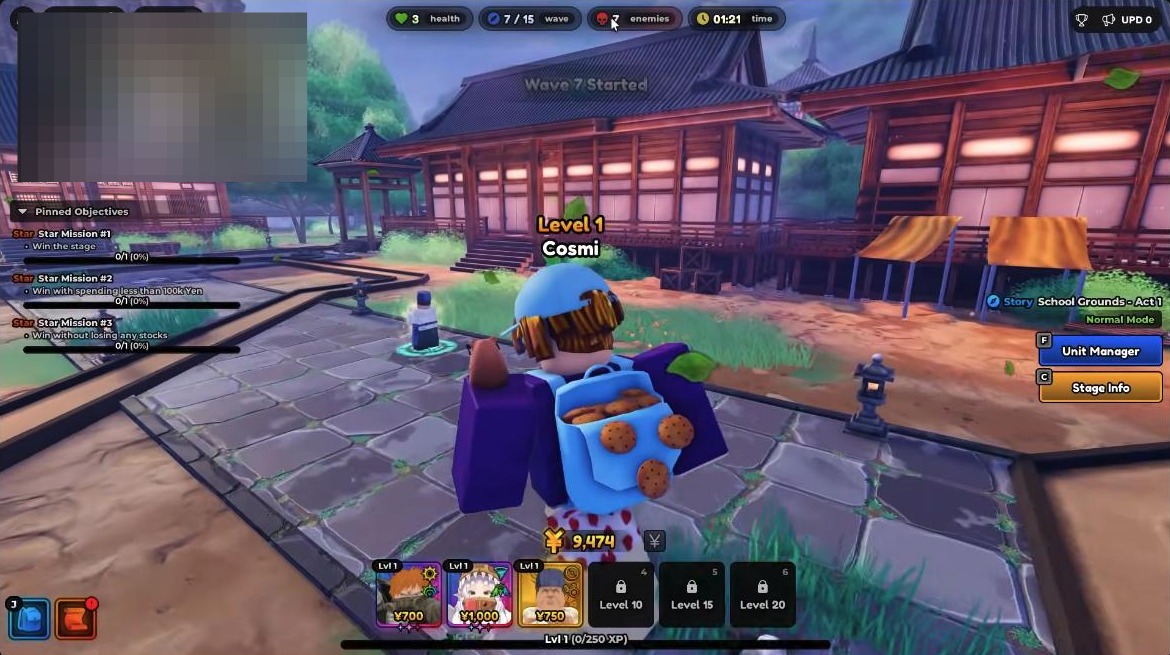
Each stage also comes with optional Star Missions that add replay value and challenge. Typical objectives include winning the stage, winning while spending less than a set amount of Yen, and winning without losing any stocks (health). Clearing these earns extra rewards and pushes you to optimize your unit placement and economy rather than just brute-forcing every level. Handy Unit Manager and Stage Info buttons let you tweak your loadout and review the map at any time.
Areas, Story Mode, and Secret Units
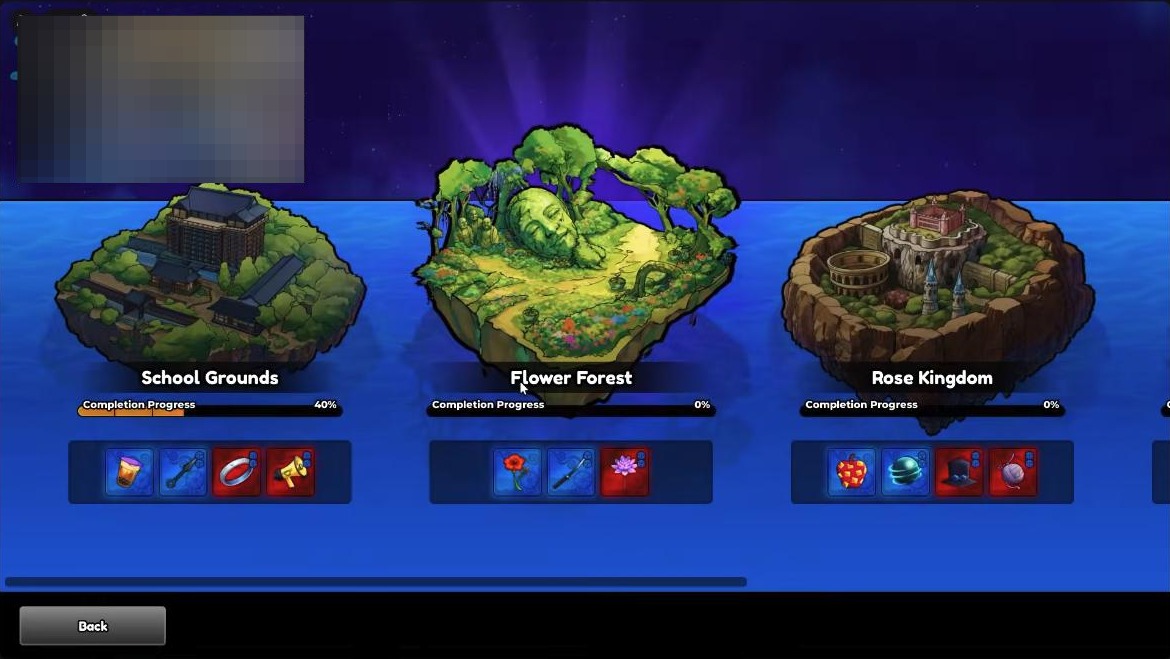
Content is organized into distinct Areas, each presented as a floating island with its own theme, completion percentage, and reward track. Early areas include School Grounds, Flower Forest, and Rose Kingdom, and you progress through them to unlock rewards and harder content.
Beyond the standard areas, there is a dedicated Story mode (also referred to as the Spirit mode) that is broken into three acts. This is where a lot of the game’s most exciting rewards live, including the chance to earn secret units. One notable example is unlocking a Bleach-inspired Ichigo unit by progressing through the story acts and collecting items like a Shinigami sword.
Raids and Endgame Content
For higher-level players, Raids provide the cooperative endgame challenge. Raids carry a level requirement (around level 25), so you will need to grind out some experience before they open up. The good news is that leveling is quick thanks to generous XP and Battlepass multipliers during stages, sometimes stacking up to 15x Battlepass EXP. Once you qualify, you can invite friends and tackle raids together for some of the best loot in the game.
Is Anime Expeditions Worth Playing?
If you enjoy anime gacha games or tower defense, Anime Expeditions is absolutely worth checking out. It nails the fundamentals with satisfying summoning, deep unit building, and challenging stages, while wrapping everything in one of the best-looking lobbies in the genre. The variety of systems, including guilds, raids, story acts, secret units, equipment, and cosmetics, means there is a lot to keep you busy well past the early game.
As with any new release, expect the meta, banners, and balance to shift over time, so it is a great moment to jump in early, build a strong roster, and grow with the game.