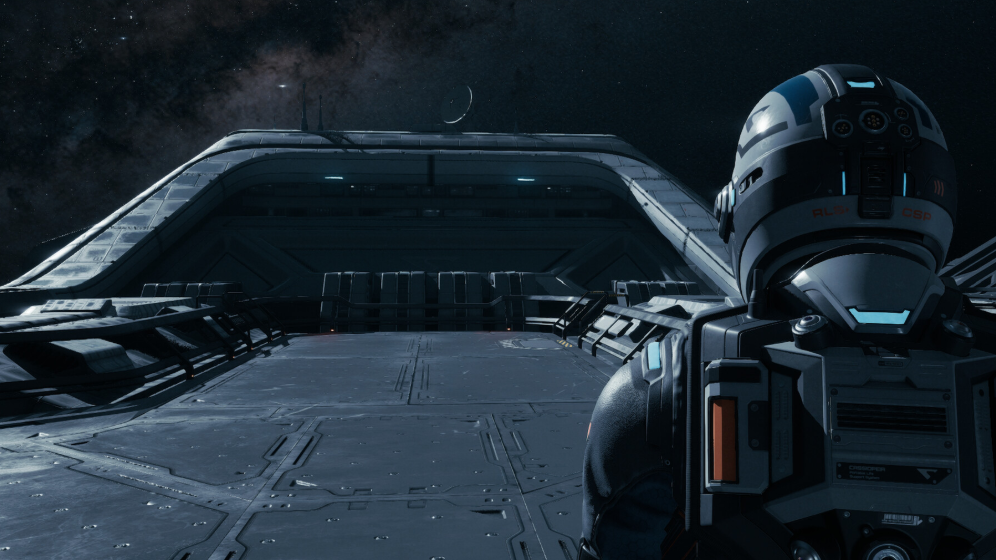
Directive 8020 is the latest entry in Supermassive Games’ Dark Pictures Anthology, trading earthbound horror for a deep-space survival nightmare aboard the colony ship Cassiopeia. The story follows a small crew of astronauts sent to scout a distant exoplanet as humanity’s last hope, only to crash-land alongside an alien organism that can perfectly imitate any person it touches.
Quick answer: Earth is dying, so the Cassiopeia is sent 12 light-years to Tau Ceti f. The ship is breached by a shapeshifting alien mimic, the crew crash-lands on the planet, and players guide five characters through paranoia, stealth, and branching choices to decide who survives and whether humanity gets a future.
Setting and premise
The narrative is set in a future where Earth has become unlivable. A corporation called Corinth funds and dispatches the Cassiopeia, a colony ship carrying a skeleton crew and a much larger population in hyper-sleep. Their destination is Tau Ceti f, a candidate exoplanet roughly 12 light-years from home, framed as humanity’s only realistic chance of survival.
The opening hours establish a routine: long shifts, sterile corridors, and sleep technicians monitoring the hibernating colonists. That calm shatters when a meteorite strikes the hull, tearing a crack through the ship and depositing an alien lifeform that begins working its way through the vessel’s systems and the crew themselves.

The Cassiopeia crew
Players directly control five members of the Cassiopeia’s awake crew, with other characters appearing in supporting roles. The events are narrated from a perspective looking back at the mission, with senior mission officer Laura Eisele framing the recollection.
| Character | Role | Voice/Actor |
|---|---|---|
| Brianna Young | Pilot of the Cassiopeia, daughter of esteemed astronaut Bill Young | Lashana Lynch |
| Nolan Stafford | Mission commander and veteran explorer, first man on Mars | Danny Sapani |
| Laura Eisele | Lead mission designer and architect of the Cassiopeia | Lotte Verbeek |
| Dr. Samantha Cooper | Medical officer, sole survivor of a failed Mars mission | Anna Leong Brophy |
| Josef Cernan | Engineer skilled with both hardware and people | Philip Arditti |
| Zoe Anders | Science officer with an unclear background | Kathryn Wilder |
| Tomas Carter | Sleep technician, present during the opening incident | Frank Blake |
| Pari Simms | Sleep technician, partnered with Carter at the start | Anneika Rose |
The crew is bound by more than work. Stafford watches over Brianna as a father figure, thanks to his friendship with her late father. Cooper and Anders share a close bond. These pre-existing relationships matter when paranoia begins to fracture the group.
The alien threat
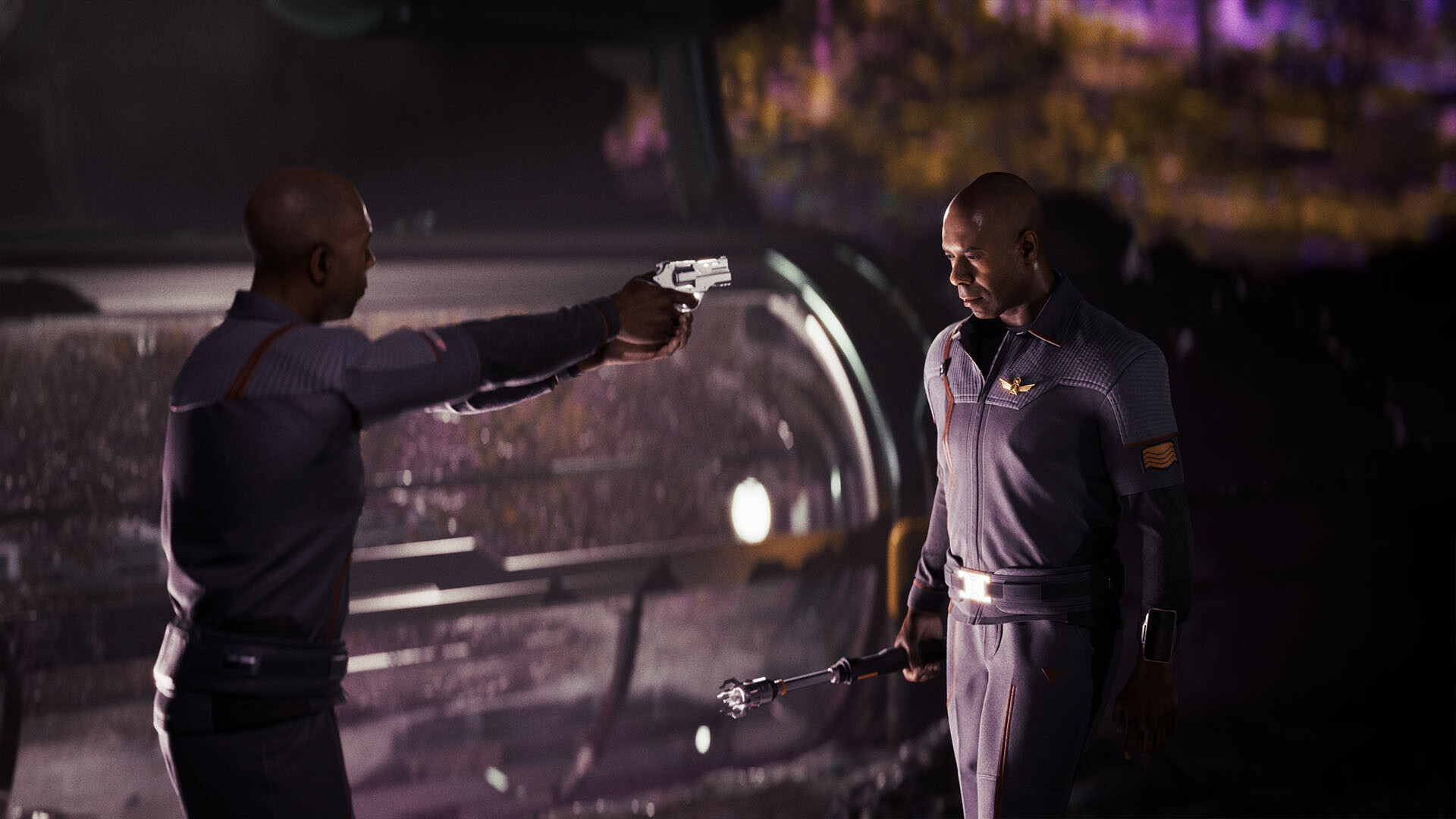
The antagonist is a shapeshifting organism that arrives with the meteorite strike. It is described as a mass of pink, fleshy matter capable of perfectly copying a human host, including voice, mannerisms, and memory cues. The inspiration is clearly drawn from John Carpenter’s The Thing, with the isolated spaceship setting evoking Alien.
The crew has no firearms. Survival comes down to evasion, stealth, and improvised tools such as a wedge that doubles as a last-resort weapon. The mimic mechanic means trust itself becomes a survival resource. Identifying a copy requires paying attention to small tells in speech and behaviour rather than confronting the creature directly.
How the story unfolds
The narrative is split across eight episodes and runs roughly ten hours on a first playthrough. It does not move strictly forward in time. Scenes flash ahead to glimpses of what awaits the crew, then return to the events that caused them, gradually filling in the gaps.
The prologue places Pari Simms and Tomas Carter on shift when the hull is breached. After that opening, the rest of the crew is introduced, and the perspective rotates between the five playable leads. The order in which you control them is fixed, but whether they reach the next scene alive depends on your choices and your reflexes during action sequences.
A corporate conspiracy thread runs alongside the survival story. Hints accumulate that Corinth has not been straightforward about the mission’s true purpose, and a dedicated “conspiracy” collectible category fills in those motives as you explore. The crew eventually faces a final dilemma where saving themselves may mean putting everyone on Earth at risk.
Choice, Destiny, and Turning Points
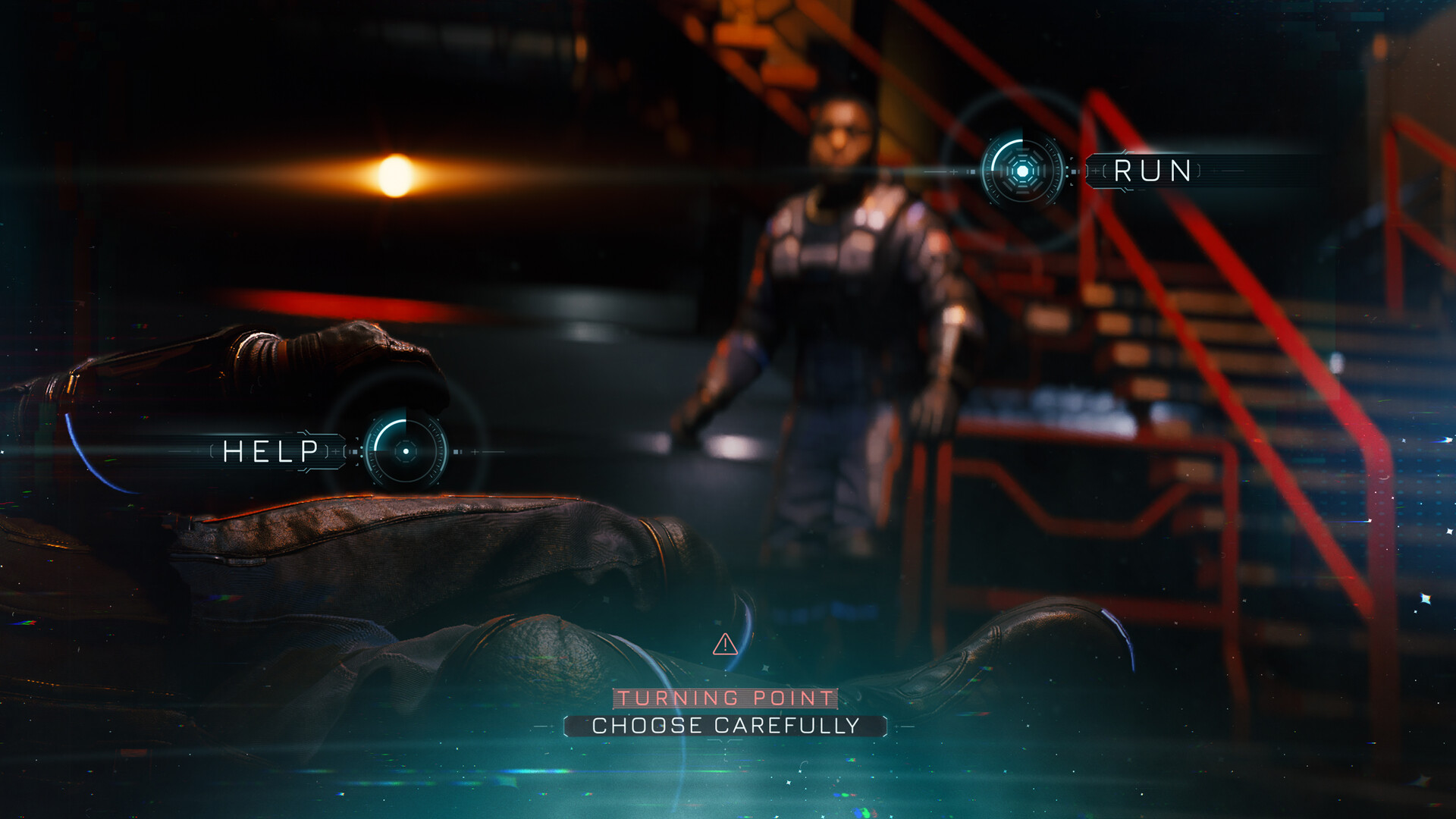
Decisions in Directive 8020 do more than gate a single life-or-death moment. Each playable character accumulates personality traits through dialogue and action choices. Push those traits far enough, and the new Destiny system locks in one of two mutually exclusive endings for that character, based on who they have become across the story.
The Turning Points system is the headline structural addition. It opens a visual decision tree showing the branches you have taken and the ones you have missed, and lets you rewind to key moments to try a different path. Two play modes shape how this feels:
| Mode | How it changes the story |
|---|---|
| Explorer | Turning Points are available. You can rewind to earlier scenes and reshape outcomes without restarting. |
| Survivor | Turning Points are disabled. Every choice is permanent and every death sticks for that playthrough. |
Themes and tone
Paranoia is the central theme. Because the mimic can wear any face, meeting a crewmate alone in a darkened corridor becomes a threat rather than a relief. The story leans on the collapse of trust within a small, trained group that no longer knows who is human.
Layered on top of that is corporate distrust. The crew works for a company that controls the mission’s information flow, and clues about Corinth’s real intentions surface through environmental storytelling, found messages, and the wrist-worn communicator that lets characters check in with each other.

Endings and replay
Launch coverage points to roughly five substantial ending states, shaped by who survives, which destinies each character locks in, and how the conspiracy thread resolves. Across all paths, the game tracks 44 unique character death scenes that can be witnessed if every branch is explored.
Replays are built around the Turning Points tree. Once the credits roll, you can return to specific decisions, swap your answer, and follow a fresh branch without starting over. Survivor mode exists for players who want one committed run with no rewinds.
Connection to the Dark Pictures Anthology
Directive 8020 was originally pitched as the start of a second season of The Dark Pictures Anthology, teased at the end of The Devil in Me. During an extended development cycle, the project moved to Unreal Engine 5 and stepped back from overt anthology framing, presenting itself as a more standalone sci-fi entry. Lore collectibles still tie the world to the wider anthology timeline, particularly around what happened on Earth between the previous game and the events leading up to the Cassiopeia mission.
Directive 8020 is available on PlayStation 5, Xbox Series X|S, and PC via Steam, with single-player, local Movie Night mode for up to five players, and online co-op planned as a free post-launch update. Whether the crew makes it home, whether Earth gets its second chance, and which version of each character emerges from the Cassiopeia is left in the hands of the player.