Apple’s rebuilt assistant, Siri AI, leans on a deal with Google, and that single fact has led many people to conclude the new Siri is simply Gemini wearing an Apple skin. The reality is more layered. Gemini sits at the foundation of most of Apple’s new models, but the assistant you talk to on an iPhone is built, retrained, and run by Apple, with only the heaviest cloud work touching Google’s infrastructure.
Quick answer: Four of Apple’s five new Foundation Models run on Apple Silicon and were refined using outputs from Gemini frontier models, not deployed as Gemini itself. Only the largest model, AFM 3 Cloud Pro, runs on Google Cloud with Nvidia GPUs, still wrapped in Apple’s Private Cloud Compute. The Siri app, voice, knowledge base, and on-device experience contain none of Google’s Assistant or search.
Why people think Siri AI is just Gemini
The assumption is understandable. For months before WWDC 2026, the expectation was that Apple had given up on its own models and handed Siri to Google. A deliberately vague joint statement in January, confirming that Apple Foundation Models would be based on Google’s technology, did little to dispel that read. So when the new Siri arrived, parts of the Apple community quickly decided it was a reskinned, slightly older Gemini.
During the keynote itself, Gemini was barely named. The clearer explanation came afterward, in a private technical session where Craig Federighi and the Apple executives running Siri and AI walked through the relationship in detail. The picture that emerged is one of careful, precise language, where what each company avoids saying matters as much as what it confirms.
Apple’s five third-generation Foundation Models
A Foundation Model is a large AI model trained on a huge amount of data, then used in full or in part to power specific features inside apps. Apple scales its models to different sizes so they can run in different places, from a phone in your pocket to a server with hundreds of gigabytes of memory. The current lineup, documented on Apple’s Machine Learning research site, has five third-generation models split between on-device and cloud.
| Model | Runs on | What it does |
|---|---|---|
| AFM 3 Core | On device | 3-billion-parameter dense model for everyday on-device tasks |
| AFM 3 Core Advanced | On device (newest hardware) | 20-billion-parameter sparse, multimodal model activating 1–4 billion parameters per request; powers expressive voices and higher-accuracy dictation |
| AFM 3 Cloud | Apple Silicon servers | Server model tuned for speed and efficiency; handles most cloud requests |
| AFM 3 Cloud (Image) | Apple Silicon servers | Image generation and editing for Image Playground, Genmoji, Clean Up, Extend, and Reframe |
| AFM 3 Cloud Pro | Google Cloud with Nvidia GPUs | Most capable model; handles agentic tool use and complex reasoning |
AFM 3 Core Advanced uses a sparse architecture, meaning it is broken into chunks that each specialize in a subject. Only the pieces needed for a request get loaded. Ask how tall the Burj Khalifa is and the math portion stays idle; follow up with how many Burj Khalifas fit between Earth and the Moon, and the math chunk activates. This model needs an iPhone 17 Pro or iPhone Air, a Mac with an M3 chip and at least 12GB of RAM, or an iPad with an M4.
Where each model actually runs
The first four models, both on-device models and the first two cloud models, run on Apple Silicon. The cloud versions use Apple’s Private Cloud Compute, an architecture with code open to researchers so that only the data needed to complete a request is sent. Once the request is done, that data is deleted and never retained.
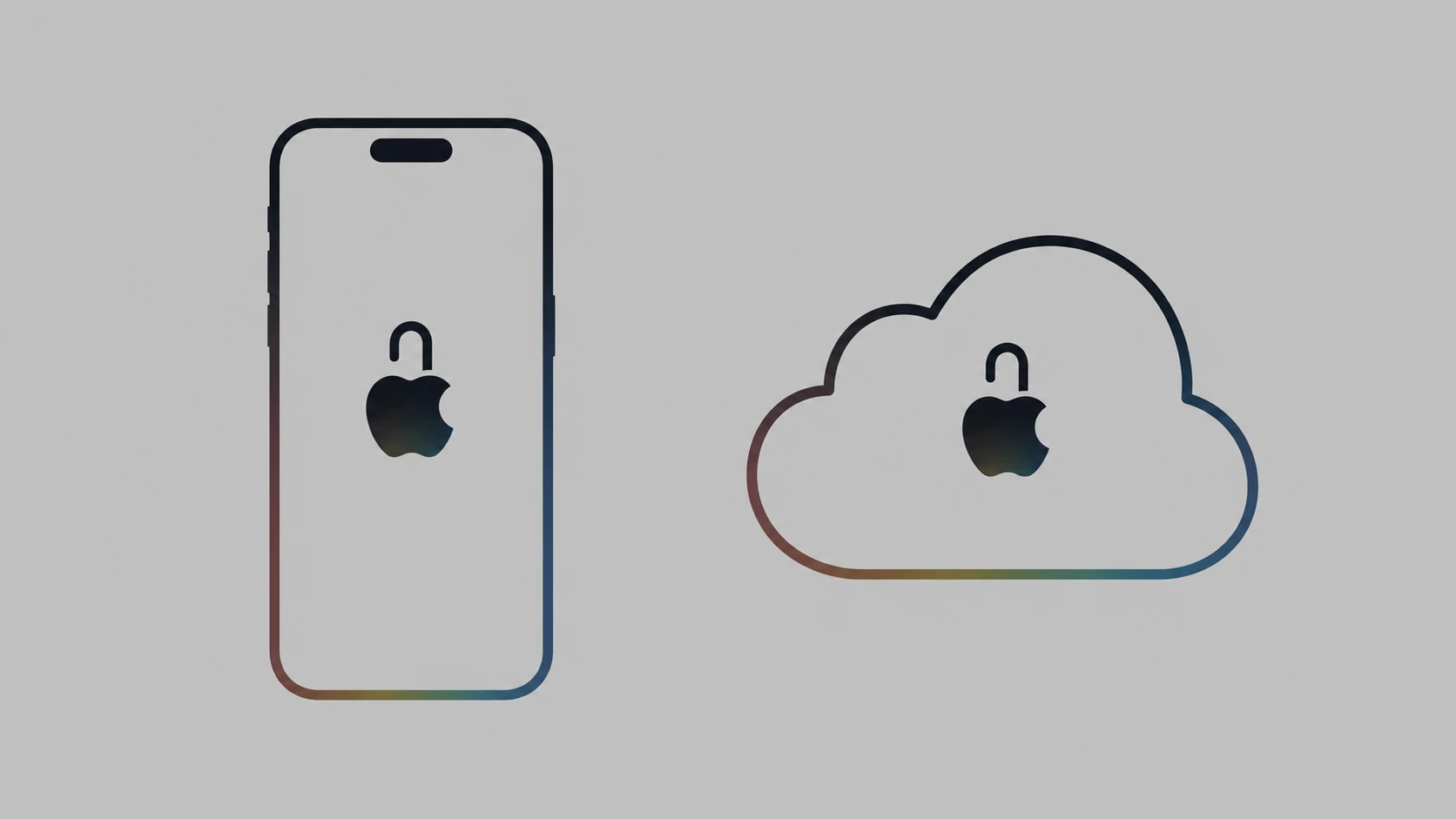
The exception is AFM 3 Cloud Pro, the largest model, which needs more power than Apple’s current Silicon-based servers can deliver. It runs on Google’s cloud infrastructure with Nvidia GPUs. Even there, Apple extends its own Private Cloud Compute, so the core guarantees still apply: stateless computation, no privileged runtime access, non-targetability, and verifiable transparency. The technical details of stretching PCC onto Google’s hardware are published on Apple’s Security Research site.
How Siri AI routes your request
When you ask Siri something, it is first interpreted, either from typed text or through a voice recognition model. A component called the System Orchestrator then turns your words into an invisible internal prompt and decides which model or models should handle it.
Simple jobs like turning on a light, setting a timer, or reading the weather stay on device. If you ask Siri to write a few paragraphs, the orchestrator sends the prompt up to Private Cloud Compute and includes only the data needed to finish the task. Drafting an email about a potluck, for instance, might pull relevant text messages from the on-device search index and, if useful, a screenshot of what is on screen. Once the result returns to your device, the request and any attached data are deleted.
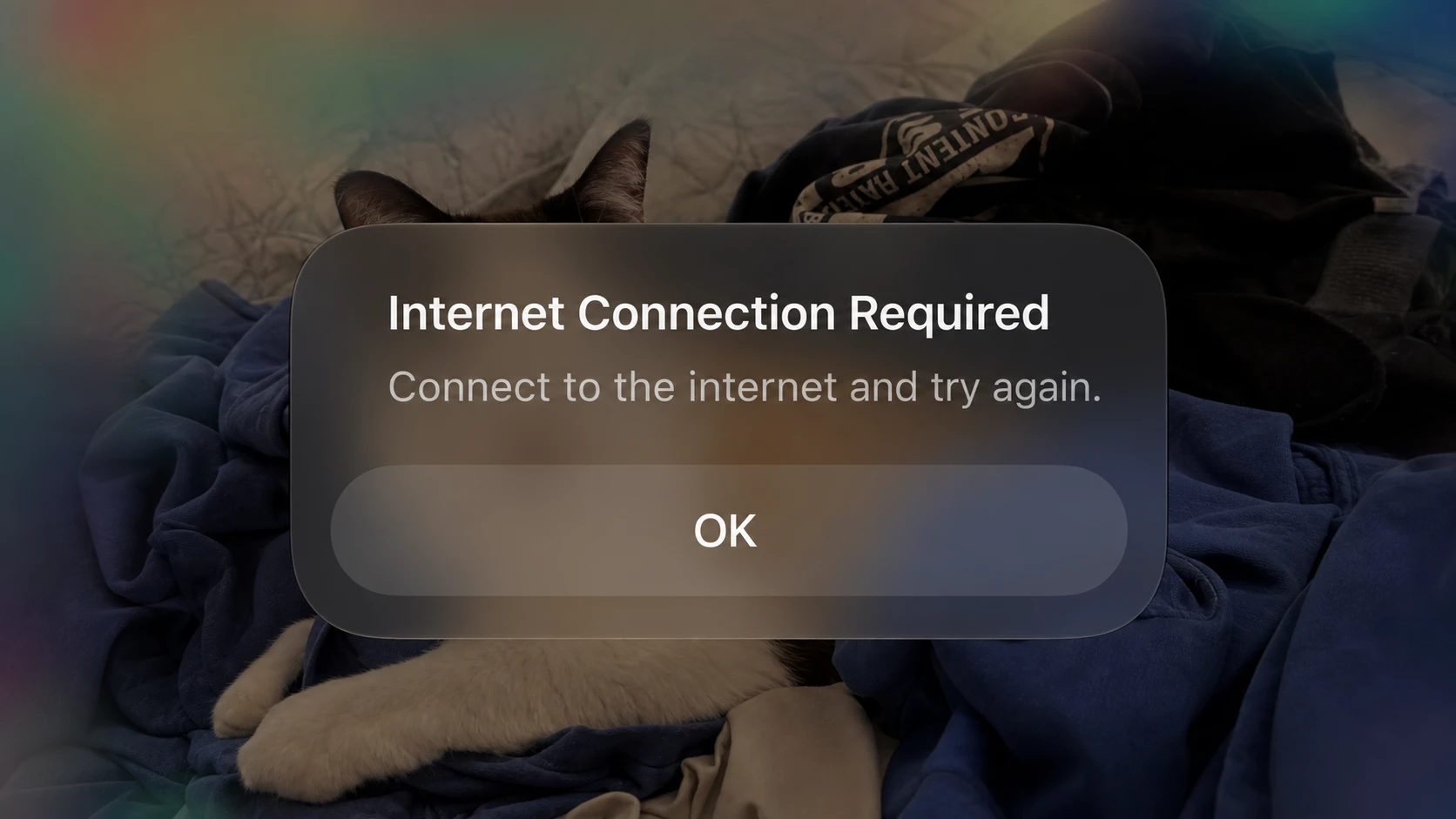
This is why some of the new AI image tools looked slow in the iOS 27 demos. Images and data must be uploaded and processed in the cloud first. Switch on Airplane mode and disconnect from Wi-Fi, and the new AI image tools stop working entirely, because they depend on the cloud path.
Where Gemini actually fits in
Federighi was blunt about what Siri AI is not. In his words from the post-keynote session:
Of course, we don’t have the Gemini app as our app. In fact, none of that client code is part of how we run on iOS. For these models, we use none of the models that Google deploys to their customers, nor do we use the infrastructure and means by which they deploy models to their customers. And then, when it comes to the knowledge base, we of course don’t use Google Search or anything like that as the foundation of our system. So I hope that’s clear. The amount of the Google Assistant we use is none.
Read carefully, those statements are about the client experience, the servers Google uses for its own customers, and the knowledge base. Apple built its own World Knowledge Service to power Siri’s factual answers, separate from Google Search. What Federighi did not claim is that Apple’s models are unrelated to Gemini’s code. He said the opposite. The four models built for Apple Silicon are, in his description, “trained using proprietary data with reinforcement learning and refined using outputs from Gemini frontier models.”
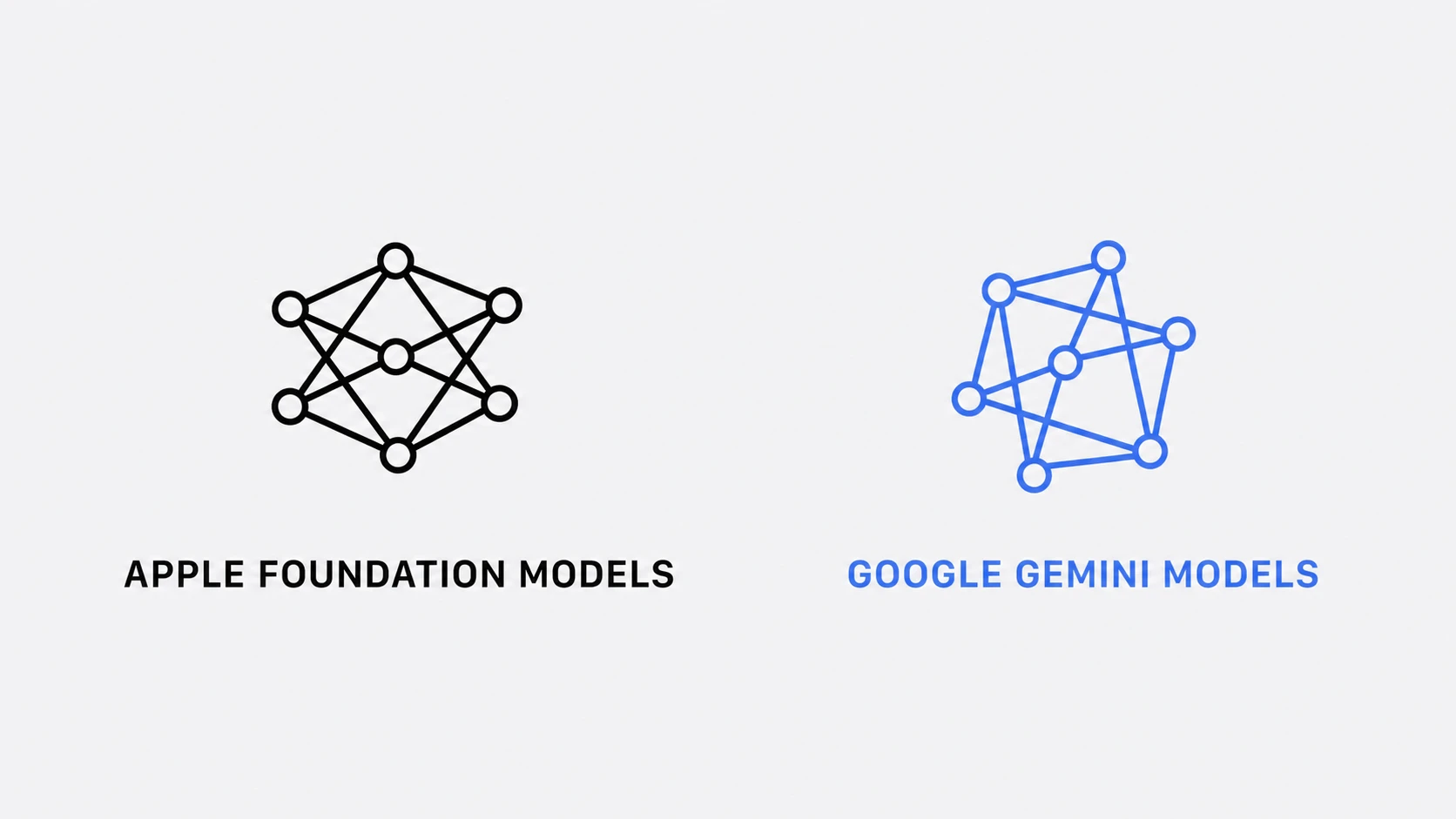
In practice, Apple appears to have started with Gemini’s foundation, rebuilt and resized the models for Apple Silicon, then retrained them with its own data, weights, and guardrails. Notably, Federighi left AFM 3 Cloud Pro out of that “refined using Gemini outputs” statement, which suggests the largest model is trained or distinguished differently, possibly drawing on both Apple and Google data.
A useful comparison is how Apple built macOS. Every modern Apple operating system traces back to a Unix-derived core called Darwin, yet macOS does not behave like, or share features with, generic Unix. The foundation was a starting point, not the finished product. Siri AI follows the same pattern. You should not expect the same behavior, capabilities, or output from Siri AI on an iPhone that you would get from Gemini on a Pixel.
The short version of Gemini’s role
| Part of Siri AI | Gemini involved? |
|---|---|
| Siri app, voice, and on-screen experience | No |
| Knowledge base for factual answers | No (Apple’s own World Knowledge Service) |
| Servers Google uses for its own customers | No |
| Training of the four Apple Silicon models | Yes, refined using outputs from Gemini frontier models |
| AFM 3 Cloud Pro compute | Runs on Google Cloud with Nvidia GPUs, inside Apple’s Private Cloud Compute |
So the verdict is neither “Siri AI is Gemini” nor “Gemini has nothing to do with it.” Gemini shaped the underlying models and provides the raw horsepower for the most demanding cloud requests, while the assistant, its knowledge, its privacy layer, and most of its day-to-day processing are Apple’s own. For the person holding the phone, Siri AI is an Apple product that happens to stand on a Google-influenced foundation.