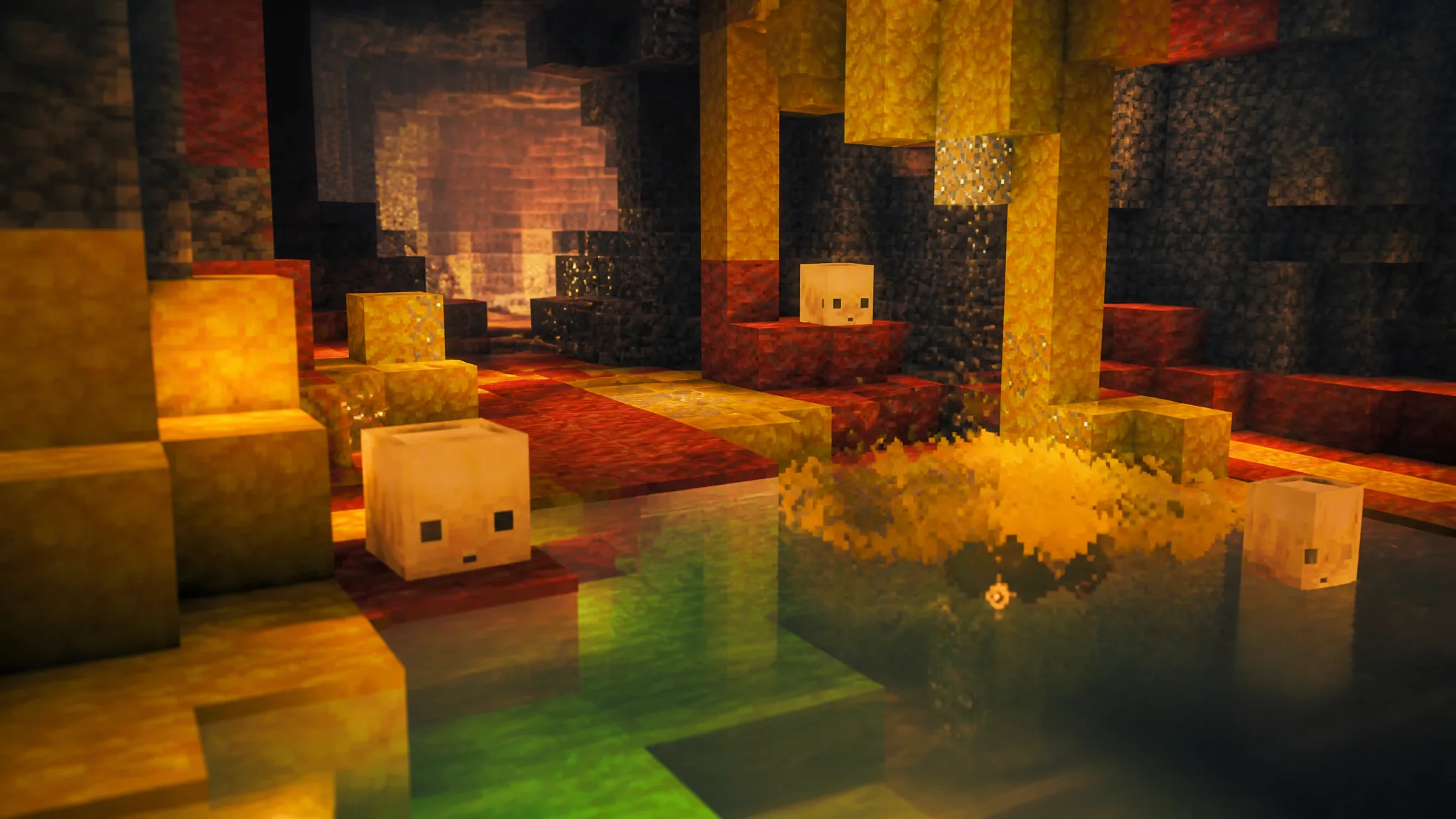
Sulfur caves are the bright yellow, deep red underground biome added in Minecraft’s Chaos Cubed game drop. They are filled with sulfur and cinnabar blocks, bubbling sulfur pools that emit toxic gas, and the new sulfur cube mob that spawns nowhere else. Like every biome, they generate randomly, so there is no fixed coordinate, but there are clear surface signals that lead you straight to one.
Quick answer: Scan the Overworld surface for a sulfur spring, a bubbling yellowish pool that gives off gas, then dig straight down beneath it to reach the cave. If cheats are enabled, type /locate biome minecraft:sulfur_caves in chat to get the nearest coordinates instantly.
Where sulfur caves generate
Sulfur caves form underground at the same depth as lush caves and dripstone caves, so you do not need to dig to bedrock. They tend to be smaller and more broken up than other cave biomes, which is why you can pass right by one if you only sink a single shaft. The biome appears at low weirdness values, meaning it commonly borders other cave types and usually sits beneath dry surface terrain such as mountains, plateaus, deserts, and badlands. It can also generate under the ocean, but it never spawns next to rivers.
In rare cases the biome leaks onto the surface, bleeding out of cave openings or tall coastal cliffs, and it can even generate above ground inside mountain rings. When that happens, the yellow blocks are visible without digging at all.
Method 1: Follow a sulfur spring on the surface
This is the fastest reliable approach. A sulfur spring always generates directly above a sulfur cave, so finding one on the surface tells you a cave is waiting below.
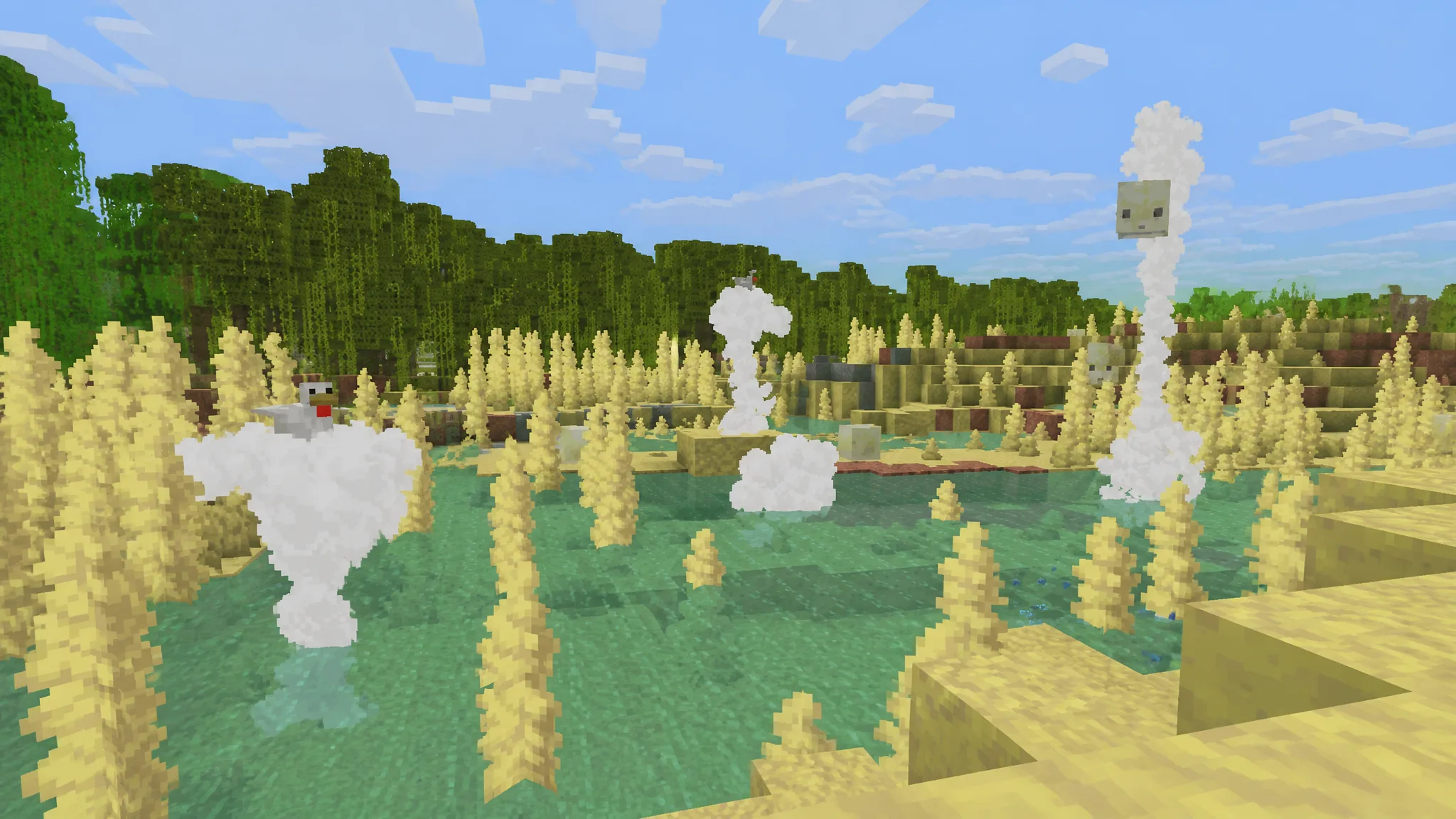
Note: Do not stand in the spring water while mining underneath it. The gas from potent sulfur below the pool inflicts the Nausea effect on contact, which warps your vision and makes the dig harder.
Method 2: Explore caves and mine outward
If no springs are nearby, you can reach a sulfur cave by exploring normally. Because the biome generates as pockets within the wider underground, the same way lush caves and dripstone caves do, you can stumble into one while caving.
Method 3: Use the locate biome command
With cheats enabled or operator permissions on a server, you can skip the search entirely and pull the nearest coordinates from chat.
/locate biome minecraft:sulfur_cavesThe game returns the position of the closest sulfur cave biome. From there you can walk to it or teleport with the /tp command. On Java Edition, you can also open the debug screen with F3 and watch the biome name update in real time as you move, which confirms when you have crossed into the cave even before the walls turn yellow.
How to confirm you are inside a sulfur cave
The biome is unmistakable once you are in it. Several signs confirm you reached the right place.
- Walls and pillars made of yellow sulfur and red cinnabar, often stretching from floor to ceiling.
- Sulfur pools with a distinctive acid-green water color that release gas and white bubble particles.
- Sulfur spikes growing from the ground and ceiling in patches of varying size.
- Sulfur cubes hopping around, which only spawn in this biome.
On Bedrock Edition the sky fog also takes on a green tint, another quick visual cue that you are in the right biome.
Blocks you will find inside
| Block | Where it appears | Notes |
|---|---|---|
| Sulfur | Main cave walls and pillars | Bright yellow; full set of stairs, slabs, walls, polished, chiseled, and bricks |
| Cinnabar | Layered with sulfur | Deep red; same full block set as sulfur |
| Potent sulfur | Bottom of sulfur springs and pools | Lighter, cleaner texture; releases gas that causes Nausea under water |
| Sulfur spikes | On top of sulfur terrain | Crystalline formations in varied patches |
Ores are scarce here because sulfur and cinnabar replace most of the stone and deepslate that would normally hold them. The trade-off is the two full decorative block families, which give builders a wide warm-toned palette.
The sulfur cube and other mobs
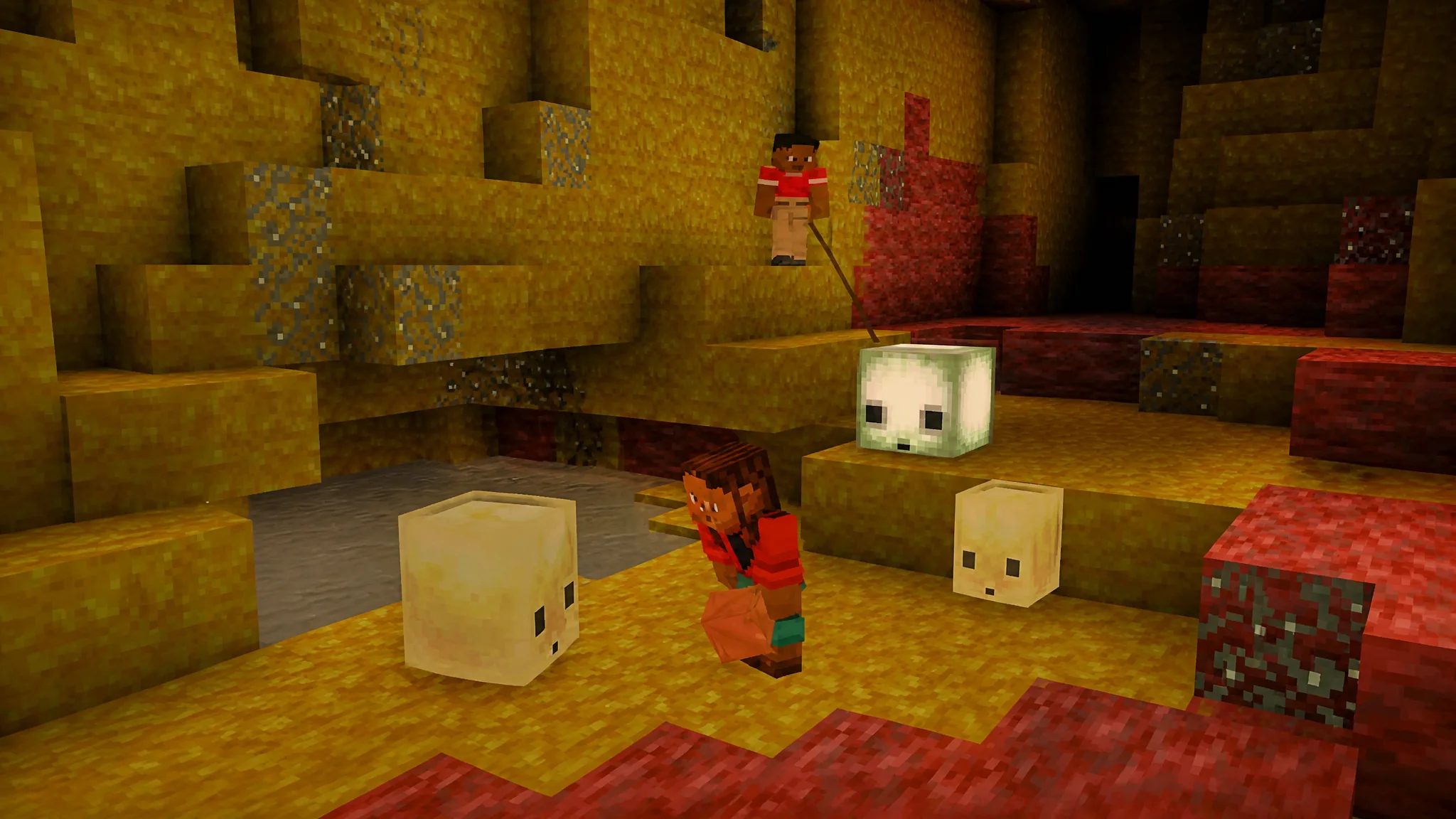
The sulfur cube is the headline reason to come here. It shares the square shape and eyes of slimes and magma cubes but in yellow, and it can absorb a block to change its physics. Feeding it different blocks alters four attributes, namely speed, bounciness, ground friction, and air drag. Absorb an iron block and it becomes slow and heavy with little bounce, while an ice block makes it fast and slippery with no bounce at all. You cannot tame one, but you can lead it by holding a block it wants to eat, and an absorbed block can only be removed with shears.
The cave is hostile, so prepare before you descend. Cave spiders spawn in the tight corridors and can poison you, and the gas pools punish careless movement.
| Mob | Group size |
|---|---|
| Sulfur cube | 2–4 |
| Creeper | 2 |
| Skeleton | 2 |
| Zombie | 2 |
| Slime (slime chunks only) | 1 |
| Cave spider | 1 |
| Enderman | 1 |
| Witch | 1 |
| Zombie villager | 1 |
| Bat | 8 |
How to play it right now
Sulfur caves are still in development as part of the Chaos Cubed drop, so they are available through testing builds rather than the stable release. On Bedrock Edition you can try them by enabling previews or beta, following the official instructions for joining Bedrock betas and previews. Java players can reach them through the latest snapshots. Because the features are being iterated on, colors and textures may shift between updates, and you can report problems through bugs.mojang.com.
Whichever route you take to find one, the surface spring is the signal that matters most. Spot the bubbling yellow pool, dig beneath it, and the sulfur cube and its chaotic block-absorbing tricks are waiting just below.