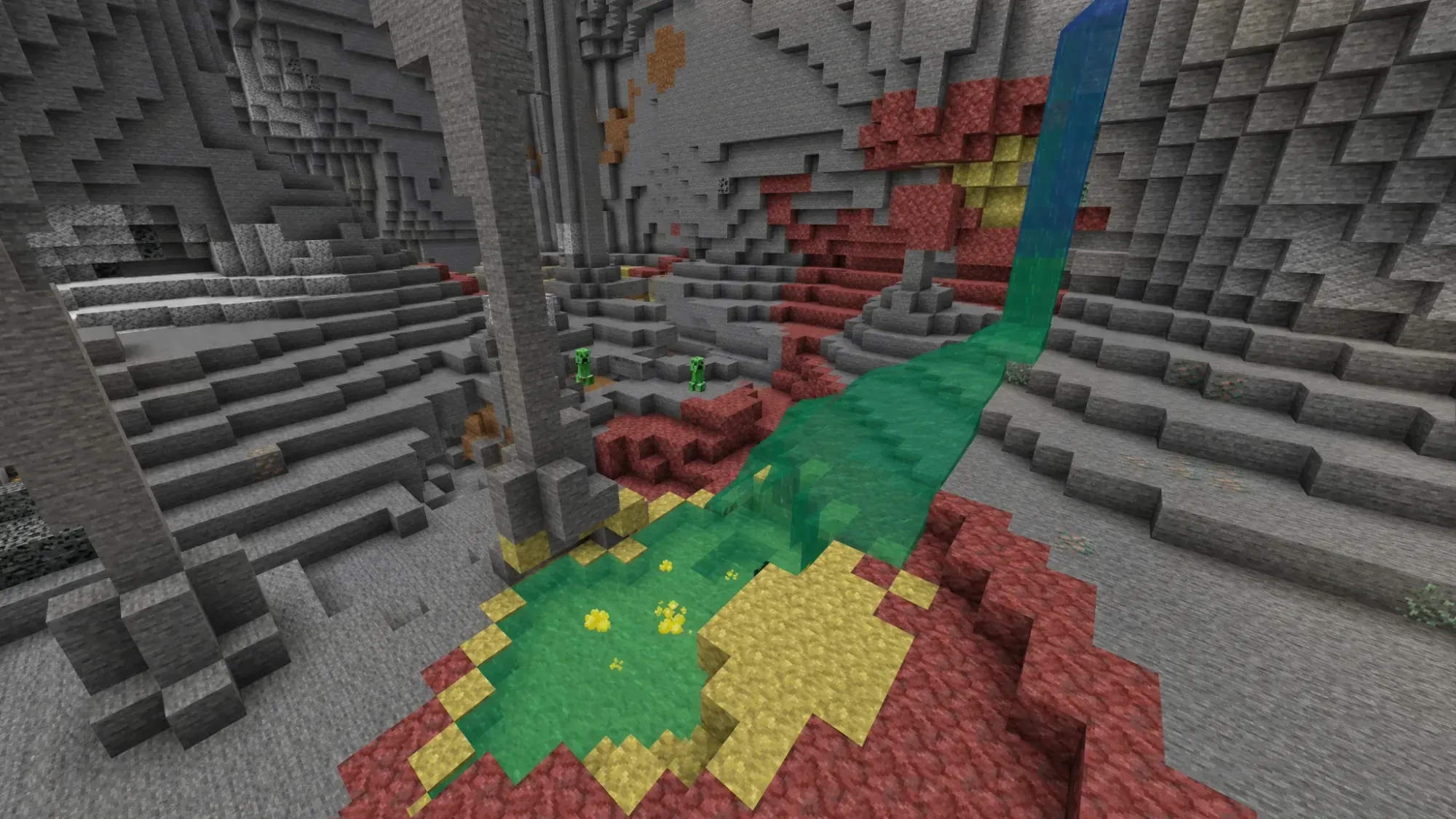
Sulfur caves are a cave biome built from bright yellow sulfur and deep red cinnabar, filled with green-tinged pools that leak noxious gas. They sit deep underground at the same level as lush caves and dripstone caves, and they are the only place the new sulfur cube mob spawns. The biome arrives with the Chaos Cubed game drop, which is currently playable in Java snapshots and Bedrock previews.

How to find sulfur caves in Minecraft
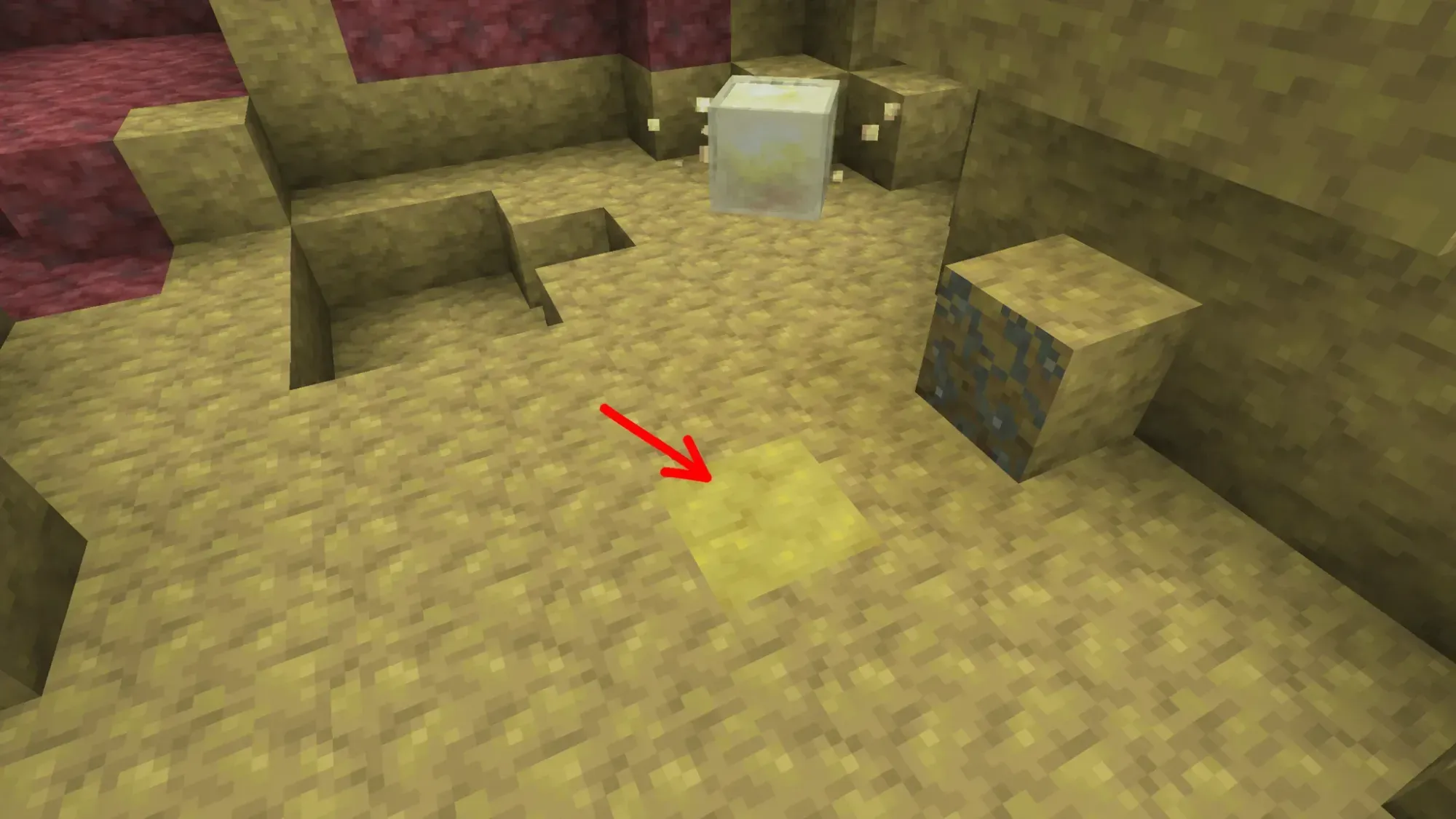
Sulfur caves generate underground but stay small and fragmented compared to other cave biomes. The fastest non-command method is to travel across the surface and watch for a sulfur spring, a cluster of sulfur, sulfur spikes, and rock holding a small pool of bubbling water. A spring on the surface signals that a sulfur cave sits below it.
/locate biome minecraft:sulfur_caves
Locate the nearest sulfur cave
You can also reach one by mining through ordinary caves, since the biome generates at similar depths to lush and dripstone caves. The moment you see yellow sulfur and red cinnabar replacing normal stone, you have arrived. Rarely, the biome leaks onto the surface inside mountain rings or out of tall oceanic cliffs.
Sulfur cave hazards and the nausea effect
The sulfur pools scattered through the biome are the main danger. Potent sulfur sits at the bottom of these pools and releases a cloud of noxious gas that rises to the surface and spreads across the water. Any player or mob that touches the gas gets the Nausea effect, which distorts your view. Drinking milk clears the effect quickly.
Springs and pools can also form geysers. When potent sulfur sits above a magma block under one to four water blocks, it erupts roughly every 50 seconds, launching entities upward for a few seconds without dealing damage. A lava source instead makes the geyser erupt continuously. The plume rises about seven blocks for each water block stacked above the potent sulfur.
All sulfur cave blocks
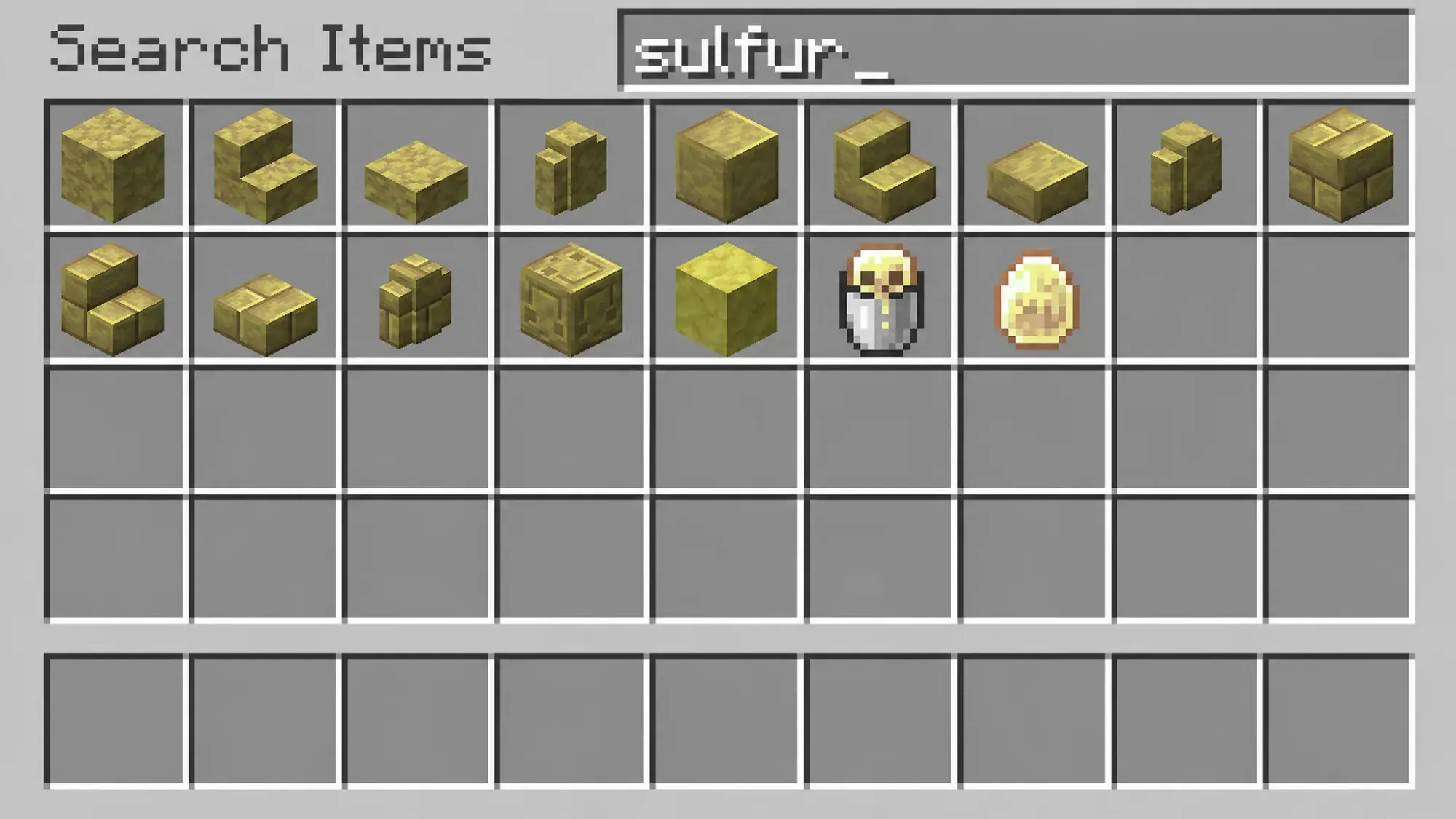
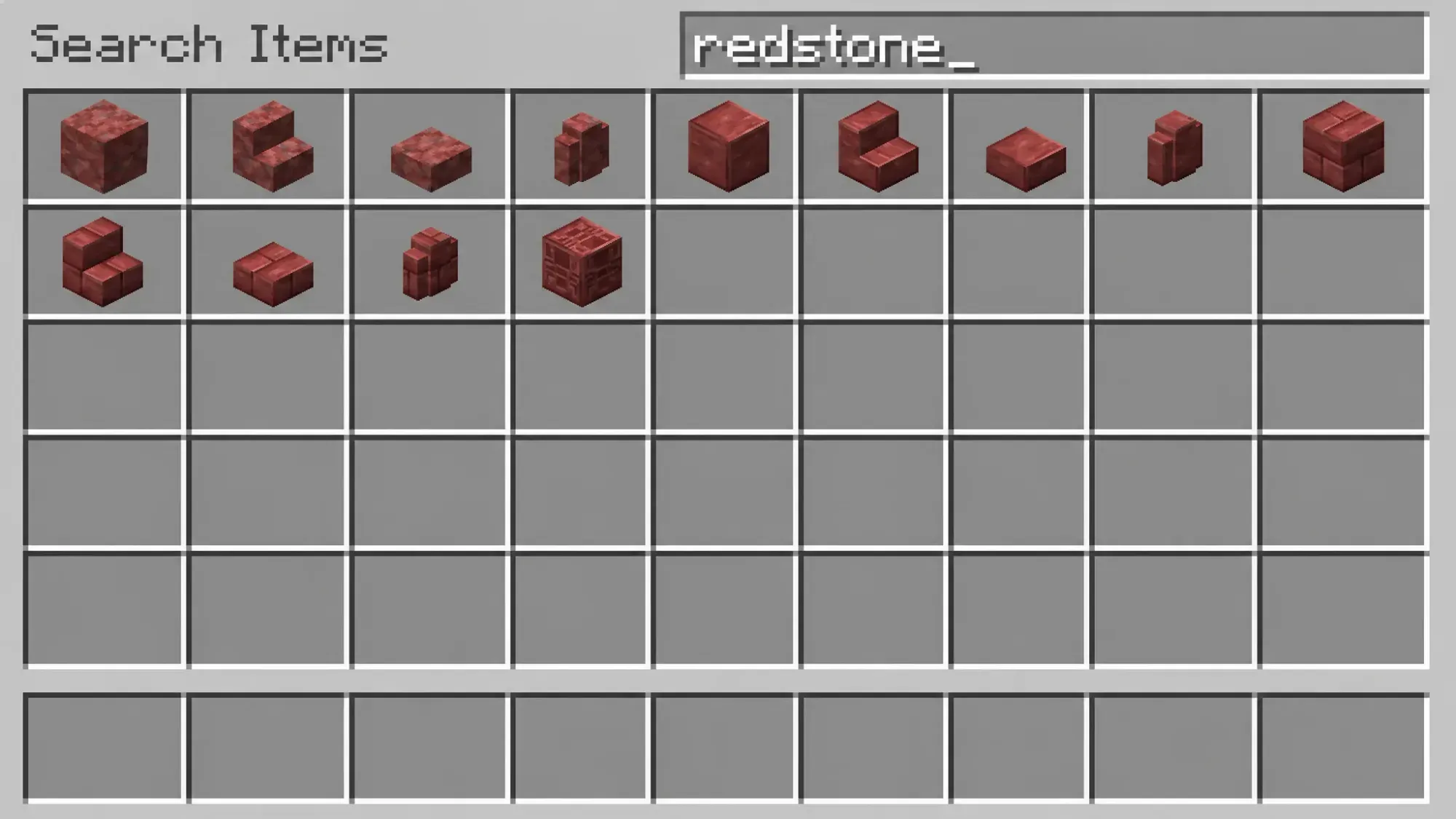
Sulfur and cinnabar both come as full decorative block sets, giving builders a warm yellow and a deep volcanic red to work with. Sulfur drops when mined with any pickaxe and can be crafted or cut into a long list of variants. Sulfur spikes generate on top of sulfur as stalactites and stalagmites, and four of them craft back into a sulfur block.
| Block | Where it appears | What it does |
|---|---|---|
| Sulfur | Throughout the biome and in springs | Yellow building block; full set of slabs, stairs, walls, polished, chiseled, and bricks |
| Cinnabar | Layered with sulfur | Red building block with the same full set of variants |
| Potent sulfur | Bottom of pools and springs | Emits noxious gas (Nausea) and powers geysers |
| Sulfur spike | On top of sulfur | Forms stalactites and stalagmites that deal contact damage |
Mobs that spawn in sulfur caves
The sulfur cube is the headline resident and spawns only here, but the biome shares many standard cave mobs. Cave spiders, creepers, skeletons, zombies, and the rest can all appear, so treat it like any other dark cave when it comes to lighting and combat.
| Mob | Group size | Notes |
|---|---|---|
| Sulfur cube | 2–4 | Passive, exclusive to this biome |
| Creeper, skeleton, zombie | 2 | Standard hostile spawns |
| Cave spider | 1 | Common in the biome |
| Slime | 1 | Only in slime chunks |
| Enderman, witch, zombie villager | 1 | Rare spawns |
| Bat | 8 | Ambient |
Sulfur cubes and block absorption
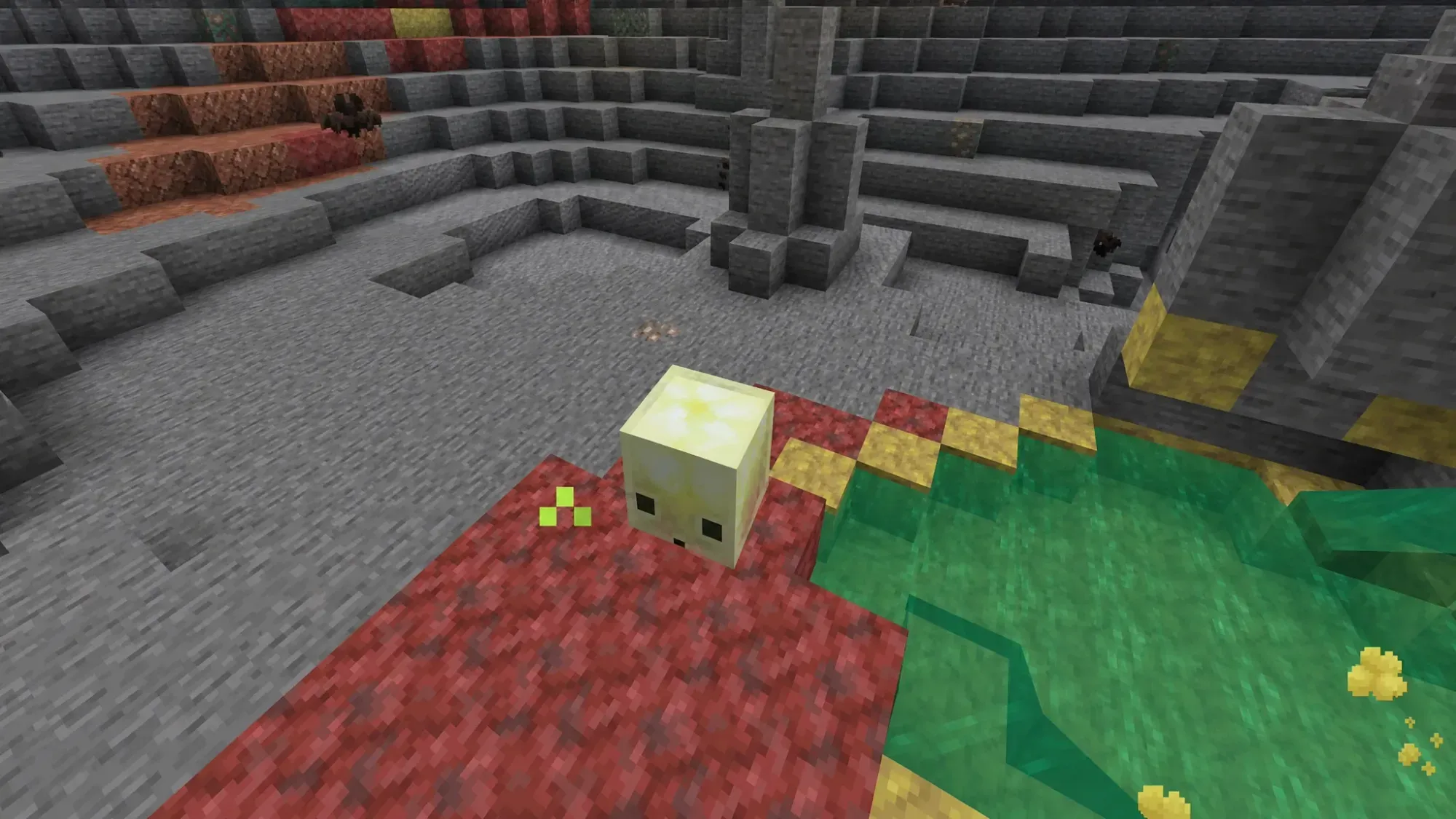
Sulfur cubes look like yellow slimes and behave like their green and magma cousins, minus the hostility. They are passive, immune to fall damage, and split into two smaller cubes when killed. Unlike slimes and magma cubes, those small cubes can grow into large ones over time, so you can slowly duplicate them.
The standout trick is absorption. A cube can pick up a dropped full block, or you can use a block on it directly. Once it holds a block, the cube becomes immobile and immune to damage, and hitting it knocks it around like a ball. Where you strike it sets the direction, and the damage that would have been dealt sets the distance.
The absorbed block decides how the cube moves. Wood and logs make it bouncy, wool makes it float, iron and other metals make it heavy, ice makes it slide, honeycomb makes it sticky, magma makes it deal contact damage, and TNT makes it ignitable. Shears remove any absorbed block safely, with the single exception of lit TNT, which explodes after six seconds and leaves no smaller cubes behind.
You can move a large cube by scooping it with an empty bucket, which produces a Bucket of Sulfur Cube and preserves the mob’s data when placed back down. Small cubes cannot be bucketed. To stop a wild cube from despawning, name it with a name tag and anvil before transporting it.
Once you can spot a sulfur spring on the surface or run the locate command, the rest of the biome opens up quickly. Grab a bucket, some milk for the gas, and a few test blocks, and you have everything needed to haul cubes home and start experimenting with their physics.