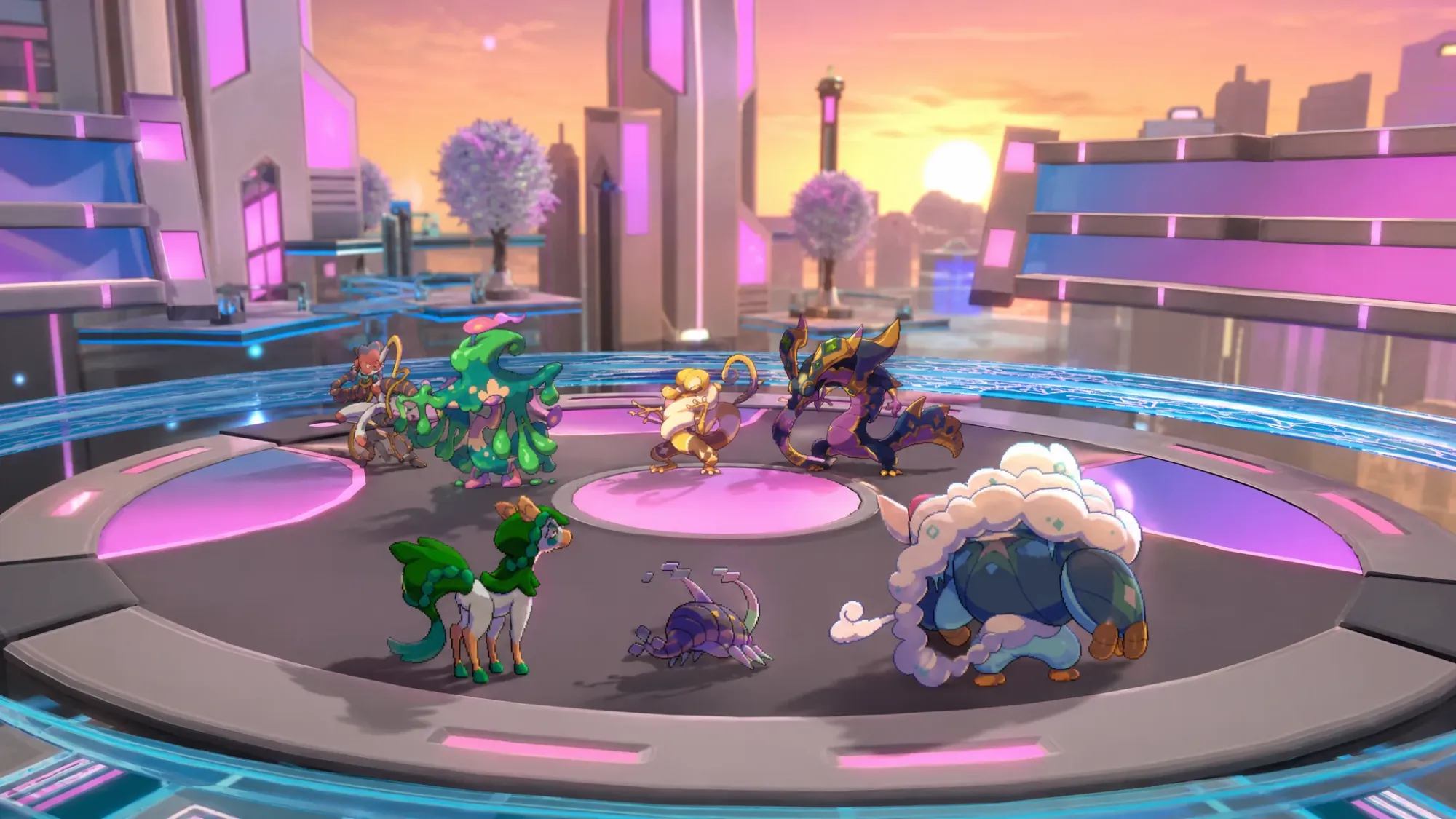
Every Animon in LumenTale: Memories of Trey carries an elemental type that decides what it hits hard, what it shrugs off, and even what it can do outside of battle. There are 13 types in total, and you can run into all of them in both halves of Talea, whether you start your journey in Logos or Mythos.
All 13 Animon types in LumenTale
The world of Talea runs on 13 elements. Twelve of them are described as the original, ancient elements, with a thirteenth created through human ingenuity that blended into the rest rather than standing apart. In practice, all 13 work the same way in combat as the basis for damage, resistance, and weakness.
| Type | Type | Type |
|---|---|---|
| Grass | Water | Fire |
| Virus | Aura | Electric |
| Geo | Data | Ice |
| Demon | Anomalous | Chakra |
| Ancient | — | — |
Type is separate from an Animon’s Attribute. Attributes (Furor, Horrens, Mestus, Felicis, and Sereum) shape personality and battle role, while the 13 types govern elemental strengths and weaknesses. A single Animon always has both.
How hidden secondary types work
Most Animon have a single type, but the majority of species can also carry a secondary “hidden” type that belongs to the individual creature rather than the species as a whole. This is why two Animon of the same species can behave a little differently in battle.
The pool of possible hidden types is fixed per species. Smellwing, for example, is always a Virus type and can only ever pick up Demon as its hidden type. It will never gain any other secondary element.
A few species are more flexible. Bonkey’s base type is Anomalous, and it can show up with either Fire or Chakra as its hidden type. Other species have no secondary type at all and stay locked to a single element.
There’s no type chart — each species sets its own matchups
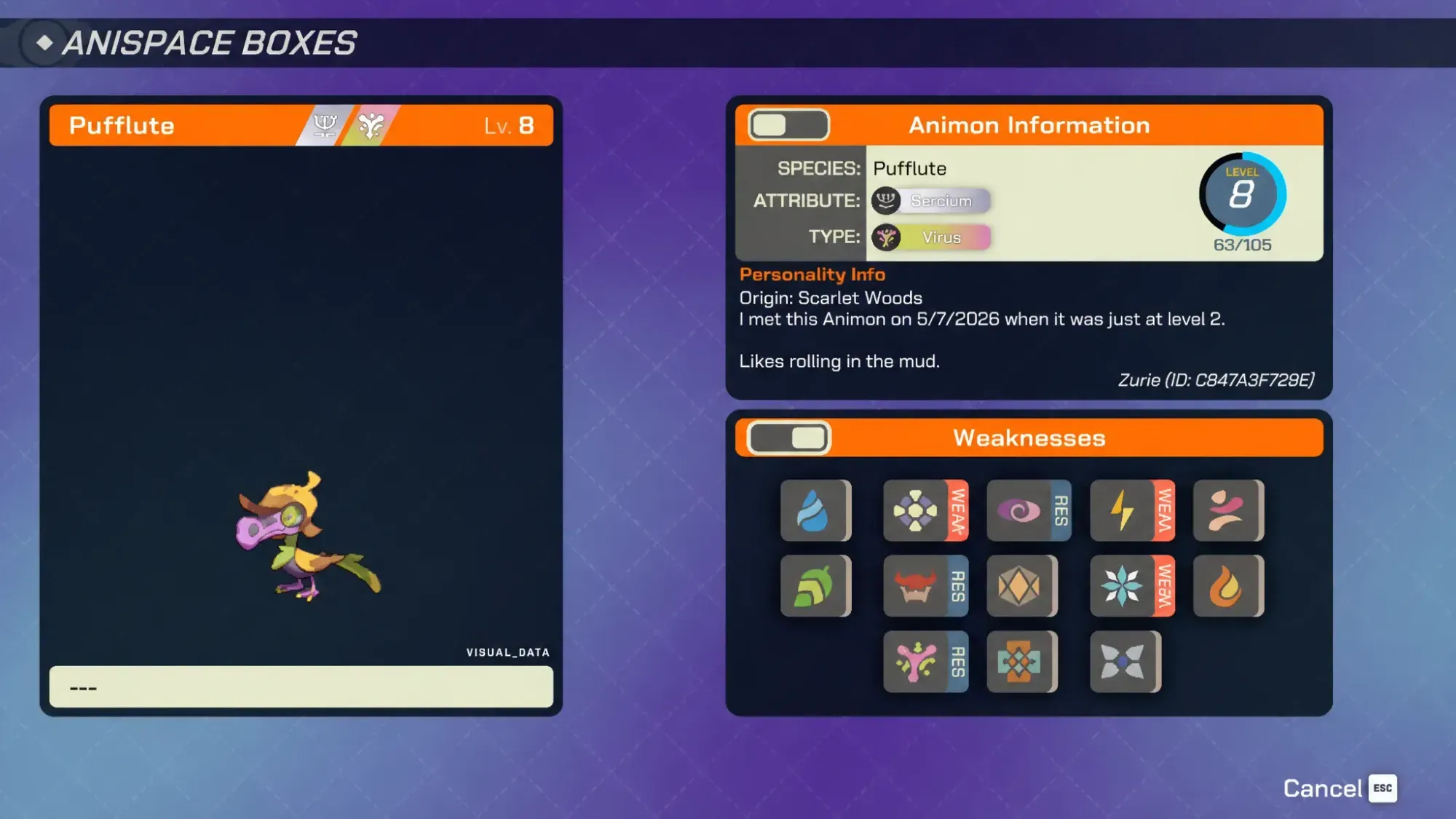
The big departure from most creature collectors is that LumenTale has no universal type chart. Fire isn’t automatically strong against Grass for every creature. Instead, each species defines its own list of weaknesses and resistances.
That means one Virus Animon like Smellwing might take extra damage from Aura attacks, while a different Virus species resists them. You can’t assume a matchup just from the type label, so you learn each creature’s profile individually.
How to find an Animon’s weaknesses and resistances
Because matchups vary by species, you have to discover them. There are three reliable ways to do it.
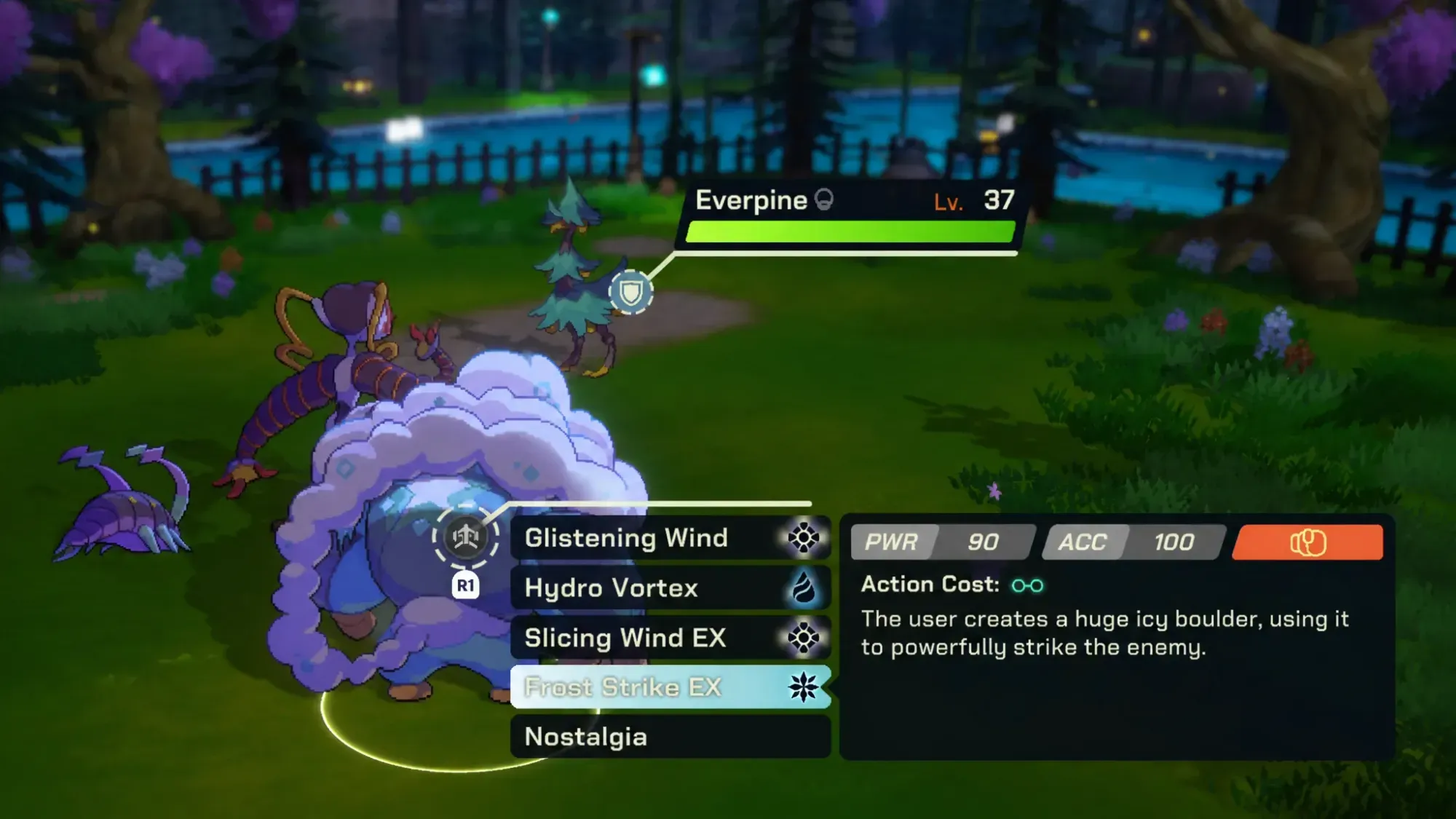
Firtrich, a Grass type, is a clear example. The shield marker on its health bar confirms it resists Ice-type moves, so you’d switch to a different element to deal real damage.
Types also power up the Holoken outside battle
The Holoken is the device you throw to catch Animon and break crates for resources, and types matter for it too. As you progress through the story, you unlock the ability to infuse the Holoken with the power of your Animon, and each type grants a different field ability.
| Type infusion | What it does in the overworld |
|---|---|
| Geo | Destroys the giant boulders that block paths |
| Aura | Propels the purple fans found across Talea to open gates and power structures |
These powers tie exploration directly to the types you’ve collected, so building a varied roster opens up more of the map as you travel.
Why hidden types are worth checking before you build a team
Since hidden types are rolled per individual, scanning and catching duplicates of a species can turn up creatures with different secondary elements. That extra type changes the resistance and weakness spread, which can matter when you’re picking four active members for a battle from your party of six.
The practical takeaway is simple. Treat every species as its own puzzle, scan anything you haven’t fought before, and lean on the move-select shield icons to avoid wasting turns on attacks a creature shrugs off. With 13 types in play and hidden second types layered on top, learning matchups creature by creature is the core of building a team that holds up across Talea.