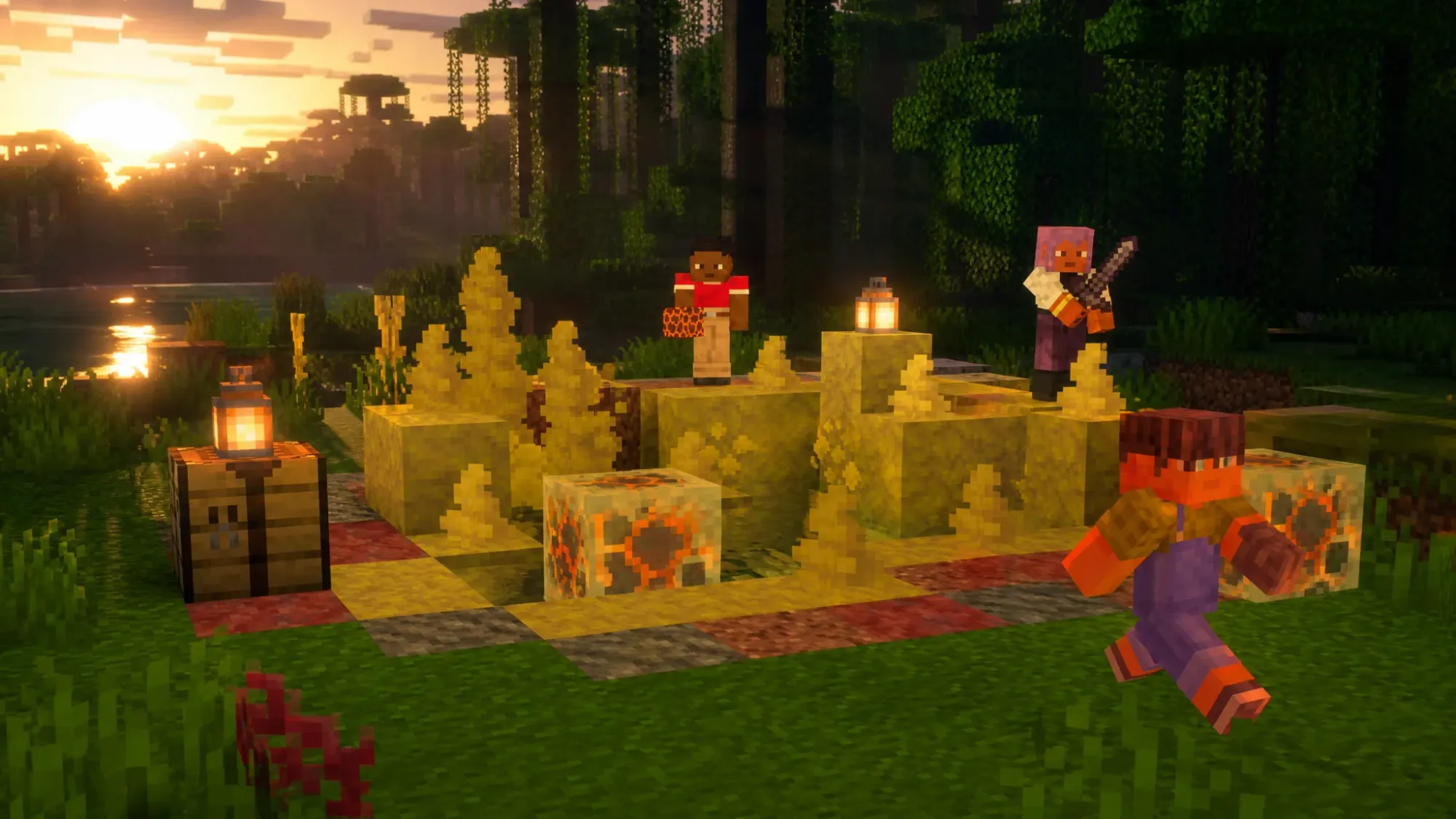
Chaos Cubed, the second Minecraft game drop of 2026, now has a firm launch date. It ships as Java Edition 26.2 and Bedrock Edition 26.30, and its headline addition is the sulfur caves biome along with the sulfur cube, a passive mob that swallows blocks and takes on their physical behavior.
Quick answer: Chaos Cubed releases on June 16, 2026 for both Java Edition (26.2) and Bedrock Edition (26.30). You do not need to opt into anything; the update arrives as a standard automatic update on the release day.
Chaos Cubed release date and version numbers
Both editions launch on the same day, so there is no staggered rollout between Java and Bedrock. The update uses Minecraft’s year-based naming scheme, where the first two digits are the year and the final number is the drop count for that year. Chaos Cubed is the second drop of the year, which is why it carries the 26.2 label on Java.
| Edition | Version | Release date |
|---|---|---|
| Java Edition | 26.2 | June 16, 2026 |
| Bedrock Edition | 26.30 | June 16, 2026 |
Before the stable launch, Mojang is closing out development with the final pre-releases and release candidates, then a round of bug fixes. On Bedrock, the experimental toggle that previously gated these features (labeled “Drop 2 of 2026”) is removed and the content is folded into the normal game.
Sulfur caves: the new underground biome
The sulfur caves are an underground cave biome that generates inside hills, mountains, and ordinary terrain in the Overworld. They are built around bands of yellow sulfur and red cinnabar blocks, with sulfur spikes forming stalactites and stalagmites along the walls and floors. Cave spiders spawn here in place of regular spiders, which marks the first time cave spiders generate naturally outside of spawners.
Greenish sulfur pools appear throughout the biome. They contain potent sulfur at the bottom, which fills the water with noxious gas and inflicts the Nausea effect on any player or mob that wades in. On the surface above a sulfur cave, you may also spot a sulfur spring, a cluster of sulfur, spikes, and magma blocks that acts as a visual marker for the cave below. Springs generate in small, medium, large, and extra-large variants.
The sulfur cube and its block archetypes
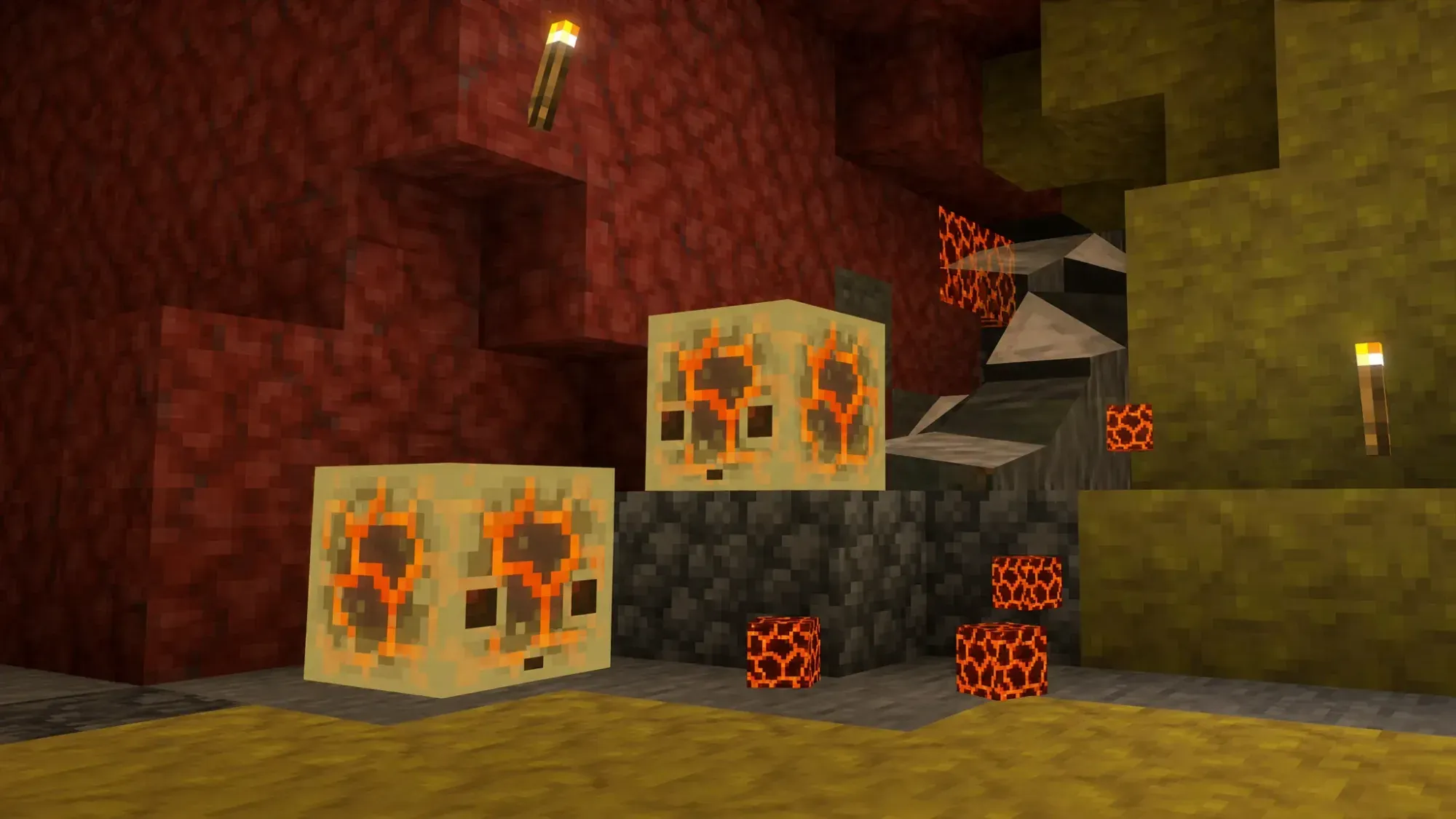
The sulfur cube is the centerpiece mob. It is a passive, slime-like creature with 8 health that hops around the sulfur caves and splits into two smaller cubes when killed. Unlike slimes and magma cubes, the small versions can grow back into a large cube, much like a baby mob maturing, and you can speed that up by feeding them slimeballs.
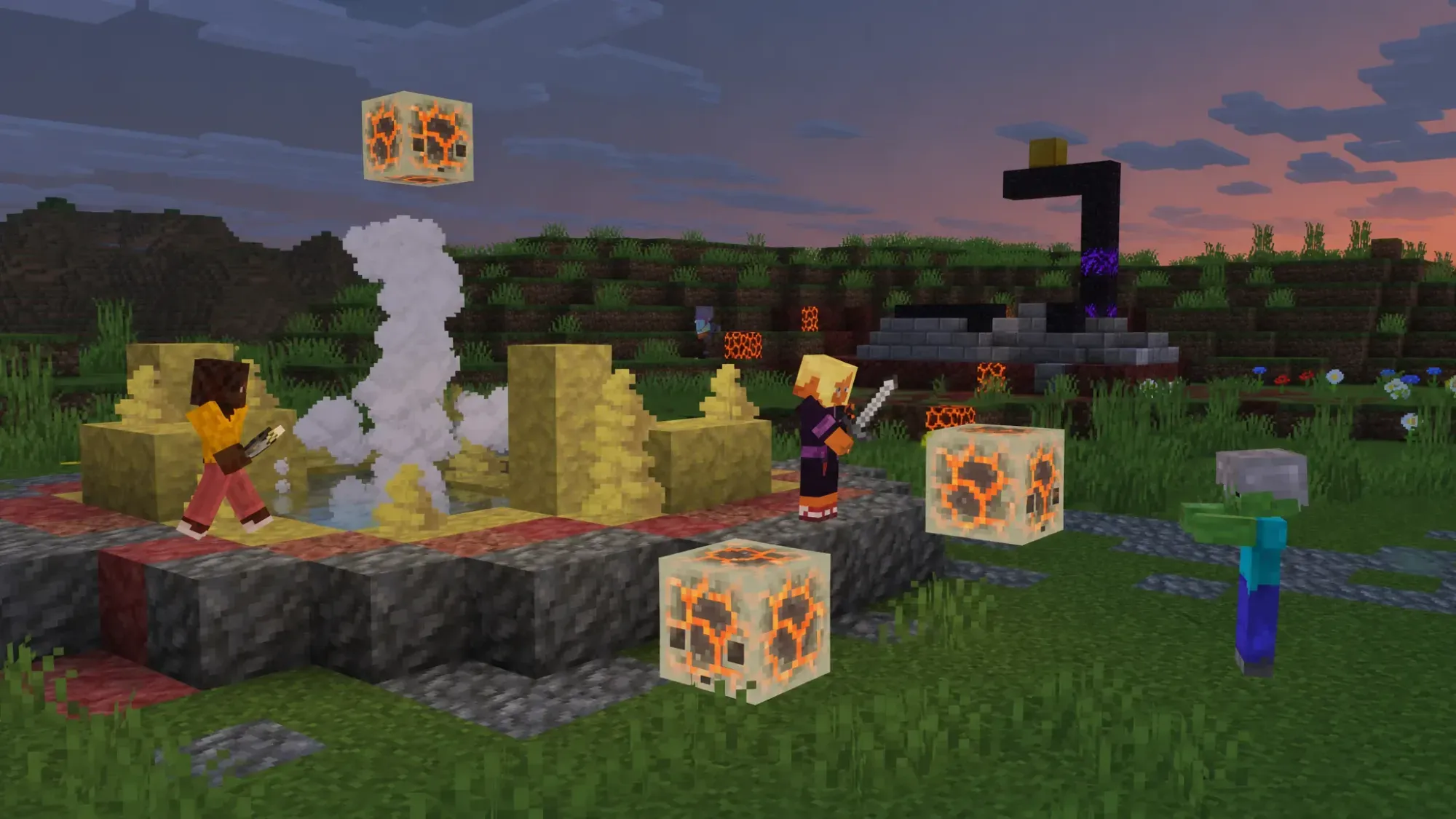
The cube’s defining trick is block absorption. Hand it a full block, or let it pick one up off the ground, and it pulls the block inside its body. In that state it becomes immobile and resists most damage, instead getting knocked back when hit, with stronger hits sending it further. Shear it to drop the block and revert it to normal. The block it holds decides how it moves when punched, sorted into physics archetypes.
| Archetype | Behavior | Example block |
|---|---|---|
| Regular | Medium speed, medium bounce, floats | Grass / dirt |
| Bouncy | Fast, high bounce, floats | Oak log |
| Slow bouncy | Slow, high bounce, sinks | Stone |
| Fast flat | Fast, low bounce, sinks | Moss block |
| Slow flat | Slow, low bounce, sinks | Block of iron |
| Light | Slow, high bounce, high air drag | White wool |
| Fast sliding | Fast, no bounce, low friction | Blue ice |
| Slow sliding | Slow, no bounce, low friction | Red mushroom block |
| High resistance | Very slow, high friction, low bounce | Soul sand |
| Sticky | Extreme friction, no bounce | Honeycomb block |
| Hot | Damages entities on contact | Magma block |
| Explosive | Ignitable, explodes after 6s fuse | TNT |
A large cube can be scooped into an empty bucket to move it, and the bucket remembers any block stored inside. Dispensers can insert, swap, or shear blocks on a cube, and can spawn one from a bucket of sulfur cube. The explosive (TNT) cube is the one to watch, since once it is primed by fire, redstone, or a nearby blast, it cannot be sheared, bucketed, or damaged before it detonates.
New blocks, items, and music
The drop adds two full decorative block families. Sulfur is a yellow crystalline block and cinnabar is a red rock, and each comes with stairs, slabs, walls, polished variants, bricks, and chiseled forms. Sulfur spikes can be crafted into sulfur blocks at a four-to-one ratio, and potent sulfur is crafted from nine sulfur blocks.
On the audio side, fingerspit composed five new background tracks named “Memories,” “Ebb,” “Home,” “Shores,” and “Nightly,” plus a music disc called “Bounce.” The disc is found in chest minecarts within mineshafts that cut through sulfur caves, and it outputs a comparator signal of 8 when played in a jukebox.
| Item | How to obtain |
|---|---|
| “Bounce” music disc | Mineshaft chest minecart inside sulfur caves |
| Bucket of sulfur cube | Use an empty bucket on an adult sulfur cube |
| Sulfur cube spawn egg | Creative inventory |
| Sulfur spikes | Buy two from a wandering trader for one emerald |
Quality-of-life changes and edition differences
Java Edition picks up the friends list, bringing it closer to Bedrock’s social features, alongside an experimental Vulkan renderer and a new /unpublish command that closes a player’s integrated server. Sculk sensors can now detect geyser eruptions, and a new advancement called “Uh Oh” unlocks when a sulfur cube absorbs a TNT block.
Bedrock’s release bundles a wider set of fixes and tweaks. Bees can now be bred and tempted with chorus flowers and spore blossoms, skeleton-type mobs fire arrows on the same difficulty-based timing as Java, texture streaming is enabled by default on supported hardware, and the main menu panorama gains a scroll-speed slider. Dedicated servers now ship with the allowlist enabled by default.
You will know the update has landed when your launcher or store shows version 26.2 on Java or 26.30 on Bedrock and the title screen panorama switches to the Chaos Cubed art. Once you are in a world, head underground and look for bands of yellow and red rock or a sulfur spring on the surface to confirm the new biome is generating. From there, the fastest way to test everything is to feed a sulfur cube a block and start lobbing it around.