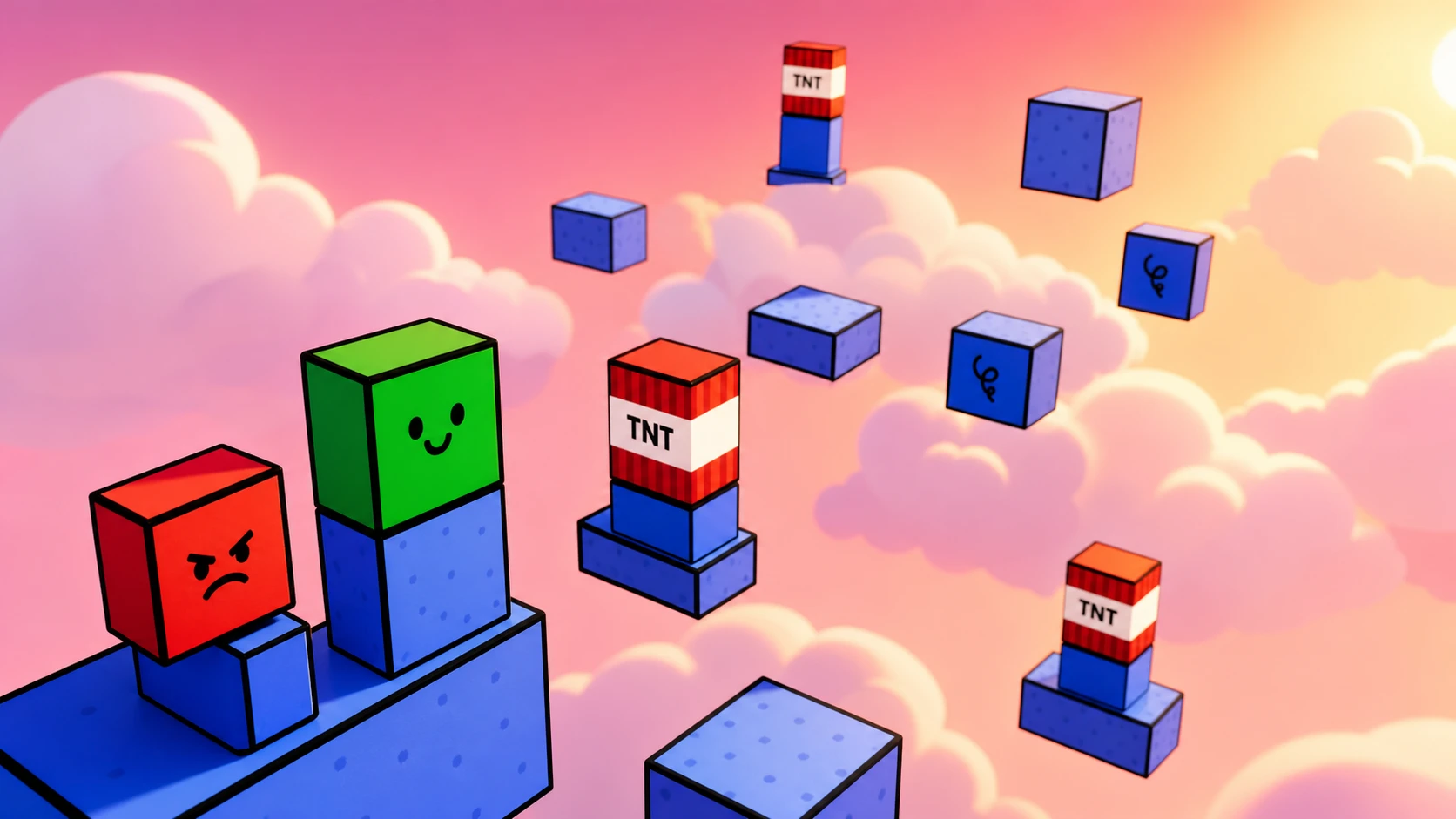
The Bouncing Pack is one of the level sets inside Pop and Drop on Roblox, built around physics puzzles where you remove blocks to send objects falling and bouncing into the right spot. It is split into a long run of numbered stages, a separate TNT track that adds explosive blocks, and a handful of player-made community stages.
Quick answer: To finish the Bouncing Pack, clear the main run of stages from Level 1 through Level 60, then work through the TNT levels, which currently run from Level 1 up to Level 30. A stage counts as done when the puzzle resolves, and the game advances you to the next level number.
What the Bouncing Pack contains
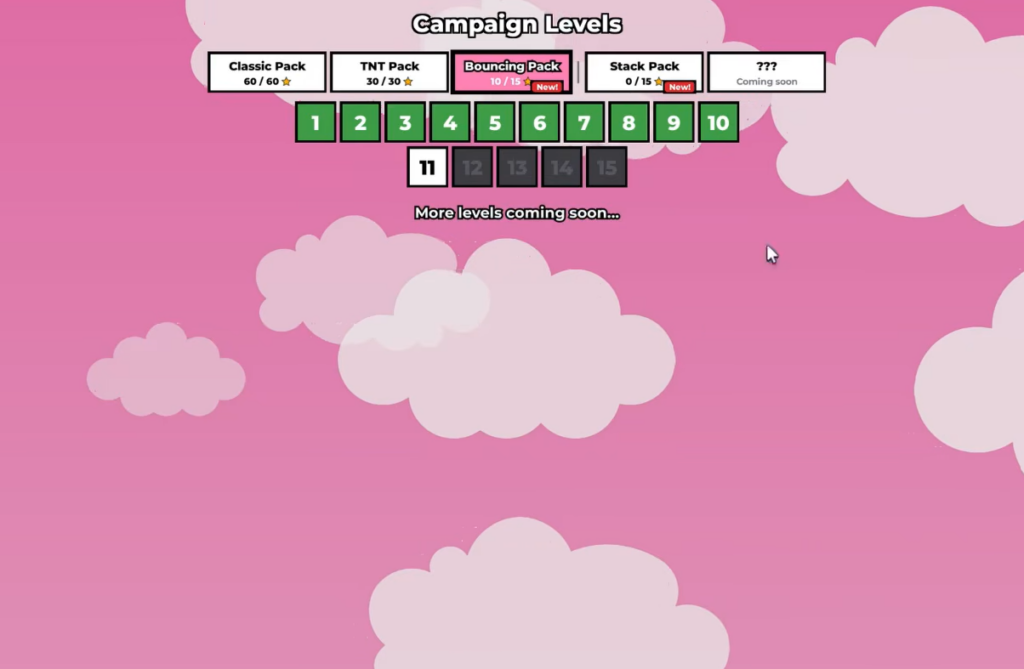
The pack is organized into three tracks. The main track is the largest, and the one most players start with. The TNT track reuses the same drop-and-bounce idea but introduces explosive blocks, so the order in which you pop things matters more. Community stages are named rather than numbered and sit apart from the standard progression.
| Track | Range | Notes |
|---|---|---|
| Main levels | Level 1 to Level 60 | The core progression of the Bouncing Pack. |
| TNT levels | Level 1 to Level 30 | Adds explosive blocks; pop order is critical. |
| Community levels | Named stages | Includes Boxed in, wrong dimension, Rollin, why is this so hard, and Einstein. |
How to approach the main levels (1 to 60)
The early stages from Level 1 to around Level 20 act as a gentle ramp, teaching how blocks fall and bounce after you pop them. The middle stretch from roughly Level 21 to Level 50 introduces tighter setups where one wrong pop sends an object out of reach. The closing stretch from Level 51 to Level 60 packs the hardest layouts, with Level 60 being the toughest of the standard run.
Clearing the TNT levels (1 to 30)
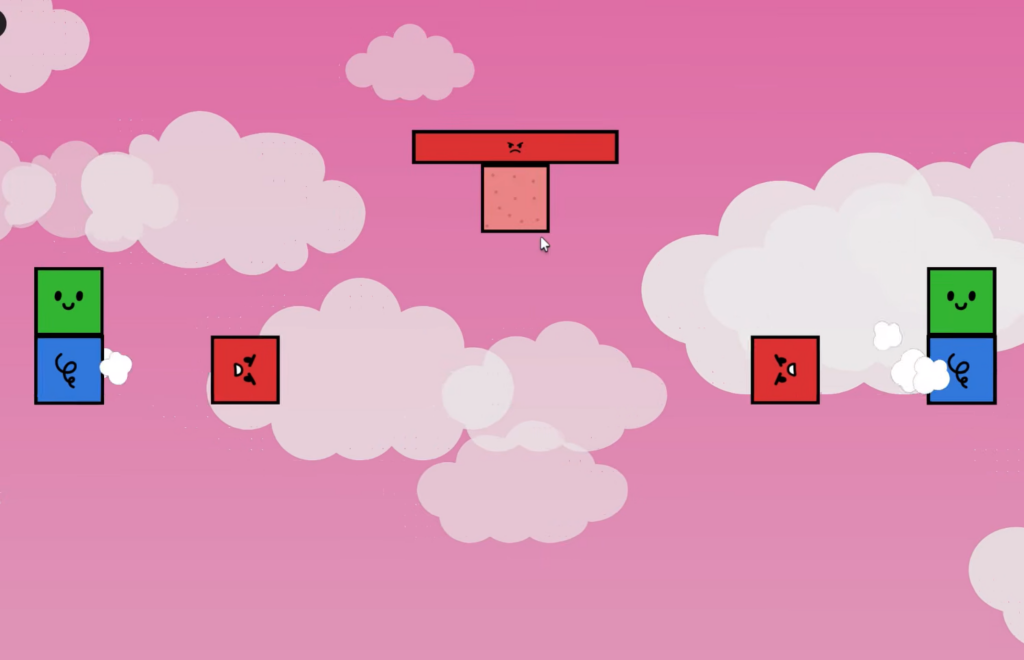
The TNT track plays like the main levels but adds blocks that explode and clear nearby pieces. That makes sequencing the centerpiece of every puzzle. A single detonation can either solve a stage in one move or wreck a layout, so plan the chain before you trigger it.
The first ten TNT stages stay simple, the 11 to 20 band tightens the spacing between explosives and targets, and 21 to 30 demands precise timing. Treat each TNT block as the last thing you pop in its area unless an early blast is clearly needed to move an object.
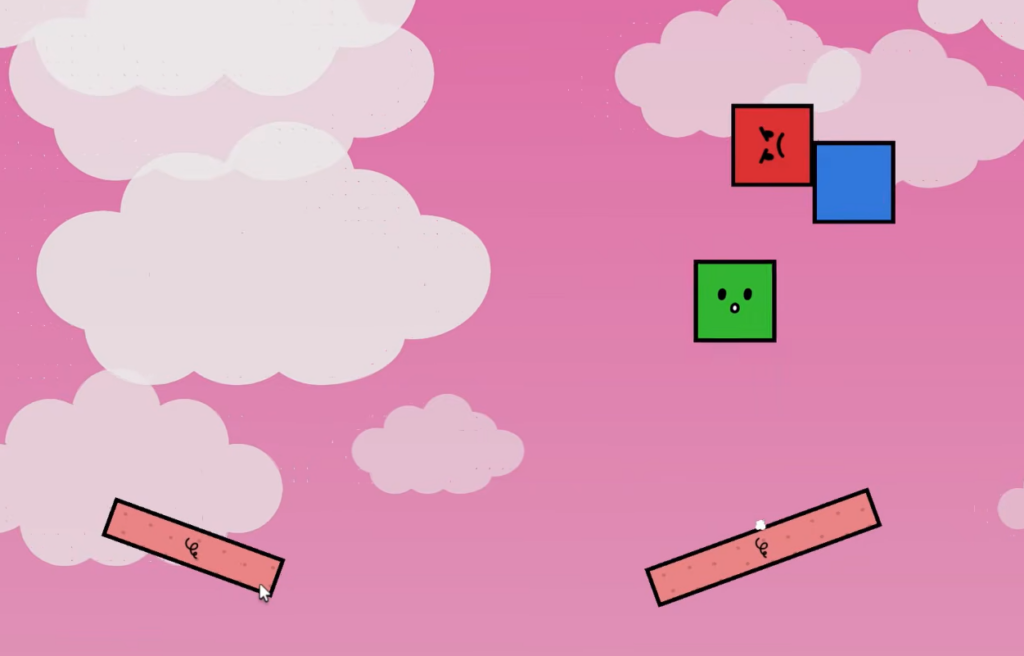
Community levels worth knowing
Beyond the numbered tracks, the Bouncing Pack carries named community stages. These are made by players, so they vary in difficulty and do not follow the steady ramp of the main run.
- Boxed in
- wrong dimension
- Rollin
- why is this so hard
- Einstein
How to know a level is complete
A stage resolves once every object reaches its intended resting place, and the puzzle stops moving. The game then advances you to the next level number, which is your confirmation the solution held. If a piece slips off the board or fails to land where it needs to, the stage will not register as finished, and you can restart it to try a different pop order.
The most reliable way to finish the Bouncing Pack is to clear the main run first, then carry that block-and-bounce timing into the TNT track and the named community stages.