
A base in Solarpunk lives or dies by its power grid. The weather system is dynamic; the sun sets, the wind stalls, and any setup that leans on a single source eventually goes dark and stalls your sprinklers, pumps, and refiners mid-job. The fix is a grid that mixes generation, stores power correctly, and feeds itself with fuel.
Quick answer: Run a 60/40 mix of high-altitude Wind Turbines and unobstructed Solar Panels, wire batteries in parallel, isolate crafting stations behind Manual Switches to kill the 2W idle drain, then close the loop with Sprinklers growing Sunflowers or Engineered Algae into a Biomass Processor that fuels a backup generator.
Mix solar and wind on a 60/40 split
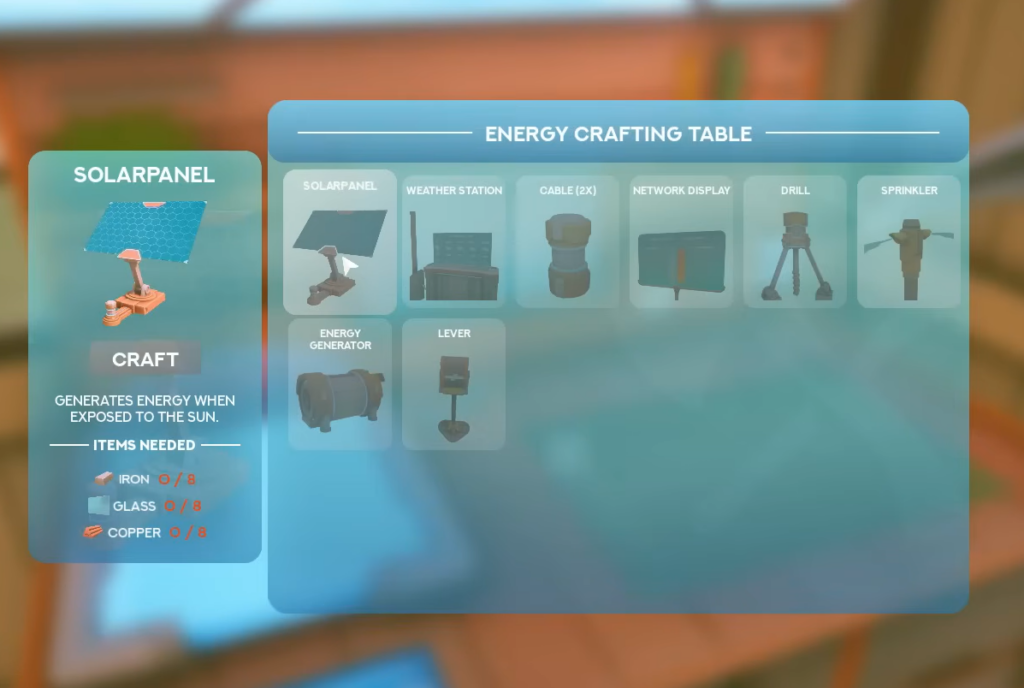
Solar Panels are cheap and tempting, but they are the most common reason early grids collapse. Cloud cover is not just a visual effect. It cuts solar output by up to 80 percent, and a three-day storm in the first Spring season is a likely random event. A panel-only grid stops your water pumps and kills crops when that storm lands.
Wind covers the gap because turbines generate day and night. Aim for roughly 60 percent wind and 40 percent solar, so neither weather pattern can shut you down. Your target is passive generation that beats passive drain by at least 300 percent, with the surplus pushed into a scalable battery bank.
| Source / Consumer | Output or Draw | Weather dependency | Early-game count |
|---|---|---|---|
| Basic Solar Panel | +25W (peak noon) | High (fails at night and in storms) | 8–10 |
| Basic Wind Turbine | +15W (average) | Medium (needs Z-level above 20) | 4–6 |
| Water Pump (Tier 1) | −30W (active) | None | 1 (on its own switch) |
| Basic Battery | 1000J capacity | None (max I/O 100W) | 4 (wired in parallel) |
Wire batteries in parallel, not series
A Basic Battery has two separate limits. The first is storage, measured in Joules. The second is its input and output rate, measured in Watts, capped at 100W. Ten panels pushing 50W each will overwhelm a single battery’s 100W intake and waste 400W of potential power.
The solution is to wire batteries in parallel so the input load spreads across the whole bank. Stack them in a climate-controlled room as well, because weather exposure triggers capacity decay on batteries left out in the open.
Kill the 2W vampire drain with switches
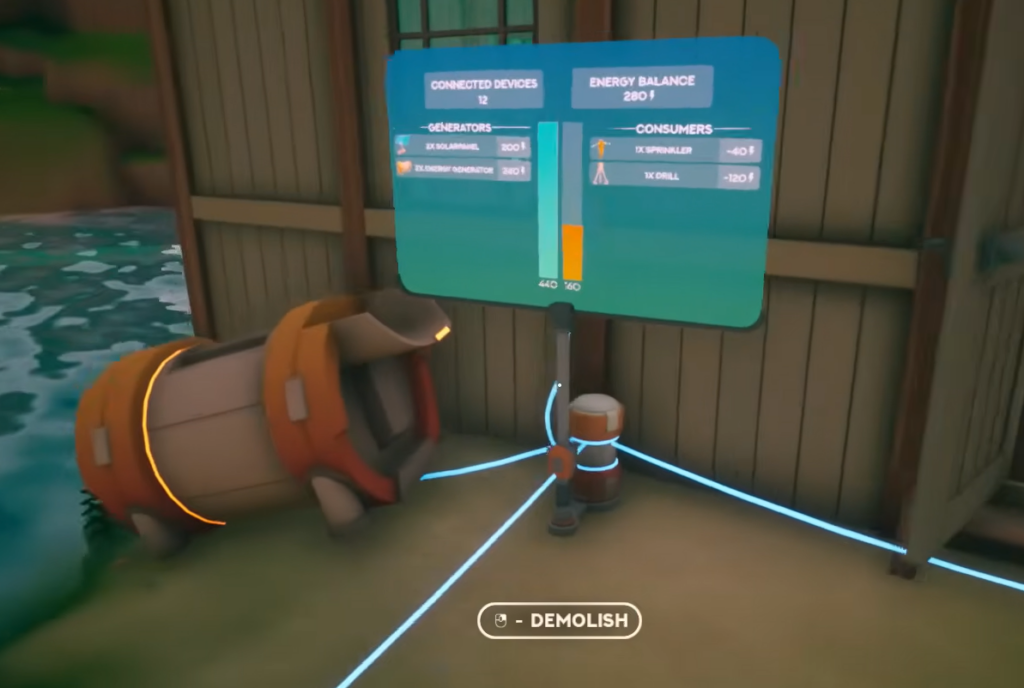
Every crafting station wired to the grid pulls a constant 2W even when it is idle. Ten machines means 20W bleeding out around the clock, and overnight that alone can empty a Basic Battery and shut down life support.
Build Manual Switches early and split your grid into two blocks. Keep water pumps and farming on a permanent life-support line, and put crafting stations on a separate breaker you only flip when you are actively smelting or building. Day/Night Sensors and Battery Threshold Switches can automate this, cutting power to idle stations without you touching the panel.
Use altitude for wind and clear sightlines for solar
Wind output scales with height. At sea level (Z:0) a turbine runs on a 0.5x multiplier, but place an Advanced Wind Turbine at Z:150, and it jumps to a 2.5x multiplier. A single high turbine can match five ground-level units, which saves a large amount of refined aluminum and copper.
Solar uses ray-traced shadow mapping, so panels stay inactive while anything sits between them and the sun. Build a tall farmhouse east of your array and the panels stay dark for the first four morning hours. Put your solar farm on the highest, most open plateau, and expect a 15 percent drop in peak efficiency during Winter when the sun sits lower.
Close the biofuel loop for infinite fuel
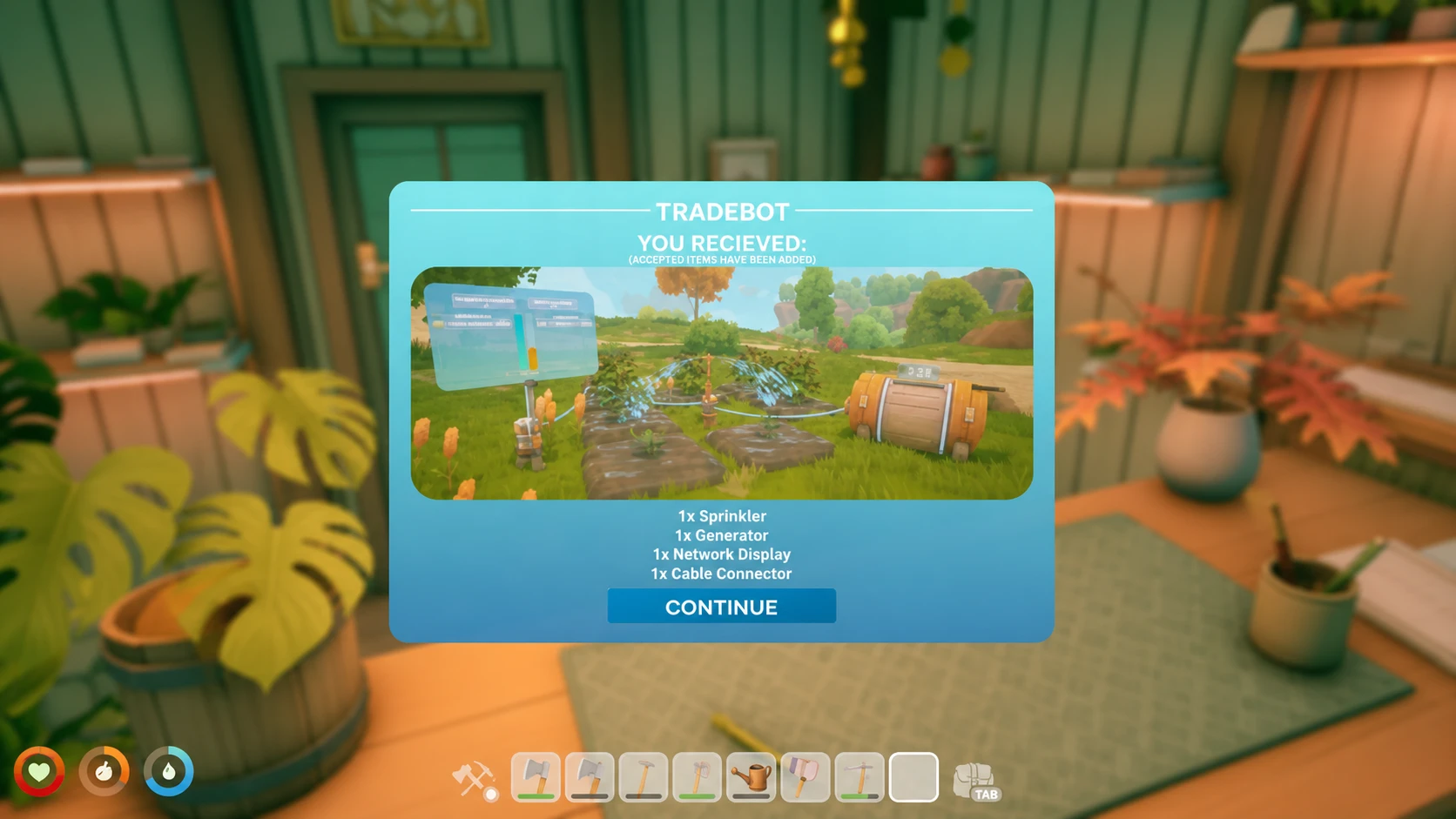
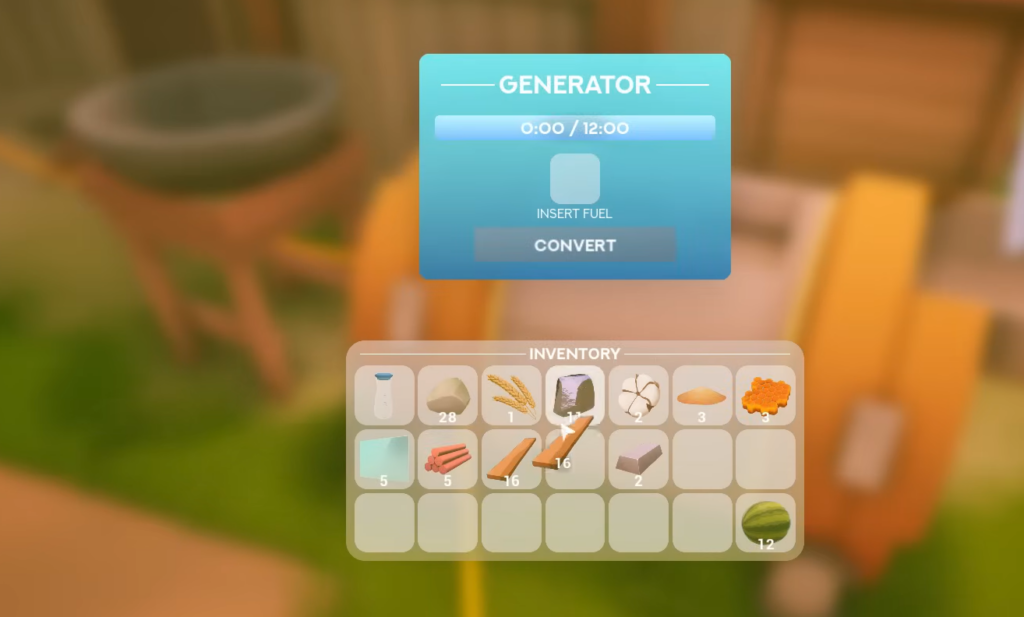
Electricity powers your static base, but airships and portable tools need physical Biofuel. The endgame goal is a self-sustaining loop where a fraction of your power runs automated Sprinklers, the crops feed a Biomass Processor, and the resulting fuel runs a generator that produces more power than the farming consumed.
Crop choice decides whether the loop runs at a profit. Basic leaves convert at a weak 0.1L per unit over 30 seconds, so they are useless here. Sunflowers and Engineered Algae carry the highest energy density and turn the loop net-positive.
| Crop | Growth time | Water need | Biomass yield | Conversion | Net energy |
|---|---|---|---|---|---|
| Potatoes | 2 days | Low | 5 units | 0.5L per unit | Low (negative if pumped) |
| Sunflowers | 4 days | Medium | 25 units | 2.0L per unit | High (+400W) |
| Engineered Algae | 1 day | High (needs tanks) | 15 units | 3.5L per unit | Extreme (+1200W) |
Engineered Algae is the top performer, but it needs constant water circulation, which means your pumps run 24/7 and add a heavy baseline draw. Offset that with a dedicated grid section so the algae refinery never starves the rest of your base.
Upgrade wires and add transformers before scaling
Wires overload. Push 1000W through a Tier 1 Copper Wire and it sparks, burns out, and has to be physically replaced, which is catastrophic if it fails while you are exploring another island. Tier 1 wire also loses 5 percent of power over long runs, so unlock Copper Wire Tier 2 early.
Before scaling your battery banks, switch to Electrum Wires, which handle up to 5000W. Route power through Transformers to step the voltage down before it reaches sensitive gear like Automated Sprinklers, which break if a lightning storm sends a surge through them.
How to confirm the grid is stable
You know the build works when your battery bank holds charge through a full night and through a multi-day storm without your pumps or sprinklers cutting out. The fuel loop is closed once the Biomass Processor and generator keep running on their own crops while net battery charge stays flat or climbs.
If the grid still drains, check the usual culprits. Idle crafting stations bleeding 2W each, batteries wired in series instead of parallel, panels stuck in a building’s shadow, or a Tier 1 wire overloading and burning out are the failures that quietly empty an otherwise healthy bank. Fix those and the base keeps the lights on regardless of the weather outside.