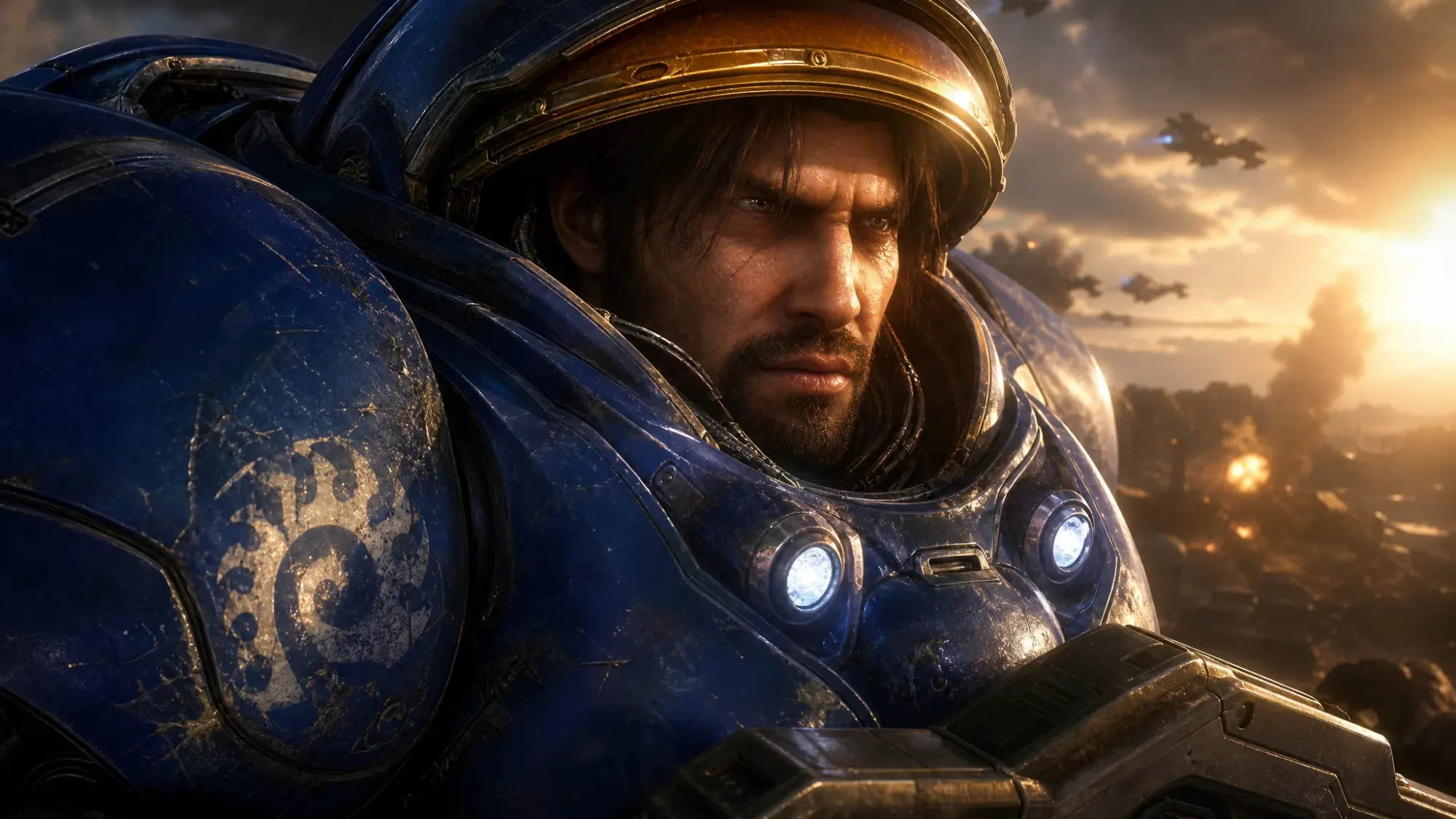
StarCraft II just received its largest balance shake-up in years. Blizzard pushed the 5.0.16 Public Test Realm (PTR) build, and the changes are aggressive enough to rewrite long-standing build orders. The headline adjustment cuts the number of starting workers each player begins with, and that single number ripples through every opening on every map.
What the 5.0.16 PTR patch changes
The stated goal is to stretch out the early and mid-game so players stay competitive on one to three bases for longer. Blizzard also wants non-warped Gateway play to be a real option for Protoss and broader strategic variety for Terran, Zerg, and Protoss alike. A set of quality-of-life tweaks rounds out the package. You can read the full breakdown in the official 5.0.16 PTR patch notes.
Here are the core changes drawing the most attention:
| Area | Change |
|---|---|
| Economy | Starting workers reduced from 12 to 8 |
| Economy | Mineral counts at bases adjusted |
| Protoss | Warpgate research moved from the Gateway to the Cybernetics Core |
| Protoss | Warp-in Time changed from a variable rate to a flat 3 seconds |
| Zerg / Protoss | Basic auto-attacks added to spellcasters such as the Infestor and Disruptor |
| Terran | Survival nerfs to the Ghost |
Why cutting starting workers from 12 to 8 matters
Every standard StarCraft II game has opened with 12 workers for years. Dropping that to 8 means slower early income and harder choices about whether to build workers, expand, or invest in military and tech first. Openings that relied on a fast economic curve no longer line up the same way.
The mineral adjustments compound the effect. With base resources tuned alongside fewer workers, the math behind expansion timings and saturation shifts, which is exactly why players are calling this the biggest update in a decade. A game this finely optimized reacts strongly to even small numerical changes, and these are not small.
Protoss Warpgate rework explained
The Protoss changes carry the most structural weight. Moving Warpgate research from the Gateway to the Cybernetics Core changes when players can access warp-in technology, since the Cybernetics Core is a separate tech step in the build order. To balance that timing shift, the Warp-in Time becomes a flat 3 seconds for all units instead of varying by unit.
That pairing is meant to make standard, non-warped Gateway production a more viable path rather than treating Warpgate as the default. Adding basic auto-attacks to casters like the Disruptor and the Infestor also gives those units something to do when their abilities are on cooldown, which affects how they trade in fights.
This is a test build, not a live patch
The PTR exists so the community can play these changes before they reach the live ladder. When fans first saw the notes, many on Reddit and the TeamLiquid forums assumed it was an elaborate leak or a late April Fools’ joke, given how dramatic the worker change is. It is real, and content creators and professional players quickly weighed in.
Because this is the PTR, build orders, guides, and tutorials built around the old economy are effectively on hold until the changes are either confirmed, revised, or dropped. Numbers on a test server can change before anything goes live, so treat the current values as a snapshot rather than a final ruling.
Who actually makes these changes
StarCraft II’s balance has been community-driven for years. In October 2020, Blizzard announced it would stop producing paid content such as Co-op Commanders and War Chests, while committing to keep servers online and continue balance patches. After that, the StarCraft II Community Balance Council, made up of professional players, tournament organizers, and community figures, began curating and testing the balance updates.
Blizzard’s remaining team acts as the technical gatekeeper that pushes the code live. That structure is why a PTR build is treated as a significant event. It signals that Blizzard is still cooperating with the council to keep the competitive scene moving, 16 years after the game’s July 27, 2010 launch.
Where StarCraft II stands now
StarCraft II remains the benchmark for competitive real-time strategy. Events like the Global StarCraft II League and the ESL Pro Tour still draw strong viewership, and top players such as Serral, Maru, and Clem continue to compete at the highest level. A patch this disruptive forces everyone, from ladder regulars to tournament pros, to relearn openings and rework their efficiencies.
For now, the move to make is simple. Jump onto the PTR if you want to test the new worker counts and Protoss Warpgate timings firsthand, and hold off on rebuilding your ranked strategies until Blizzard confirms which of these changes survive to a live patch.