Windrose hands out talent points every time you level, and the temptation is to pour them straight into damage nodes. That is a trap. Weapons and armor carry most of your offensive output in the early game, while your stamina bar and health pool are doing almost nothing to help you. The talents that matter first are the ones that widen that survival margin so you can actually finish a fight or an exploration run without limping home.
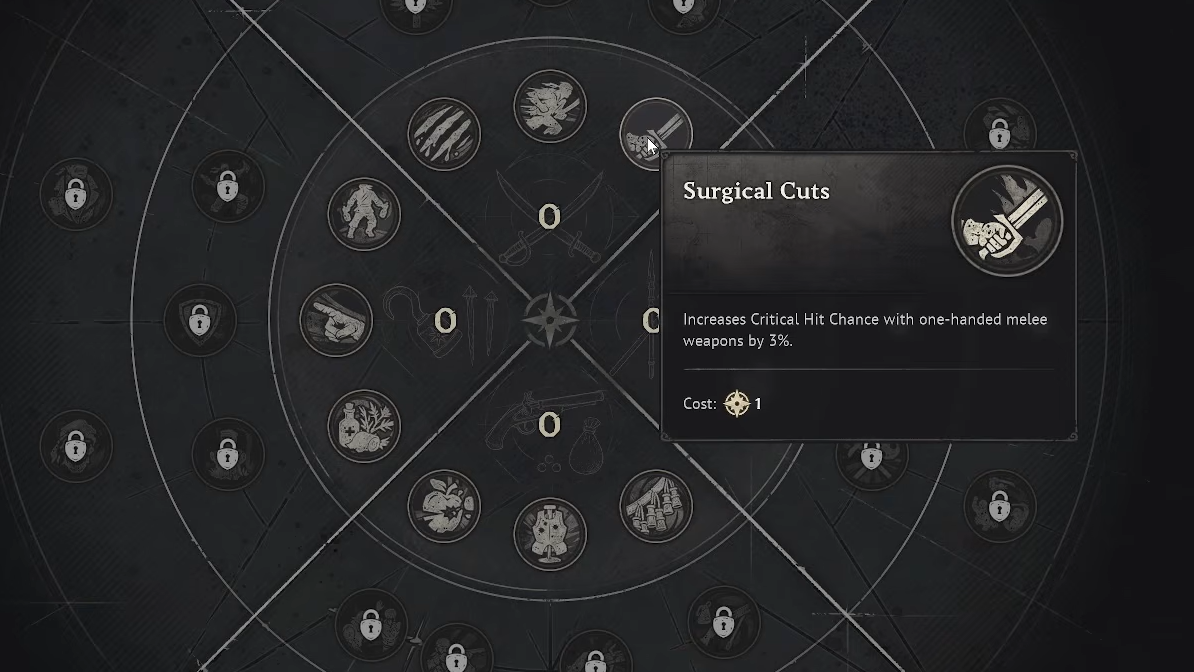
How the talent system works
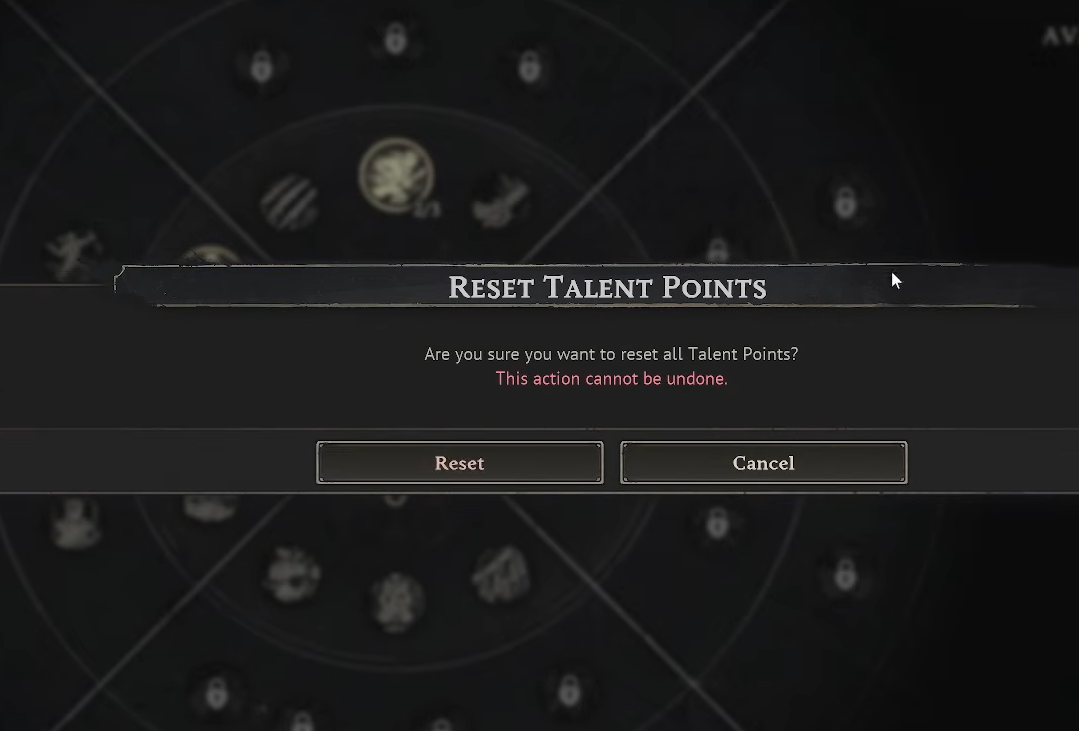
Talents are permanent passive upgrades spent from a separate pool of points earned on level-up. You open them by pressing Esc, going to Inventory, and selecting Talents. Points are not locked in. You can reset both your stats and your talents freely at any time with no cost, which means you can spec into gathering nodes for a mining run and then roll back into combat before a boss fight.
The tree is split roughly into survival and stamina on the left, melee and firearms in the middle, and naval, crafting, and outlaw branches on the right. The early game almost exclusively rewards the left side.
Marathon Runner is the first priority
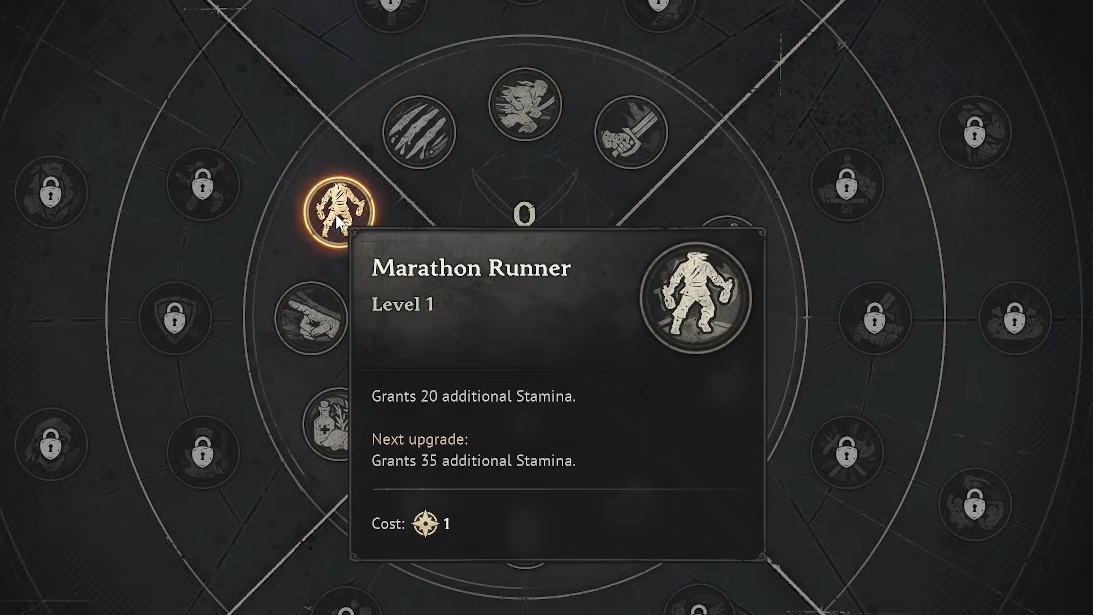
You start with only three pips of stamina, and everything drains it: sprinting, swinging a weapon, dodging, mining nodes, chopping trees. Marathon Runner adds a flat stamina bonus at each rank, maxing at +50. That is roughly a full extra pip, and it changes how every other system feels.
Max this before anything else. It stacks cleanly with points in Endurance and with armor sets that carry stamina-consumption reductions, so you compound the benefit rather than hit diminishing returns.
| Rank | Stamina bonus |
|---|---|
| 1 | +20 |
| 2 | +35 |
| 3 | +50 |
Agile cuts the cost of dodging
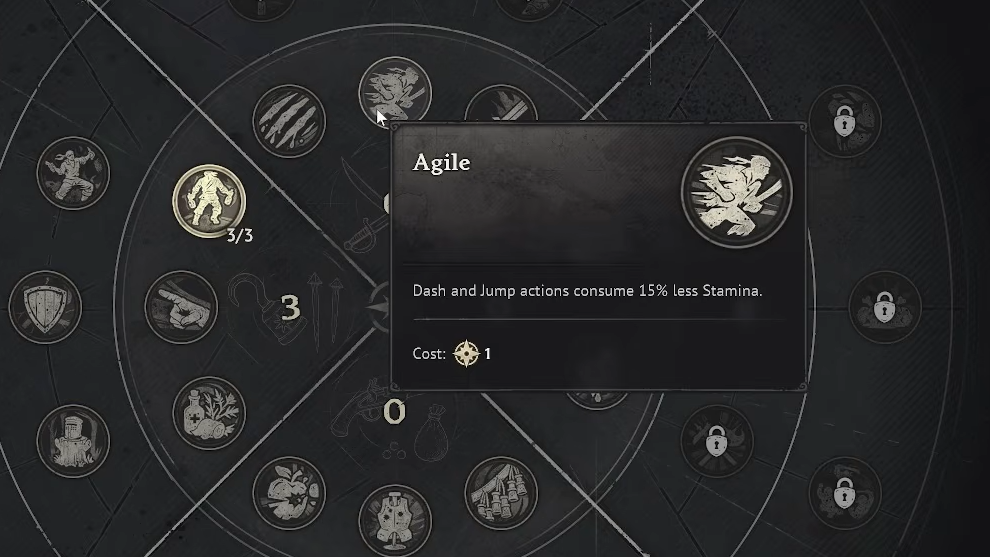
Parries in Windrose have a tight timing window and punish mistakes hard, especially when two or three enemies are pressuring you. Dodging is the safer default, and Agile reduces the stamina cost of dashing and jumping by up to 40 percent at max rank. Combined with the expanded pool from Marathon Runner, you can roll through group fights and reposition around bosses without ever watching the gauge drain to zero mid-animation.
Just a Flesh Wound for raw survivability
Most damage in the opening hours comes from melee. Enemy ranged attacks are easy to sidestep or break line of sight on, which means the real threat is whatever is swinging at you from arm’s length. Just a Flesh Wound grants up to 12 percent flat melee damage resistance at rank three. It applies regardless of weapon, armor, or build, making it one of the few universally correct picks in the tree.
| Rank | Melee damage resistance |
|---|---|
| 1 | 6% |
| 2 | 9% |
| 3 | 12% |
Stout Frame adds a second health bar’s worth of padding
Stout Frame provides flat health at each rank, up to +240 at max. For reference, each point of Vitality gives you 13 health, so this single talent is worth roughly 18 to 19 Vitality points. There is no attribute investment in the game that matches that rate of return in the early hours. If you have been dying to bosses in two or three hits, this is the fix.
Too Angry to Die is a free second life
On a fatal blow, Too Angry to Die revives you at 30 percent health. The cooldown is 16 minutes, which sounds long until you realize it resets between boss attempts and saves you from miserable corpse runs across an island. One point here removes an entire category of early-game frustration.
How this pairs with your stat points
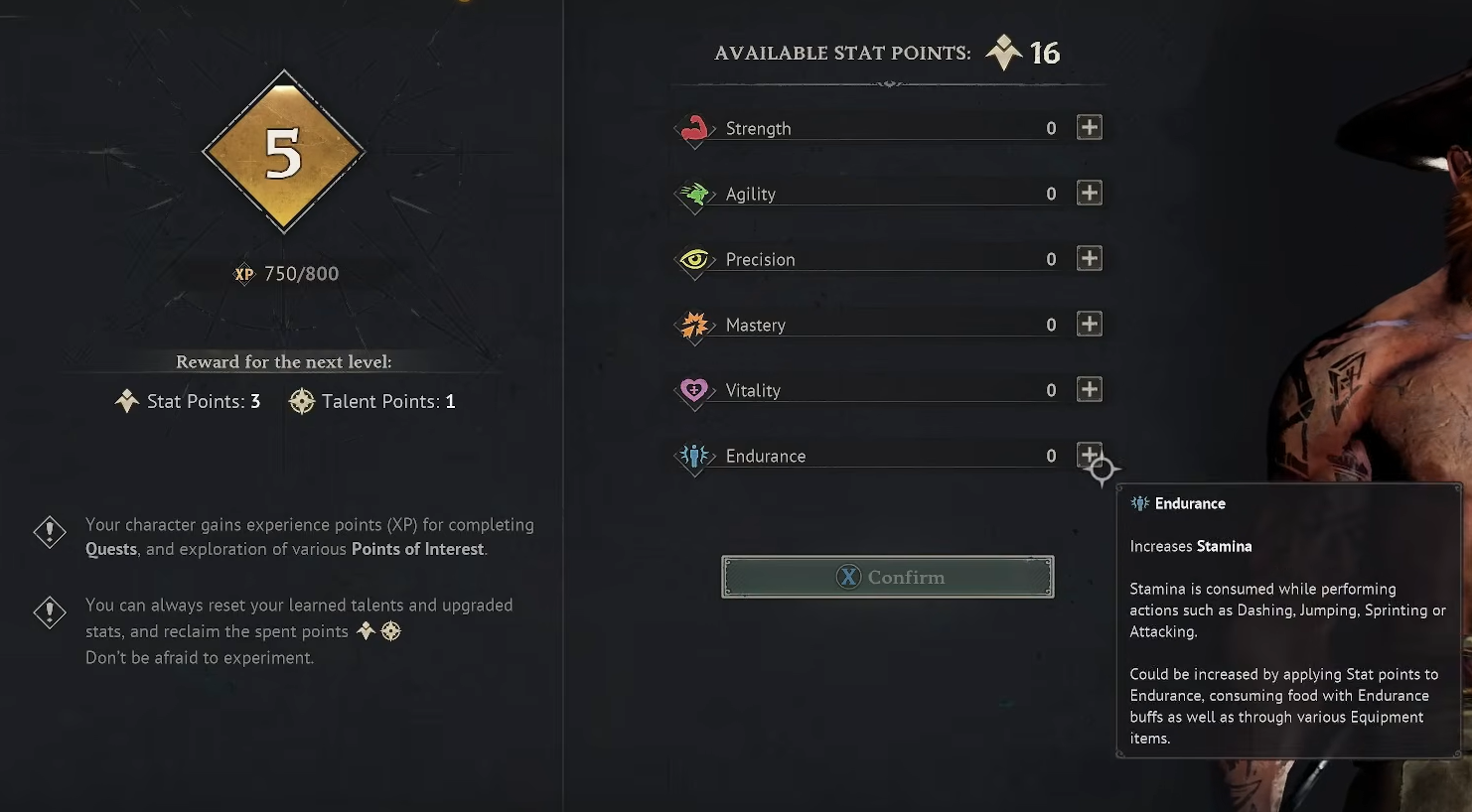
Talents sit on top of your attribute allocation, and the two should reinforce each other. Endurance gives you 5 stamina per point, Vitality gives 13 health per point. For a survival-first opening, split points evenly between Endurance and Vitality, then pour the remainder into the single damage stat that matches your weapon.
| Stat | Per point | Scales these weapons |
|---|---|---|
| Strength | Melee damage | Club, Halberd |
| Agility | Melee damage | Saber, Greatsword, Blunderbuss |
| Precision | Ranged/technical damage | Rapier, Pistol, Musket |
| Mastery | +0.5% crit chance | All weapons |
| Vitality | +13 health | — |
| Endurance | +5 stamina | — |
Do not spread points across multiple damage stats. Only one scales the weapon in your hand at any given time. A Rapier and Pistol build is worth calling out because both weapons scale entirely off Precision, making it the most point-efficient hybrid in the early game.
Suggested order for the first 10 to 15 points
What to avoid
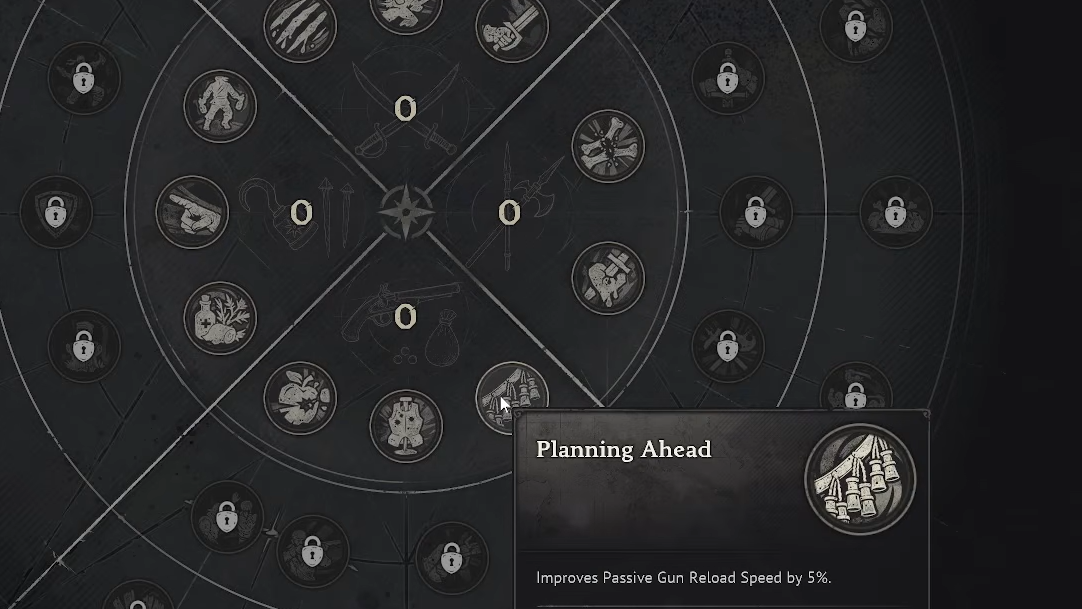
Damage-focused talents like Surgical Cuts or Planning Ahead look attractive on paper, but weapon tier upgrades close the damage gap faster than a few percentage points from the tree. Gun-based talents depend on a steady gunpowder supply, which you will not have yet. Mastery-adjacent crit nodes are better served by armor sets such as Privateer’s and by Razor-tier weapons, so paying for crit through the tree early is wasted value.
Resetting is free, so if you misallocate, walk back to the respec option and redistribute. The cost is time, not points.
When to branch out
Once the core five are handled, the tree opens up based on how you actually play. Saber and Rapier users benefit from Swashbuckler’s 10 percent light-attack stamina reduction. Halberd and Greatsword players should look at Heavy Handed for extra poise damage against shields. Parry-focused builds pick up Perfect Deflection and Riposte for the 20 percent counter-attack bonus. Gatherers dip into Pack Mule for +15 percent carry weight, Lumberjack and Prospector for yield bumps, and Artisan for 20 percent faster crafting at workbenches.
Naval players eventually want Shipwright’s Touch, Sea Legs, Wind Catcher, and Cannoneer, but none of those matter until you are actually engaging other ships. They are a mid-game pivot, not an opening move.
The opening-hour rule stays the same regardless of your endgame direction: fix stamina, fix melee survival, then specialize. Everything else can wait until you have stopped dying to the first boss.