
Status effects, called aggregates in Palworld, are elemental tags that either boost or blunt the damage a target takes. Landing one is not automatic. Each effect fills a hidden build-up meter, and it only triggers once that meter crosses a set point. Understanding those points, plus how effects overwrite each other, is what separates a wasted grenade from a clean double-damage window against a boss.
Quick answer: Standard enemies apply a status once build-up passes 100. Each time you re-apply the same status to a boss, its threshold doubles (100, 200, 400, 800), and raid bosses scale up toward 2000. Poison is the only status that never gets overwritten and can sit alongside another effect.
Status effect durations and damage multipliers
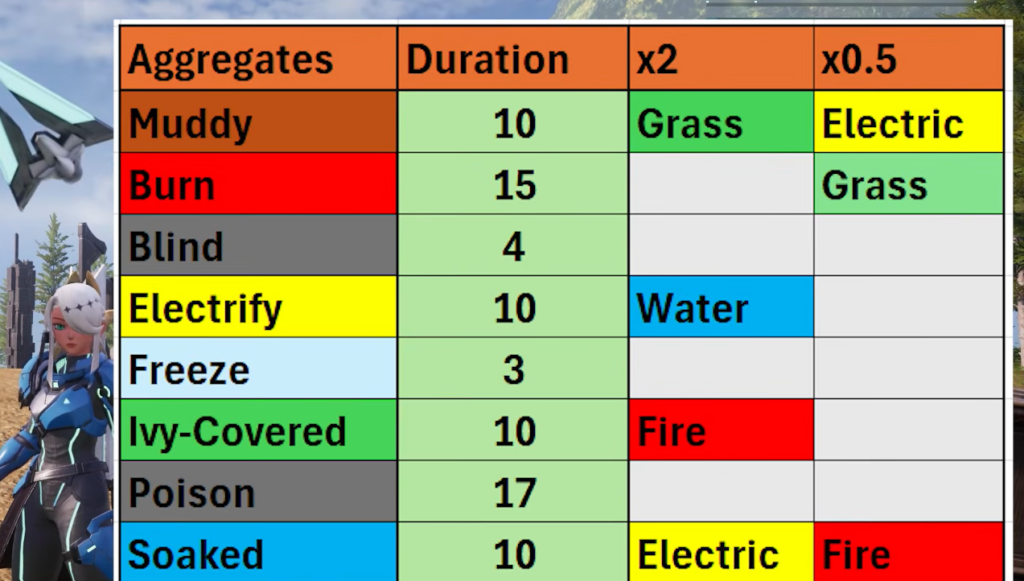
Every aggregate lasts a fixed number of seconds and, in most cases, changes how much damage a specific element deals to the affected target. A x2 entry means that element hits for double while the status is active; x0.5 means it hits for half. This is the core reason you set up a status before committing your big attacks.
| Status | Duration (sec) | Double damage | Half damage |
|---|---|---|---|
| Poison | 17 | — | — |
| Burn | 15 | — | Grass |
| Muddy | 10 | Grass | Electric |
| Electrify | 10 | Water | — |
| Ivy-Covered | 10 | Fire | — |
| Soaked | 10 | Electric | Fire |
| Blind | 4 | — | — |
| Freeze | 3 | — | — |
Freeze and Electrify also lock a target in place for a few seconds, and Ivy-Covered, Muddy, and Soaked slow movement. Ivy-Covered additionally blocks stamina actions like jumping and dodging. Poison and Burn deal steady damage over time, which is why they carry the fight even after you stop attacking.
How status thresholds scale on bosses
Regular enemies need only 100 points of build-up before a status pops. Bosses are stubborn. The first application still needs 100, but every re-application raises the bar. The meter climbs to 200, then 400, then 800, so keeping a status permanently glued to a boss takes progressively more effort.
Raid bosses push this to the extreme, with thresholds scaling toward 2000 points. Against those targets you cannot rely on a single grenade. You need a party built to feed build-up continuously, and you time your damage to land inside the short window a status stays active.
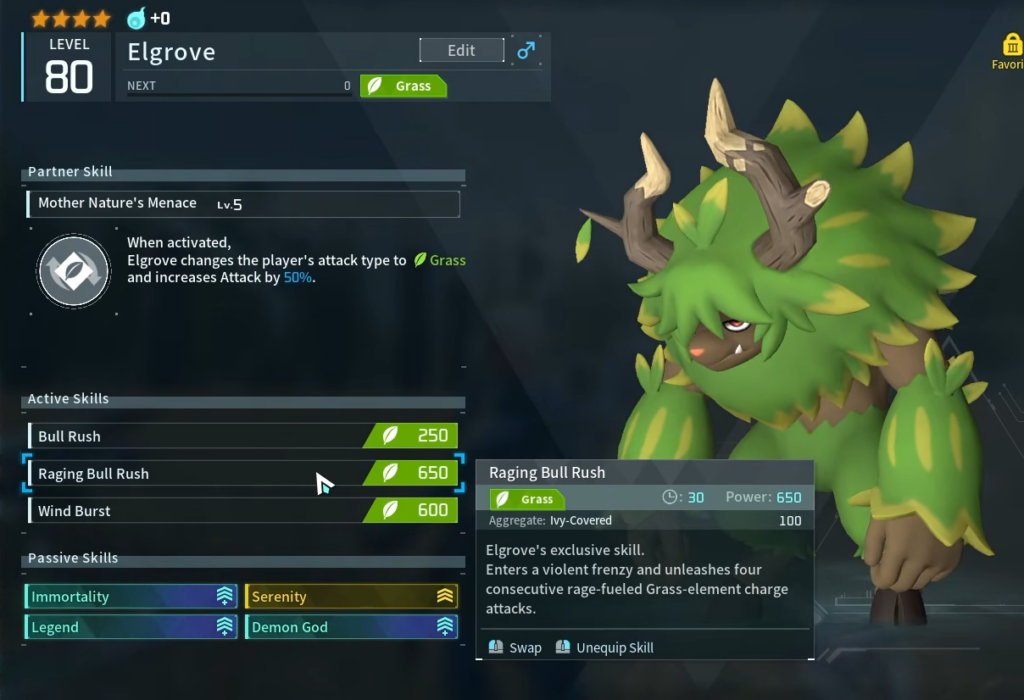
How to apply status effects
There are three reliable ways to build up an aggregate, and they stack together well.
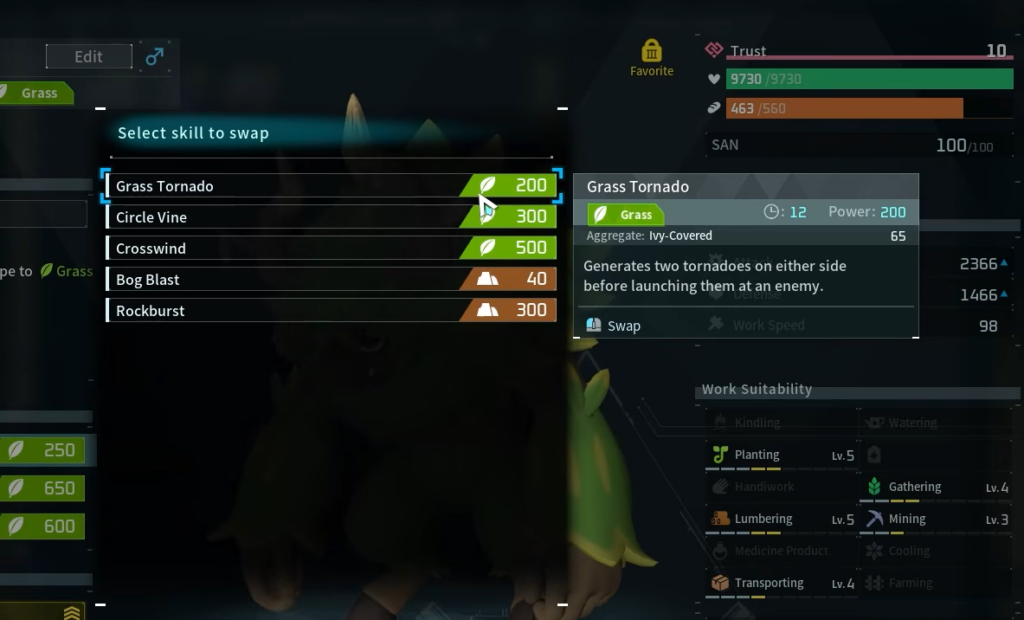
- Pal active skills. Elemental attacks from your Pals add build-up matching their element, for example Grass moves feed Ivy-Covered and Water moves feed Soaked.
- Elemental grenades. Grass, Ground, and Shock Grenades each apply 100 points of build-up instantly, enough to trigger the status on a standard enemy in one throw.
- Bows and crossbows. Elemental arrows add build-up on hit, which is useful for topping off a meter you have already started.
You can also let party Pals apply statuses through your own weapon. Certain Pals kept in the active party add their status to your player attacks. Venusa’s Snake’s Sagacity adds Blind, Snock’s Charging Shell adds Electrify, and Renjishi’s Stage Combat adds Burn. Because each shot contributes build-up, rapid-fire weapons like shotguns and fast rifles stack these party effects far quicker than slow, single-shot weapons.

Overwriting rules and the Poison exception
A target can carry only one standard status at a time. Applying a new one immediately replaces whatever was there, and this can cost you damage if you are not careful. Burn instantly overwrites Ivy-Covered, which cancels the Fire double-damage bonus you set up. In the same way, Soaked overwrites Electrify, swapping one setup for another mid-combo.
Poison is the single exception. It cannot be overwritten by any other status and ticks alongside a second effect. That independence, combined with its 17-second duration, is why Poison is one of the strongest aggregates to run. Blind sits at the bottom, lasting only 4 seconds with no damage multiplier attached.
Note: the overwrite problem has a workaround. Because Burn wipes Ivy-Covered, you can pre-build a boss’s Burn resistance with Fire Grenades first. Once the boss resists Burn, your Ivy-Covered stays put, and the Fire double-damage window survives long enough to exploit.
Element immunities that block a status
Some Pals simply cannot receive certain statuses because of their element. Trying to apply one to an immune target wastes build-up entirely.
| Status | Immune elements |
|---|---|
| Burn | Fire, Water |
| Freeze | Ice, Fire |
| Electrify | Electric, Ground |
| Soaked | Water |
| Muddy | Ground, Grass |
| Ivy-Covered | Grass, Fire |
| Blind | Dark |
| Poison | None |
Neutral and Dragon Pals have no elemental immunities, so any status lands on them. Nothing resists Poison, which is another reason it stays useful against every kind of target.

Building teams around a damage window
Partner skills turn a status into a serious damage spike. Several Pals reward you for hitting a target that already carries a specific effect.
| Pal | Partner skill | Effect |
|---|---|---|
| Needoll | Hug Me Please | +85% damage to enemies affected by Ivy-Covered |
| Prixter | Phantom Venom | +80% damage to enemies affected by Poison |
| Finsider Ignis | Ember Chamber | +40% Fire damage to enemy weak points |
| Wixen | Lord Fox | Adds Fire attribute to your attacks and raises attack |
A Fire-focused setup pairs these ideas neatly. Apply Ivy-Covered to make Fire deal double, keep Needoll active for the extra 85% against ivy-covered targets, and add Finsider Ignis to punish weak points. Because Wixen grants your attacks the Fire attribute while it can also apply Ivy-Covered, it lets a single Pal both set up and cash in the window.
Against a raid boss like Blazamut Ryu, the play is to stack Soaked and Electrify with the right timing. Both statuses last 10 seconds, so aligning them opens roughly a 10-second double-damage window where your team dumps everything. The tighter you overlap the effects, the more of that window you actually use.

Treat status effects as the setup, not the payoff. Pick the aggregate whose double-damage element matches your team, respect the immunities so you never waste build-up, and watch the overwrite order so a rushed Burn does not erase the Ivy-Covered you just earned. Do that, and even a raid boss’s 2000-point wall becomes a predictable rhythm of build-up and burst.