
Skills are the part of a Responder that sticks around long after a lucky crowbar breaks. In No More Room in Hell 2, you don’t build a loadout from a clean menu. Instead, the game hands you three random skills at set levels and asks you to keep one. That constraint is the whole game. The real question is never “what’s the perfect build,” it’s “which of these three do I grab right now?”
Quick answer: Prioritize stamina, health, and ammo economy first. Athlete, Thick Skin, Sturdy Body, and Scavenger are safe grabs on almost any Responder. Take weapon-specific skills (shotgun, heavy rifle, pistol, melee) only when they match the gun you actually carry, and reroll anything that fights your role.
How skill picks work in No More Room in Hell 2
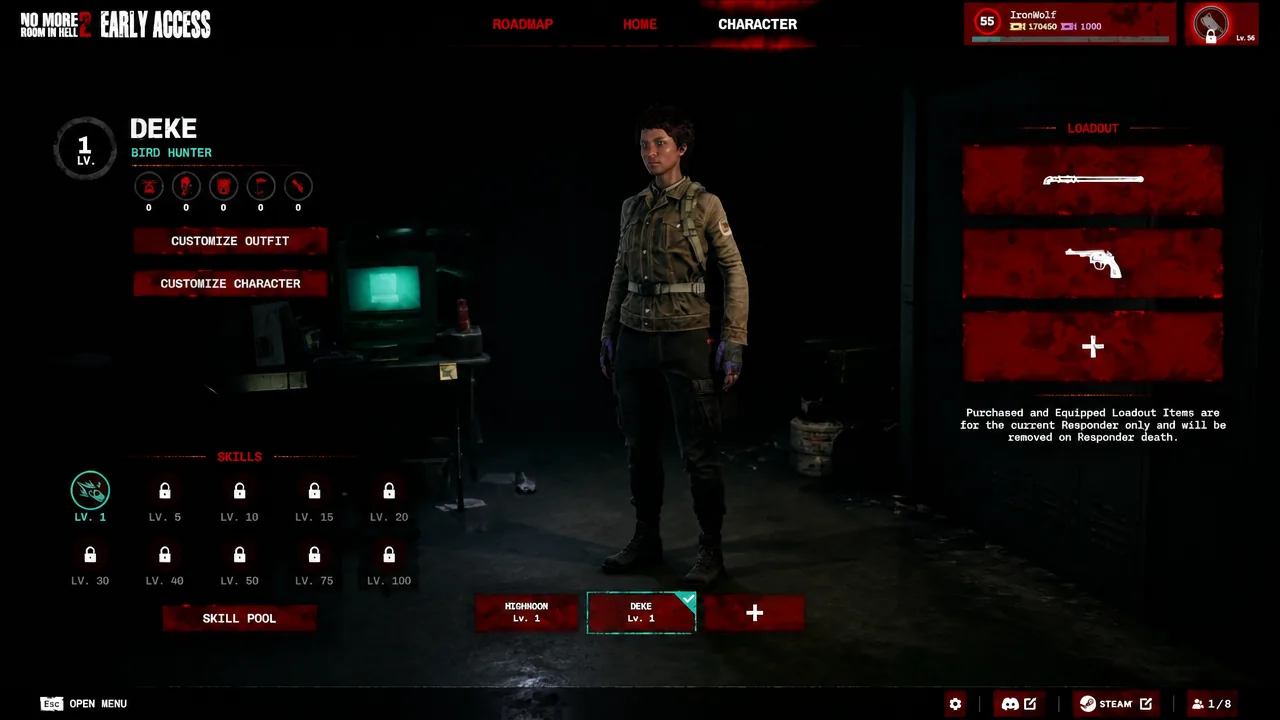
Every Responder starts with one job-based skill tied to their pre-outbreak career, then fills the rest of their slots as they level. You reach picks at Responder levels 5, 10, 15, 20, 30, 40, and 50, with 50 as the max rank. At each threshold the game offers three random skills from your unlocked pool and you choose one.
The pool isn’t fully open, either. Some skills only appear once you’ve already taken a prerequisite. Hard Blow, for example, won’t show up unless you previously grabbed Rush, Hitman, or Butcher. Athlete, Thick Skin, and Sturdy Body all require an earlier “survival” skill such as Adrenaline Rush, Limbo, Resilience, Acquired Immunity, Skilled Medic, or Quiet Steps in a prior slot. Plan your early picks so the strong ones can appear later.
What changed in the 1.0 skill pool
Before you copy an old Early Access screenshot, note that the Armageddon 1.0 update reshuffled the roster. Averaging, Guts, and Teddy Bear were removed from the live pool. Three new reload skills were added: Handgun Reloading, Rifle Reloading, and Shotgun Reloading, each speeding up reloads for its matching firearm family. If a stale ranking still lists the removed skills, reroll them out of your head.
Progression also moved. The Expert unlock requirements were originally tied to your account level, but 1.0 shifted progression toward the Assignments and Merits system, so the exact unlock paths may differ from older tables. The skill effects themselves carried over intact.
No More Room in Hell 2 skills tier list
This ranks individual skills by pick priority, not by how they perform inside one hyper-specific build. Treat S-tier as “take it over almost anything,” A-tier as “take it when it matches your weapon lane,” and B-tier as roll-dependent filler you grab when the other two options are worse. Keep in mind that many low-tier skills climb sharply once their Expert version is unlocked.
| Tier | Skills |
|---|---|
| S | Athlete, Thick Skin, Sturdy Body, Scavenger, Marathon Runner, Vulture, Mule, Caravan, Butcher, Headhunter, Hitman, Quiet Steps, Skilled Medic, Stayin’ Alive, Healing Item Stack, Resident Genes, Lucky Pathogen, Builder, Grenadier |
| A | Overkill, Tight Shot, Steel Chamber, Headblown, Hard Blow, Penetrating Shot, Mohawk, Rush, Adrenaline Rush, Acquired Immunity, Limbo, Locked On, Longer Battery, Resilience |
| B | Steady Shot, Steady Hand, Hellfire, Eagle Eye, Icarus, Doorbreaker, Foreman, Heavy Shoves, Steel/Wicked handgun nodes (Wicked), Winged, Deprived, Handgun / Rifle / Shotgun Reloading |
Why the S-tier skills earn the top slot
The strongest skills fix problems every Responder faces regardless of weapon. Athlete is the melee economy backbone. More stamina means more swings, more sprints, and more shoves before you gas out during a grab, which is when frontliners die. Thick Skin is a flat maximum-health boost with no downside, and Sturdy Body cuts incoming attack damage, so both belong on any build that plans to stand near zombies.
Ammo scarcity is the real boss in this game, which is why Scavenger sits so high. More ammo per pickup directly fights the thing that ends most runs. Weight-cut skills like Vulture, Mule, Caravan, and Healing Item Stack matter for the same reason. They let one player bank supplies for the squad’s future. Caravan trades stamina and health for carry weight, so pair it with Athlete and Thick Skin to offset the strain.
On the support side, Skilled Medic, Stayin’ Alive, Resident Genes, and Lucky Pathogen keep the squad upright and buy time against infection. At least one squadmate should carry the medical line every queue. Quiet Steps rewards city maps and stealth objectives, while Butcher, Headhunter, and Hitman turn melee into a reliable, ammo-free answer to walkers.
A-tier: strong, but lane-dependent
A-tier skills are excellent inside their weapon family and mediocre outside it. Overkill and Tight Shot are the shotgun package. More pellets plus tighter spread pushes shotguns over the top, so grab both if you run one. Steel Chamber anchors heavy-rifle builds, Headblown pushes handguns toward one-shot headshot breakpoints, and Penetrating Shot plus Mohawk clear packed corridors by punching through multiple targets.
Hard Blow and Rush reward two-handed blunt weapons with cheaper, harder staggers, which is the spine of crowd control on Survival doorways. Defensive utility like Adrenaline Rush, Acquired Immunity, Limbo, and Resilience isn’t flashy, but each one quietly keeps a Responder alive through the moment that would otherwise wipe them.
B-tier and the new reload skills
B-tier skills aren’t bad. They’re comfort and situational picks that rarely decide a run. Steady Shot, Steady Hand, and the rest of the accuracy package reduce recoil and spread, which feels nice but seldom changes the outcome. Doorbreaker, Foreman, and Heavy Shoves shine on breaching kits and do little elsewhere. Icarus and Winged extend shotgun and SMG range for players who lean into those weapons.
The 1.0 reloading skills land here for now. Faster reloads have real value on a gun-forward build, and a pump shotgun genuinely loves Shotgun Reloading, but stamina and health picks still come first on most Responders. Their placement is provisional while the meta settles after the wipe.
Expert versions and prerequisites
Every skill has an Expert upgrade that dramatically improves its effect, and some jump tiers because of it. Base Thick Skin adds 10% maximum health while its Expert version adds a significant boost. Expert Marathon Runner removes the running stamina cost entirely, and Expert Acquired Immunity makes you fully immune to infection. Because Expert unlocks compete for slots and require account progress, invest in the ones tied to the role you actually play.
| Skill | Base effect | Common prerequisite |
|---|---|---|
| Athlete | Increased stamina | A prior survival skill (Adrenaline Rush, Limbo, Resilience, Acquired Immunity, Skilled Medic, or Quiet Steps) |
| Thick Skin | Increased maximum health | Same survival-skill requirement as Athlete |
| Sturdy Body | Reduced damage from attacks | Same survival-skill requirement as Athlete |
| Hard Blow | More two-handed stagger damage | Rush, Hitman, or Butcher first |
| Headhunter | Increased melee headshot damage | Rush, Hitman, or Butcher first |
| Healing Item Stack | Medical items weigh less | Scavenger, Longer Battery, Builder, Stayin’ Alive, or Grenadier first |
| Mule | Increased backpack capacity | Scavenger, Longer Battery, Builder, Stayin’ Alive, or Grenadier first |
| Overkill / Steel Chamber | More pellets / more heavy-rifle damage | Headblown, Eagle Eye, Hellfire, or Tight Shot first |
Reroll advice and how this ranking was built
Rerolls cost credits, but they’re worth spending. A Medic staring at three Marksman rolls should reroll rather than settle. Leave a flexible slot or two on every build so map modifiers and the swing between Survival waves and Scenario finales can shift your priorities. After a permadeath wipe, rebuild the same reliable spine instead of gambling on a brand-new identity for every Responder.
Placements here weigh how many builds a skill helps and how strong the effect is, with extra credit for stamina, health, and ammo economy since those decide the most runs. This ranking reflects the 1.0 Armageddon pool, including the removal of Averaging, Guts, and Teddy Bear and the addition of the three reload skills. Weapons spawn and disappear, but skills stay with a Responder until permadeath takes them, so pick for the character you actually want to keep extracting.