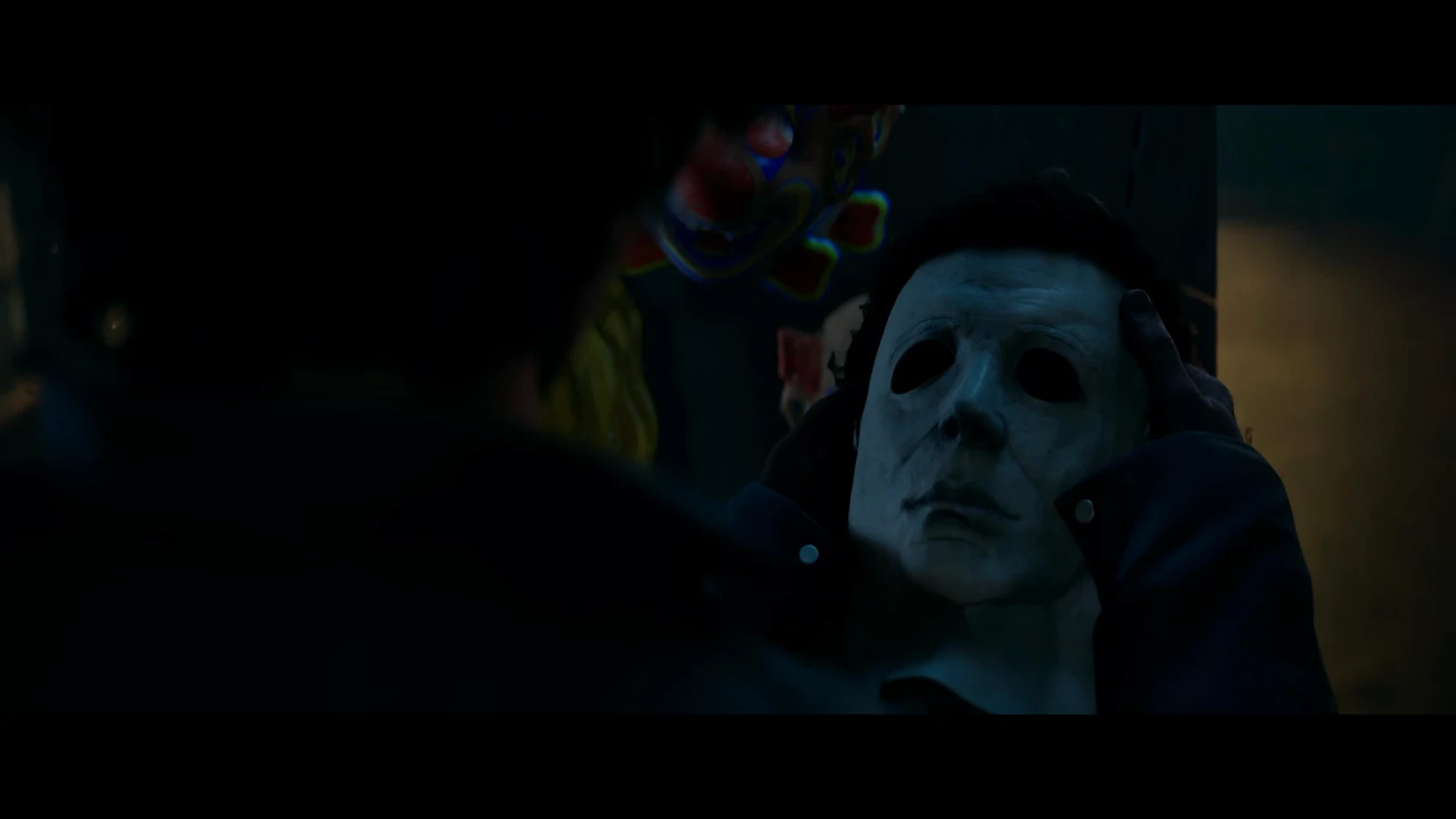
Michael Myers can no longer walk up to a survivor and instantly execute them in Halloween: The Game. Patch 1.0.3 reworks how grabs turn into kills, tying the outcome to Michael’s Bloodthirst level, the victim’s Stalk tier, and whether he is pressed against something he can kill them with. When those conditions are missing, the grab becomes a button-mashing struggle that either player can win.
Quick answer: A grab is only an unavoidable kill when Michael is at Bloodthirst Tier 3 with the victim at Stalk Tier 2 or higher, or at Bloodthirst Tier 2 with the victim at Stalk Tier 3. Otherwise a struggle minigame decides it.
What Patch 1.0.3 changed about Michael’s grab
Before the update, a grab was effectively a free kill. Michael could find a survivor, grab them, and run an execution regardless of how much he had stalked them. The patch removes that guarantee. Grabs now only end in an automatic execution when specific tier requirements are met, which pushes players toward actually stalking targets rather than rushing them.
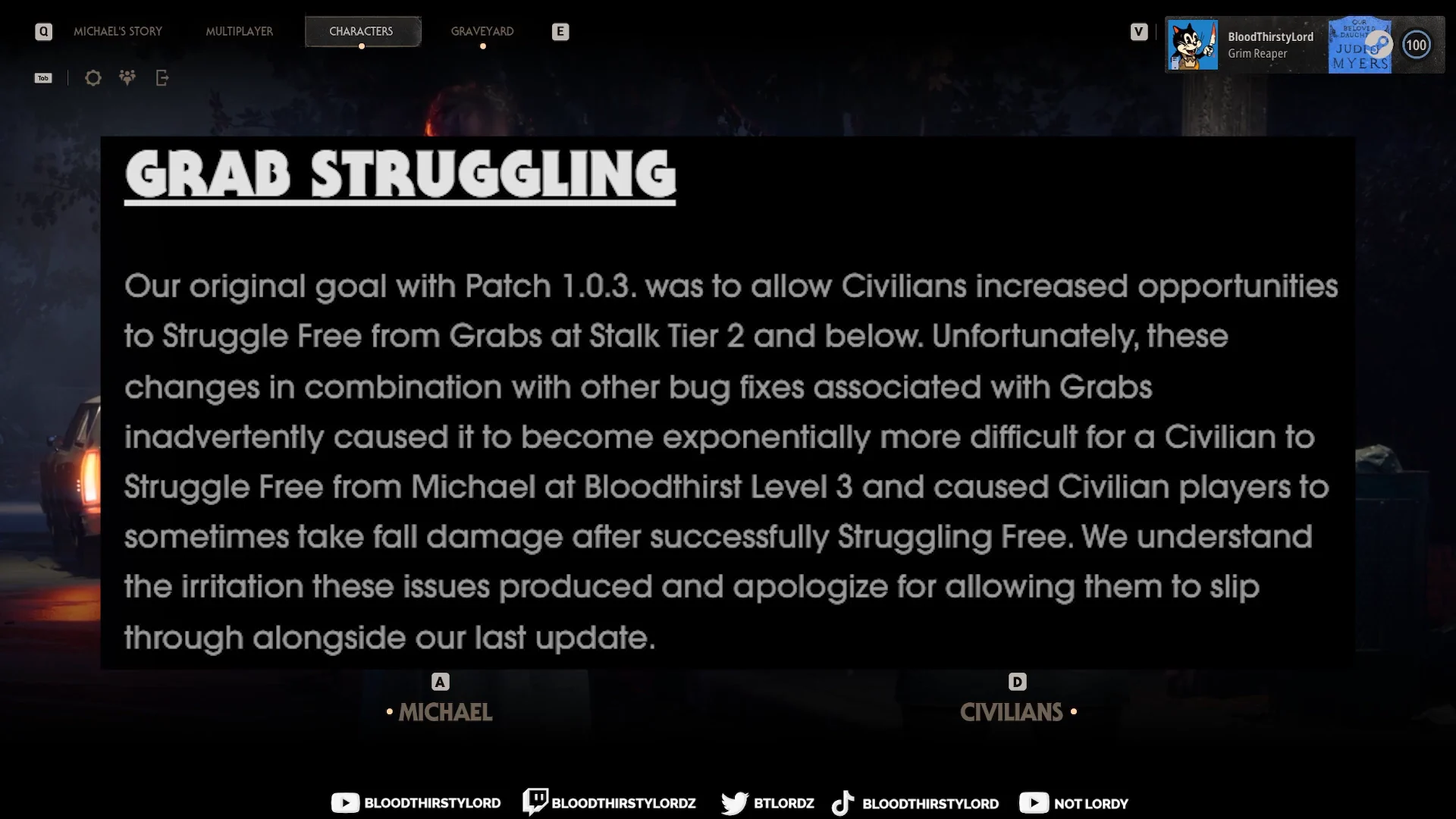
The patch notes for version 1.0.3 call out two fixes directly: grab escapes at Bloodthirst Level 3 and a fall-damage bug on uneven terrain after a survivor breaks free. The Bloodthirst Level 3 change is the core of the grab rework and the reason a top-tier Michael can still secure kills without a struggle.
The exact tiers that guarantee a grab kill
Two things decide a guaranteed execution: Michael’s Bloodthirst tier, which he builds up over a match, and the victim’s Stalk tier, which he raises by watching that specific target. Reaching the right combination of both means the survivor cannot break out of the grab.
| Michael’s Bloodthirst | Victim’s Stalk | Result |
|---|---|---|
| Tier 3 | Tier 2 or higher | Guaranteed execution, no struggle |
| Tier 2 | Tier 3 | Guaranteed execution, no struggle |
| Below either combo | Any | Struggle minigame triggers |
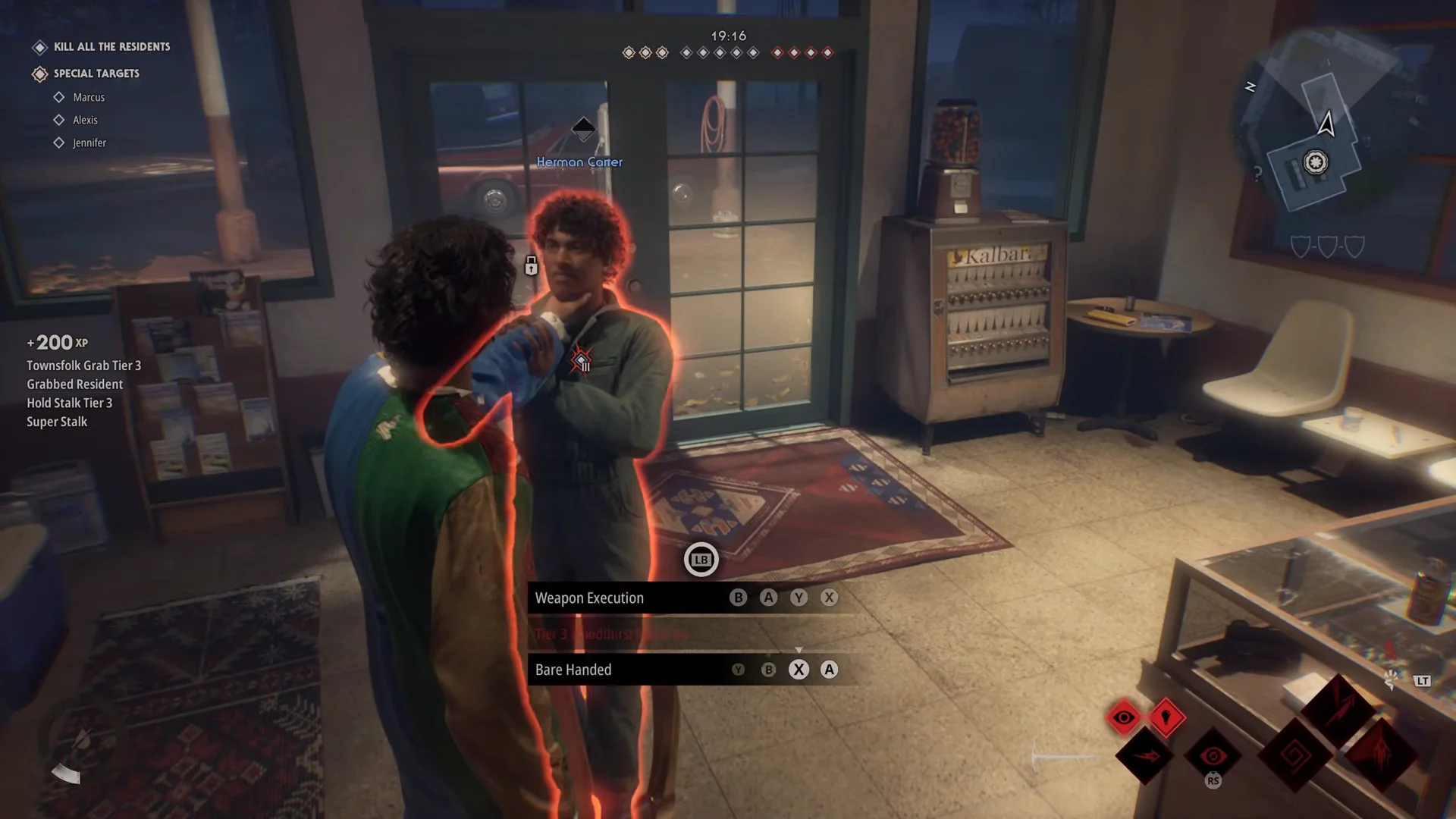
This is why a fully built Michael at Bloodthirst Tier 3 can grab a lightly stalked survivor and kill them, while an under-prepared Michael risks a fight even against the same target. The grab opens the execution menu with options such as bare-handed, weapon, and Bloodthirsty finishers once the requirement is satisfied.
Environmental executions bypass the tier check
There is one route around the Bloodthirst and Stalk requirement. If Michael grabs a survivor while standing directly against an interactive object, he can trigger an environmental execution that the target cannot escape. This works with hazards and props such as a wall, a stove, a counter, or a pool table.
Positioning is strict. Michael has to be right on top of the object for the context kill to appear, and standing even slightly too far away causes the attempt to fail. In practice this covers finishers like a fireplace roast, a heated stovetop kill, and a wall pin.
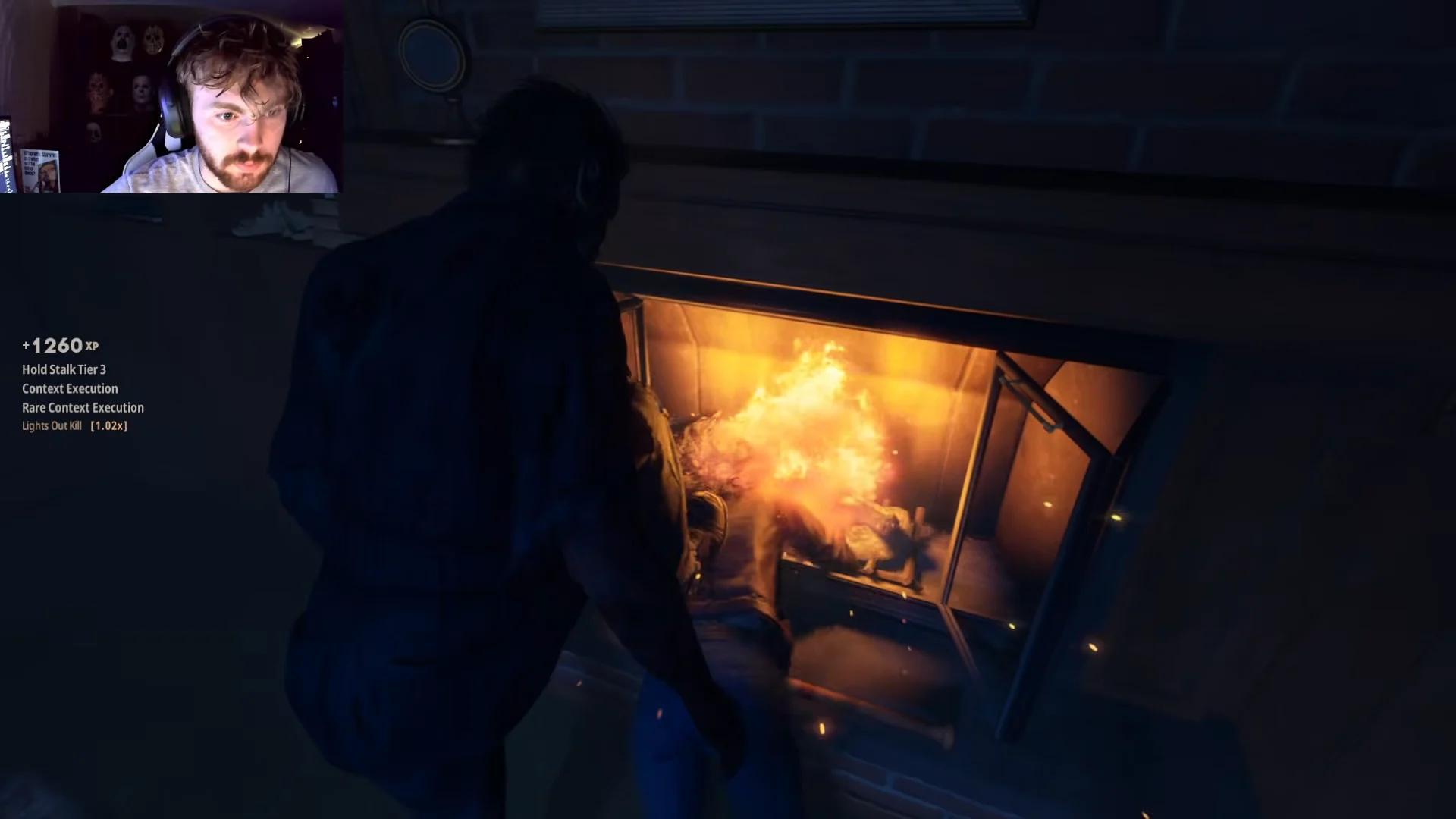
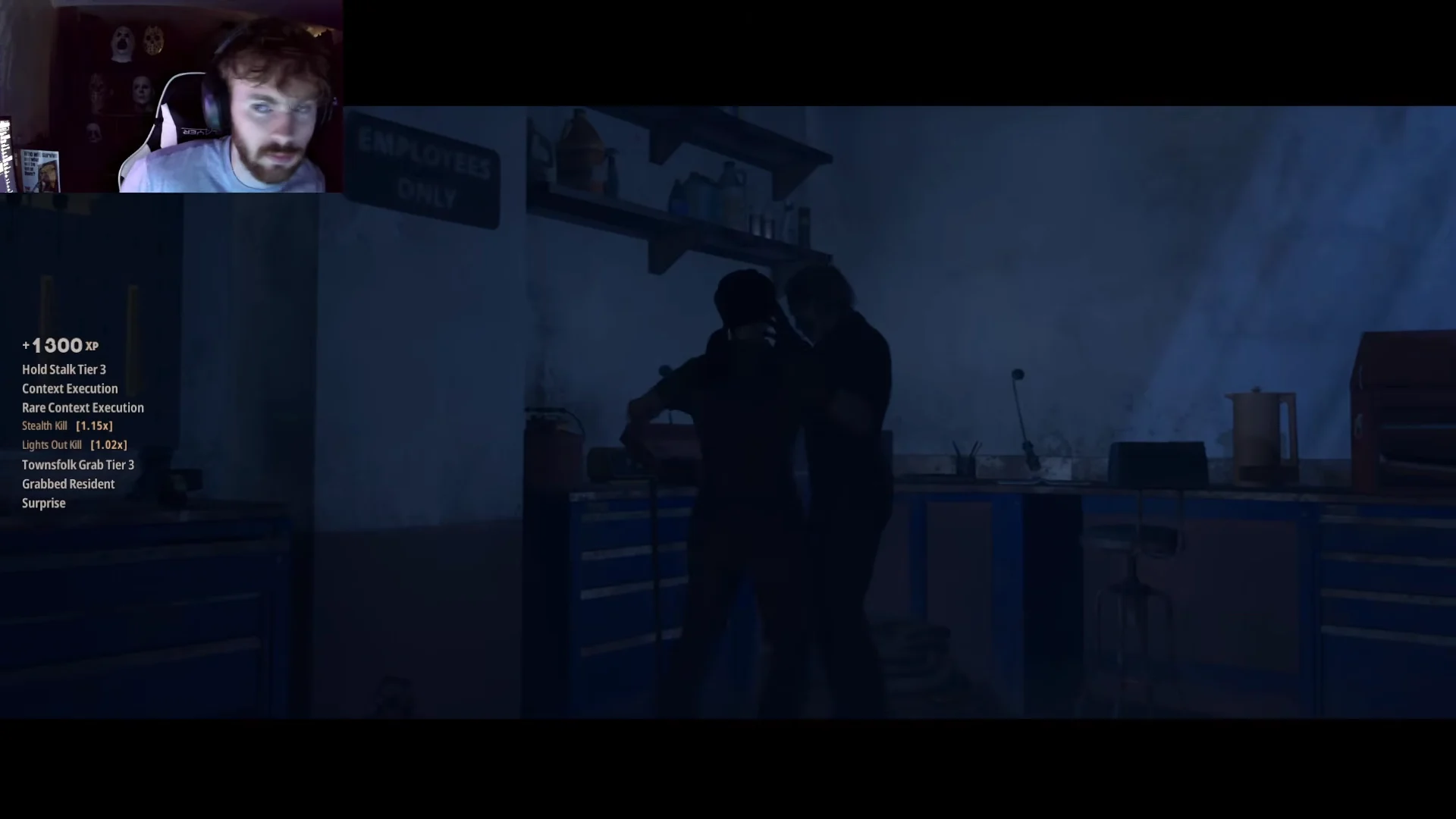
Because these kills ignore the tier check, they give Michael a reliable option early in a match before Bloodthirst is built. A grab near a workshop table or a kitchen appliance can end a survivor even at low Bloodthirst, provided he lines up on the object.
The struggle minigame when the grab is not secure
When the tier requirement is not met and there is no object to use, the grab starts a struggle minigame. Both players mash prompt inputs, such as the LT and RT triggers or face buttons, and the winner decides what happens next.
If Michael misses a prompt or gets out-mashed, the survivor immediately breaks free and stuns him, opening the door for an escape. Win the mash, and Michael proceeds to the execution. The struggle applies to more than civilians, since police officers who respond to the map can also break out of grabs when prompts are missed.
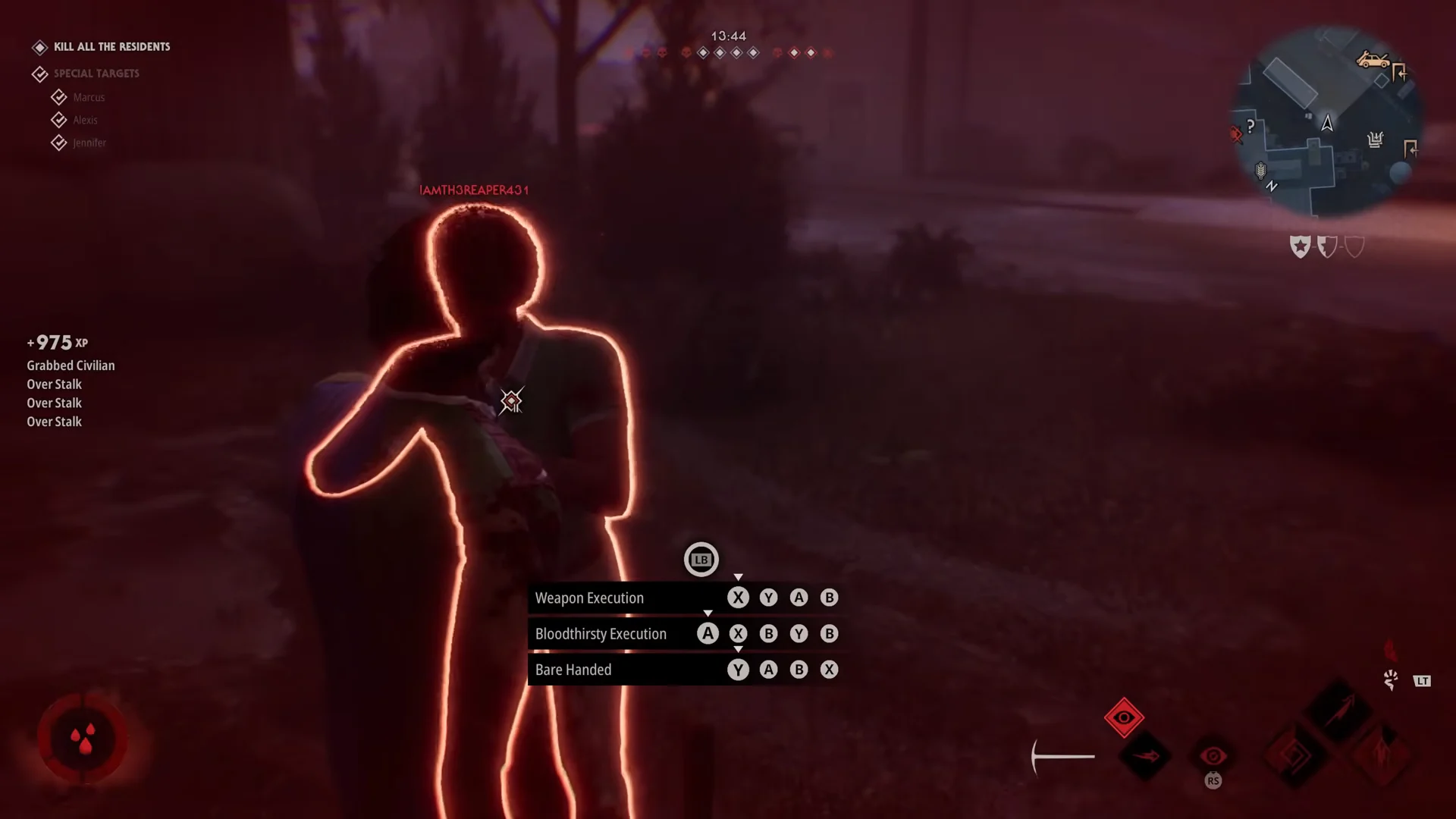
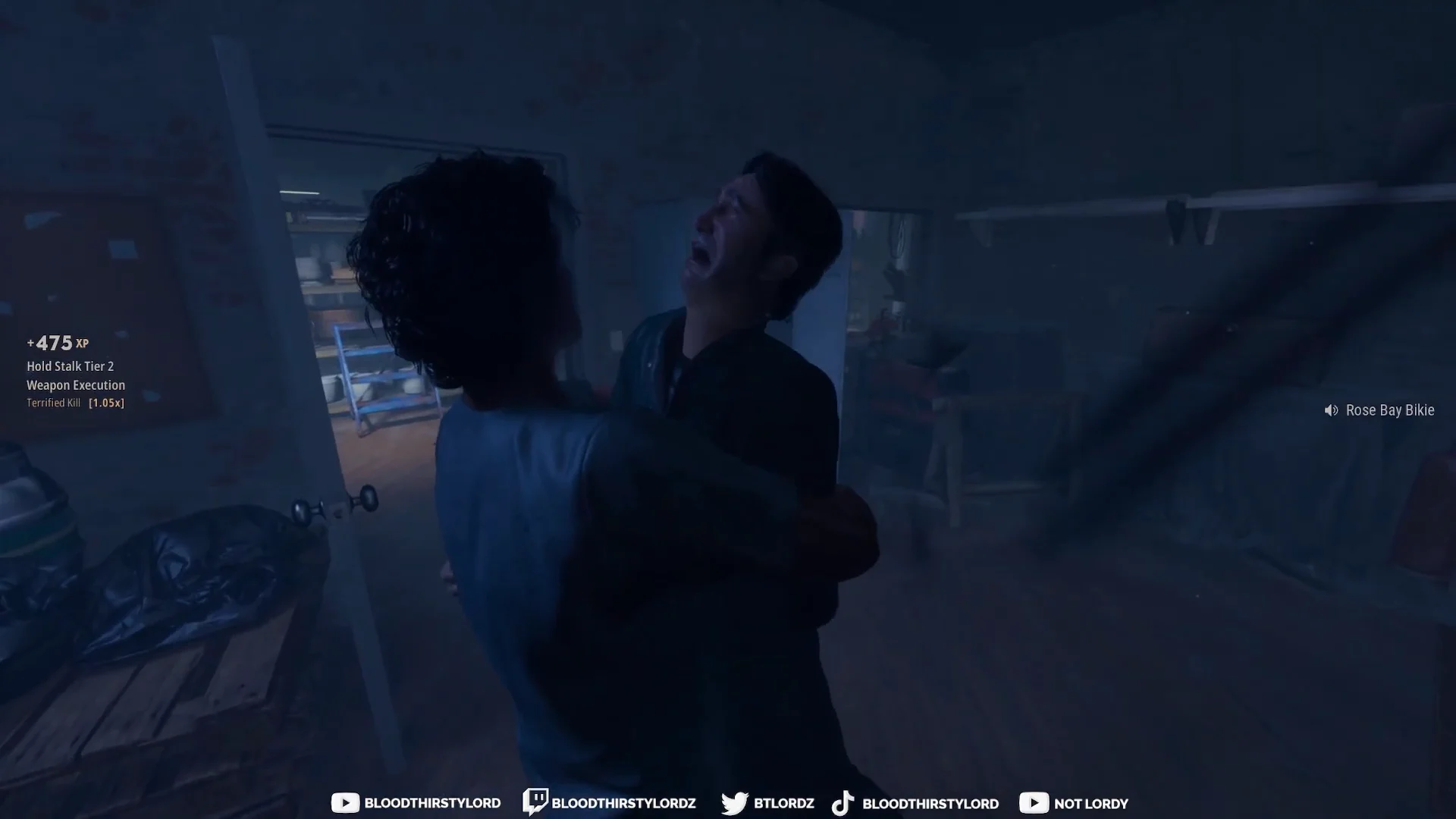
You know the grab succeeded when the execution animation plays and the target is confirmed killed, with special targets showing an on-screen kill message. A failed grab instead ends with the survivor slipping loose and Michael briefly stunned.
Civilian Capability changes how fast victims escape
Not every survivor resists a grab equally. A character’s Capability stat directly affects grab defense, and higher Capability means a faster break-free during the struggle. Bob has a Capability rating of 9, the highest in the game, which makes him escape noticeably quicker than low-Capability characters.
The practical effect is that the same grab can play out very differently depending on who Michael catches. Against a weak-Capability civilian the mash is easy to win, while a high-Capability survivor like Bob can beat the prompt and get away, which is where meeting the tier requirement or using an environmental object matters most.
Car hiding and the grab bug near vehicles
Vehicles play into stalking as well. Michael can hide inside parked cars and watch nearby survivors through the windows while staying out of sight, which lets him raise Stalk tiers on several targets at once, including groups refueling or repairing a car.
Grabbing a survivor while clipped against a vehicle can trap Michael inside the car’s geometry, warping his limbs and desyncing the camera and animation. This car grab bug is a known problem when attempting a grab right on a vehicle’s model.
Taken together, the changes make stalking the point again. Building Bloodthirst, tiering up a target’s Stalk, and using the environment now separate a clean kill from a survivor breaking loose, and the higher a victim’s Capability, the more those preparations decide the outcome.