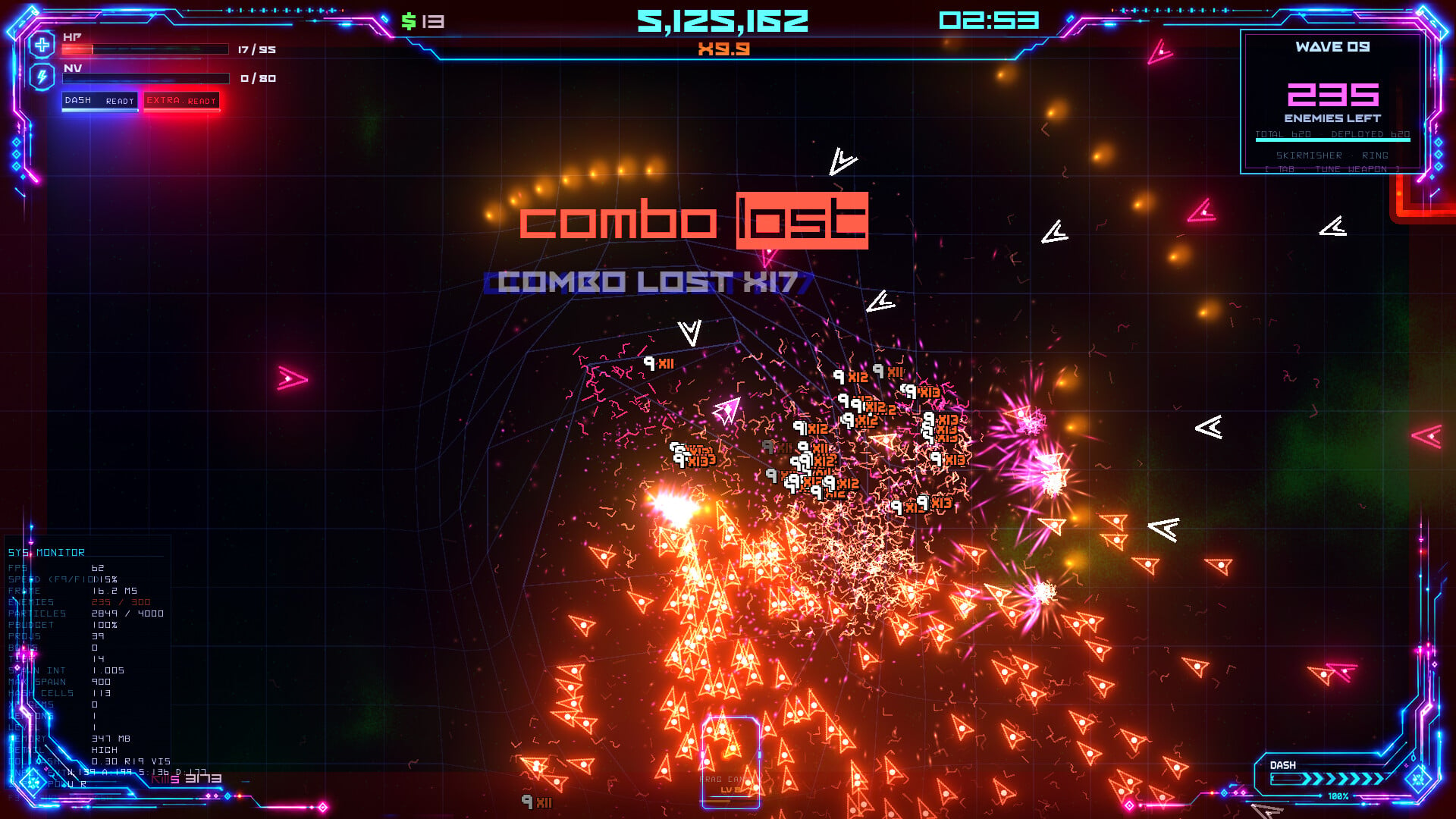
Geometry Rift: Apocalypse is a neon bullet hell roguelite from Dad & Son Games that leans hard on two obvious influences: the frantic, screen-filling chaos of Geometry Wars and the compulsive build progression of Vampire Survivors. You pilot a geometric ship, thousands of enemies swarm in, and your job is to shoot, dodge, and stack power-ups until you become strong enough to survive. A playable demo is out now, and the studio has been pushing players toward it while the full game is still in development.
Quick answer: The demo is free to try on Steam right now, and the full PC version is planned for Q1 2027, with Nintendo Switch and PlayStation versions also announced.
What Geometry Rift: Apocalypse actually is
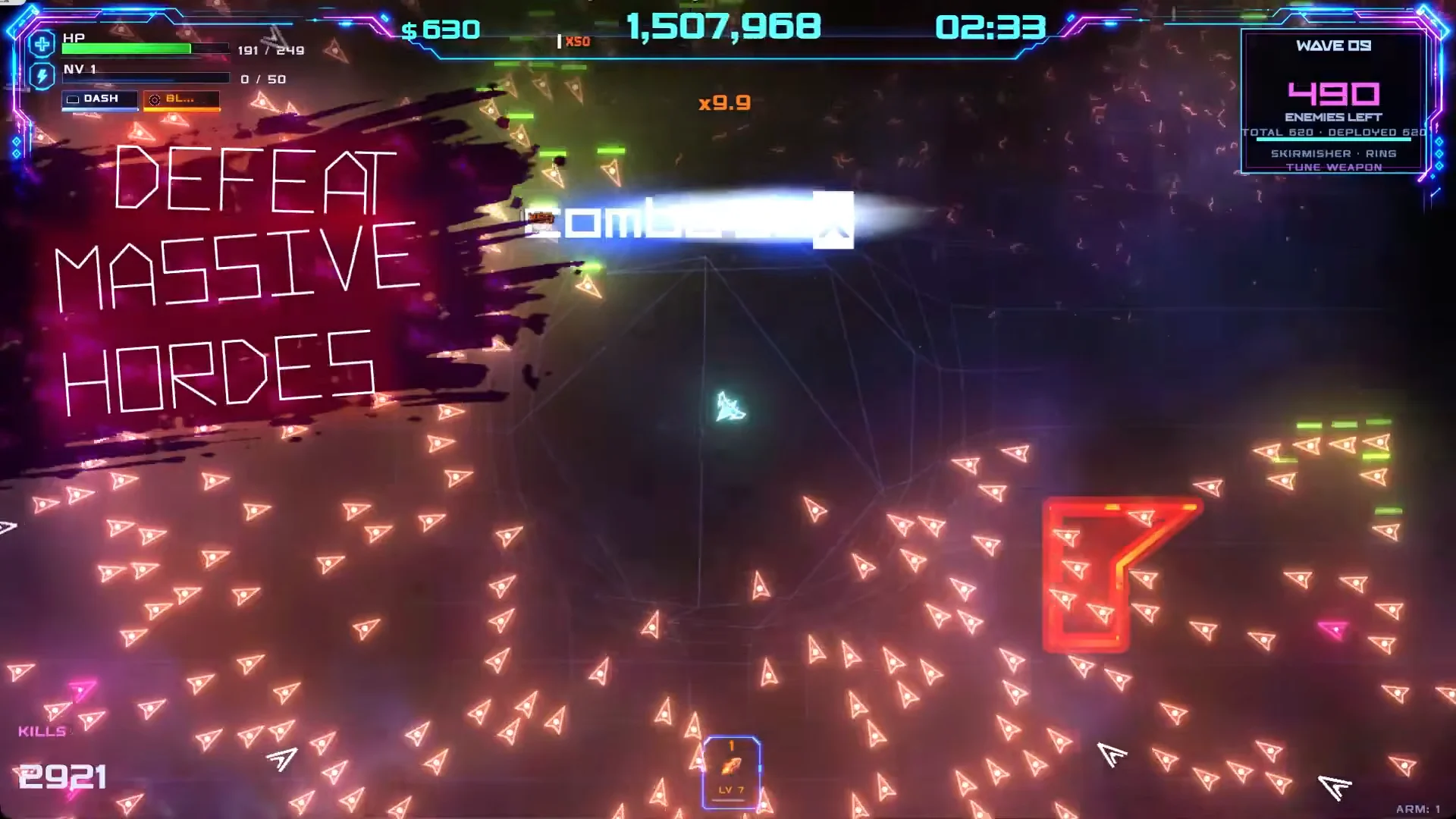
At its core, this is an arcade action roguelite built around auto-fire combat and constant enemy pressure. Waves of geometric shapes flood the arena, and clearing them fast keeps your combo and score climbing. The design goal is the “just one more run” loop: short, intense sessions where you unlock new weapons and gear, then start over stronger.
You are not locked into one control style. You can lean on auto-fire and focus entirely on dodging, or switch to twin-stick manual aiming if you want direct control over where your shots land. That flexibility is a deliberate feature rather than a difficulty setting.
Worlds, megabosses, and retro challenges
The campaign runs across four distinct worlds, each with its own enemy set, visual style, and final boss. Progress is laid out on a star map with mission nodes and objectives, including named encounters like Void Meteor and Vector Colossus. Every world also includes three special challenges that rewrite the rules of a run in unusual ways.
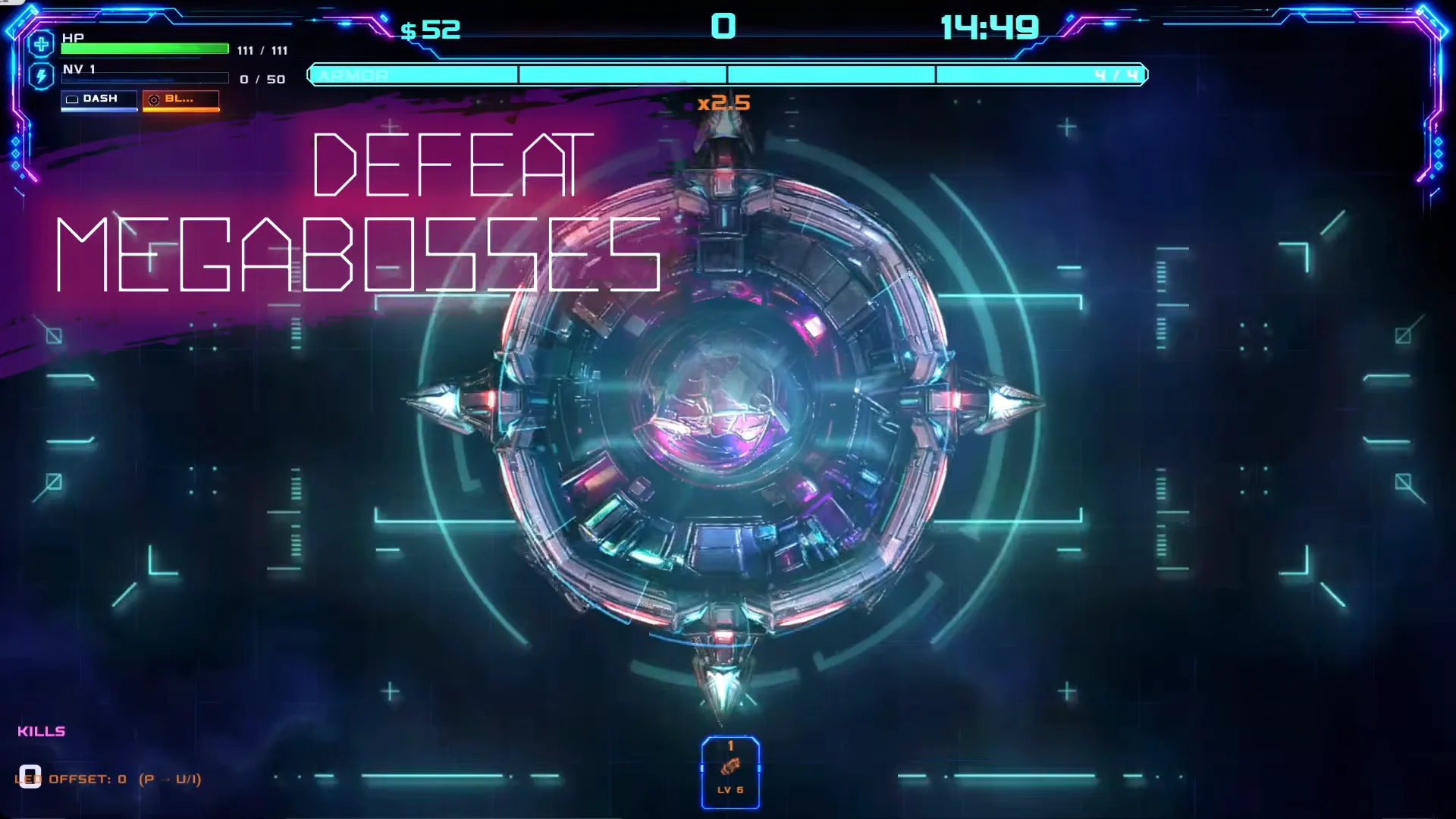
Bosses are a highlight. Multi-phase megabosses such as the Void Sentinel have destructible segments and a central core, so fights become about reading attack patterns and knocking out the right parts in order. On-screen prompts like “Destroy 4 segments, then the core” and warnings such as “Pulse incoming” and “Core critical” telegraph the pattern shifts.
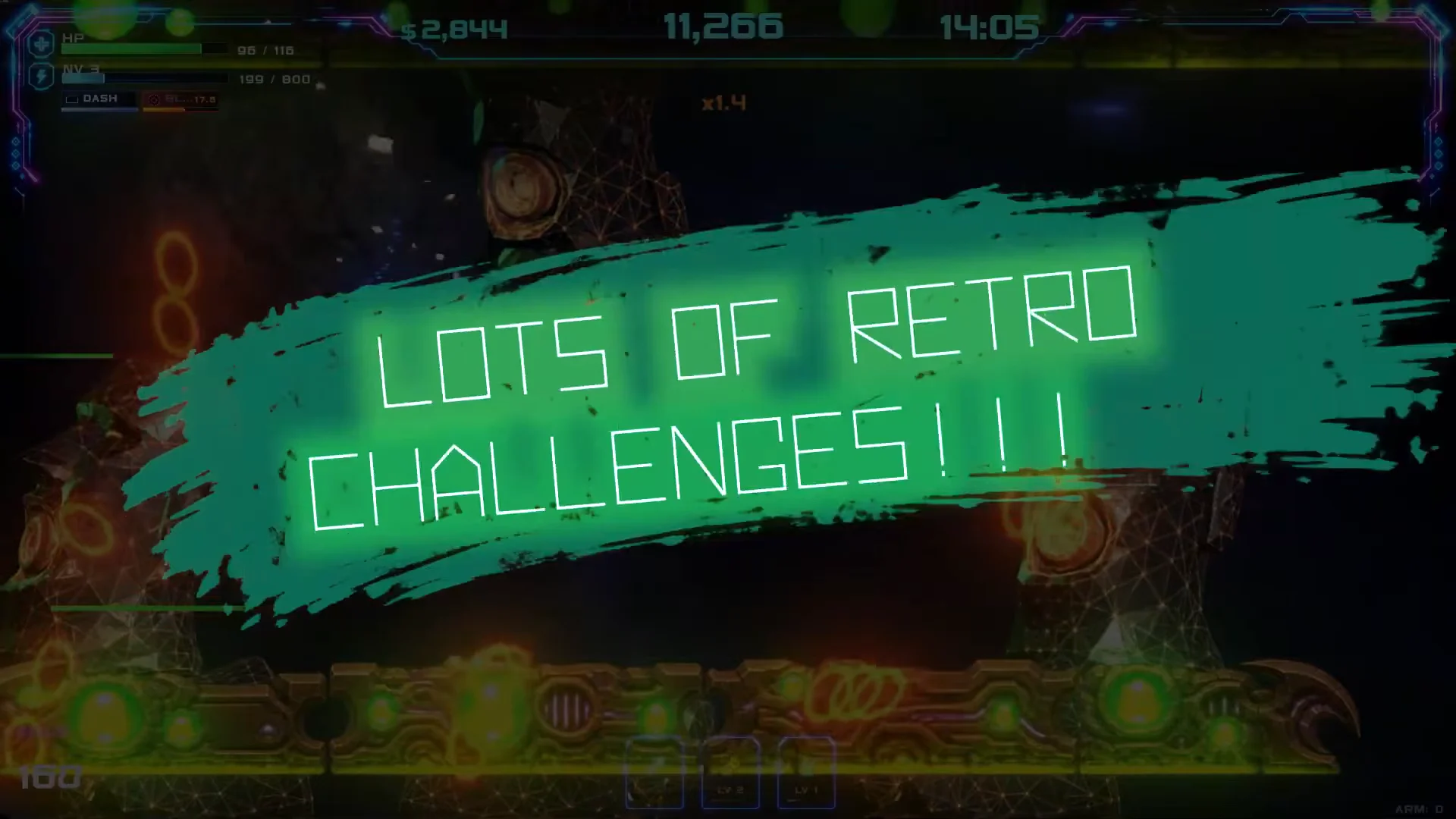
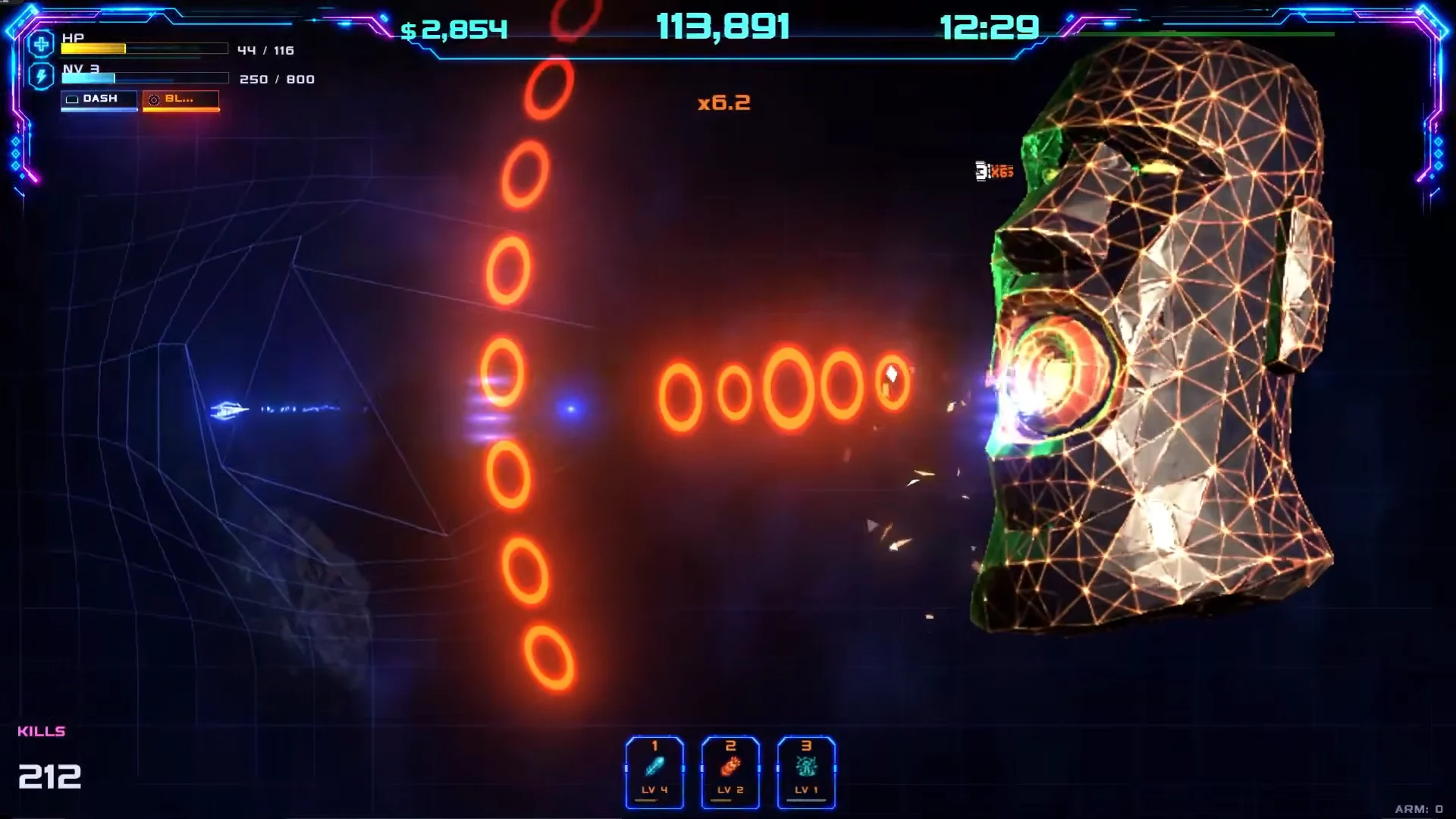
Woven through all of this are mini-games that pay tribute to arcade classics. Expect Pac-Man-style ghosts, Breakout bricks, Asteroids-style floating rocks, Space Invaders waves, and even geometric Moai heads to shoot at, all framed as extra challenges rather than the main mode.
Ships, gear, and the Ship System Network
There are 18 unlockable ships, each with its own abilities and stats that change how a run plays. The hangar roster includes names like Oracle, Viper, Falcon, Trident, Phantom, Stinger, Mantis, Nova, Aegis, and Apex. Picking a ship is the first strategic decision of a run.
On top of your ship, you slot active gear and abilities. These include Boost Dash, Reflect Shield, Blast, Overdrive, and Grow, plus defensive tools such as a cell that grants five seconds of immunity. Weapons and power-ups pulled during runs range from lasers and massive bombs to chain lightning, shields, time freeze, and black holes, all meant to be mixed into extreme builds.
Persistent upgrades live in a node-based tech tree called the Ship System Network. Investing here boosts stats that carry between runs, such as XP Magnet, Data Siphon for extra experience, firepower, and shields. It is the meta-progression layer that makes each restart a little easier than the last.
Leveling up mid-run also feeds into high-tier “Godslayer” weapons and perks, the screen-clearing specials that turn a struggling run into a power fantasy. Cards like Cyber Blade, Frost Aura, and Glass Cannon show up as level-up choices.
Co-op, Endless Mode, and leaderboards
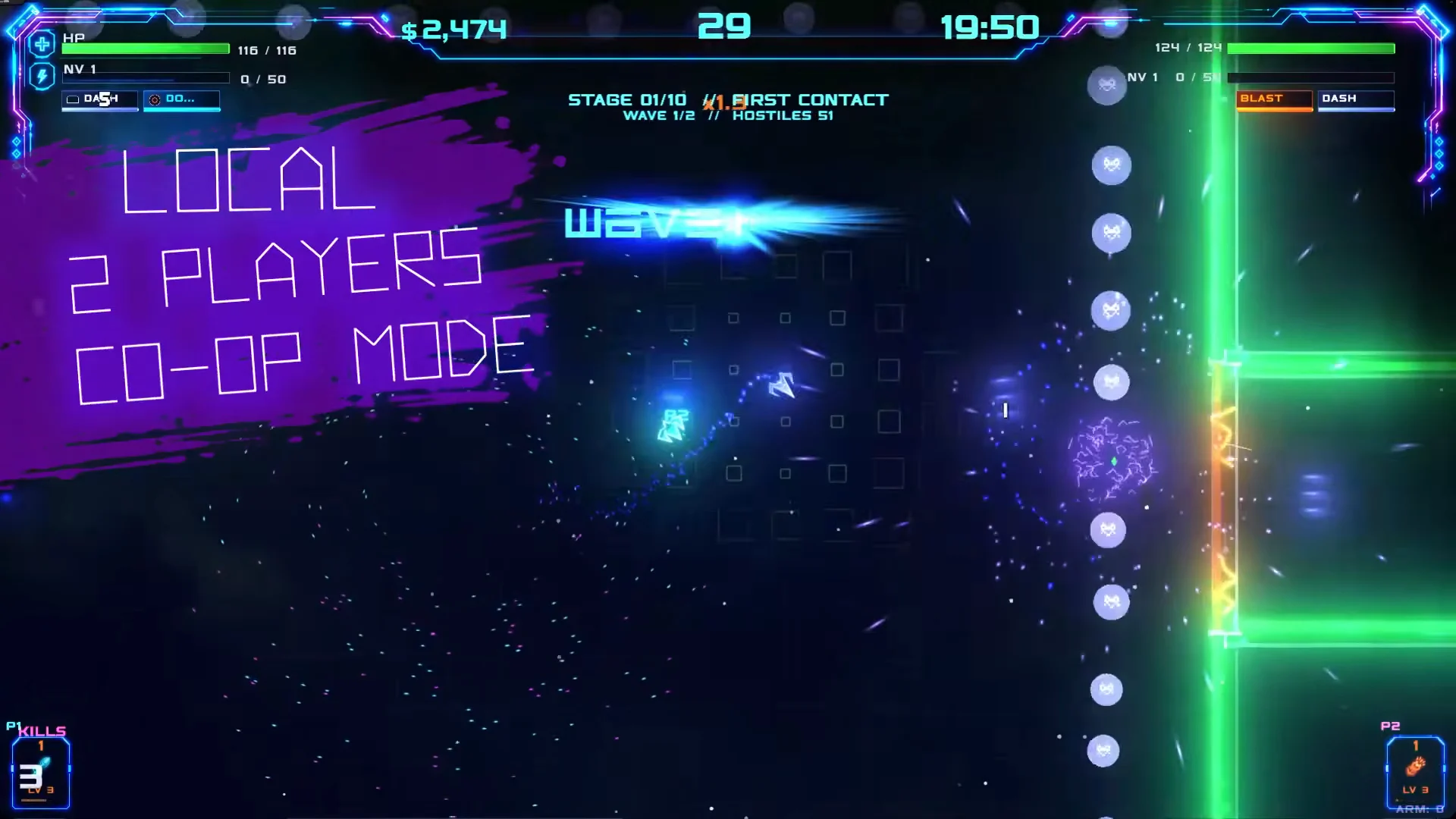
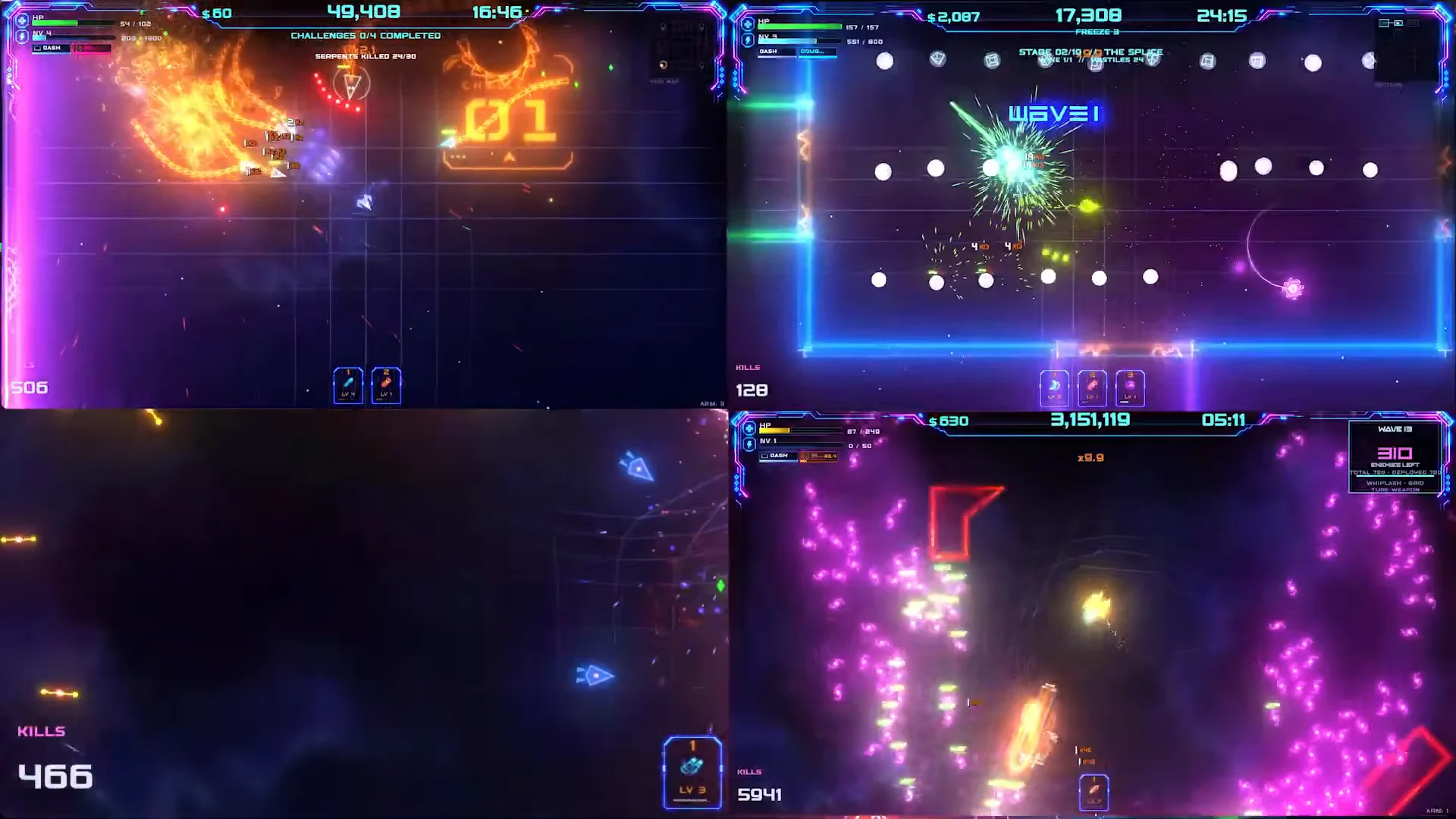
The game supports two-player local co-op on a shared or split screen, so a second pilot can drop in beside you on the couch. It also works through Remote Play Together for online sessions using local co-op.
For players who want a longer test of skill, Endless Mode strips away the campaign structure and pushes you to survive as long as possible while chasing a spot on the global leaderboard. A comic-style story runs through the campaign in scattered scenes, and the full soundtrack is composed by Awesome, a demoscene musician, with an in-game visual player for listening outside of matches.
Platforms and release date
The Steam page lists a planned release window of Q1 2027 for PC, covering Windows, macOS, and SteamOS plus Linux. It carries Steam Achievements, Steam Cloud, Family Sharing, and support for 11 languages with full audio and subtitles.
Beyond PC, the game has been announced for Nintendo Switch and appears on PlayStation with support for one to two players and offline play. The exact console launch timing has drawn some confusion in the community, with players noting a mismatch between an early listed Switch date and the Q1 2027 window shown on Steam.
The Steam Q1 2027 window is the most concrete release target currently attached to the game, so treat that as the reliable timeframe until the studio confirms firm console dates.
Trying the demo now
The quickest way to see whether the loop clicks for you is the free demo, which is live on the game’s Steam listing. From there you can also add the game to your wishlist to get notified when the full version goes live.
You will know the demo is installed correctly when it appears in your Steam library and launches to the ship hangar, where you can pick a starting ship and begin a run. For the recommended experience on PC, the target hardware is around an Intel Core i5-8400 or Ryzen 5 2600 with a GTX 1050 Ti or RX 560 and 8GB of RAM, which is modest by modern standards. If your setup meets the minimum spec instead, the game still runs, just with less headroom for the busiest horde moments.